
Long before babies can walk, they’re already moving to music — kicking their legs, bouncing in your arms, or wiggling when a favorite song comes on. Dancing activities for babies are one of the simplest, most joyful ways to support early development while creating memories you’ll both love. You don’t need rhythm, dance training, or fancy equipment — just some music, a little floor space, and a willingness to be a little silly.
Below, we’ll cover why dancing matters for babies, the best dance activities by age, and simple tips to make movement time a regular part of your routine.
Why Dancing Matters for Baby Development
Movement is one of the earliest ways babies express themselves and interact with the world. Babies are naturally wired to respond to rhythm, and dance gives them a full-body way to explore that response — long before they have the words to describe how music makes them feel.
Dancing with your baby supports:
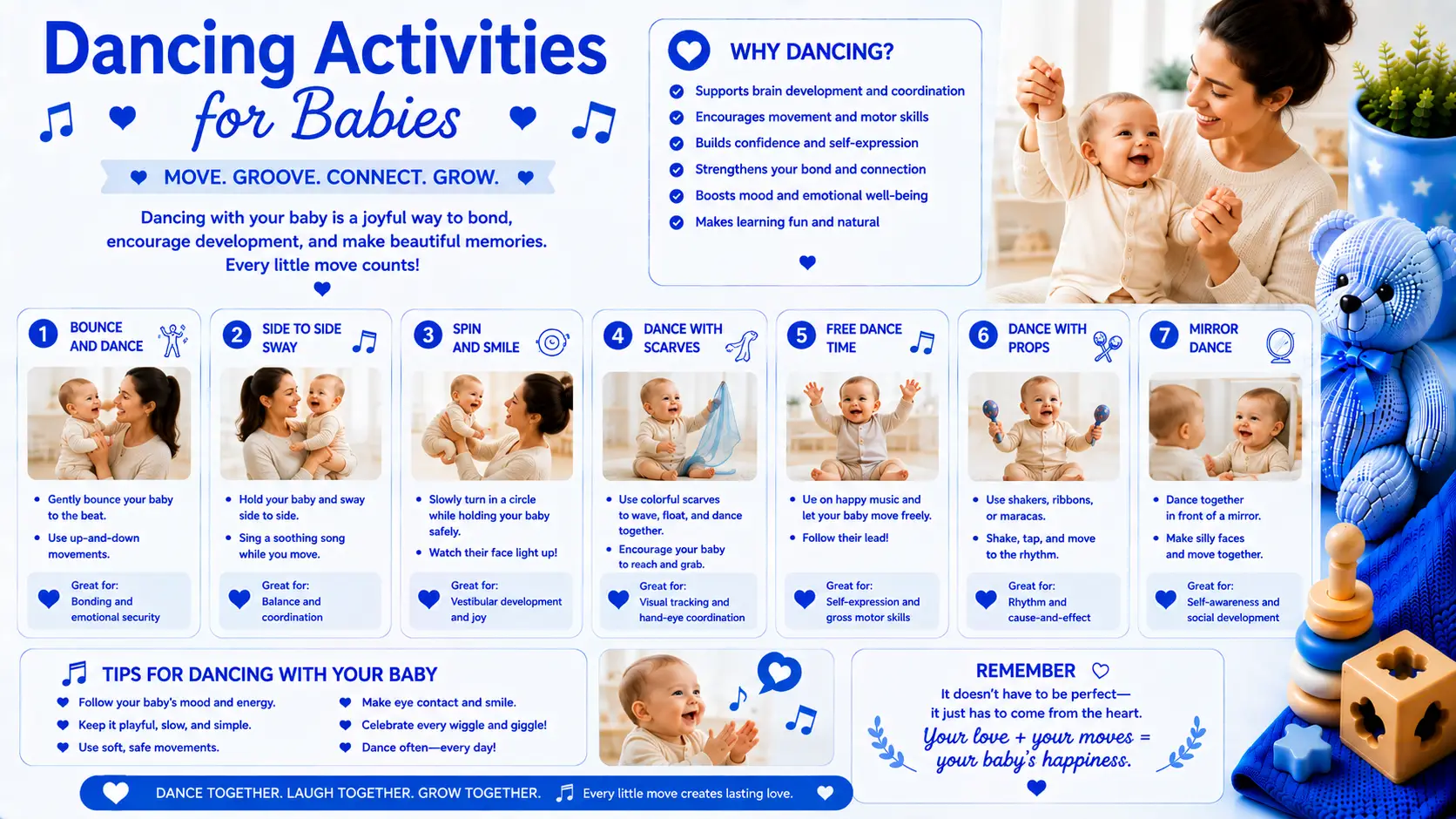
Motor skills and coordination. Bouncing, swaying, and eventually clapping or stepping to a beat helps build both gross motor skills (whole-body movement) and fine motor coordination.
Bonding and trust. Holding your baby while you sway or dance together is a deeply connective experience — it builds trust and strengthens your emotional bond.
Emotional expression. Movement is one of the earliest outlets babies have for expressing feelings. A fast, upbeat song might spark giggles and bouncing, while a slow sway can soothe and calm.
Cognitive development. Creative movement stimulates the brain, supporting memory and the ability to connect ideas — helping babies link sound, rhythm, and physical action.
Confidence. As babies master new movements, from a first wobbly bounce to an early clap, they build a genuine sense of accomplishment.
It’s never too early to start. Even in the first few months, babies are responsive to sound and rhythm, and gentle rocking or swaying to music can be soothing — and sometimes even sleep-inducing — for both of you.
Dancing Activities for Babies by Age
Newborn to 6 Months
At this stage, your baby is the passenger, not the driver — but that doesn’t mean dance time isn’t valuable.
Gentle swaying. Hold your baby securely and sway side to side to soft music or singing.
Rocking to a beat. Rock your baby in your arms in rhythm with a song, which can also help with soothing and sleep.
Face-to-face bouncing. Sit your baby on your lap and gently bounce them while making eye contact and smiling — babies are highly responsive to your facial expressions during movement.
6 to 12 Months
As babies gain more head and core control, they can start participating more actively.
Supported bouncing. Hold your baby upright (supporting their trunk) and let them bounce to the beat of a song.
Clapping to music. Gently clap your baby’s hands together in rhythm to introduce the connection between sound and movement.
Scarf or ribbon dancing. Wave a lightweight scarf while dancing so your baby can watch and reach for it, building visual tracking alongside movement.
12 to 24 Months
Once babies are walking (or close to it), dance becomes much more interactive and physical.
Freeze dance. Play music and dance together, then freeze completely when the music stops — a fun way to build listening skills and impulse control.
Animal movement dancing. Put on music and move like different animals — waddle like a duck, stomp like an elephant, or hop like a frog — to spark imagination alongside movement.
Follow-the-leader dancing. Model simple moves (spinning, stomping, arm waving) and encourage your toddler to copy you, which builds coordination and social learning.
Group dance time. Dancing with siblings, other toddlers, or in a parent-and-toddler class introduces turn-taking and shared space in a fun, low-pressure way.
Tips for Dancing with Your Baby
Follow their lead. If your baby seems more interested in watching than moving, that’s still valuable engagement — let them warm up at their own pace.
Use a mix of tempos. Slow songs are great for calming, gentle movement, while upbeat songs invite bigger, more energetic dancing.
Keep sessions short. A few minutes of dancing is plenty for younger babies — you can always come back to it later in the day.
Add praise and encouragement. Smiles, claps, and verbal praise help build your baby’s confidence as they experiment with new movements.
Make it routine. Regular dance time, even just a few minutes daily, helps babies build familiarity and look forward to movement play.
Don’t worry about “correct” moves. At this age, dancing is about exploration and joy, not technique — there’s no wrong way to move.
When to Consider a Parent-and-Baby Dance Class
Many communities offer parent-and-baby movement or dance classes, often through local dance studios, community centers, or early-childhood programs. These classes can introduce structured movement activities, music variety, and social interaction with other babies and caregivers. While not necessary for development, they can be a fun way to build a regular dance routine and meet other parents along the way.
Final Thoughts
Dancing activities for babies don’t need to be complicated or planned out — a few minutes of swaying, bouncing, or spinning to your favorite songs is enough to support real developmental growth while creating joyful shared moments. Whether it’s a slow sway before nap time or a full-on living room dance party, moving together to music is one of the simplest ways to help your baby grow, express themselves, and feel closer to you.
FAQ
At what age can babies start dancing?
Babies can begin “dancing” in a passive sense from birth, through gentle rocking and swaying. More active movement, like bouncing or clapping, typically develops between 6 and 12 months as coordination improves.
What are the benefits of dancing for babies?
Dancing supports motor skills, coordination, emotional expression, cognitive development, and bonding between baby and caregiver.
Do babies need to be held to dance, or can they move on their own?
Both work well. Younger babies benefit from being held and moved gently, while babies who can sit or stand independently often enjoy exploring movement on their own, with supervision.
What kind of music is best for baby dance time?
A mix of tempos works best — slower, calming songs for gentle swaying and upbeat, rhythmic songs for more energetic bouncing and movement.
Are parent-and-baby dance classes worth trying?
They can be a fun addition to at-home dancing, offering structured movement, music variety, and social interaction, though they aren’t necessary for babies to benefit from dancing.