
You don’t need a park, a playdate, or a fancy toy to give your baby a great outdoor experience — sometimes the richest sensory world is right in your own backyard. Gardens are packed with textures, smells, colors, and sounds that babies simply can’t get indoors, and the best part is that most garden activities for babies cost nothing and take almost no setup. Here’s a practical, age-by-age guide to making the most of garden time with your little one.
Why Garden Play Is So Good for Babies
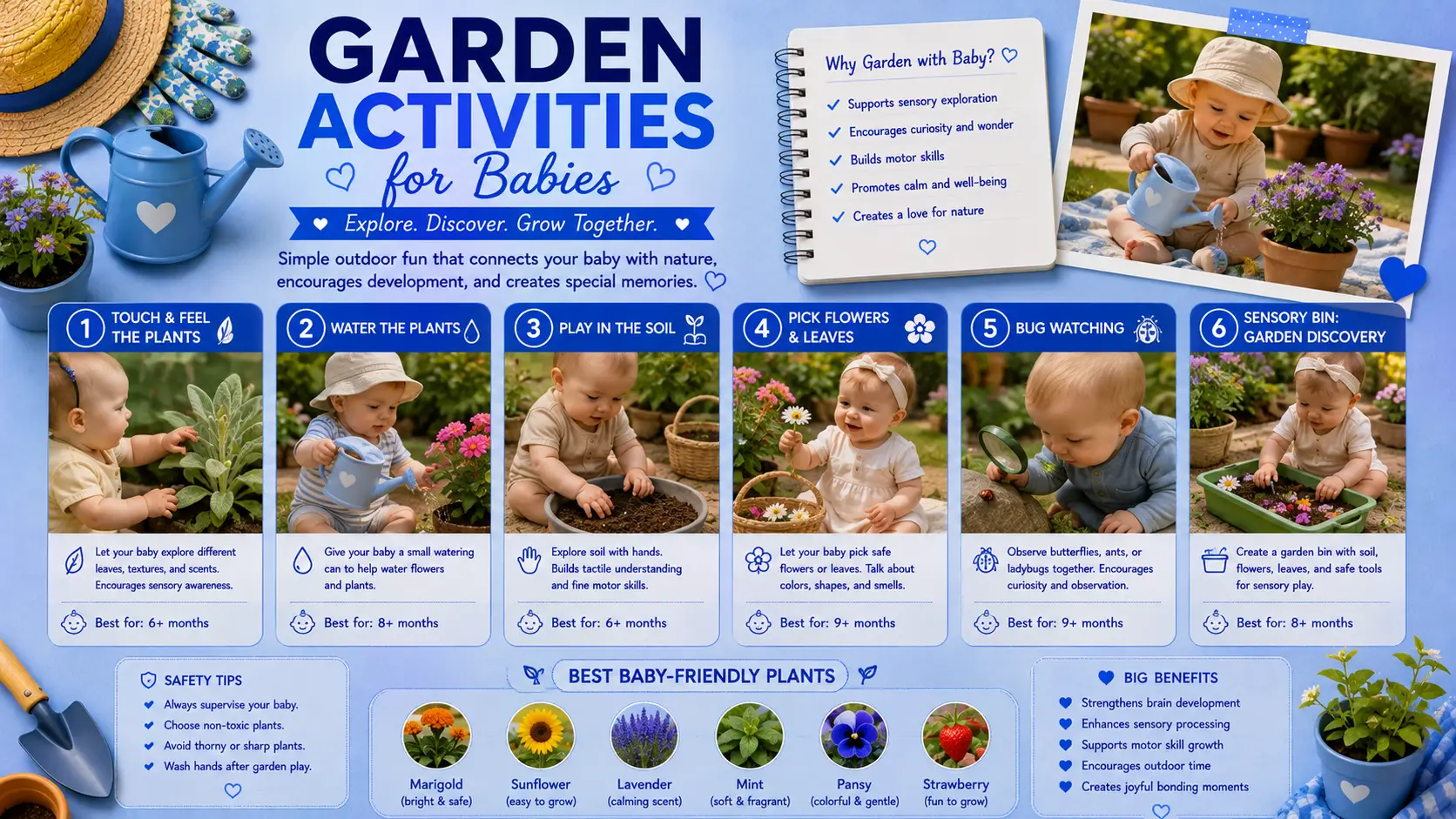
A baby’s brain forms connections through sensory experience, and gardens happen to be one of the richest sensory environments available. Between the rustle of leaves, the scent of herbs, the feel of grass and soil, and the sight of moving shadows and colorful petals, a few minutes in the garden can engage sight, sound, touch, and smell all at once. Beyond sensory development, garden time supports:
Fine and gross motor skills — reaching for leaves, gripping grass, and eventually crawling over uneven ground
Language development — narrating what baby sees (“soft leaf,” “buzzing bee”) builds early vocabulary
Calm and regulation — natural light and green space have a noticeably soothing effect on many babies
Bonding time — garden exploration naturally invites shared attention between parent and baby
Garden Activities by Age
0 to 3 Months: Watching and Sensing
At this stage, babies mostly take the garden in through their eyes and ears. Lay a blanket in dappled shade and let your baby watch leaves move in the breeze, listen to birds, and feel a light breeze on their skin. Simply narrating what you both see and smell is enough of an “activity” right now.
4 to 6 Months: Textures and Tummy Time
This is a great age for outdoor tummy time, since babies tend to lift their heads longer when there’s more to look at outside. Try a gentle texture tour: hold your baby’s hand near (not in the mouth) a soft leaf, a smooth stone, or a fuzzy plant like lamb’s ear, and describe what they’re feeling.
7 to 12 Months: Hands-On Sensory Play
Once babies are sitting up and reaching for things, garden play gets much more interactive:
Sensory bins — fill a shallow container with sand, soil, or grass clippings and safe garden items like large pinecones or smooth stones for baby to explore with their hands
Messy mud play — squishing mud between the fingers is a favorite go-to for sensory-rich, low-cost outdoor play (keep a warm bath ready for after!)
Flower and leaf touch-and-smell — safe, non-toxic flowers and herbs like basil or mint let baby explore scent alongside texture
Watering can play — a small, lightweight watering can lets baby “help” water plants, which is great for hand-eye coordination
Nature basket — gather a few leaves, sticks, and petals in a basket for supervised, hands-on exploration
12+ Months: Early Gardening Helpers
Toddling babies can start “helping” in very simple ways — patting soil into a pot, dropping seeds into a hole you’ve made, or using a child-sized watering can. These early gardening tasks build fine motor skills and a first sense of cause and effect (“I water the plant, and it grows”).
Easy, Low-Cost Garden Activity Ideas
Leaf and petal rubbings — place a leaf under paper and rub a crayon over it for a simple, mess-free craft once baby is a bit older
Bubble time — bubbles floating past flowers and grass are a reliable source of giggles and a nice way to encourage reaching and popping
Bird and bug watching — point out a butterfly or a bird’s nest; babies are naturally drawn to movement
Color hunts — for older babies, look for “green” or “yellow” together as an early color-recognition game
Homemade sensory garden — plant a small patch of textured, safe plants (soft grasses, herbs, pansies) specifically for baby to touch and smell
Garden Safety Tips for Babies
Always supervise closely — babies explore with their mouths, so keep an eye on anything small enough to swallow
Check that any plants baby can reach are non-toxic; a quick search of your garden’s plant list is worth the five minutes
Avoid areas treated with pesticides or fertilizer for at least the label’s recommended waiting period
Dress for the weather and use sun protection appropriate for your baby’s age
Keep a damp cloth or wipes handy for hands and mouths after mud or sensory bin play
Final Thoughts
Garden activities for babies don’t need to be elaborate or Pinterest-perfect. A patch of grass, a few safe leaves, and your full attention are enough to turn a normal afternoon into a rich sensory experience. As your baby grows, the same small garden will offer new things to touch, smell, and discover — making it one of the easiest, most repeatable outdoor activities available to any family.
FAQ
What age can babies start doing garden sensory activities?
Babies can enjoy garden sensory experiences from birth, though hands-on activities like touching textures or sensory bins are best from around 4–6 months, once they can reach and grasp.
Is mud play safe for babies?
Yes, with supervision. Choose an area free from pesticides, chemicals, or animal waste, and always watch closely to prevent baby from putting mud in their mouth.
What garden plants are safe for babies to touch?
Soft, non-toxic plants like lamb’s ear, ferns, ornamental grasses, and herbs such as basil and mint are popular choices for baby-safe sensory gardens. Always double-check any plant before allowing contact.
How can I create a sensory garden for my baby?
Combine textured, safe plants (soft leaves, grasses, herbs) with elements like smooth stones, a small water feature, or wind chimes to engage touch, smell, sight, and sound together.
What are the benefits of garden play for babies?
Garden play supports sensory development, fine and gross motor skills, early language through narration, and calming, mood-boosting exposure to natural light and green space.