
Newborns enter a world that looks soft and blurry. Their eyes are still learning to work together, and clear vision reaches only about 8 to 12 inches—the perfect distance for gazing at a parent’s face during feeding or cuddles. Color vision develops gradually over the first few months. In those earliest weeks, high-contrast black-and-white images stand out dramatically against the haze. That is why black and white books for babies have become a staple for parents and caregivers looking to support early visual and brain development.
Why High-Contrast Books Matter
At birth, babies primarily perceive light, dark, and shades of gray. Bold black patterns on white (or white on black) create the strongest signals on the retina. These signals travel to the brain and help strengthen the visual pathways. Research and pediatric guidance consistently note that newborns prefer high-contrast images because they are easier to focus on and track.
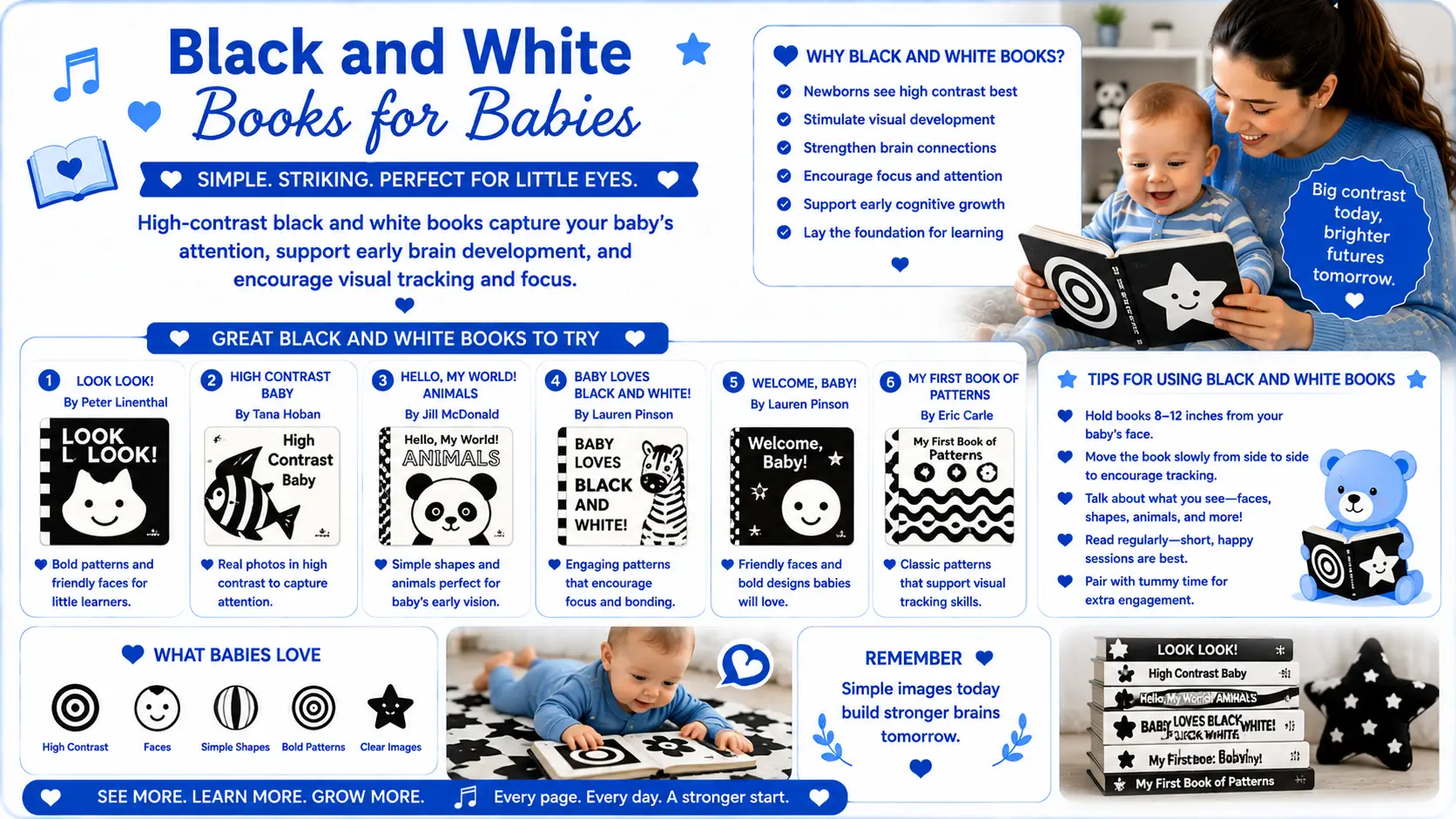
The benefits go beyond vision. Looking at simple shapes and patterns encourages concentration and eye-tracking skills. When a parent holds a book and talks about the pictures—“Look at the big circle” or “Here’s a zigzag”—the baby also hears language, rhythm, and the familiar voice of a loved one. This combination of visual stimulation and connection supports early cognitive growth and bonding.
Many parents notice their baby locking onto a black-and-white page during tummy time or a diaper change. The focused stare is not just cute; it is practice. Over time, these moments help build the foundation for later skills such as depth perception and the ability to notice details in more complex scenes.
When and How to Introduce Them
You can start high contrast books for newborns from day one. Place a sturdy board book or accordion-style book a short distance from your baby’s face during quiet alert times. Tummy time becomes more engaging when a high-contrast image sits in front of them. Some families keep a favorite volume near the changing table so the baby has something interesting to look at while being cleaned up.
Keep sessions short and responsive. If your baby looks away or fusses, put the book down. There is no need to force attention. Simply offering the images regularly is enough. As weeks pass and color vision improves (typically becoming more reliable around 3 to 5 months), many babies still enjoy the bold simplicity of these books even as they begin exploring colorful pages.
Popular Black and White Books Worth Trying
A few titles appear again and again on recommended lists because they balance striking visuals with sturdy construction:
Look, Look! and the related books by Peter Linenthal feature large, clear black-and-white illustrations of everyday objects and animals. The simple captions make them easy to narrate.
Black on White and White on Black by Tana Hoban offer pure high-contrast images with no text—ideal for pure visual focus or for parents who want to invent their own words.
Spots and Dots (and its companion Hearts and Stars) from the Art Baby series presents abstract patterns that babies often find mesmerizing.
I Kissed the Baby! by Mary Murphy mixes high-contrast art with a gentle, interactive story that invites kissing and singing along.
Series such as Hello, Baby Animals and similar high-contrast board books from publishers like duopress or Usborne add simple greetings or animal sounds while staying mostly monochrome (sometimes with a single pop of color).
Many of these are board books designed to withstand chewing, drooling, and repeated handling. Some accordion or soft-cloth versions unfold for tummy time or can be propped up nearby.
Practical Tips for Everyday Use
Choose books with thick pages and rounded corners for safety. Soft fabric or waterproof options work well for travel or bath time. You do not need a large collection—two or three well-chosen titles often suffice in the first months.
Talk while you look. Describe shapes, count dots, make animal sounds, or simply narrate what you see. This dialogic style of reading boosts vocabulary exposure even before your baby understands the words. Pair the books with real-life high-contrast moments: a black-and-white patterned blanket, a simple mobile, or the contrast of your own eyes and hair against your face.
As your baby grows past six months and begins preferring brighter colors and more detailed pictures, keep a couple of the old favorites on the shelf. Many toddlers still enjoy the clean designs, and older siblings sometimes like “reading” them to the baby.
Making It Work on Any Budget
Library systems frequently stock high-contrast titles. Printable black-and-white pattern pages (laminated or slipped into a cheap photo album) can serve the same purpose. Even a piece of paper with bold marker drawings works in a pinch. The key is the contrast and the shared attention, not an expensive set.
FAQ
Why are black and white books recommended for babies?
Newborns see high-contrast images most clearly. Black-and-white patterns stimulate the developing visual system, support focus and tracking, and create enjoyable moments of connection between parent and child.
When should I start using high contrast books with my newborn?
Right away. Babies benefit from them in the first weeks and months while color vision and focus are still maturing. They remain useful well into the second half of the first year.
Do babies only see in black and white?
Not exactly. They can detect some color early (especially red), but their ability to distinguish a full range of colors improves significantly by about 3–5 months. High contrast remains the easiest for them to process at the beginning.
Are colorful books bad for newborns?
No. Colorful books are fine and become more engaging as vision develops. High-contrast books simply match the stage of visual development most newborns experience, so they tend to hold attention longer in the early months.
How long should I use black and white books?
There is no strict cutoff. Many families use them heavily for the first 3–6 months and then transition toward more colorful titles while keeping a few favorites available. Follow your baby’s interest.