Skip to content
DidYouSearch DidYouSearch
  • did you search?
  • Baby Plus+
    • Baby Activities
      • Arts & Crafts
      • Indoor Activities
      • Montessori
      • Music
      • Outdoor Activities
      • Reading
      • Sensory Play
      • Tummy Time
    • Baby Development
      • Brain Development
      • Cognitive Development
      • Emotional Development
      • Fine Motor Skills
      • Growth Milestones
      • Monthly Milestones
      • Motor Skills
      • Physical Development
      • Social Development
      • Speech Development
    • Baby Feeding
      • Allergies
      • Baby Led Weaning
      • Bottle Feeding
      • Breast feeding
        • Breastfeeding Diet
        • Breastfeeding Positions
        • Latch Problems
        • Low Milk Supply
        • Mastitis
        • Pumping Schedule
        • Weaning
      • Burping
      • Cluster Feeding
      • Feeding Schedule
      • Formula Feeding
        • Formula Amount
        • Formula Brands
        • Formula Comparison
        • Formula Preparation
        • Formula Storage
      • Hydration
      • Pumping
      • Solid Foods
    • Baby Gear Reviews
      • Best Baby Carrier
      • Best Baby Monitor
      • Best Baby Strollers
      • Best Bottles
      • Best Breast Pump
      • Best Car Seat
      • Best Cribs
      • Best Diapers
      • Best Formula
      • Best Toys
    • Baby Growth
      • Growth Spurts
      • Height Charts
      • Monthly Growth
      • Percentiles
      • Weight Charts
    • Baby Health
      • Allergies
      • Cold
      • Constipation
      • Cough
      • Diarrhea
      • Ear Infection
      • Fever
      • Flu
      • Pediatric Visits
      • Rashes
      • Teething
      • Vaccines
      • Vomiting
    • Baby Nutrition
      • Dairy
      • Drinks
      • Eggs
      • Fish
      • Fruits
      • Healthy Recipes
      • Meat
      • Snacks
      • Vegetables
      • Vitamins
    • Baby Products
      • Baby Carriers
      • Bassinets
      • Bottles
      • Breast Pumps
      • Car Seats
      • Cribs
      • Diaper Bags
      • High Chairs
      • Monitors
      • Strollers
      • Swings
      • Toys
      • Walkers
    • Baby Recipes
      • BLW Recipes
      • Breakfast
      • Dinner
      • Finger Foods
      • Lunch
      • Purees
      • Snacks
    • Baby Safety
      • Baby Proofing
      • Car Seats
      • Choking Hazards
      • CPR
      • Home Safety
      • Poison Prevention
      • Safe Sleep
      • Sun Protection
      • Water Safety
  • Baby Names
    • Boy Names
    • Girl Names
    • American baby boy names
    • American baby girl names
    • Biblical Names
    • Middle Names
    • Modern Names
    • Short Names
    • Unique Names
    • Unisex Names
  • Recommended
    • Baby Shopping
      • Baby Registry
      • Budget Baby Shopping
      • Hospital Bag
      • Must Have Products
      • Newborn Checklist
      • Nursery Ideas
    • Baby Sleep
      • Bedtime Routine
      • Co Sleeping
      • Crib Safety
      • Nap Schedules
      • Night Wakings
      • Sleep Environment
      • Sleep Products
      • Sleep Regression
      • Sleep Training
      • Wake Windows
      • White Noise
    • Childcare
      • Daycare
      • Babysitters
      • Kindergarten
      • Nannies
      • Preschool
    • Newborn Care
      • Nail Care
      • Baby Hygiene
      • Bathing
      • Crying
      • Diapering
      • Ear Care
      • Eye Care
      • Skin Care
      • Soothing Techniques
      • Temperature
      • Umbilical Cord
    • Special Needs
      • Premature Babies
      • Autism Signs
      • Developmental Delays
      • Down Syndrome
      • NICU
      • Twins
    • Seasonal Baby Care
      • Spring
      • Summer
      • Travel
      • Fall
      • Holidays
      • Winter
  • Parenting
    • Bonding
    • Discipline
    • Emotional Intelligence
    • First Time Parents
    • Gentle Parenting
    • Positive Parenting
    • Routines
    • Single Parents
    • Working Parents
  • Pregnancy
    • Pregnancy Complications
    • Labor & Delivery
    • Postpartum Recovery
    • Pregnancy Exercises
    • Pregnancy Medications
    • Pregnancy Nutrition
    • Pregnancy Sleep
    • Pregnancy Symptoms
    • Pregnancy Tests
    • Pregnancy Vitamins
    • Pregnancy Weeks
  • Toddler
    • Preschool
    • Speech
    • Tantrums
    • Toddler Food
    • Toddler Sleep
    • Behavior
    • Independence
    • Learning
    • Potty Training
  • Traveling with Baby
    • Road Trips
    • Beach
    • Camping
    • Flying
    • Hotels
    • Packing Lists
  • did you search?
  • Baby Plus+
    • Baby Activities
      • Arts & Crafts
      • Indoor Activities
      • Montessori
      • Music
      • Outdoor Activities
      • Reading
      • Sensory Play
      • Tummy Time
    • Baby Development
      • Brain Development
      • Cognitive Development
      • Emotional Development
      • Fine Motor Skills
      • Growth Milestones
      • Monthly Milestones
      • Motor Skills
      • Physical Development
      • Social Development
      • Speech Development
    • Baby Feeding
      • Allergies
      • Baby Led Weaning
      • Bottle Feeding
      • Breast feeding
        • Breastfeeding Diet
        • Breastfeeding Positions
        • Latch Problems
        • Low Milk Supply
        • Mastitis
        • Pumping Schedule
        • Weaning
      • Burping
      • Cluster Feeding
      • Feeding Schedule
      • Formula Feeding
        • Formula Amount
        • Formula Brands
        • Formula Comparison
        • Formula Preparation
        • Formula Storage
      • Hydration
      • Pumping
      • Solid Foods
    • Baby Gear Reviews
      • Best Baby Carrier
      • Best Baby Monitor
      • Best Baby Strollers
      • Best Bottles
      • Best Breast Pump
      • Best Car Seat
      • Best Cribs
      • Best Diapers
      • Best Formula
      • Best Toys
    • Baby Growth
      • Growth Spurts
      • Height Charts
      • Monthly Growth
      • Percentiles
      • Weight Charts
    • Baby Health
      • Allergies
      • Cold
      • Constipation
      • Cough
      • Diarrhea
      • Ear Infection
      • Fever
      • Flu
      • Pediatric Visits
      • Rashes
      • Teething
      • Vaccines
      • Vomiting
    • Baby Nutrition
      • Dairy
      • Drinks
      • Eggs
      • Fish
      • Fruits
      • Healthy Recipes
      • Meat
      • Snacks
      • Vegetables
      • Vitamins
    • Baby Products
      • Baby Carriers
      • Bassinets
      • Bottles
      • Breast Pumps
      • Car Seats
      • Cribs
      • Diaper Bags
      • High Chairs
      • Monitors
      • Strollers
      • Swings
      • Toys
      • Walkers
    • Baby Recipes
      • BLW Recipes
      • Breakfast
      • Dinner
      • Finger Foods
      • Lunch
      • Purees
      • Snacks
    • Baby Safety
      • Baby Proofing
      • Car Seats
      • Choking Hazards
      • CPR
      • Home Safety
      • Poison Prevention
      • Safe Sleep
      • Sun Protection
      • Water Safety
  • Baby Names
    • Boy Names
    • Girl Names
    • American baby boy names
    • American baby girl names
    • Biblical Names
    • Middle Names
    • Modern Names
    • Short Names
    • Unique Names
    • Unisex Names
  • Recommended
    • Baby Shopping
      • Baby Registry
      • Budget Baby Shopping
      • Hospital Bag
      • Must Have Products
      • Newborn Checklist
      • Nursery Ideas
    • Baby Sleep
      • Bedtime Routine
      • Co Sleeping
      • Crib Safety
      • Nap Schedules
      • Night Wakings
      • Sleep Environment
      • Sleep Products
      • Sleep Regression
      • Sleep Training
      • Wake Windows
      • White Noise
    • Childcare
      • Daycare
      • Babysitters
      • Kindergarten
      • Nannies
      • Preschool
    • Newborn Care
      • Nail Care
      • Baby Hygiene
      • Bathing
      • Crying
      • Diapering
      • Ear Care
      • Eye Care
      • Skin Care
      • Soothing Techniques
      • Temperature
      • Umbilical Cord
    • Special Needs
      • Premature Babies
      • Autism Signs
      • Developmental Delays
      • Down Syndrome
      • NICU
      • Twins
    • Seasonal Baby Care
      • Spring
      • Summer
      • Travel
      • Fall
      • Holidays
      • Winter
  • Parenting
    • Bonding
    • Discipline
    • Emotional Intelligence
    • First Time Parents
    • Gentle Parenting
    • Positive Parenting
    • Routines
    • Single Parents
    • Working Parents
  • Pregnancy
    • Pregnancy Complications
    • Labor & Delivery
    • Postpartum Recovery
    • Pregnancy Exercises
    • Pregnancy Medications
    • Pregnancy Nutrition
    • Pregnancy Sleep
    • Pregnancy Symptoms
    • Pregnancy Tests
    • Pregnancy Vitamins
    • Pregnancy Weeks
  • Toddler
    • Preschool
    • Speech
    • Tantrums
    • Toddler Food
    • Toddler Sleep
    • Behavior
    • Independence
    • Learning
    • Potty Training
  • Traveling with Baby
    • Road Trips
    • Beach
    • Camping
    • Flying
    • Hotels
    • Packing Lists
Close

Search

Home/Baby Activities/Reading/Bedtime Reading Tips
Reading

Bedtime Reading Tips

By DrAdam
August 14, 2026 5 Min Read
0

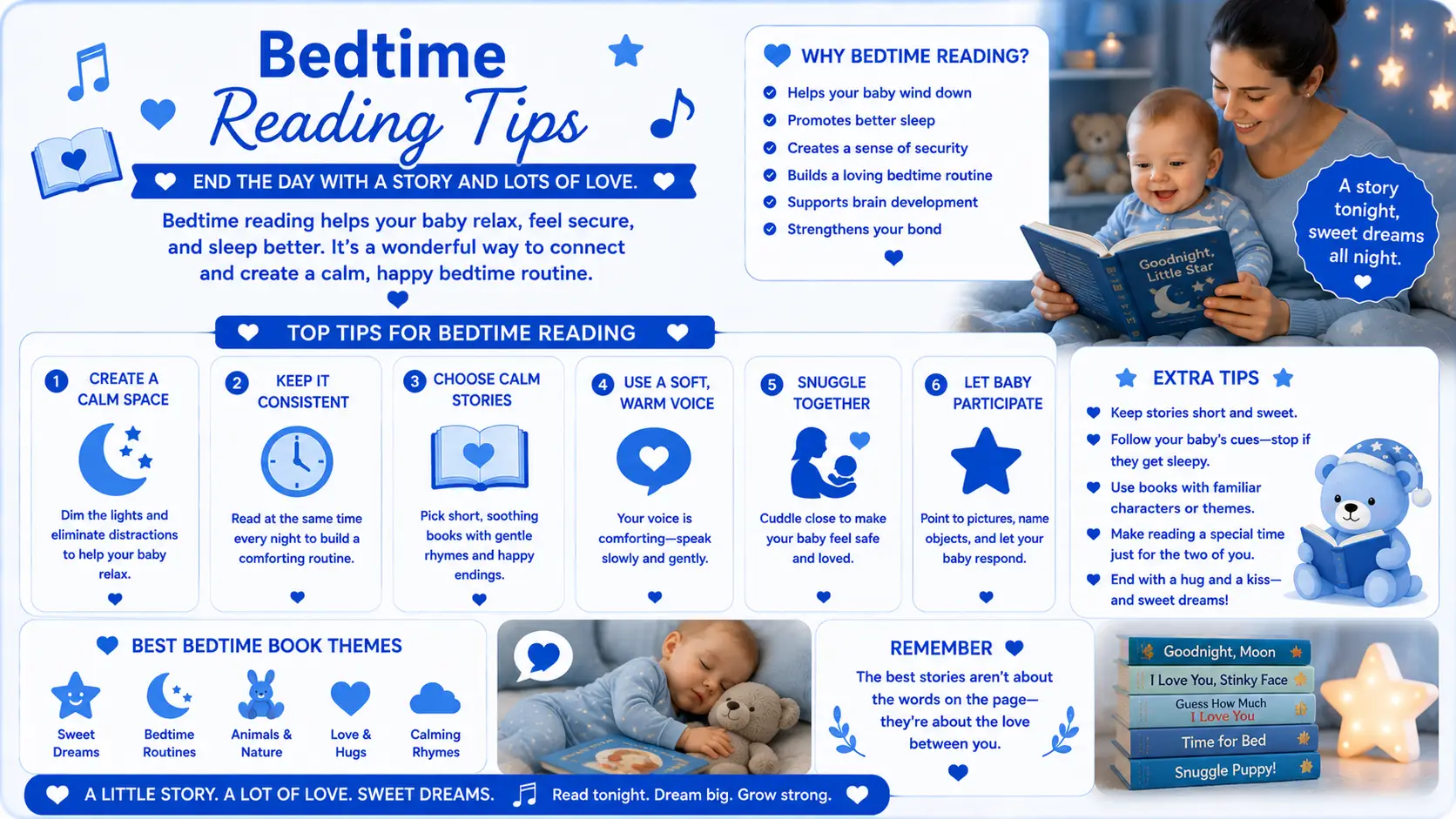
There’s something almost magical about the last few minutes before a child falls asleep — the lights are low, the day’s chaos has settled, and it’s just the two of you with a book. But getting to that peaceful moment isn’t always automatic. If bedtime stories in your house look more like negotiations than cuddle time, these bedtime reading tips can help turn story time back into the calm, connecting ritual it’s meant to be.

Whether you’re reading to a newborn who can’t focus past your nose or a toddler who wants to pick out “just one more book,” here’s what sleep experts, librarians, and experienced parents recommend.

Why Bedtime Reading Works

Contents hide
1 Why Bedtime Reading Works
2 Tips for a Better Bedtime Reading Routine
2.1 Keep It Consistent
2.2 Set Expectations Up Front
2.3 Create a Cozy, Low-Stimulation Space
2.4 Choose Calm, Not Chaotic, Stories
2.5 Let Repetition Happen
2.6 Offer Limited Choices
2.7 Use Voice and Expression
2.8 Get Physically Close
2.9 It’s OK If They Don’t Sit Still
2.10 Don’t Force It on Hard Nights
3 Bedtime Reading by Age
4 The Bottom Line
5 FAQ
5.1 How long should bedtime reading last?
5.2 What are the best books to read at bedtime?
5.3 Is it okay to read the same book every night?
5.4 What if my baby doesn’t seem to pay attention during bedtime stories?
5.5 What age should bedtime reading start?

Reading before bed does double duty. It’s a proven way to build language and vocabulary — the more words a child hears, the stronger their early language development tends to be — and it also functions as a powerful sleep cue. A consistent bedtime story tells a child’s brain and body that the day is winding down, which can make the transition to sleep noticeably smoother.

It’s also simply good bonding time. A few minutes of undivided, screen-free attention at the end of the day fills what one children’s sleep expert calls a child’s “emotional tank,” setting them up for a calmer night and a closer relationship with you.

Tips for a Better Bedtime Reading Routine

Keep It Consistent

A predictable bedtime reading routine — the same general order, roughly the same time each night — helps children (and babies) understand what comes next. It doesn’t need to be rigid; some families read right after pajamas, others right before lights-out. What matters most is repeating the same sequence night after night so it becomes an automatic cue for winding down.

Set Expectations Up Front

For toddlers old enough to understand, telling them how many books you’ll read before bed — “we’re reading two stories, then it’s time to sleep” — helps avoid the classic “one more book” negotiation. Having your child repeat the plan back to you can reinforce it even further.

Create a Cozy, Low-Stimulation Space

Dim lighting, a comfortable chair or spot in bed, and the TV off all help signal that this is winding-down time, not playtime. A dedicated cozy reading corner — even just a pillow and a small basket of books — can make bedtime reading feel like a special ritual kids look forward to.

Choose Calm, Not Chaotic, Stories

Save the wild, high-energy books for daytime. At bedtime, gentle, melodic stories with soothing language and predictable rhythms work best — save the pirates-versus-dinosaurs adventures for another time of day.

Let Repetition Happen

If your child wants the exact same book every single night for weeks, that’s completely normal — and developmentally useful. Repetition helps kids recognize patterns, predict what happens next, and build vocabulary through familiar words. Many parents find it helpful to keep one steady “regular” alongside one or two rotating titles to balance comfort with variety.

Offer Limited Choices

Instead of asking “what do you want to read?” (an overwhelming, open-ended question for a toddler), put out two or three books and let your child pick from those. This gives them a sense of control over bedtime without derailing the routine.

Use Voice and Expression

Reading with different voices, sound effects, or a softer, slower tone as bedtime approaches keeps stories engaging without amping kids up right before sleep. For babies, speaking a little more slowly than usual helps them tune in to the individual sounds and rhythms of language.

Get Physically Close

Holding a baby, or letting a toddler snuggle into your lap or side, reinforces the comfort and safety of the routine. Physical closeness also lets your child watch your face and expressions, which adds another layer of connection beyond just the words on the page.

It’s OK If They Don’t Sit Still

Babies and younger toddlers may wiggle, play with a toy, or seem distracted while you read — that doesn’t necessarily mean they’re not listening. The sound of your voice during the routine still provides comfort and reinforces the bedtime cue, even if their eyes aren’t glued to the page.

Don’t Force It on Hard Nights

If your child is overtired, resistant, or just not into it on a particular night, it’s fine to skip the book and go straight to sleep. Reading should build positive associations, not become another nightly battle — a missed story here and there won’t undo the routine.

Bedtime Reading by Age

Newborns to young babies: Focus on the sound of your voice and closeness rather than the story itself. Simple, rhythmic books work well.

Babies under 15 months: Simple picture books with big, clear images and minimal text tend to hold attention best.

Toddlers (15 months to 3 years): Expect strong opinions about book choices — offer limited options and lean into their favorites, even if it means reading the same one for weeks.

Preschool and up: Introduce a wider variety of stories and themes, and start involving your child in predicting what happens next in the story.

The Bottom Line

Great bedtime reading isn’t about finding the “perfect” book or reading flawlessly every night — it’s about consistency, comfort, and showing up with a story most nights of the week. Keep it calm, keep it predictable, and let your child’s preferences guide the details. Over time, that nightly ritual becomes one of the most reliable ways to build both a love of reading and a smoother bedtime.

FAQ

How long should bedtime reading last?

Around ten to fifteen minutes is a good general target, though even a single short book is enough to build the routine. For overtired kids, a short session with one calm book is often better than pushing through several.

What are the best books to read at bedtime?

Gentle, melodic books with soothing language and predictable rhythms work best. Avoid highly stimulating or exciting stories right before sleep, since those can work against the wind-down effect you’re going for.

Is it okay to read the same book every night?

Yes. Repetition helps children recognize patterns, build vocabulary, and predict what comes next in a story, all of which support language development. It’s completely normal for a favorite book to stay in rotation for weeks.

What if my baby doesn’t seem to pay attention during bedtime stories?

That’s normal, especially for babies and young toddlers. Even if they’re playing with a toy or looking away, the sound of your voice still reinforces the bedtime routine and provides comfort.

What age should bedtime reading start?

There’s no minimum age — many parents begin reading to their babies in the first weeks of life. Starting early helps establish the routine before your child is old enough to resist it.

Author

DrAdam

Dr. Adam. Obstetrician and Gynecologist

Follow Me
Other Articles
Previous

Reading Routine for Babies

Next

Black and White Books for Babies

No Comment! Be the first one.

Leave a Reply Cancel reply

Your email address will not be published. Required fields are marked *

What is Did You Search?

The “Did You Search” website was created for all mothers and families. Just search to find all your needs about your children.

Links

  • about
  • contact
  • privacy policy
  • medical disclaimer
  • sitemap
Copyright 2026 — DidYouSearch. All rights reserved.