
Reading does not begin the day a child sounds out their first word. It starts much earlier—with the rhythm of a parent’s voice, the pleasure of turning a page, and the growing understanding that marks on a page carry meaning. Tracking reading milestones by age helps parents know what to expect and how to support their child without pressure. Every child develops at their own pace, so these stages are general guides rather than strict deadlines.
Babies (0–12 Months): Building the Foundation
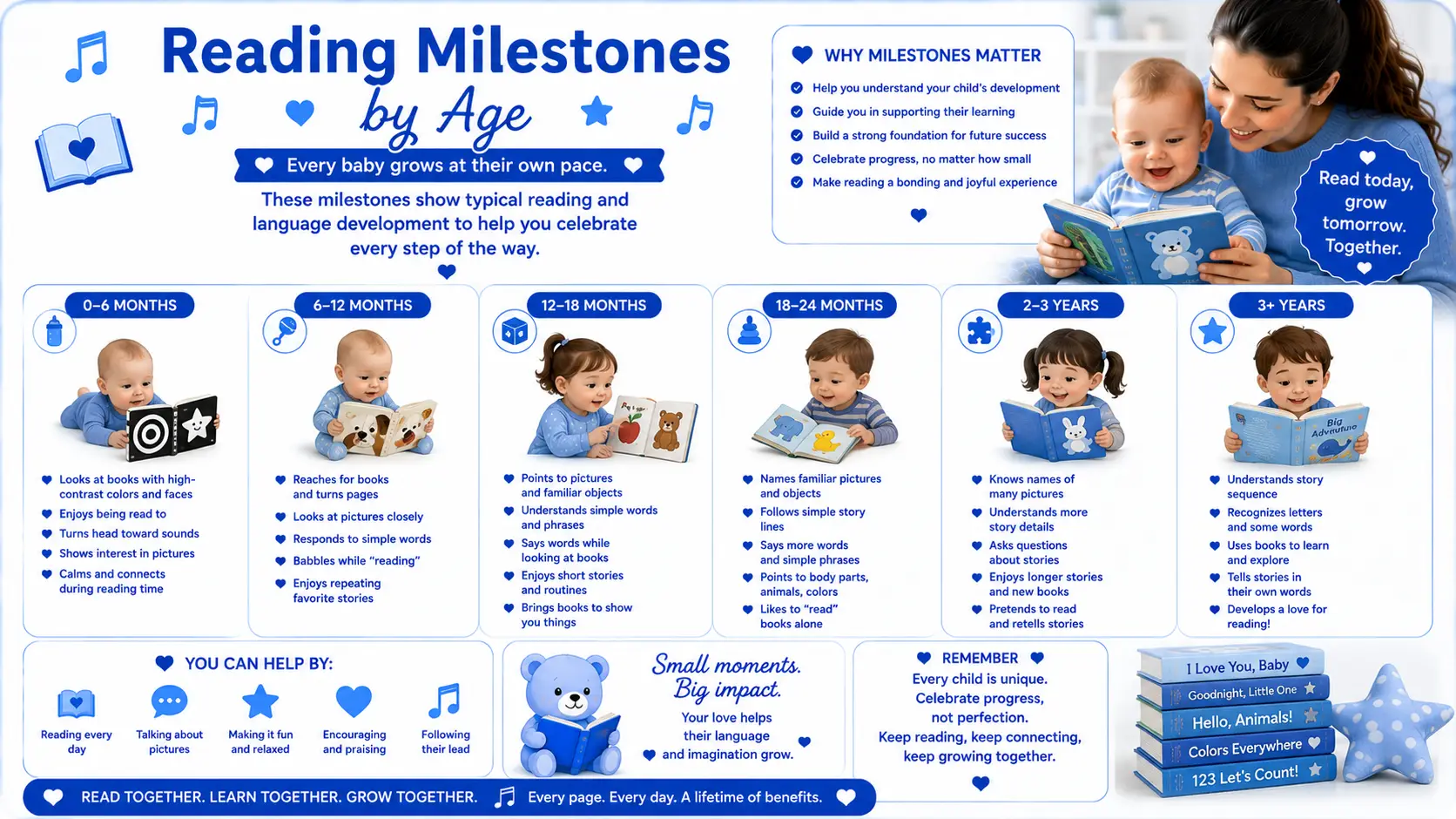
In the first year, the focus is on language exposure and positive experiences with books. Newborns respond to the cadence of speech and lullabies. By a few months, they begin watching faces closely and turning toward voices. Around 6–12 months, many babies reach for board books, pat pictures, and help turn pages (often several at a time). They may coo or babble in response to a story and enjoy high-contrast images or simple photographs of faces and everyday objects.
Mouthing books is normal and part of sensory exploration. Soft cloth books, sturdy board books, and books with textures work especially well at this stage. Simply holding your baby and reading aloud—even for a few minutes—builds the association between books, comfort, and connection.
Toddlers (1–3 Years): Active Participation
Toddlers move from passive listeners to active participants. Between 12 and 24 months, many children begin pointing to pictures when asked (“Where’s the dog?”), naming familiar objects, and recognizing favorite books by their covers. They turn board-book pages more deliberately and may carry books around or bring them to you to read. By age 2–3, toddlers often finish familiar sentences, pretend to “read” by turning pages and telling the story from memory, and show clear preferences for certain books.
Repetition is powerful. Reading the same story again and again helps toddlers internalize language patterns and vocabulary. Interactive books with flaps, textures, or simple questions keep engagement high.
Preschoolers (3–5 Years): Print Awareness and Early Skills
Preschool years mark big leaps in early literacy milestones. Most 3- and 4-year-olds understand that books are held a certain way, that pages turn from right to left (or left to right depending on the language), and that print—not just pictures—carries the story. They enjoy rhyming games, recognize some letters (especially those in their own name), and may “write” by scribbling or forming letter-like shapes. Many identify familiar signs and logos in the environment.
By age 5, children often match some letters to their sounds, recognize a few sight words, and retell simple stories in sequence. They may begin sounding out short words or reading predictable picture books with support. Pretend reading becomes more sophisticated as they use book language and expression.
Early School Years (Ages 6–8): Learning to Read and Reading to Learn
Most children learn to read between ages 6 and 7, typically during first or second grade. At this stage they decode unfamiliar words using phonics, recognize more words by sight, and read simple sentences with growing fluency. Comprehension improves as they connect stories to their own experiences and answer questions about what they have read.
By ages 7–8, many children shift from “learning to read” to “reading to learn.” They tackle longer books, use context clues, and begin reading independently for information and pleasure. Fluency, vocabulary, and comprehension continue to strengthen with practice and exposure to varied texts.
How Parents Can Support Progress at Every Stage
The most effective support is consistent, enjoyable shared reading. Talk about pictures, ask open-ended questions, and follow your child’s interests. Point to words occasionally as you read to reinforce the connection between spoken and written language. Sing songs, play rhyming games, and make books part of daily routines—bedtime, waiting rooms, or quiet afternoons.
Limit screen time in favor of real books and conversation when possible. A print-rich environment (books within reach, labels, notes) also helps. If your child seems frustrated or uninterested, keep sessions short and positive. Pressure rarely helps; curiosity and connection do.
When to Seek Extra Support
Children develop at different rates. Some read early; others need more time. Consider talking with a pediatrician or teacher if your child shows persistent difficulty with letter recognition, rhyming, or sounding out words well into the early school years, or if they avoid books altogether despite positive exposure. Early intervention can make a meaningful difference.
FAQ
What are typical reading milestones by age?
Babies explore books and respond to voices. Toddlers name pictures and pretend to read. Preschoolers develop print awareness and letter knowledge. Most children begin decoding words around ages 6–7 and grow more fluent thereafter. Individual timelines vary.
When do kids usually learn to read?
Most children learn to read between ages 6 and 7. Some start earlier (around 4–5), while others take longer. The foundation for reading is built from birth through language exposure and shared book experiences.
How can I support early literacy milestones at home?
Read aloud daily, talk about pictures and stories, play with rhymes and sounds, and keep books accessible. Follow your child’s interests and keep the experience enjoyable rather than instructional in the early years.
Is it normal if my toddler only wants the same book over and over?
Yes. Repetition helps children master language patterns, anticipate what comes next, and feel secure. It is a sign of engagement, not boredom.
Should I be worried if my child is not reading by age 5 or 6?
Not necessarily. Many children need more time and practice. Focus on building enjoyment and foundational skills. Consult a teacher or pediatrician if you notice ongoing struggles with letters, sounds, or interest in books, as early support can help.