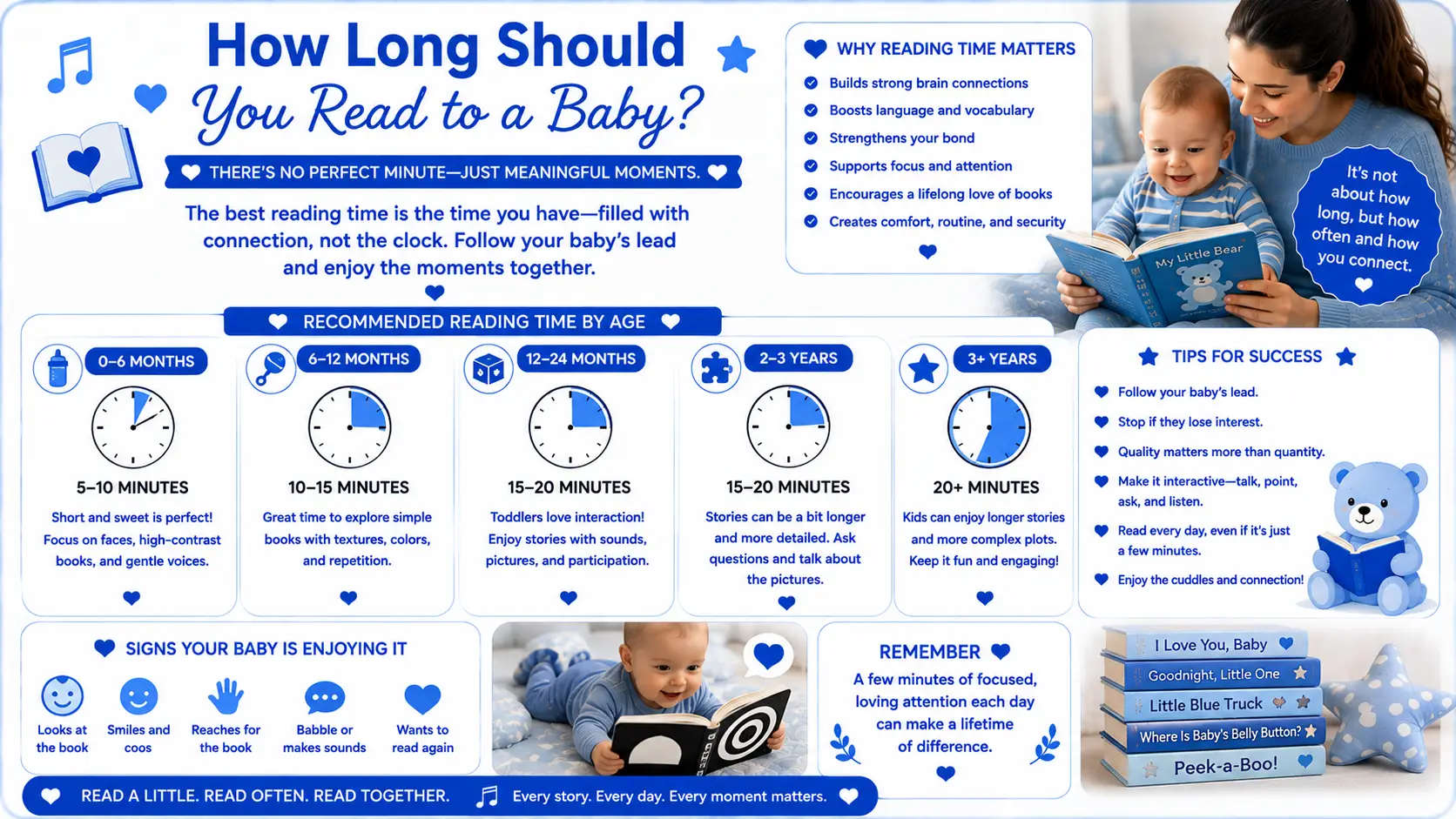

Ten to twenty minutes a day is plenty—broken into short sessions rather than one long sit-down. Consistency and warmth matter far more than the clock. Even a few minutes of shared reading several times a day supports language development, brain growth, and the parent-child bond.
The American Academy of Pediatrics recommends starting from birth. Babies do not need to understand the words. They benefit from the rhythm of your voice, the closeness of snuggling, and the rich language exposure that books provide.
Why Reading to Babies Matters
Shared reading builds early language foundations long before a baby speaks. Studies show that infants whose parents read at least one book a day (or roughly seven books a week) starting in the first weeks of life score higher on expressive and receptive language measures by 9 and 12 months.
Books expose babies to a wider vocabulary and more complex sentence structures than everyday conversation. They also strengthen social-emotional skills through eye contact, facial expressions, and the comforting routine of story time. Reading before naps or bedtime helps signal that it is time to wind down and creates positive associations with books that can last for years.
The goal is not perfection or finishing every page. Short, frequent, positive experiences count. A two-minute session where your baby looks at the pictures, reaches for the book, or simply settles against you is a success.
When Should You Start Reading to a Baby?
It is never too early. You can begin on day one. Newborns already recognize familiar voices from the womb and respond to the cadence of speech. High-contrast black-and-white books work especially well in the first months because newborns see best at close range (about 6–10 inches) and prefer strong visual contrasts.
By 3–6 months many babies begin tracking pictures more actively. Between 6 and 12 months they often grab, mouth, and “read” board books on their own terms. Follow their lead: if they turn away, arch their back, or fuss, the session is over. That is normal—attention spans at this age are measured in seconds to a few minutes.
How Long and How Often?
Most pediatric guidance settles on 10–20 minutes total per day for babies and young toddlers. You can achieve this with three 5-minute sessions, a single bedtime book read twice, or several brief moments sprinkled through the day (during tummy time, while waiting at the doctor’s office, or after a diaper change).
One book a day is a realistic and powerful target. Research shows measurable language gains from this simple habit. Quality beats quantity: an engaged, interactive few minutes outweighs a longer session where both of you feel restless.
As babies grow into toddlers, sessions naturally lengthen because attention spans improve. The foundation laid in infancy makes later reading easier and more enjoyable.
Practical Tips for Reading to Your Baby
Keep sessions short and follow your baby’s cues. Read when they are fed, dry, and alert. Cuddle so they feel safe and can see both the book and your face—face-to-face reading lets them watch your expressions and mouth movements, boosting social learning.
Use expressive voices, animal sounds, and exaggerated intonation. Point to pictures and name objects. Pause and comment (“Look at the kitty!”). Repetition is powerful—babies love hearing the same book many times and begin to anticipate what comes next.
Choose durable books: soft cloth or vinyl for the earliest months, sturdy board books once they start grasping and mouthing. Look for simple rhymes, bold pictures, textures, and high-contrast images. Classics such as Goodnight Moon or playful board books by Sandra Boynton work well, but any book you enjoy reading counts because your voice is the main ingredient.
Make books available throughout the home and in the diaper bag. Turn reading into part of daily routines rather than a special event that requires perfect conditions.
Age-by-Age Snapshot
Newborn to 3 months: Focus on your voice and high-contrast images. Sessions may last only 1–2 minutes.
3–6 months: Bright colors and simple pictures hold attention longer. Babies may begin batting at pages.
6–12 months: Board books they can hold and explore. They often show preferences and may turn pages with help. Mouthing is normal exploration.
Throughout the first year the emphasis stays the same: connection, language exposure, and joy.
Reading to a baby is one of the simplest, highest-impact things parents can do. You do not need special skills, expensive materials, or long stretches of quiet time. Ten to twenty minutes of regular, warm shared reading—spread however it fits your day—lays groundwork for language, literacy, and a lifelong love of books. Start where you are, keep it short and positive, and trust that the small moments add up.
FAQ
How long should I read to my newborn each day?
Even 5–10 minutes total, broken into very short sessions, is beneficial. Newborns mainly need to hear your voice and feel the closeness. Consistency matters more than duration.
Is it okay if my baby doesn’t pay attention or just chews the book?
Yes. Short attention spans and oral exploration are completely normal. If your baby stills briefly, looks at the page or your face, or reaches for the book, they are engaged. Follow their cues and end when they signal they are done.
When is the best time of day to read to a baby?
Any time that works—when they are alert and content. Many families find bedtime or naptime especially effective because the routine is calming. Opportunistic reading during wait times or quiet moments also adds up.
What are the best books for babies under one year?
High-contrast black-and-white books for the earliest weeks, then sturdy board books with bright pictures, simple text or rhymes, textures, and faces. Cloth or vinyl books are good for younger babies who mouth everything. Classics and interactive titles both work well.
Does reading to a baby really improve language development?
Yes. Research shows that consistent daily reading in the first year is linked to higher expressive and receptive language scores by 9–12 months. The combination of vocabulary exposure, prosody, joint attention, and emotional connection supports brain development for later literacy and communication.