
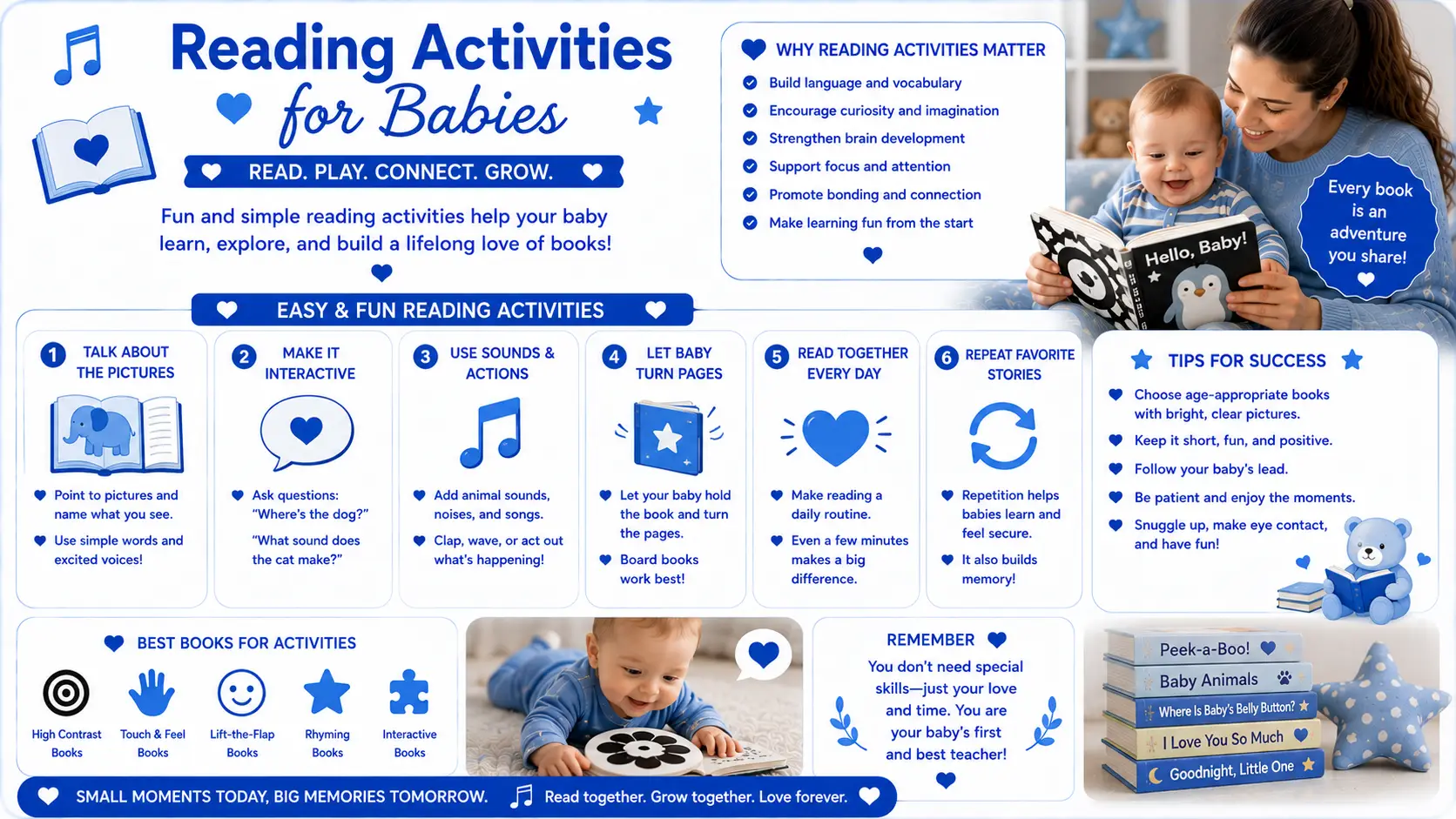

Reading activities for babies turn simple book time into playful moments that build language, attention, bonding, and early literacy skills. You do not need elaborate setups or long sessions. Short, interactive experiences—pointing at pictures, making animal sounds, letting your baby touch pages—make a real difference from the earliest weeks.
The American Academy of Pediatrics and early childhood experts encourage shared reading from birth. Babies absorb the rhythm of language, your facial expressions, and the comfort of closeness even before they understand words. Interactive reading activities amplify these benefits by engaging multiple senses and encouraging back-and-forth interaction.
Why Interactive Reading Matters for Babies
Reading aloud exposes infants to richer vocabulary and sentence patterns than everyday talk. Adding activities—naming objects, using different voices, pausing for responses—helps babies connect words to pictures and actions. It also strengthens joint attention (looking at the same thing together), which supports later communication and learning.
Sensory exploration is normal and valuable. Babies mouth books, grab pages, and flip them randomly. Sturdy board, cloth, or vinyl books turn this into positive learning. Consistency counts more than perfection: a few engaged minutes several times a day build stronger foundations than occasional long sessions.
Age-Appropriate Reading Activities
Newborns to 3 months Focus on your voice and high-contrast images. Hold books 6–10 inches from their face. Read calmly or sing the text. Try black-and-white pattern books during quiet alert times. Gently guide their hand to touch a page while naming it. Keep sessions to 1–3 minutes and follow cues—looking away means they are done.
3 to 6 months Vision improves, so introduce brighter colors and simple faces. Prop a board book during tummy time so they can look while strengthening muscles. Make exaggerated facial expressions that match the pictures. Bounce gently on your knee while reading rhythmic rhymes. Point and name: “Look at the dog!” Pause and smile when they coo or kick in response.
6 to 12 months Babies start grabbing, patting pages, and showing preferences. Offer textured or lift-the-flap books. Let them hold and explore (mouthing is fine). Act out the story with gestures or animal sounds. Ask simple questions even if they cannot answer yet: “Where’s the ball?” Follow their lead—if they keep turning back to one page, stay there and talk about it.
Fun, Practical Reading Activities to Try
Point and label. As you read, point to pictures and clearly name objects, actions, or feelings. “That’s a red ball. The bunny is hopping.” This builds vocabulary and shows that pictures represent real things.
Make it multisensory. Choose books with different textures, mirrors, or flaps. Guide your baby’s fingers: “Feel the soft fur.” Crinkly pages or books that squeak add extra interest. During bath time, try waterproof books.
Add voices and sound effects. Use high and low pitches, animal noises, or silly character voices. Sing nursery rhymes or turn the text into a song. Babies love the exaggerated “parentese” style of speech—it helps them tune into language sounds.
Follow the baby’s lead and invite participation. Place books within reach so they can choose. Let them turn pages (even several at once). Pause before a repeated phrase so they can “fill in” with a sound or gesture. Copy their babbles and expand them: if they say “ba,” respond “Yes, ball!”
Combine reading with routines. Read during tummy time, after diaper changes, or as part of bedtime wind-down. Create a simple “story box” with a few favorite books and related soft toys. Pull one out and talk about it together. Repetition is powerful—babies thrive on hearing the same book many times and begin anticipating what comes next.
Play with the pictures. Instead of reading every word, describe what you see or invent a short story. Ask “What do you think happens next?” or act out an action from the page. For older babies, hide a soft toy behind the book for a gentle peek-a-boo moment tied to the story.
These activities work best when they feel playful rather than instructional. If your baby loses interest, switch books, take a break, or simply cuddle while humming. The goal is positive association: books equal closeness and fun with you.
Tips for Success
Keep books accessible in low baskets or around the house. Choose durable options designed for babies. Read face-to-face when possible so they can watch your expressions and mouth movements. Short, frequent sessions fit better into busy days than one long one. Celebrate any engagement—eye contact, reaching, or babbling counts as success.
Interactive reading activities for babies require no special training or expensive materials. Your voice, attention, and willingness to be a little silly are the most powerful tools. Start simple, stay responsive, and enjoy the moments. Over time these shared experiences help build language skills, curiosity, and a lasting love of books.
FAQ
What are simple reading activities for newborns?
Focus on high-contrast books and your voice. Hold the book close, read or sing softly, and gently touch pages while naming them. Sessions of 1–2 minutes during alert times work well. Cuddling while hearing your voice is the main activity at this stage.
How can I make reading more interactive for my baby?
Point to pictures and name them, use different voices and sound effects, pause for responses, let your baby touch or hold the book, and follow their interests (revisit favorite pages). Add textures, flaps, or mirrors for sensory engagement.
Are touch-and-feel or flap books good for babies?
Yes. These books encourage exploration with hands and mouths while building curiosity and fine motor skills. They make reading multisensory and help babies stay engaged longer. Choose sturdy, age-appropriate ones without small detachable parts.
What if my baby only chews the book or won’t sit still?
That is normal exploration. Sturdy board or cloth books are designed for it. Keep sessions short, follow their lead, and try reading while they are on their tummy or in your lap during calm moments. Engagement can look like brief eye contact or reaching rather than quiet sitting.
How often should I do reading activities with my baby?
Aim for daily shared reading, even if only a few minutes at a time. Spreading short interactive moments throughout the day (bedtime, tummy time, waiting rooms) is more effective than waiting for a perfect long session. Consistency builds habits and benefits.