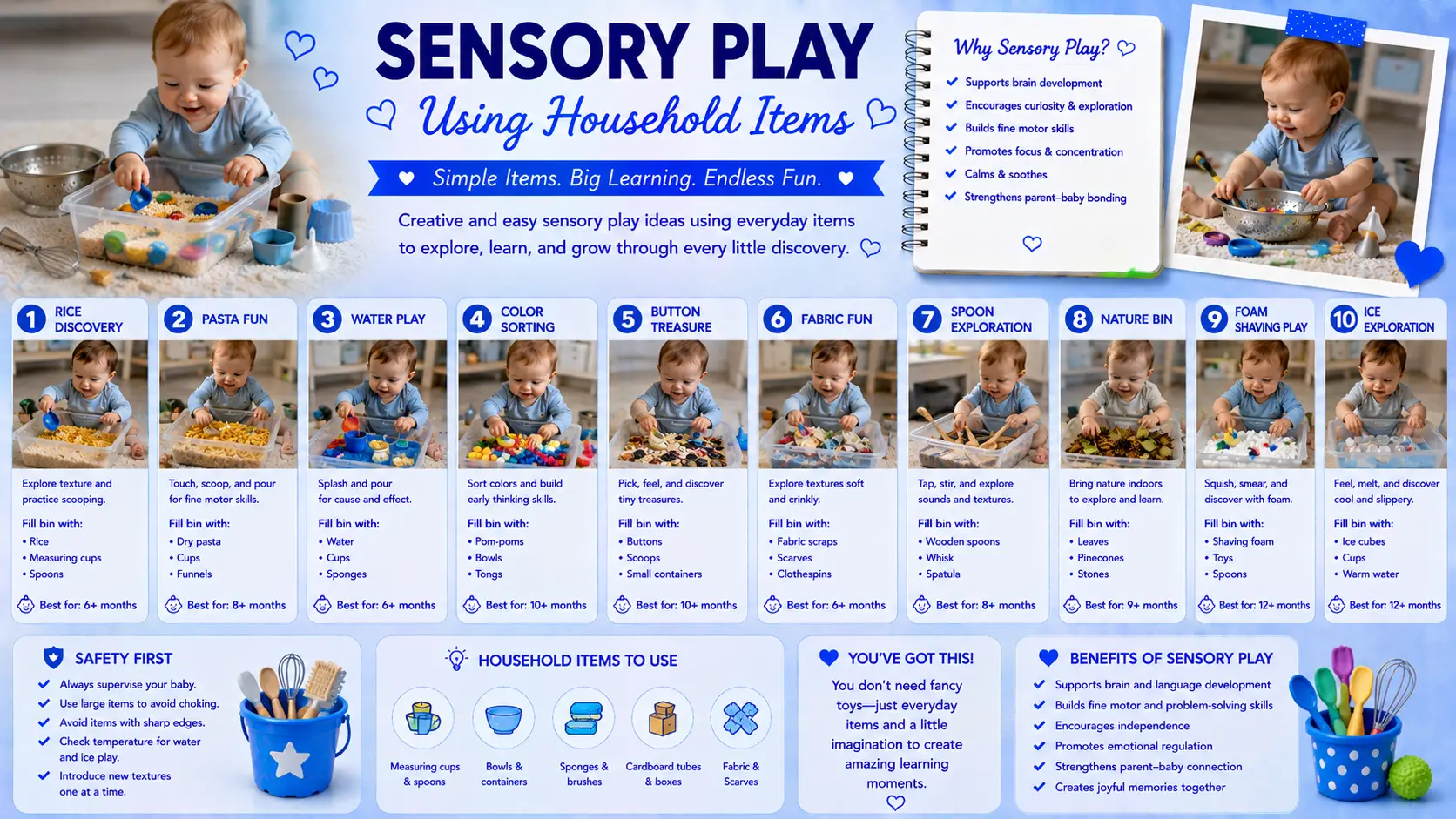

Sensory play is any activity that engages a child’s senses—touch, sight, sound, smell, taste, and even movement or body awareness. It does not require expensive toys or specialized equipment. Everyday items already in your kitchen, bathroom, or living room can create rich, engaging experiences that support healthy development.
Parents and caregivers often search for “sensory play ideas for toddlers,” “easy sensory activities at home,” and “DIY sensory bins with household items.” The good news is that the most effective setups are simple, low-cost, and ready in minutes.
Why Sensory Play Matters
Sensory experiences help build neural connections in the brain. When children scoop rice, pour water, or bang pots, they practice fine and gross motor skills, learn cause and effect, expand language, and develop problem-solving abilities. These activities also support emotional regulation—many kids find repetitive scooping or squishing calming. Research and pediatric experts consistently highlight that sensory play boosts cognitive growth, social interaction, and creativity from infancy through the preschool years.
Using household items removes barriers. You avoid the pressure to buy specialty kits, reduce waste, and model resourcefulness. Supervision remains essential, especially with small objects that could pose choking hazards, and taste-safe materials are best for babies and young toddlers who still explore with their mouths.
Simple Sensory Play Ideas Using What You Already Have
Kitchen Cupboard Sensory Bins Fill a shallow plastic bin, large mixing bowl, or storage container with dry rice, pasta, dried beans, oats, or uncooked popcorn kernels. Add measuring cups, spoons, funnels, colanders, muffin tins, or small plastic toys for burying and finding. Kids love pouring, scooping, and transferring materials. For color interest, dye rice with a few drops of food coloring mixed with a bit of vinegar or rubbing alcohol, then let it dry. This classic setup answers the frequent search for “sensory bin ideas for toddlers” and builds hand strength and coordination.
Water Play Anywhere A sink, bathtub, or plastic bin becomes an instant sensory station. Add cups, funnels, sponges, ladles, and a few drops of food coloring or bubble bath. Experiment with warm and cool water, or freeze small toys in ice cubes for a melting “rescue” activity. Water play develops pouring skills, introduces temperature concepts, and often leads to extended focused play. Keep towels nearby and supervise closely.
Pots, Pans, and Sound Exploration Hand over wooden spoons, metal pots, lids, and plastic containers. Children discover volume, rhythm, and cause and effect as they bang, stack, and nest items. Different materials produce different sounds—rice shaken in a sealed container versus a metal spoon on a pan. This activity is excellent for auditory sensory input and requires almost zero setup.
Texture and Fabric Exploration Gather clean socks, washcloths, scarves, sponges, bubble wrap, cardboard boxes, and aluminum foil. Create a simple texture walk by placing different materials on the floor for barefoot exploration, or fill a bag or box for tactile discovery. Babies enjoy feeling sponges or soft fabrics; older toddlers can sort by texture or use bubble wrap for stamping with paint.
Homemade Playdough and Goop Combine flour, salt, water, and a little oil for basic playdough (many simple recipes exist online). For a no-cook alternative, mix cornstarch and water to make oobleck—a non-Newtonian fluid that is solid when pressed and liquid when released. Add food coloring or essential oils for extra sensory layers. Cookie cutters, rolling pins, and garlic presses from the kitchen turn these into open-ended creative tools.
Ice and Temperature Play Freeze water with food coloring or small toys in ice cube trays. Let children explore melting ice in a bin or during bath time. The temperature contrast and transformation engage multiple senses at once.
Other quick options include shaving cream (or a taste-safe whipped cream alternative) spread on a tray for finger painting, cardboard boxes for tunnels and forts, and paper towel tubes for rolling or sound experiments.
Practical Tips for Success
Start small. One or two materials often hold attention better than an overflowing setup. Contain the mess with a sheet, tarp, or by working outdoors or in the bathtub. Involve children in cleanup when possible—it extends the learning. Rotate materials to keep interest high. For babies, focus on larger, safe objects and close supervision. Always check for allergies and avoid small parts with children under three who still mouth objects.
Sensory play does not need to be elaborate or perfectly Instagram-ready. The goal is exploration, not perfection. Ten focused minutes of pouring rice or squishing dough can be more valuable than an hour of passive screen time.
FAQ
What age is appropriate for sensory play with household items?
Sensory experiences begin in infancy with simple textures and sounds. Supervised water play, fabric exploration, and large-item bins work well for babies. Toddlers and preschoolers thrive with more complex scooping, pouring, and sorting activities. Adapt materials to the child’s developmental stage and always prioritize safety.
How do I keep sensory play from becoming too messy?
Use a designated space such as a plastic tablecloth, large tray, or the bathtub. Choose contained bins with lids for storage. Start with less messy dry materials like rice before introducing water or goo. Involving kids in sweeping or wiping up teaches responsibility and reduces frustration.
Are food items safe for sensory bins?
Dry pantry staples such as rice, pasta, and oats are commonly used and generally safe under supervision. For children who still put everything in their mouths, choose larger items or taste-safe alternatives and watch closely. Avoid raw kidney beans (toxic if uncooked) and be mindful of choking hazards and potential waste. Non-food options like shredded paper, cotton balls, or water work well too.
What if my child doesn’t seem interested at first?
Model the play yourself without pressure. Sit nearby and explore the materials casually. Some children need time to warm up to new textures. Offer the activity repeatedly in short sessions. Interest often grows once the child feels free to experiment without expectations.
How often should we do sensory play?
There is no strict rule. Even a few times a week provides benefits. Many families incorporate it into daily routines—bath time, cooking together, or quiet afternoon play. Consistency matters more than duration; short, regular sessions support development effectively.