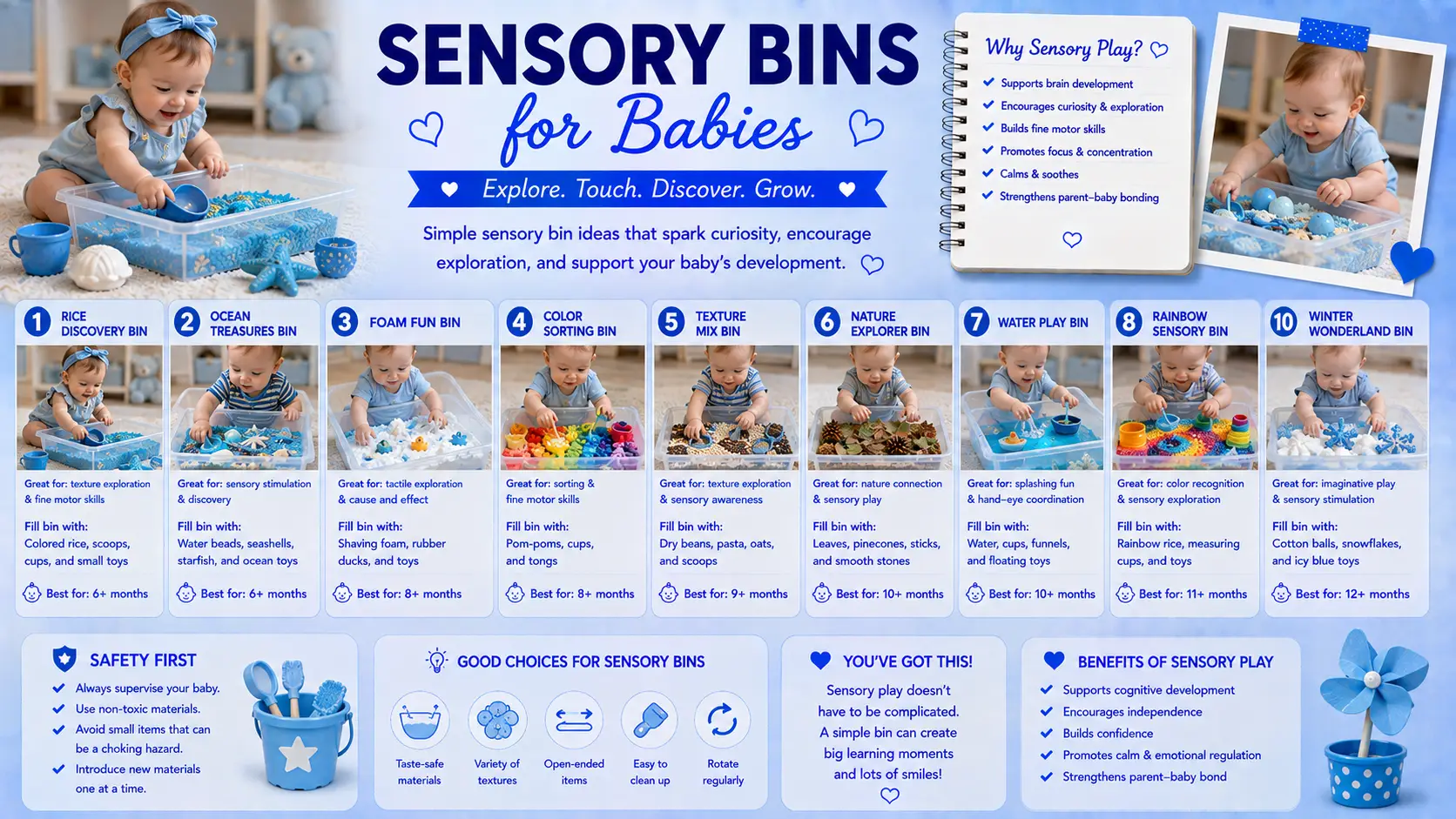

Sensory bins for babies are shallow containers filled with materials that invite hands-on exploration through touch, sight, sound, and sometimes taste or smell. Unlike open-ended free play, these bins keep the mess somewhat contained while giving little ones a rich sensory experience. Parents frequently search for “sensory bins for babies,” “edible sensory bins for babies,” “DIY sensory bin ideas for infants,” and “are sensory bins safe for babies under 1.” The answer is yes—when you choose the right fillers and supervise closely.
Babies explore the world primarily through their mouths, so traditional toddler fillers like dry rice, beans, or kinetic sand are usually postponed. For infants, the focus shifts to taste-safe or fully edible options and large, non-choking-hazard items.
Benefits of Sensory Bins for Babies
Sensory play supports brain development during a critical window. Running fingers through oats or splashing in water strengthens neural connections related to touch, texture, and cause-and-effect. Fine motor skills grow as babies scoop, dig, pour, and transfer materials. These actions also build hand strength and coordination needed later for feeding and writing.
Cognitive gains appear early. Burying a toy under cereal and watching a baby uncover it supports object permanence. Talking about what they feel (“This is cold,” “This is soft and sticky”) boosts language development. Many parents notice a calming effect—repetitive scooping or squishing can help regulate an overstimulated baby, much like sensory bottles do through visual focus.
Social and emotional benefits emerge when caregivers join in, modeling language and sharing attention. Even short sessions encourage curiosity, persistence, and independent exploration once a baby is ready.
Safety Guidelines for Sensory Bins with Babies
Safety is the top priority. Always stay within arm’s reach. Choose a low, stable bin or tray that a sitting baby can reach into easily. Never leave a baby alone with water, and limit water depth.
For babies still mouthing everything (most under 12–18 months), stick to edible or taste-safe materials. Examples include oats, crushed Cheerios or other large cereal, cooked pasta, yogurt, pudding, cloud dough made from flour and oil (or infant cereal and coconut oil), and oobleck (cornstarch + water). Avoid small, hard items that pose choking risks. Check for allergies, and introduce new materials one at a time.
Wash hands and surfaces before and after play. Use food-grade ingredients only, and discard any material that has been heavily mouthed or left sitting out. For younger babies who are not yet sitting steadily, sensory bags (sealed Ziplocs filled with gel, colored water, or soft materials and taped to the floor) offer a safer alternative during tummy time.
Most experts suggest starting structured sensory bin play around 6–9 months, once a baby can sit with support and show interest in reaching and grasping. Before that, focus on simpler texture experiences and supervised water play in the bath.
Easy DIY Sensory Bin Ideas for Babies
You don’t need fancy supplies. A plastic storage bin, under-bed storage tray, or even a baking sheet works. Place it on a wipeable surface or old sheet for easier cleanup.
Edible oat or cereal bin Pour dry oats or crushed Cheerios into the bin. Hide a few large, soft toys or linking rings for discovery. This simple setup teaches object permanence and offers a pleasant, dry texture that is safe if tasted.
Water and ice sensory bin Fill a shallow bin with a small amount of water and add large ice cubes. Provide plastic cups or scoops. The temperature contrast fascinates babies, and the melting process creates natural cause-and-effect learning. Constant supervision is essential.
Cooked spaghetti or pasta bin Cook pasta, rinse, and optionally tint with a drop of food coloring. The slippery texture invites squeezing and transferring. Add large plastic animals or scoops for extra interest.
Cloud dough or moon dough Mix flour (or infant rice cereal) with a little oil or baby oil until it holds shape when squeezed but remains soft. It feels luxurious and is generally taste-safe in small amounts.
Yogurt or pudding “paint” Spread plain yogurt or pudding on a tray lid or shallow bin and let baby finger-paint. Add a drop of natural food coloring if desired. This is fully edible and excellent for early mark-making.
Bubble foam or aquafaba foam Whip tear-free bubble bath with water, or use chickpea water (aquafaba) with a pinch of cream of tartar for a taste-safer version. The light, airy texture encourages scooping and burying toys.
Rotate materials to keep interest high, and keep sessions short—often just 5–15 minutes for younger babies. Dress baby in minimal clothing or an old onesie for easier cleanup, and consider outdoor play when weather allows.
Practical Tips for Success
Start with one simple filler so the experience doesn’t overwhelm. Narrate what baby is doing to build language. Offer tools like large spoons or cups only after basic hand exploration is established. Store dry materials in sealed containers for reuse, and prepare wet materials fresh. If mess anxiety is high, begin with sensory bags or sealed bottles and gradually move to open bins.
Sensory bins grow with your child. What begins as simple oat scooping can later become themed small-world play with dry rice or sand once mouthing decreases.
FAQ
When can babies start using sensory bins?
Around 6–9 months is a common starting point for open bins, once sitting is steady. Younger babies can enjoy sealed sensory bags or supervised water play earlier.
Are sensory bins safe for babies who put everything in their mouths?
Yes, if you use edible or taste-safe fillers (oats, cereal, cooked pasta, yogurt, cloud dough) and supervise constantly. Avoid small hard items until the intense mouthing stage passes.
What are the best edible sensory bin ideas for babies?
Oats or crushed Cheerios, cooked spaghetti, yogurt finger paint, cloud dough made with infant cereal, and water with ice are popular, low-risk options that still deliver rich sensory input.
How do I keep the mess under control?
Use a shallow tray or bin on a washable mat or sheet, play outdoors when possible, limit the amount of filler, and dress baby lightly. Keep a damp cloth or wipes nearby for quick cleanups.
What are the main benefits of sensory bins for infants?
They support sensory processing, fine motor development, early cognitive skills such as object permanence, language growth through descriptive talk, and can provide a calming, focused activity during busy days.