
At three months, babies are rapidly discovering the world through their senses. Vision sharpens, they begin tracking moving objects, head control improves, and they start reaching and grasping. Everyday moments—your voice, a soft touch, high-contrast patterns—become powerful learning experiences. Parents frequently search for “sensory activities for 3-month-olds,” “activities for 3-month-old babies,” and “tummy time ideas for infants,” looking for simple ways to support this stage without overcomplicating things.
Sensory play at this age does not mean elaborate setups. It means intentional, gentle engagement that matches what a 3-month-old can actually do and enjoy. Short sessions of a few minutes, repeated often, are more effective than long ones. Always follow your baby’s cues: stop if they look away, fuss, or seem tired.
Why Sensory Experiences Matter at Three Months
In the first three months, babies build foundational neural pathways through sight, sound, touch, movement, and smell. High-contrast visuals help develop tracking and focus. Familiar voices and gentle sounds support auditory processing and bonding. Skin-to-skin contact and varied textures build body awareness and emotional security. Tummy time strengthens neck, shoulder, and core muscles needed for later rolling and sitting.
These experiences also encourage early social skills. When you smile, talk, or respond to coos, your baby learns that communication is reciprocal. Sensory activities support motor skills, calmness, and curiosity while strengthening the parent-child connection.
Practical Sensory Activities for 3-Month-Olds
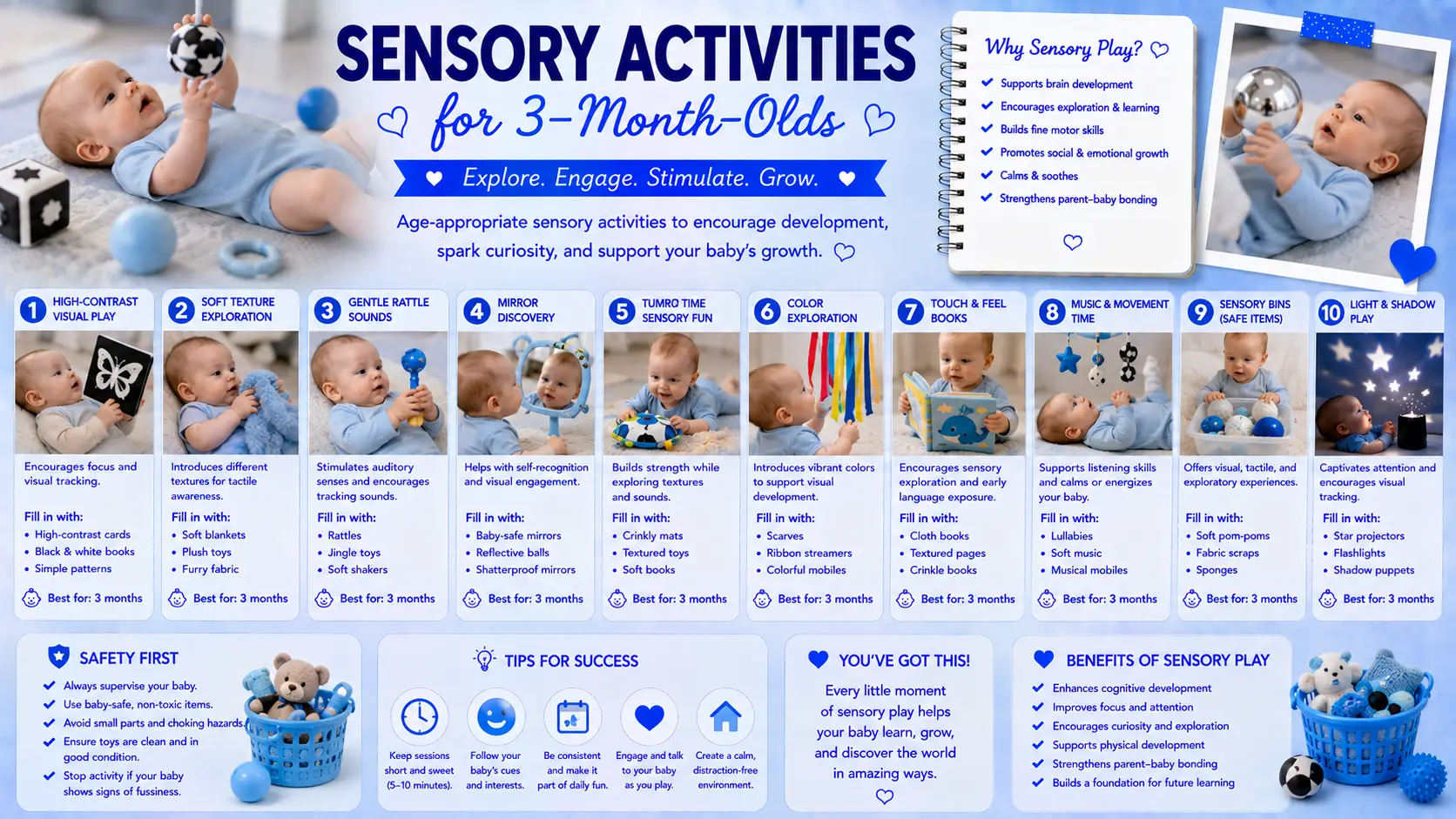
Tummy Time with Visual Interest Place your baby on a firm surface for short periods of tummy time several times a day. Position a baby-safe mirror in front so they can see their reflection, or lay out high-contrast black-and-white cards or a colorful play mat. You can also lie face-to-face and talk or make expressions. This combines motor strengthening with visual and social input. Start with one or two minutes and gradually increase as tolerance grows.
High-Contrast Visual Tracking Babies at this age still prefer bold contrasts. Slowly move a black-and-white toy, patterned scarf, or simple board book from side to side about 8–12 inches from their face while they lie on their back. Watch as they follow it with their eyes. This builds visual tracking skills that many parents look for when searching “visual stimulation for 3-month-olds.”
Gentle Sound and Voice Play Talk, sing, or read in varied tones. Use a soft rattle or crinkly fabric near (but not too close to) their ears. Shake a rattle gently from different directions so they turn toward the sound. Your voice remains the most engaging “toy.” Narrate daily routines—“Now we’re putting on your socks”—to link language with experience.
Touch and Texture Exploration Offer safe, varied textures under close supervision: a soft washcloth, a smooth wooden spoon (clean and large), a silicone teether, or different fabrics. Stroke their arms, legs, or back with gentle pressure. Baby massage with a fragrance-free lotion can be calming and builds body awareness. Skin-to-skin contact continues to provide rich sensory input and regulation.
Mirror and Face Time Babies are fascinated by faces. Hold a baby-safe mirror so they can gaze at themselves, or simply sit face-to-face and make exaggerated expressions, smiles, and sounds. This supports social-emotional development and visual focus.
Movement and Vestibular Input Hold your baby and gently sway, rock, or dance to music. Change positions—carry them upright against your chest, support them in a seated position on your lap (with full support), or take them for a walk outside. Different positions give new perspectives and help develop balance and spatial awareness. Outdoor strolls add natural light, fresh air, and varied sounds.
Simple Water Experiences During bath time, gently splash water or let them feel a wet sponge on their hands or feet. Keep sessions short and always support the head and body. Never leave a baby unattended near water, even shallow amounts.
Grasping Practice Offer a lightweight rattle or soft toy within easy reach while they lie on their back. Many 3-month-olds are beginning to swipe at and occasionally grasp objects. Celebrate attempts—this builds hand-eye coordination.
Tips for Success and Safety
Keep sessions brief and positive. Watch for signs of overstimulation such as turning away, arching, or fussiness. Always supervise closely. Avoid small objects that could pose choking risks, and choose toys labeled for infants. High-contrast items and simple household textures work well; fancy equipment is unnecessary. Consistency matters more than perfection—incorporating these moments into daily care routines (diaper changes, feeding, bath time) makes them sustainable.
If your baby seems less responsive than expected or you have concerns about vision, hearing, or motor development, consult your pediatrician. Every baby develops at their own pace.
FAQ
How long should sensory activities last for a 3-month-old?
Most babies this age engage for just a few minutes at a time. Multiple short sessions throughout the day are better than one long one. Follow your baby’s interest and energy level rather than a strict timer.
Is tummy time considered a sensory activity?
Yes. Tummy time provides proprioceptive and tactile input while strengthening muscles. Adding a mirror, high-contrast images, or your face turns it into a multi-sensory experience that many parents specifically search for under “tummy time sensory ideas.”
What if my 3-month-old doesn’t seem interested in toys or activities?
That is common. At this stage, your face, voice, and touch are often more engaging than objects. Try activities during alert, calm windows after a nap or feed. Interest grows quickly in the coming weeks as tracking and reaching improve.
Can I use household items for sensory play with a 3-month-old?
Yes, with care. Clean soft fabrics, large smooth spoons, mirrors, and high-contrast paper or books are suitable under supervision. Avoid anything small enough to fit in the mouth, sharp, or breakable. Stick to items larger than the baby’s fist and always stay present.
How do I know if my baby is getting enough sensory stimulation?
Responsive caregiving—talking, holding, offering varied but not overwhelming experiences—usually provides plenty. Look for engagement cues like eye contact, cooing, reaching, or calm focus. If your baby is generally content, tracking objects, and responding to your voice, they are likely receiving appropriate input. Overstimulation is more common than under-stimulation at this age; quiet downtime is also valuable.