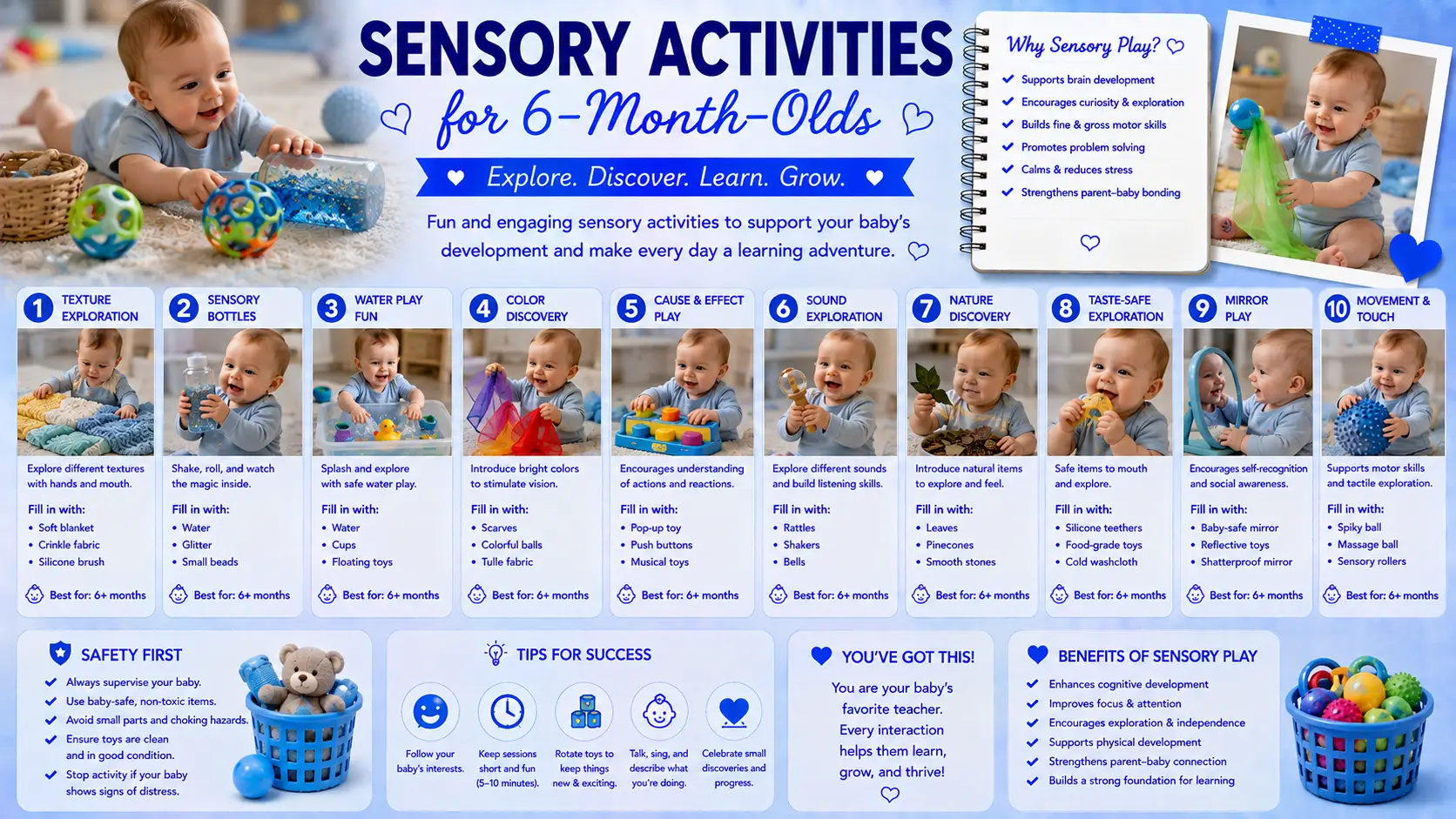

At six months, babies are rapidly exploring the world through their senses. They’re reaching, grasping, mouthing objects, tracking movement with their eyes, and responding more to sounds and textures. Sensory activities for 6-month-olds support this natural curiosity while building important skills like hand-eye coordination, muscle strength, and early cognitive connections.
These simple, everyday experiences help strengthen neural pathways. Research and pediatric guidance consistently highlight how sensory stimulation in infancy supports overall development. The best sensory play for a 6-month-old is safe, supervised, and uses common household items or basic baby toys. Focus on activities that engage touch, sight, sound, and movement without overwhelming your little one.
Here are practical, high-engagement sensory activities tailored for this age.
Tummy Time with Textured Toys
Tummy time remains one of the most valuable activities for 6-month-olds. It builds neck, shoulder, and core strength needed for sitting and crawling. Add sensory elements to keep it interesting.
Place a soft blanket on the floor and position your baby on their tummy. Surround them with toys that offer different textures—crinkly fabric books, soft balls with varied surfaces, or a mirror for visual interest. Get down at their level, talk or sing, and encourage reaching. Short sessions of a few minutes several times a day work better than long stretches.
This combines motor development with tactile and visual input, making it a top sensory activity for 6-month-olds.
Sensory Bottles for Visual Tracking
Sensory bottles are simple to make and endlessly fascinating. Fill a clear, sturdy plastic bottle with water, a drop of food coloring or oil, and safe items like glitter, small beads (sealed tightly), or colorful pom-poms. Secure the lid firmly—tape or glue it for extra safety.
Shake or roll the bottle in front of your baby. They will track the moving objects with their eyes and may try to grasp it. This activity supports visual tracking, cause-and-effect understanding, and fine motor skills as they reach and hold.
Water Play in a Shallow Basin
Water play ranks among the easiest and most enjoyable sensory experiences for babies this age. Fill a shallow tray, baking sheet, or small baby tub with a small amount of lukewarm water. Add floating toys, a soft sponge, or plastic cups.
Supervise closely and let your baby splash, pat the water, or reach for toys. The temperature, sound, and movement provide rich tactile and auditory feedback. Many parents find this soothes babies while encouraging grasping and reaching. Always stay within arm’s reach and keep sessions short.
Texture Exploration and Treasure Baskets
Introduce a variety of safe textures. Gather clean household items or baby-safe materials: soft scarves, a piece of velvet or corduroy, a smooth wooden spoon, a silicone spatula, or a textured ball. Place them in a low basket or on a mat for your baby to explore while sitting supported or on their tummy.
Guide their hands to feel the differences. Some babies enjoy fabric pulled gently across their arms or legs. This type of sensory play for 6-month-olds builds tactile discrimination and fine motor skills. Start with just a few items so it does not become overwhelming.
Sensory Bags for Mess-Free Fun
Fill a sturdy zip-top bag with hair gel and a few large pom-poms, or a bit of water with ice cubes, then seal it tightly and tape it to the floor or highchair tray. Your baby can press, poke, and watch the contents move without creating a mess.
These bags offer visual and tactile stimulation while supporting cause-and-effect learning. They are especially useful for babies who mouth everything, as the contents stay contained.
Musical Sounds and Simple Instruments
Auditory sensory input is powerful at this age. Offer soft baby rattles, maracas, or a small drum. Shake them near your baby, then encourage them to hold and experiment. Sing nursery rhymes while tapping a rhythm on a pot or their highchair tray.
Music and sound play enhance listening skills, rhythm awareness, and social connection. Many 6-month-olds light up when they discover they can make noise themselves.
Mirror Play and Everyday Observation
Place a baby-safe mirror on the floor during tummy time or propped nearby while sitting. Babies this age often become fascinated by their reflection. Talk about what they see—“Look at those big eyes!”—to add language.
You can also take short sensory walks indoors or outdoors (weather permitting), pointing out lights, shadows, leaves moving, or household sounds. These moments turn ordinary surroundings into rich sensory experiences.
Safety Guidelines for Sensory Play
Always supervise closely. Avoid small parts that could pose a choking hazard. Check temperatures of water or materials. Choose non-toxic, BPA-free items when possible. Stop if your baby shows signs of overstimulation—looking away, fussiness, or arching. Follow your pediatrician’s guidance, especially if your baby was born premature or has specific developmental needs.
Keep sessions brief and positive. The goal is joyful exploration, not structured lessons.
Why Sensory Activities Matter at Six Months
At this stage, babies are integrating sensory information with emerging motor skills. Activities that combine movement, touch, and vision help wire the brain for future learning. Consistent, playful sensory experiences support concentration, body awareness, and curiosity. They also create bonding opportunities through shared attention and conversation.
You do not need expensive toys. Many of the best sensory activities for 6-month-olds use items already in your home. Consistency and responsiveness matter more than variety.
Start with one or two activities that match your baby’s current interests and energy. Over time, you will notice preferences—some babies love water, others fixate on textures or sounds. Follow their lead while gently introducing new sensations.
These moments of discovery help lay the foundation for later skills like sitting independently, crawling, and eventual language development. Enjoy the process—your baby’s wonder is contagious.
FAQ
What are the best sensory activities for a 6-month-old?
Tummy time with textured toys, sensory bottles, supervised water play, fabric or texture baskets, and simple musical instruments consistently rank as favorites. These engage multiple senses while matching typical developmental abilities at this age.
How often should I do sensory play with my 6-month-old?
Short, frequent sessions work best—several times a day for a few minutes each. Watch your baby’s cues and incorporate sensory elements into everyday routines like bath time or floor play rather than forcing scheduled activities.
Are sensory bags safe for 6-month-olds?
Yes, when made carefully with a heavy-duty sealed bag, large non-choking items, and constant supervision. Tape the bag securely so it cannot be pulled open, and never leave your baby alone with it.
What if my baby doesn’t seem interested in sensory activities?
Babies have different temperaments and energy levels. Try varying the time of day, reducing the number of items, or pairing the activity with something they already enjoy, such as your voice or a favorite song. Interest often grows with repeated gentle exposure.
Can sensory play help with developmental delays?
Sensory experiences support typical development and can complement early intervention when recommended by professionals. If you have concerns about your baby’s progress, consult your pediatrician. Play remains beneficial for all babies when kept enjoyable and pressure-free.