Skip to content
DidYouSearch DidYouSearch
  • did you search?
  • Baby Plus+
    • Baby Activities
      • Arts & Crafts
      • Indoor Activities
      • Montessori
      • Music
      • Outdoor Activities
      • Reading
      • Sensory Play
      • Tummy Time
    • Baby Development
      • Brain Development
      • Cognitive Development
      • Emotional Development
      • Fine Motor Skills
      • Growth Milestones
      • Monthly Milestones
      • Motor Skills
      • Physical Development
      • Social Development
      • Speech Development
    • Baby Feeding
      • Allergies
      • Baby Led Weaning
      • Bottle Feeding
      • Breast feeding
        • Breastfeeding Diet
        • Breastfeeding Positions
        • Latch Problems
        • Low Milk Supply
        • Mastitis
        • Pumping Schedule
        • Weaning
      • Burping
      • Cluster Feeding
      • Feeding Schedule
      • Formula Feeding
        • Formula Amount
        • Formula Brands
        • Formula Comparison
        • Formula Preparation
        • Formula Storage
      • Hydration
      • Pumping
      • Solid Foods
    • Baby Gear Reviews
      • Best Baby Carrier
      • Best Baby Monitor
      • Best Baby Strollers
      • Best Bottles
      • Best Breast Pump
      • Best Car Seat
      • Best Cribs
      • Best Diapers
      • Best Formula
      • Best Toys
    • Baby Growth
      • Growth Spurts
      • Height Charts
      • Monthly Growth
      • Percentiles
      • Weight Charts
    • Baby Health
      • Allergies
      • Cold
      • Constipation
      • Cough
      • Diarrhea
      • Ear Infection
      • Fever
      • Flu
      • Pediatric Visits
      • Rashes
      • Teething
      • Vaccines
      • Vomiting
    • Baby Nutrition
      • Dairy
      • Drinks
      • Eggs
      • Fish
      • Fruits
      • Healthy Recipes
      • Meat
      • Snacks
      • Vegetables
      • Vitamins
    • Baby Products
      • Baby Carriers
      • Bassinets
      • Bottles
      • Breast Pumps
      • Car Seats
      • Cribs
      • Diaper Bags
      • High Chairs
      • Monitors
      • Strollers
      • Swings
      • Toys
      • Walkers
    • Baby Recipes
      • BLW Recipes
      • Breakfast
      • Dinner
      • Finger Foods
      • Lunch
      • Purees
      • Snacks
    • Baby Safety
      • Baby Proofing
      • Car Seats
      • Choking Hazards
      • CPR
      • Home Safety
      • Poison Prevention
      • Safe Sleep
      • Sun Protection
      • Water Safety
  • Baby Names
    • Boy Names
    • Girl Names
    • American baby boy names
    • American baby girl names
    • Biblical Names
    • Middle Names
    • Modern Names
    • Short Names
    • Unique Names
    • Unisex Names
  • Recommended
    • Baby Shopping
      • Baby Registry
      • Budget Baby Shopping
      • Hospital Bag
      • Must Have Products
      • Newborn Checklist
      • Nursery Ideas
    • Baby Sleep
      • Bedtime Routine
      • Co Sleeping
      • Crib Safety
      • Nap Schedules
      • Night Wakings
      • Sleep Environment
      • Sleep Products
      • Sleep Regression
      • Sleep Training
      • Wake Windows
      • White Noise
    • Childcare
      • Daycare
      • Babysitters
      • Kindergarten
      • Nannies
      • Preschool
    • Newborn Care
      • Nail Care
      • Baby Hygiene
      • Bathing
      • Crying
      • Diapering
      • Ear Care
      • Eye Care
      • Skin Care
      • Soothing Techniques
      • Temperature
      • Umbilical Cord
    • Special Needs
      • Premature Babies
      • Autism Signs
      • Developmental Delays
      • Down Syndrome
      • NICU
      • Twins
    • Seasonal Baby Care
      • Spring
      • Summer
      • Travel
      • Fall
      • Holidays
      • Winter
  • Parenting
    • Bonding
    • Discipline
    • Emotional Intelligence
    • First Time Parents
    • Gentle Parenting
    • Positive Parenting
    • Routines
    • Single Parents
    • Working Parents
  • Pregnancy
    • Pregnancy Complications
    • Labor & Delivery
    • Postpartum Recovery
    • Pregnancy Exercises
    • Pregnancy Medications
    • Pregnancy Nutrition
    • Pregnancy Sleep
    • Pregnancy Symptoms
    • Pregnancy Tests
    • Pregnancy Vitamins
    • Pregnancy Weeks
  • Toddler
    • Preschool
    • Speech
    • Tantrums
    • Toddler Food
    • Toddler Sleep
    • Behavior
    • Independence
    • Learning
    • Potty Training
  • Traveling with Baby
    • Road Trips
    • Beach
    • Camping
    • Flying
    • Hotels
    • Packing Lists
  • did you search?
  • Baby Plus+
    • Baby Activities
      • Arts & Crafts
      • Indoor Activities
      • Montessori
      • Music
      • Outdoor Activities
      • Reading
      • Sensory Play
      • Tummy Time
    • Baby Development
      • Brain Development
      • Cognitive Development
      • Emotional Development
      • Fine Motor Skills
      • Growth Milestones
      • Monthly Milestones
      • Motor Skills
      • Physical Development
      • Social Development
      • Speech Development
    • Baby Feeding
      • Allergies
      • Baby Led Weaning
      • Bottle Feeding
      • Breast feeding
        • Breastfeeding Diet
        • Breastfeeding Positions
        • Latch Problems
        • Low Milk Supply
        • Mastitis
        • Pumping Schedule
        • Weaning
      • Burping
      • Cluster Feeding
      • Feeding Schedule
      • Formula Feeding
        • Formula Amount
        • Formula Brands
        • Formula Comparison
        • Formula Preparation
        • Formula Storage
      • Hydration
      • Pumping
      • Solid Foods
    • Baby Gear Reviews
      • Best Baby Carrier
      • Best Baby Monitor
      • Best Baby Strollers
      • Best Bottles
      • Best Breast Pump
      • Best Car Seat
      • Best Cribs
      • Best Diapers
      • Best Formula
      • Best Toys
    • Baby Growth
      • Growth Spurts
      • Height Charts
      • Monthly Growth
      • Percentiles
      • Weight Charts
    • Baby Health
      • Allergies
      • Cold
      • Constipation
      • Cough
      • Diarrhea
      • Ear Infection
      • Fever
      • Flu
      • Pediatric Visits
      • Rashes
      • Teething
      • Vaccines
      • Vomiting
    • Baby Nutrition
      • Dairy
      • Drinks
      • Eggs
      • Fish
      • Fruits
      • Healthy Recipes
      • Meat
      • Snacks
      • Vegetables
      • Vitamins
    • Baby Products
      • Baby Carriers
      • Bassinets
      • Bottles
      • Breast Pumps
      • Car Seats
      • Cribs
      • Diaper Bags
      • High Chairs
      • Monitors
      • Strollers
      • Swings
      • Toys
      • Walkers
    • Baby Recipes
      • BLW Recipes
      • Breakfast
      • Dinner
      • Finger Foods
      • Lunch
      • Purees
      • Snacks
    • Baby Safety
      • Baby Proofing
      • Car Seats
      • Choking Hazards
      • CPR
      • Home Safety
      • Poison Prevention
      • Safe Sleep
      • Sun Protection
      • Water Safety
  • Baby Names
    • Boy Names
    • Girl Names
    • American baby boy names
    • American baby girl names
    • Biblical Names
    • Middle Names
    • Modern Names
    • Short Names
    • Unique Names
    • Unisex Names
  • Recommended
    • Baby Shopping
      • Baby Registry
      • Budget Baby Shopping
      • Hospital Bag
      • Must Have Products
      • Newborn Checklist
      • Nursery Ideas
    • Baby Sleep
      • Bedtime Routine
      • Co Sleeping
      • Crib Safety
      • Nap Schedules
      • Night Wakings
      • Sleep Environment
      • Sleep Products
      • Sleep Regression
      • Sleep Training
      • Wake Windows
      • White Noise
    • Childcare
      • Daycare
      • Babysitters
      • Kindergarten
      • Nannies
      • Preschool
    • Newborn Care
      • Nail Care
      • Baby Hygiene
      • Bathing
      • Crying
      • Diapering
      • Ear Care
      • Eye Care
      • Skin Care
      • Soothing Techniques
      • Temperature
      • Umbilical Cord
    • Special Needs
      • Premature Babies
      • Autism Signs
      • Developmental Delays
      • Down Syndrome
      • NICU
      • Twins
    • Seasonal Baby Care
      • Spring
      • Summer
      • Travel
      • Fall
      • Holidays
      • Winter
  • Parenting
    • Bonding
    • Discipline
    • Emotional Intelligence
    • First Time Parents
    • Gentle Parenting
    • Positive Parenting
    • Routines
    • Single Parents
    • Working Parents
  • Pregnancy
    • Pregnancy Complications
    • Labor & Delivery
    • Postpartum Recovery
    • Pregnancy Exercises
    • Pregnancy Medications
    • Pregnancy Nutrition
    • Pregnancy Sleep
    • Pregnancy Symptoms
    • Pregnancy Tests
    • Pregnancy Vitamins
    • Pregnancy Weeks
  • Toddler
    • Preschool
    • Speech
    • Tantrums
    • Toddler Food
    • Toddler Sleep
    • Behavior
    • Independence
    • Learning
    • Potty Training
  • Traveling with Baby
    • Road Trips
    • Beach
    • Camping
    • Flying
    • Hotels
    • Packing Lists
Close

Search

Home/Baby Activities/Sensory Play/Sensory Activities for 9-Month-Olds
Sensory Play

Sensory Activities for 9-Month-Olds

By DrAdam
August 14, 2026 5 Min Read
0

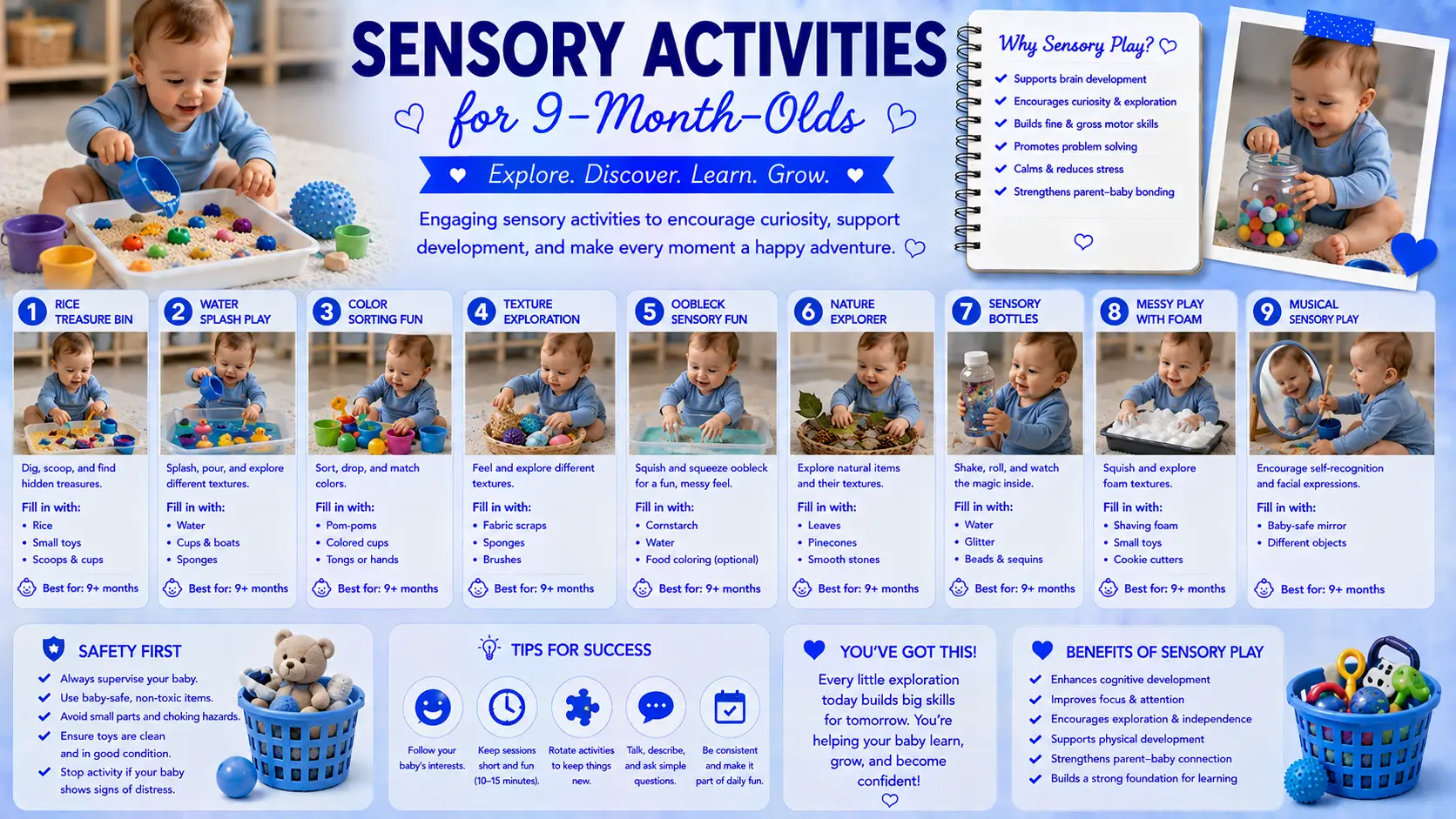
By nine months, most babies are on the move. They crawl, pull up to stand, cruise along furniture, and explore everything with their hands and mouths. This stage brings bigger curiosity and stronger motor skills, making sensory activities for 9-month-olds especially rewarding. These experiences help refine coordination, build body awareness, support early problem-solving, and strengthen the connections between their senses and developing brain.

The best sensory play for a 9-month-old is simple, supervised, and often taste-safe, since mouthing is still a primary way they learn. You can create engaging setups with household items that encourage crawling, grasping, dumping, and exploring new textures. Focus on short, joyful sessions that follow your baby’s lead.

Here are practical, high-interest sensory activities tailored to this age.

Crawling on Varied Surfaces and Simple Obstacle Courses

Contents hide
1 Crawling on Varied Surfaces and Simple Obstacle Courses
2 Taste-Safe Sensory Bins and Messy Play
3 Container Play and Grab-and-Drop Games
4 Water Play and Under-the-Sea Exploration
5 Homemade Shakers and Musical Exploration
6 Sensory Bags and Vertical Surfaces
7 Unwrapping and Texture Discovery
8 Safety Tips for Sensory Play at Nine Months
9 Why These Activities Matter
10 FAQ
10.1 What are the best sensory activities for a 9-month-old?
10.2 Are sensory bins safe for 9-month-olds who put everything in their mouth?
10.3 How can I encourage crawling through sensory play?
10.4 What taste-safe sensory materials work well at this age?
10.5 How long should sensory play sessions last for a 9-month-old?

Crawling is a major skill at nine months, and changing the terrain makes it more sensory-rich. Lay out pillows, cushions, a soft blanket, a textured mat, or even an air mattress to create gentle hills and different feels under their hands and knees.

Encourage your baby to crawl over and around these surfaces by placing a favorite toy just out of reach. You can turn it into a mini obstacle course with low “mountains” of blankets. This builds shoulder and arm strength, improves body awareness, and gives rich proprioceptive and tactile feedback. Many parents find this one of the most effective ways to support crawling confidence.

Taste-Safe Sensory Bins and Messy Play

Because everything still goes in the mouth, edible or taste-safe materials are ideal. Cooked pasta, oatmeal, soft cooked rice, or large pieces of gelatin (Jell-O) work well. Place a small amount in a shallow tray or on a splash mat and let your baby dig, squish, and explore.

Add large, safe scoops, cups, or toys for transferring. Flour or cornmeal on a tray offers another simple messy option—babies love making marks or driving toy cars through it. These activities develop fine motor skills, hand-eye coordination, and tactile processing while staying relatively low-risk if supervised closely.

Container Play and Grab-and-Drop Games

Nine-month-olds are often fascinated by putting objects in and taking them out. Fill a muffin tin or large container with soft balls, large blocks, or kitchen items like measuring cups. Show your baby how to drop items in and dump them out.

Encourage reaching across the body (crossing midline) by placing toys on both sides. This strengthens grasp, improves coordination, and practices the emerging pincer grasp with larger, safe objects. It’s one of the simplest and most popular sensory activities for 9-month-olds because it combines movement, sound, and visual interest.

Water Play and Under-the-Sea Exploration

A shallow bin or baking sheet with a small amount of lukewarm water continues to be a favorite. Add floating toys, plastic sea creatures, or large soft sponges. Place it on a towel and stay right next to your baby.

The temperature, splashing sounds, and movement engage multiple senses at once. Leaning and reaching for floating items also practices balance and weight-shifting, which supports crawling and early standing. Always use minimal water and never leave your baby unattended—babies can drown in very little water.

Homemade Shakers and Musical Exploration

Fill secure plastic containers or bottles with dry pasta, rice, or beans (tape the lids tightly) to create different sounds. Let your baby shake, bang, and experiment. Pair this with singing or simple instruments like a soft rattle or drum.

Music and sound play sharpen listening skills and introduce cause and effect. Moving a scarf to match loud and soft parts of a song adds a visual and motor element that many babies enjoy.

Sensory Bags and Vertical Surfaces

Fill a sturdy zip-top bag with a bit of oil, water, and food coloring (or hair gel and large pom-poms), seal it securely, and tape it to the floor, highchair tray, or even a window. Pressing and sliding the contents provides mess-free tactile and visual stimulation.

Working on a vertical surface, such as pulling suction toys off a window or highchair tray, strengthens shoulders and wrists—important foundations for later fine motor skills.

Unwrapping and Texture Discovery

Wrap a familiar toy loosely in crinkly paper or tissue and let your baby tear it open. The sound, resistance, and eventual reveal create an exciting multi-sensory experience that practices fine motor control. You can also offer a treasure basket with safe household objects of different textures—wooden spoons, soft scarves, silicone utensils—for free exploration.

Safety Tips for Sensory Play at Nine Months

Constant supervision is essential. Choose large items that cannot fit entirely in the mouth. For messy or edible play, stay nearby and clean up promptly. Avoid small parts, toxic materials, or anything that could break into sharp pieces. Watch for signs of overstimulation and keep sessions short. If your baby is still primarily mouthing, prioritize taste-safe options.

Why These Activities Matter

At nine months, sensory experiences help integrate movement with touch, sight, and sound. They support the transition from sitting to crawling and standing, refine the pincer grasp, and build attention and curiosity. Everyday play like this also creates natural opportunities for language—naming textures, sounds, and actions as you interact.

You do not need fancy equipment. The most effective sensory activities for 9-month-olds use what you already have and adapt to your baby’s current skills and interests. Follow their curiosity, celebrate the messes, and enjoy watching them discover how their actions create interesting results.

These moments of exploration help wire the brain for future learning while strengthening your connection through shared play.

FAQ

What are the best sensory activities for a 9-month-old?

Crawling on varied surfaces, taste-safe sensory bins (pasta, oatmeal, or gelatin), container filling and dumping, shallow water play, and homemade shakers consistently engage babies this age while supporting motor and sensory development.

Are sensory bins safe for 9-month-olds who put everything in their mouth?

Yes, when you use large, taste-safe fillers like cooked pasta, soft oatmeal, or big gelatin pieces and supervise closely. Avoid small dry grains or non-edible materials that could pose choking risks.

How can I encourage crawling through sensory play?

Create gentle obstacle courses with pillows and blankets, or place interesting toys and textured materials just beyond your baby’s reach. The combination of motivation and varied tactile feedback helps build strength and confidence.

What taste-safe sensory materials work well at this age?

Cooked pasta, oatmeal, soft cooked rice, large pieces of gelatin, flour or cornmeal on a tray, and homemade edible finger paints are popular and relatively easy to clean up under supervision.

How long should sensory play sessions last for a 9-month-old?

Keep them short—often 5 to 15 minutes depending on interest. Watch for cues of fatigue or overstimulation and stop while it is still fun. Multiple brief opportunities throughout the day are more effective than one long session.

Author

DrAdam

Dr. Adam. Obstetrician and Gynecologist

Follow Me
Other Articles
Previous

Sensory Activities for 6-Month-Olds

Next

Sensory Activities for 1-Year-Olds

No Comment! Be the first one.

Leave a Reply Cancel reply

Your email address will not be published. Required fields are marked *

What is Did You Search?

The “Did You Search” website was created for all mothers and families. Just search to find all your needs about your children.

Links

  • about
  • contact
  • privacy policy
  • medical disclaimer
  • sitemap
Copyright 2026 — DidYouSearch. All rights reserved.