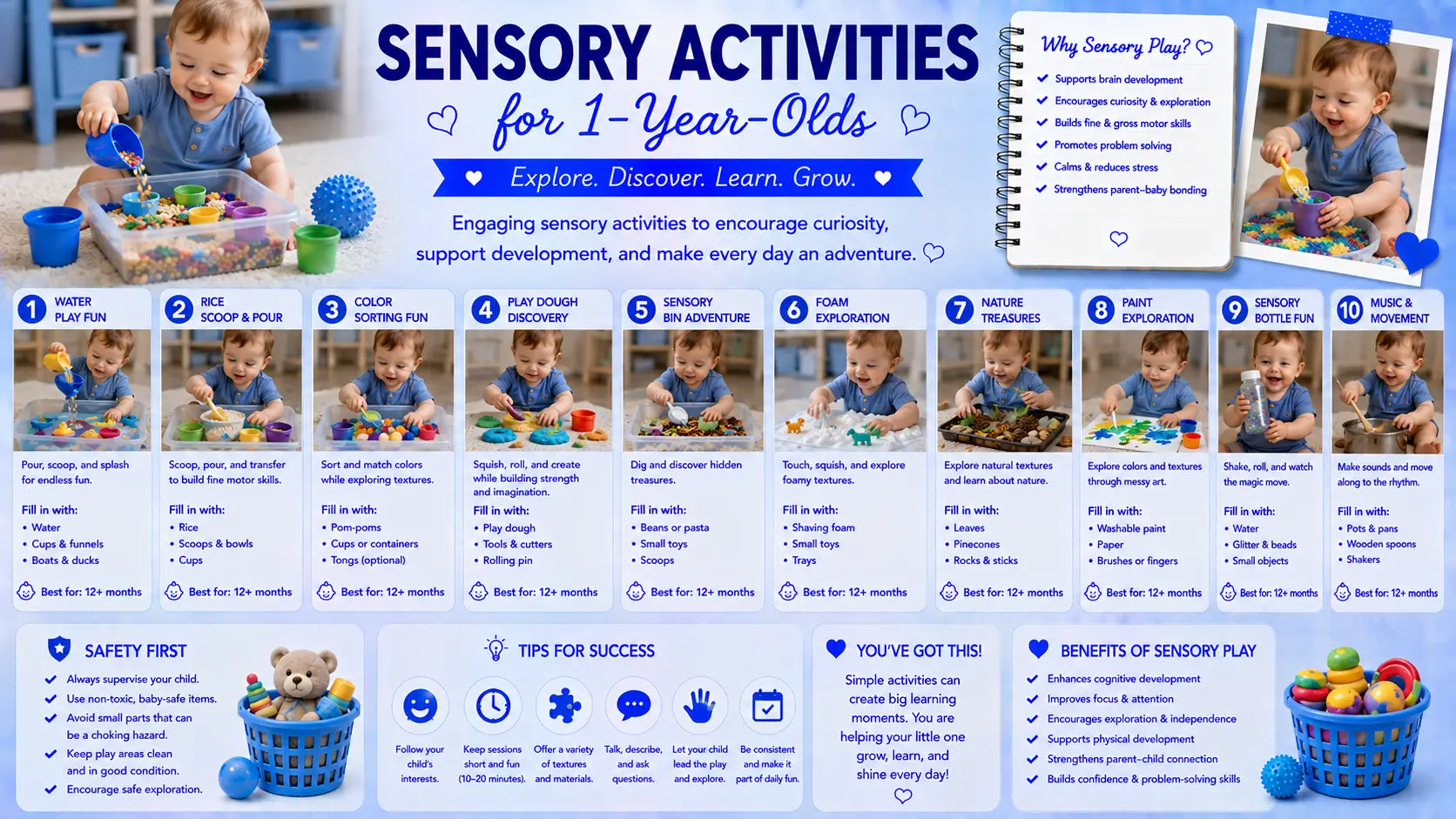

Sensory activities for 1-year-olds turn everyday moments into powerful learning experiences. At this age, babies are curious explorers who learn primarily through their senses—touching, tasting, seeing, hearing, and moving. Sensory play for 1-year-olds doesn’t require expensive kits or elaborate setups. Simple materials from your kitchen, combined with your presence, support brain development, motor skills, and language in natural, joyful ways.
Why Sensory Play Matters for One-Year-Olds
The first three years of life are a peak period for brain architecture. Sensory experiences help build neural connections that support future learning. When a 1-year-old scoops oats, squeezes a sponge, or watches ice melt, they’re practicing fine motor control, hand-eye coordination, and cause-and-effect thinking. These activities also build attention span, self-regulation, and early language as you narrate what’s happening (“You’re pouring the water—splash!”).
Research and pediatric guidance consistently highlight that play, including sensory exploration, drives cognitive, language, and social-emotional growth. For many 12- to 18-month-olds who still put everything in their mouths, the best sensory play is taste-safe. That means materials that are safe if swallowed, like dry oats, cooked pasta, yogurt, or whole-grain cereal.
Safety First with Taste-Safe Sensory Play
Always supervise closely. A 1-year-old should never be left alone with water, small objects, or any sensory setup. Avoid choking hazards smaller than a quarter—dry beans, small beads, pom-poms, or hard pieces are best saved for later. Stick to larger items and edible or near-edible fillers when possible. For water play, keep levels shallow (about half an inch in a tray) and stay within arm’s reach. Use tear-free soap if adding bubbles, and clean surfaces afterward.
Easy Sensory Activities for 1-Year-Olds
These ideas use common household items and take just a few minutes to set up. Focus on following your child’s lead rather than directing every move.
Taste-safe pantry bin Fill a shallow tray or baking sheet with dry oats or crushed Cheerios. Add a small wooden spoon, cup, or scoop. Sit on the floor together and let your child dig, pour, and taste. This builds fine motor skills and is one of the simplest sensory bins for 1-year-olds.
Warm and cold water tray Place a baking tray on a towel. Put a small amount of warm water in one cup and ice cubes in another. Your toddler can explore temperature differences, scoop, and pour. This introduces concepts of hot and cold while strengthening hand muscles.
Yogurt finger painting Mix plain yogurt with a few drops of food coloring in small bowls. Tape paper to a high-chair tray or the floor and let little hands smear, swirl, and taste. It’s fully edible, cool to the touch, and excellent for tactile exploration and creativity.
Sensory bottle Fill a clear water bottle halfway with water, add food coloring and a bit of oil, then seal the lid tightly (tape or hot glue for safety). Shake it together and watch the colors swirl and separate. This is calm, portable, and engaging for visual and auditory senses.
Frozen toy rescue Freeze a few large, safe toys or plastic animals in a shallow container of water overnight. The next day, set the ice block on a tray with warm water and a spoon. Your child works to free the toys as the ice melts—great for patience, problem-solving, and sensory input.
Bubble wrap stomp or walk Tape a sheet of bubble wrap to the floor. Hold your child’s hands and encourage walking or stomping. The pops provide satisfying auditory and tactile feedback, supporting balance and gross motor skills for new walkers.
Cooked pasta or gelatin dig Cook plain pasta or prepare gelatin (cut into cubes). Place it in a bin with cups or spoons. Hide larger safe toys for digging. Both options are taste-safe and offer unique textures—slippery, squishy, or stretchy.
Textured path Lay out different surfaces on the floor: bubble wrap, a soft blanket, aluminum foil, and a piece of cardboard or textured mat. Walk the path together. This combines tactile, proprioceptive (body awareness), and vestibular (balance) input in one simple activity.
Other quick options include sponge play in a shallow water tray, sticky contact paper on a wall or table for sticking lightweight items, or a “construction site” made from crushed graham crackers with toy trucks.
Tips for Successful Sensory Time
Keep sessions short—10 to 15 minutes of engaged play is often enough. Narrate what you see without over-directing. Clean-up is easier if you use a tray, towel, or old sheet underneath. If your child is hesitant, start with one texture or a dry material and add more gradually. The most important ingredient is you: eye contact, warm responses, and shared attention amplify the developmental benefits far more than perfect materials.
Sensory activities for 1-year-olds work best when they feel like play, not a lesson. Follow your child’s cues, celebrate the mess (within reason), and enjoy the connection these moments create.
Frequently Asked Questions
What are the best sensory activities for 1-year-olds?
Taste-safe options like oat bins, yogurt painting, shallow water play, sensory bottles, and frozen toy rescues rank among the most effective and accessible. They use kitchen staples and target multiple senses while remaining safe for mouthing.
Is sensory play safe for babies who still put everything in their mouths?
Yes, when you choose taste-safe materials (oats, yogurt, cooked pasta, cereal) and supervise constantly. Avoid small, hard, or non-edible items that pose choking risks.
How often should I do sensory activities with my 1-year-old?
A few times a week is plenty. Everyday experiences—bath time, outdoor walks, or playing with kitchen utensils—also count as valuable sensory input. Consistency matters more than frequency.
What if my toddler doesn’t seem interested?
Try a different material or shorter session. Some children prefer dry textures first; others love water. Interest often grows with repeated gentle exposure and your calm presence.
Do I need special supplies for sensory bins for 1-year-olds?
No. A baking tray, oats or cereal, cups, spoons, yogurt, and water cover most of the top activities. Household items keep it simple, affordable, and easy to repeat.