
Skip to content
DidYouSearch DidYouSearch
  • did you search?
  • Baby Plus+
    • Baby Activities
      • Arts & Crafts
      • Indoor Activities
      • Montessori
      • Music
      • Outdoor Activities
      • Reading
      • Sensory Play
      • Tummy Time
    • Baby Development
      • Brain Development
      • Cognitive Development
      • Emotional Development
      • Fine Motor Skills
      • Growth Milestones
      • Monthly Milestones
      • Motor Skills
      • Physical Development
      • Social Development
      • Speech Development
    • Baby Feeding
      • Allergies
      • Baby Led Weaning
      • Bottle Feeding
      • Breast feeding
        • Breastfeeding Diet
        • Breastfeeding Positions
        • Latch Problems
        • Low Milk Supply
        • Mastitis
        • Pumping Schedule
        • Weaning
      • Burping
      • Cluster Feeding
      • Feeding Schedule
      • Formula Feeding
        • Formula Amount
        • Formula Brands
        • Formula Comparison
        • Formula Preparation
        • Formula Storage
      • Hydration
      • Pumping
      • Solid Foods
    • Baby Gear Reviews
      • Best Baby Carrier
      • Best Baby Monitor
      • Best Baby Strollers
      • Best Bottles
      • Best Breast Pump
      • Best Car Seat
      • Best Cribs
      • Best Diapers
      • Best Formula
      • Best Toys
    • Baby Growth
      • Growth Spurts
      • Height Charts
      • Monthly Growth
      • Percentiles
      • Weight Charts
    • Baby Health
      • Allergies
      • Cold
      • Constipation
      • Cough
      • Diarrhea
      • Ear Infection
      • Fever
      • Flu
      • Pediatric Visits
      • Rashes
      • Teething
      • Vaccines
      • Vomiting
    • Baby Nutrition
      • Dairy
      • Drinks
      • Eggs
      • Fish
      • Fruits
      • Healthy Recipes
      • Meat
      • Snacks
      • Vegetables
      • Vitamins
    • Baby Products
      • Baby Carriers
      • Bassinets
      • Bottles
      • Breast Pumps
      • Car Seats
      • Cribs
      • Diaper Bags
      • High Chairs
      • Monitors
      • Strollers
      • Swings
      • Toys
      • Walkers
    • Baby Recipes
      • BLW Recipes
      • Breakfast
      • Dinner
      • Finger Foods
      • Lunch
      • Purees
      • Snacks
    • Baby Safety
      • Baby Proofing
      • Car Seats
      • Choking Hazards
      • CPR
      • Home Safety
      • Poison Prevention
      • Safe Sleep
      • Sun Protection
      • Water Safety
  • Baby Names
    • Boy Names
    • Girl Names
    • American baby boy names
    • American baby girl names
    • Biblical Names
    • Middle Names
    • Modern Names
    • Short Names
    • Unique Names
    • Unisex Names
  • Recommended
    • Baby Shopping
      • Baby Registry
      • Budget Baby Shopping
      • Hospital Bag
      • Must Have Products
      • Newborn Checklist
      • Nursery Ideas
    • Baby Sleep
      • Bedtime Routine
      • Co Sleeping
      • Crib Safety
      • Nap Schedules
      • Night Wakings
      • Sleep Environment
      • Sleep Products
      • Sleep Regression
      • Sleep Training
      • Wake Windows
      • White Noise
    • Childcare
      • Daycare
      • Babysitters
      • Kindergarten
      • Nannies
      • Preschool
    • Newborn Care
      • Nail Care
      • Baby Hygiene
      • Bathing
      • Crying
      • Diapering
      • Ear Care
      • Eye Care
      • Skin Care
      • Soothing Techniques
      • Temperature
      • Umbilical Cord
    • Special Needs
      • Premature Babies
      • Autism Signs
      • Developmental Delays
      • Down Syndrome
      • NICU
      • Twins
    • Seasonal Baby Care
      • Spring
      • Summer
      • Travel
      • Fall
      • Holidays
      • Winter
  • Parenting
    • Bonding
    • Discipline
    • Emotional Intelligence
    • First Time Parents
    • Gentle Parenting
    • Positive Parenting
    • Routines
    • Single Parents
    • Working Parents
  • Pregnancy
    • Pregnancy Complications
    • Labor & Delivery
    • Postpartum Recovery
    • Pregnancy Exercises
    • Pregnancy Medications
    • Pregnancy Nutrition
    • Pregnancy Sleep
    • Pregnancy Symptoms
    • Pregnancy Tests
    • Pregnancy Vitamins
    • Pregnancy Weeks
  • Toddler
    • Preschool
    • Speech
    • Tantrums
    • Toddler Food
    • Toddler Sleep
    • Behavior
    • Independence
    • Learning
    • Potty Training
  • Traveling with Baby
    • Road Trips
    • Beach
    • Camping
    • Flying
    • Hotels
    • Packing Lists
  • did you search?
  • Baby Plus+
    • Baby Activities
      • Arts & Crafts
      • Indoor Activities
      • Montessori
      • Music
      • Outdoor Activities
      • Reading
      • Sensory Play
      • Tummy Time
    • Baby Development
      • Brain Development
      • Cognitive Development
      • Emotional Development
      • Fine Motor Skills
      • Growth Milestones
      • Monthly Milestones
      • Motor Skills
      • Physical Development
      • Social Development
      • Speech Development
    • Baby Feeding
      • Allergies
      • Baby Led Weaning
      • Bottle Feeding
      • Breast feeding
        • Breastfeeding Diet
        • Breastfeeding Positions
        • Latch Problems
        • Low Milk Supply
        • Mastitis
        • Pumping Schedule
        • Weaning
      • Burping
      • Cluster Feeding
      • Feeding Schedule
      • Formula Feeding
        • Formula Amount
        • Formula Brands
        • Formula Comparison
        • Formula Preparation
        • Formula Storage
      • Hydration
      • Pumping
      • Solid Foods
    • Baby Gear Reviews
      • Best Baby Carrier
      • Best Baby Monitor
      • Best Baby Strollers
      • Best Bottles
      • Best Breast Pump
      • Best Car Seat
      • Best Cribs
      • Best Diapers
      • Best Formula
      • Best Toys
    • Baby Growth
      • Growth Spurts
      • Height Charts
      • Monthly Growth
      • Percentiles
      • Weight Charts
    • Baby Health
      • Allergies
      • Cold
      • Constipation
      • Cough
      • Diarrhea
      • Ear Infection
      • Fever
      • Flu
      • Pediatric Visits
      • Rashes
      • Teething
      • Vaccines
      • Vomiting
    • Baby Nutrition
      • Dairy
      • Drinks
      • Eggs
      • Fish
      • Fruits
      • Healthy Recipes
      • Meat
      • Snacks
      • Vegetables
      • Vitamins
    • Baby Products
      • Baby Carriers
      • Bassinets
      • Bottles
      • Breast Pumps
      • Car Seats
      • Cribs
      • Diaper Bags
      • High Chairs
      • Monitors
      • Strollers
      • Swings
      • Toys
      • Walkers
    • Baby Recipes
      • BLW Recipes
      • Breakfast
      • Dinner
      • Finger Foods
      • Lunch
      • Purees
      • Snacks
    • Baby Safety
      • Baby Proofing
      • Car Seats
      • Choking Hazards
      • CPR
      • Home Safety
      • Poison Prevention
      • Safe Sleep
      • Sun Protection
      • Water Safety
  • Baby Names
    • Boy Names
    • Girl Names
    • American baby boy names
    • American baby girl names
    • Biblical Names
    • Middle Names
    • Modern Names
    • Short Names
    • Unique Names
    • Unisex Names
  • Recommended
    • Baby Shopping
      • Baby Registry
      • Budget Baby Shopping
      • Hospital Bag
      • Must Have Products
      • Newborn Checklist
      • Nursery Ideas
    • Baby Sleep
      • Bedtime Routine
      • Co Sleeping
      • Crib Safety
      • Nap Schedules
      • Night Wakings
      • Sleep Environment
      • Sleep Products
      • Sleep Regression
      • Sleep Training
      • Wake Windows
      • White Noise
    • Childcare
      • Daycare
      • Babysitters
      • Kindergarten
      • Nannies
      • Preschool
    • Newborn Care
      • Nail Care
      • Baby Hygiene
      • Bathing
      • Crying
      • Diapering
      • Ear Care
      • Eye Care
      • Skin Care
      • Soothing Techniques
      • Temperature
      • Umbilical Cord
    • Special Needs
      • Premature Babies
      • Autism Signs
      • Developmental Delays
      • Down Syndrome
      • NICU
      • Twins
    • Seasonal Baby Care
      • Spring
      • Summer
      • Travel
      • Fall
      • Holidays
      • Winter
  • Parenting
    • Bonding
    • Discipline
    • Emotional Intelligence
    • First Time Parents
    • Gentle Parenting
    • Positive Parenting
    • Routines
    • Single Parents
    • Working Parents
  • Pregnancy
    • Pregnancy Complications
    • Labor & Delivery
    • Postpartum Recovery
    • Pregnancy Exercises
    • Pregnancy Medications
    • Pregnancy Nutrition
    • Pregnancy Sleep
    • Pregnancy Symptoms
    • Pregnancy Tests
    • Pregnancy Vitamins
    • Pregnancy Weeks
  • Toddler
    • Preschool
    • Speech
    • Tantrums
    • Toddler Food
    • Toddler Sleep
    • Behavior
    • Independence
    • Learning
    • Potty Training
  • Traveling with Baby
    • Road Trips
    • Beach
    • Camping
    • Flying
    • Hotels
    • Packing Lists
Close

Search

Home/Baby Safety/Is It Safe to Buy a Used or Secondhand Car Seat?
Baby SafetyCar Seats

Is It Safe to Buy a Used or Secondhand Car Seat?

By Ali
August 4, 2026 4 Min Read
0

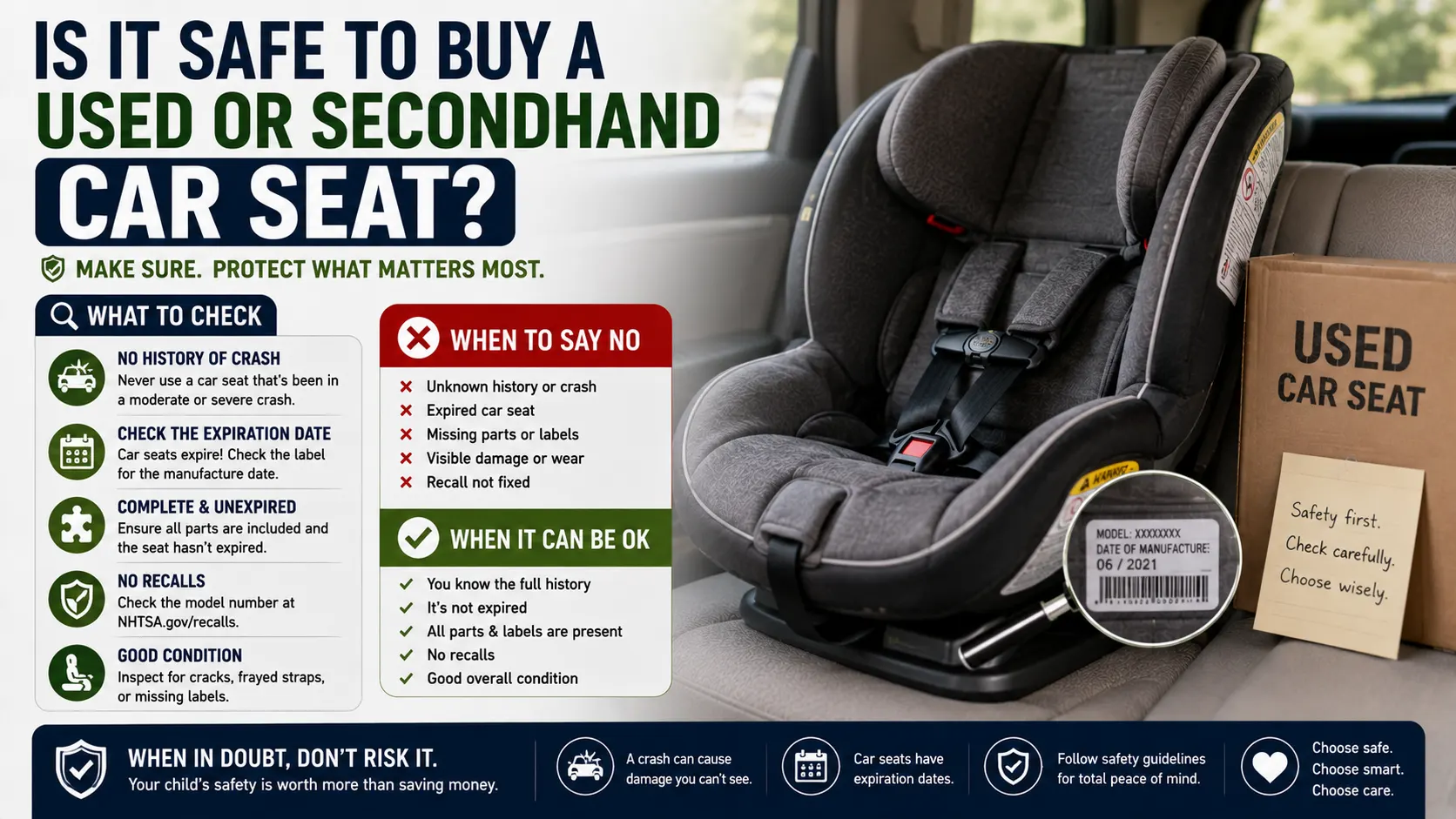
Search this question and you’ll get two confident, opposite answers: some sources say used car seats are fine with the right checks, others say avoid them entirely. Both are half-right. The honest answer depends less on “used vs. new” and more on how much you can actually verify about that specific seat’s history — and that varies enormously depending on where the seat came from.

The Short Answer

Contents hide
1 The Short Answer
2 The Risk Tier That Actually Matters More Than “Used vs. New”
3 The Hands-On Inspection Checklist
4 If Budget Is the Real Issue, There Are Lower-Risk Alternatives to Buying Used
5 Frequently Asked
6 Common Questions

A used car seat can be safe only if you can confirm all of the following with real certainty, not just a seller’s word: it has never been in a crash, it isn’t expired, it hasn’t been recalled (or the recall was properly fixed), and it has all its original parts with no missing or substituted pieces. If you can’t verify all four with confidence, don’t use it — the risks aren’t things you can spot by looking at a seat that seems fine.

The Risk Tier That Actually Matters More Than “Used vs. New”

Most articles list the same four risk factors (crash history, expiration, recalls, missing parts) without addressing the thing that actually determines whether you can verify them: who you’re getting the seat from.

Lower risk — a close family member or friend whose car and driving history you actually know. A grandparent’s seat that was barely used, or a sibling’s seat you watched them use for one child and know was never in an accident, is fundamentally different from an anonymous listing. You have real information, not just a claim.

Higher risk — Facebook Marketplace, garage sales, thrift stores, or any seller you don’t know personally. You’re relying entirely on a stranger’s word about crash history, and there’s no way to verify it independently — crash damage to internal components is frequently invisible from the outside, even in a low-speed collision. This is the category most safety organizations, including the AAP, specifically caution against.

Highest risk — a seat with multiple prior owners, or one where you can’t trace a clear chain of custody. Each transfer between owners adds a layer of uncertainty; by the time a seat has passed through two or three households, even a well-meaning current owner often doesn’t actually know its full history, they’re just repeating what they were told.

This tiering matters more than the seat’s age or condition, because the core problem with used seats isn’t visible wear — it’s invisible history you can’t confirm.

The Hands-On Inspection Checklist

If you’re evaluating a specific seat — even from a trusted source — go through this physically, not just visually:

  • Find the expiration date. It’s usually molded or printed into the plastic shell, often on the bottom or back of the seat, typically 6–10 years from the manufacture date. If you can’t find it, contact the manufacturer with the model number and manufacture date rather than guessing.
  • Check the model number and manufacture date against NHTSA’s recall database (or the manufacturer’s own recall list) before use — not after. Some recalls are easy fixes (a free replacement part), but you need to know before your child is in the seat, not after.
  • Press on the foam padding, if the seat has energy-absorbing foam in the shell. It should have some spring-back resistance; foam that feels crumbly, compressed flat, or doesn’t spring back at all has likely lost some of its crash-absorbing capacity, particularly in seats stored in a hot garage or attic for years.
  • Inspect the harness webbing for fraying, significant fading (a sign of UV/heat exposure that can weaken fibers), or fuzziness along the edges. Run your fingers along the full length, not just the visible parts.
  • Test the buckle and harness adjuster — click the buckle several times and make sure it locks firmly and releases cleanly every time; tighten and loosen the harness fully to check the adjuster mechanism doesn’t stick or slip.
  • Confirm all original parts are present against the manual (chest clip, correct harness pads if required by the model, any locking clips, the base if it’s an infant seat). A seat missing its original manual is a signal to track one down from the manufacturer before use, not to guess at correct installation.
  • Check the shell for cracks, especially near the harness slots and base attachment points — hairline cracks are sometimes hard to spot and are worth checking under good light, running a hand along stress points rather than just eyeballing them.

If Budget Is the Real Issue, There Are Lower-Risk Alternatives to Buying Used

This is the part most comparison articles skip entirely, and it’s often the more useful answer if cost — not sentimentality or convenience — is the actual reason a used seat is on the table:

  • Manufacturer and retailer trade-in events. Several major retailers run periodic car seat trade-in programs, offering a discount on a new seat in exchange for turning in an old one (used or expired), which is recycled rather than resold. Timing these around a planned purchase can meaningfully cut the cost of a new seat.
  • WIC and local health department programs. Many WIC offices and public health departments offer free or low-cost car seats to eligible families, sometimes paired with a car seat safety check.
  • Fire departments and Safe Kids coalitions. Many local fire stations and Safe Kids Worldwide chapters run car seat distribution and installation-check events, occasionally including free seats for qualifying families, in addition to free installation verification for a seat you already own.
  • Hospital and pediatrician programs. Some hospitals include a car seat (or a voucher/discount) as part of newborn discharge programs, particularly for families who demonstrate financial need.
  • Insurance and employer benefits. A small number of health insurers and employers offer car seat discounts or reimbursements as part of family or wellness benefits — worth a quick check before assuming a used seat is the only budget-friendly path.

A free or discounted new seat through one of these channels is a better outcome than a used seat of uncertain history, even a cheap one.

Continue exploring: browse the full Baby Safety hub.

Frequently Asked

Common Questions

No — this is the core problem with used seats. Crash forces can stress internal components, foam, and plastic in ways that aren't visible from the outside, even in what seemed like a minor collision. Visual condition alone doesn't tell you crash history; only a verified account from someone you trust does.
Often yes — many recalls involve a specific replaceable part (a buckle, a harness piece) rather than a fundamental defect, and a properly completed recall repair generally restores the seat to its intended safety standard. Confirm the specific recall was actually remedied, not just acknowledged, before using the seat.
Contact the manufacturer directly with the model number and manufacture date (usually molded into the plastic shell) — most manufacturers can tell you the exact expiration date over phone or email even without a visible label.
Generally yes, if the company performs and documents an actual safety inspection process (checking crash history, recall status, and completeness) rather than simply reselling donated seats — but it's worth understanding exactly what their inspection process checks before assuming it covers everything you'd want verified.
Author

Ali

Digital Marketing enthusiast with a passion for SEO, web design, analytics, and creative problem-solving.

Follow Me
Other Articles
Previous

Infant Car Seat vs. Convertible Car Seat: Which Should You Buy First?

Next

Car Seat Safety in Extreme Heat: What Parents Need to Know

No Comment! Be the first one.

Leave a Reply Cancel reply

Your email address will not be published. Required fields are marked *

What is Did You Search?

The “Did You Search” website was created for all mothers and families. Just search to find all your needs about your children.

Links

  • about
  • contact
  • privacy policy
  • medical disclaimer
  • sitemap
Copyright 2026 — DidYouSearch. All rights reserved.