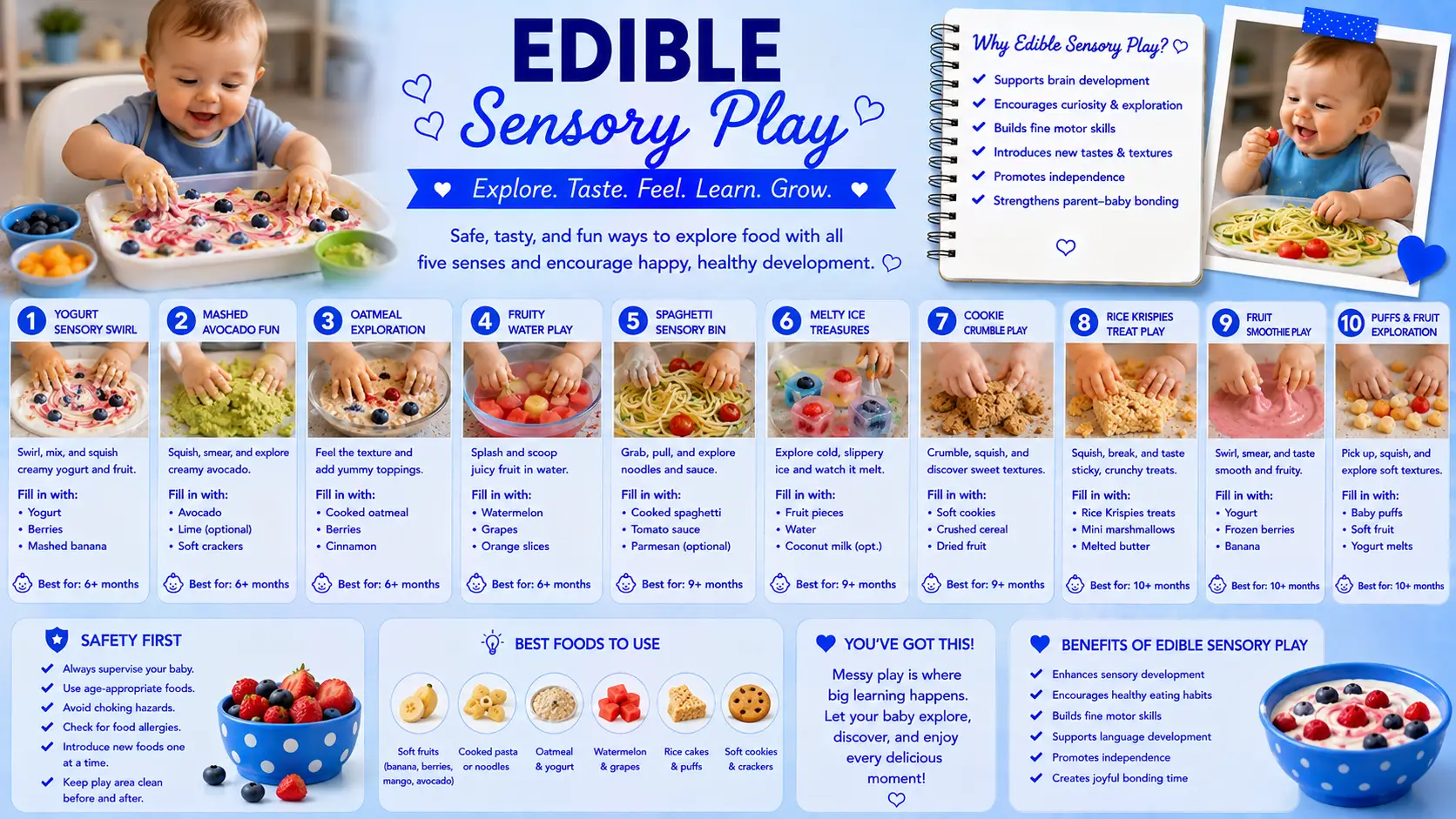

Edible sensory play (also called taste-safe sensory play) lets babies and toddlers explore textures, temperatures, colors, and smells without worry. Because young children naturally put everything in their mouths, using food-based materials turns potential hazards into safe, engaging learning opportunities. These activities support development while keeping play low-stress for parents.
Why Edible Sensory Play Works So Well
Sensory experiences help wire the brain during the critical early years. When a child squishes yogurt, digs through oats, or squishes oobleck, they build fine motor skills, hand strength, and hand-eye coordination. They also practice cause-and-effect thinking, expand vocabulary as you describe the experience, and gain confidence exploring new textures.
Taste-safe sensory play is especially valuable for infants and toddlers still in the oral stage. It removes the constant “don’t put that in your mouth” interruptions and lets curiosity lead. Many parents notice longer attention spans and less resistance to new foods when children first experience textures through play.
Safety Guidelines for Taste-Safe Sensory Play
Always supervise. Even edible materials can pose choking risks if pieces are too small or quantities are large. Choose age-appropriate sizes—avoid tiny beads, dry beans, or hard pieces for children under 3 unless closely monitored. Check for allergies before introducing new ingredients. Use food-grade items and clean surfaces thoroughly afterward. Store leftovers in the fridge if you’ll reuse them, and discard anything that has been heavily mouthed or left out too long.
“Taste-safe” means the materials are non-toxic and edible in small amounts. It does not always mean they taste delicious—many recipes are intentionally bland so children explore rather than feast.
Easy Edible Sensory Play Ideas and Recipes
These use pantry staples and take minutes to prepare. Scale quantities to the size of your tray or bin.
Oat or cereal sensory bin Pour dry rolled oats, crushed Cheerios, or Rice Krispies into a shallow tray. Add scoops, cups, and large safe toys. Children love pouring, burying, and tasting. For a “construction site,” crush cereal into finer “dirt.”
Yogurt or pudding finger painting Spoon plain yogurt or pudding into small bowls and tint with a drop or two of food coloring. Tape paper to a high-chair tray or table and let little hands paint. It’s cool, smooth, and fully edible.
Cloud dough (moon sand) Mix 1 cup flour with about ⅛ cup vegetable oil (adjust until it holds shape when squeezed). Add food coloring if desired. The soft, moldable texture is perfect for pressing, scooping, and building. For a chocolate version, stir in cocoa powder.
Oobleck Combine roughly 2 parts cornstarch with 1 part water. The mixture acts like a solid when pressed and a liquid when released—fascinating for all ages. Add cocoa for “mud” or food coloring for variety.
Cooked rainbow pasta or gelatin dig Cook pasta, drain, and toss with a little oil and food coloring. Or prepare gelatin and cut into cubes (hide larger toys inside for a rescue mission). Both offer unique slimy or jiggly textures.
Aquafaba foam Drain the liquid from a can of chickpeas and whip it with a mixer until foamy. Add a drop of food coloring. This light, bubbly texture is a great water-bead alternative and completely edible.
Edible playdough options
Peanut butter version: Mix peanut butter with powdered sugar until dough-like (sunflower seed butter works for allergies).
Marshmallow dough: Melt marshmallows with a bit of oil or butter, then mix with powdered sugar or cornstarch. These are great for rolling, cutting, and tasting in moderation.
Frozen fruit or ice rescue Freeze large pieces of fruit or safe toys in water. Set the ice block on a tray with warm water and tools so children can free the items. Temperature contrast adds extra sensory interest.
Other simple fillers include cornmeal, cream of wheat, brown sugar “sand,” or whipped cream for digging and scooping.
Tips for Success and Clean-Up
Set up on a tray, old sheet, or high chair for easier mess management. Keep sessions short—10–20 minutes is often enough. Narrate what you see (“It’s so squishy!”) without taking over. If your child is hesitant, start with drier materials like oats before moving to wetter ones. Involve older siblings by giving them their own portion or related tools.
Clean-up is usually straightforward: wipe surfaces, vacuum dry materials, and wash hands and tools. Many recipes can be refrigerated and reused once or twice.
Edible sensory play turns ordinary kitchen ingredients into rich developmental tools. It meets children where they are—curious, mouthy, and eager to explore—while giving parents peace of mind.
FAQ
What is the difference between edible and taste-safe sensory play?
Edible sensory play uses materials meant to be eaten (yogurt, pudding, fruit). Taste-safe means non-toxic and safe if tasted in small amounts (oats, cornstarch mixtures, aquafaba). Both are suitable for mouthing stages; the terms are often used interchangeably.
What are the best edible sensory play ideas for babies and toddlers?
Oat or cereal bins, yogurt painting, cloud dough, oobleck, cooked pasta, and gelatin digs are popular and easy. They require minimal prep and engage multiple senses safely.
Is edible sensory play messy?
It can be, but containment helps. Use trays, towels, or outdoor spaces. Many parents find the developmental benefits outweigh the clean-up, especially when materials are simple and washable.
Can I make edible playdough at home?
Yes. Common recipes use peanut butter and powdered sugar, marshmallows, or flour-based mixtures with oil. Always supervise and limit how much is eaten, as these are treat-like.
How do I keep edible sensory materials safe and fresh?
Prepare in clean conditions, store leftovers covered in the refrigerator, and discard after a day or two or if heavily contaminated by saliva. Always check for allergies and supervise closely to prevent overeating or choking.