
Sensory play is one of the simplest yet most powerful ways young children learn about the world. It involves any activity that stimulates one or more of the senses—touch, sight, sound, smell, taste, and the lesser-known senses of movement and body awareness. From a baby mouthing a soft rattle to a preschooler scooping rice in a bin or stomping in a muddy puddle, these experiences do far more than keep kids busy. They actively shape the brain, build essential skills, and support emotional well-being.
Parents and educators often search for “what is sensory play” and “why is sensory play important.” The short answer is that sensory-rich experiences help children process information, form neural connections, and develop the foundation for later learning. Research and child-development experts consistently highlight how these activities strengthen pathways in the brain, making it easier for kids to handle complex tasks as they grow.
How Sensory Play Supports Brain and Cognitive Development
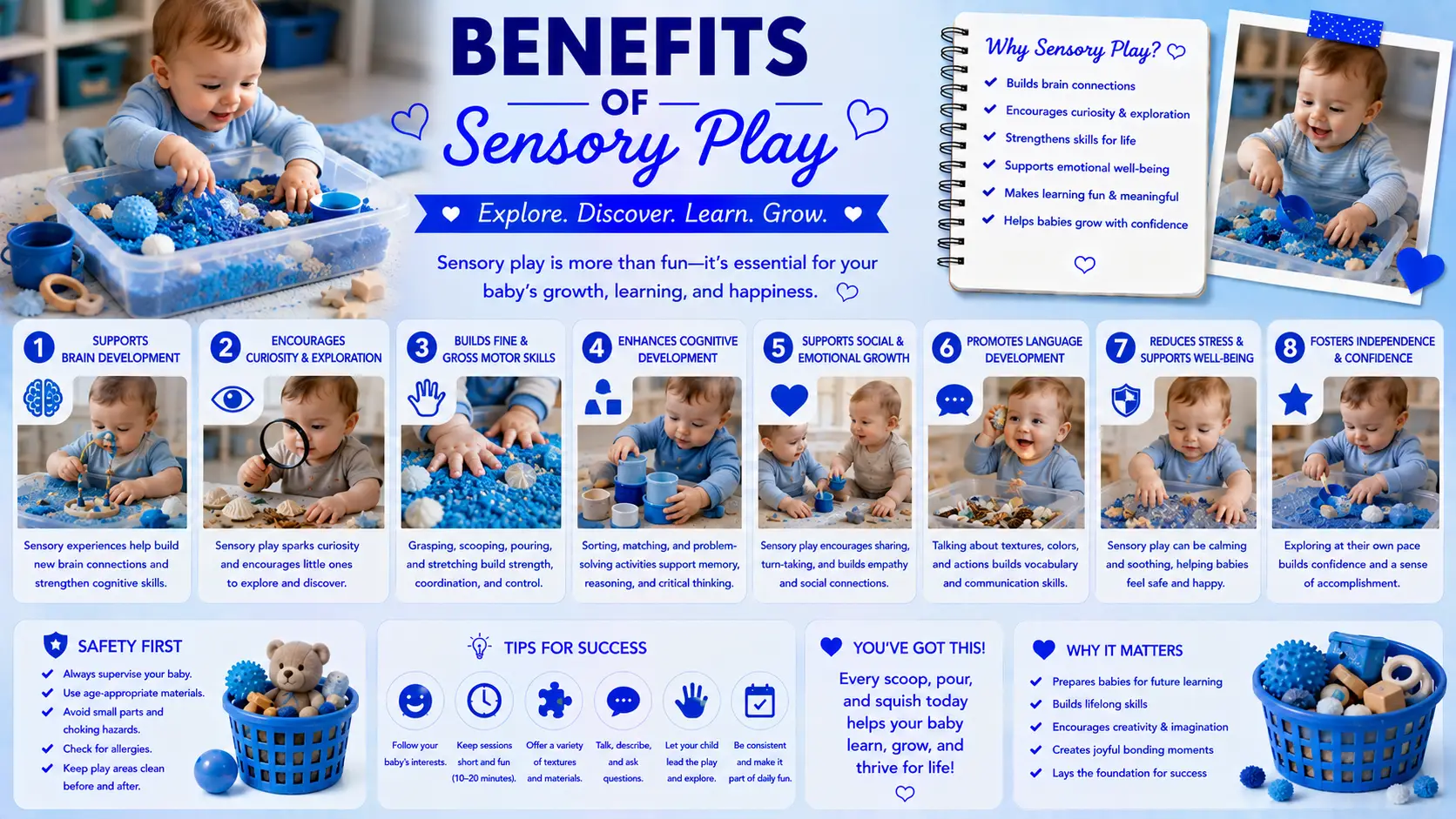
When children explore different textures, temperatures, sounds, and movements, their brains form and strengthen nerve connections. This process supports cognitive growth in measurable ways. Kids practicing sensory play learn cause and effect—pouring water from one container to another teaches volume and prediction. They develop problem-solving skills by figuring out how to move sticky slime or sort objects by texture. Memory and concentration also improve because multi-sensory experiences are more memorable than passive ones.
These benefits appear early. Sensory play for babies might look like feeling different fabrics or watching light patterns. For toddlers and preschoolers, it expands into more purposeful exploration that builds abstract thinking and scientific curiosity. Open-ended activities encourage independent thinking and creativity, skills that transfer to school readiness and beyond.
Building Motor Skills Through Hands-On Exploration
One of the most practical benefits of sensory play is the development of fine and gross motor skills. Fine motor skills—the precise movements of hands and fingers—grow stronger when children pinch playdough, scoop sand, thread beads, or squeeze sponges. These same muscles later support writing, buttoning clothes, and using utensils.
Gross motor skills benefit too. Jumping in leaf piles, balancing while carrying water, or digging in a garden engage larger muscle groups and improve coordination, balance, and body awareness. Vestibular (movement) and proprioceptive (body position) input from swinging, spinning, or pushing heavy objects help children understand where their bodies are in space—an important foundation for physical confidence and safety.
Language, Social, and Emotional Growth
Sensory play naturally expands vocabulary. As children describe what they feel—“It’s cold and bumpy,” “The slime is stretchy,” “This smells sweet”—they practice descriptive language and communication. Parents and caregivers can model words during play, turning simple moments into rich language opportunities.
Socially, shared sensory experiences invite cooperation and conversation. Two children at a water table negotiate turns, share tools, and observe each other’s discoveries. These interactions build empathy and social skills without forced instruction.
Emotionally, sensory play offers a powerful tool for self-regulation. Many children find certain textures or repetitive motions calming. Squeezing dough, running fingers through rice, or listening to soft sounds can reduce anxiety and help kids manage big feelings. For children who become overstimulated or under-responsive to sensory input, carefully chosen activities provide a safe way to practice regulation. This benefit is especially noted for kids with autism, ADHD, or sensory processing differences, though every child gains from the opportunity to explore and reset.
Sensory Play Across Ages and Everyday Life
Sensory play for toddlers often centers on messy, exploratory materials like water, sand, or edible pastes. Preschoolers can handle more structured challenges—matching scents, creating patterns with colored rice, or building with textured blocks. Babies benefit from simpler input: high-contrast mobiles, varied soft toys, and safe mouthing opportunities.
You do not need expensive kits. Everyday household items work well: a bin of dry pasta or beans, homemade playdough, ice cubes with toys frozen inside, or a tray of shaving cream. Outdoor options—mud kitchens, nature walks collecting leaves and stones, or bubble play—add fresh air and variety. The key is supervision for safety (especially with small objects or taste-safe materials for younger children) and allowing open-ended exploration rather than directing every move.
Even short sessions deliver value. Five to fifteen minutes of focused sensory play can support regulation and skill-building. Consistency matters more than duration. Incorporating sensory moments into daily routines—bath time, meal prep, or outdoor play—makes the benefits accessible without adding pressure to schedules.
Why Sensory Play Matters Long-Term
The advantages compound over time. Stronger neural pathways support later academic learning. Better motor control eases physical tasks. Richer language and social skills improve relationships. Emotional regulation tools help children navigate frustration and change. In short, the benefits of sensory play reach cognitive, physical, linguistic, social, and emotional domains—exactly the areas parents hope to nurture in the early years.
Whether you are looking for sensory play activities, ideas for toddlers, or ways to support a child with unique sensory needs, starting simple and following the child’s interests yields the best results. Curiosity drives the process; the developmental gains follow naturally.
FAQ
What is sensory play?
Sensory play includes any activity that engages one or more of a child’s senses through hands-on exploration. Examples range from feeling different textures and listening to sounds to tasting safe foods and moving the body in new ways. It is open-ended and focused on the process rather than a specific product or outcome.
At what age can children start sensory play?
Sensory experiences begin at birth. Newborns respond to touch, sound, and visual contrast. Formal sensory play activities can start in infancy with supervised, age-appropriate materials and become more complex through the toddler and preschool years. Children of all ages, including those with special needs, continue to benefit.
Is sensory play only for young children or those with special needs?
No. While it is especially valuable in early childhood and for children with autism, ADHD, or sensory processing challenges, typically developing kids of any age gain cognitive, motor, language, and emotional benefits from sensory-rich experiences.
How can I make sensory play safe at home?
Choose age-appropriate materials, supervise closely (especially with small items or liquids), use taste-safe ingredients for babies and toddlers who still mouth objects, and clean up thoroughly afterward. Start with simple setups and watch your child’s reactions to avoid overstimulation.
How often should children do sensory play?
There is no strict rule. Daily opportunities—whether short intentional sessions or natural moments during play, meals, or outdoor time—are ideal. Follow the child’s interest and energy; even brief engagement supports development and regulation.