
Sensory play offers huge developmental benefits, but safety comes first—especially with babies and toddlers who explore the world by putting things in their mouths. Parents frequently search for “safe sensory play tips,” “taste-safe sensory play,” and “sensory bin safety” because the right precautions turn potentially risky materials into valuable learning experiences. With a few clear guidelines, you can create engaging setups that support exploration while minimizing hazards.
Always Supervise Closely
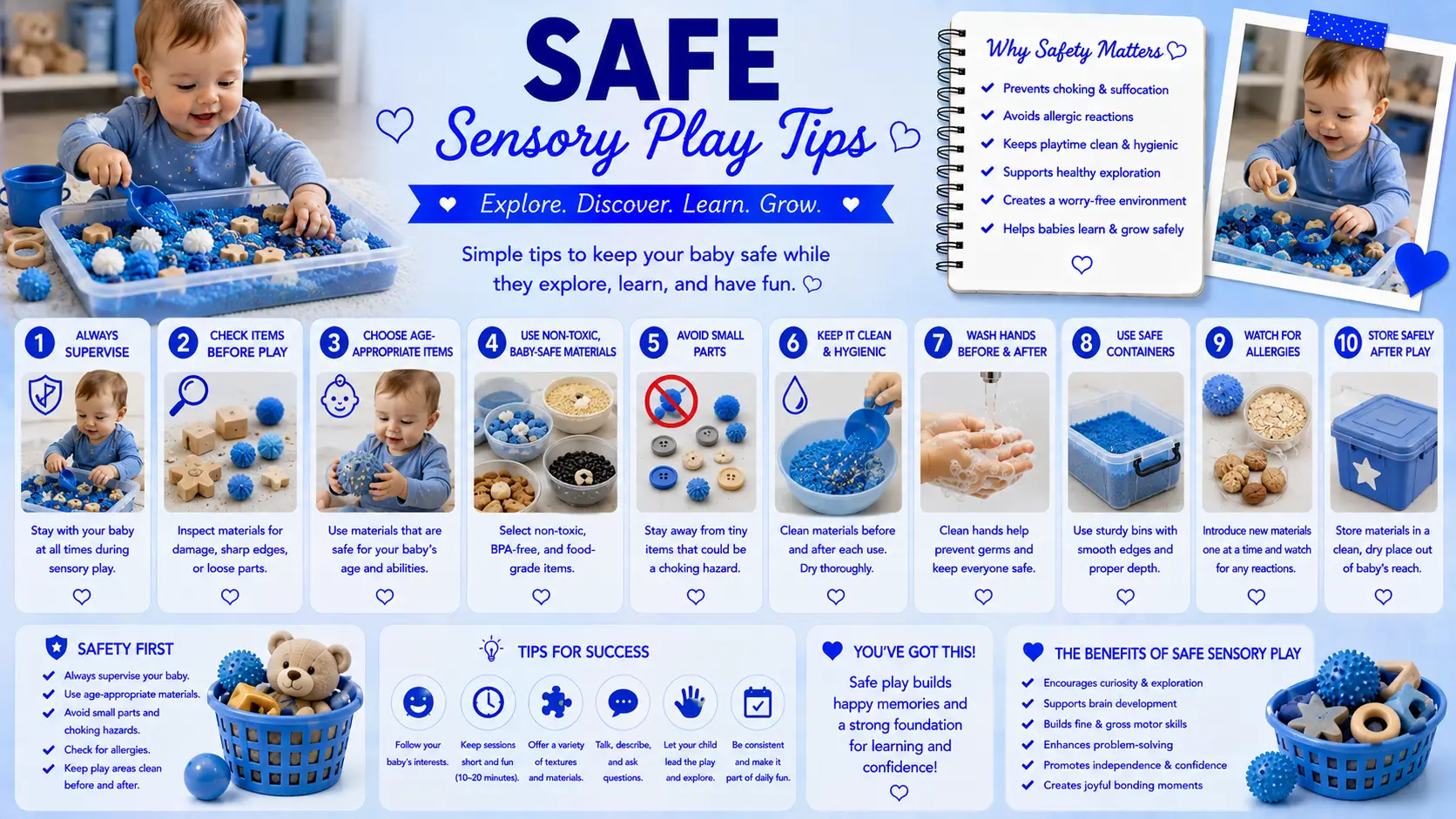
Constant adult supervision is the single most important safety rule. Young children can quickly mouth, spill, or share materials in ways that create risks. Sit nearby during play, especially the first few times a child uses a new bin or activity. Supervision also lets you model how to use materials (scooping instead of throwing, keeping items in the bin) and step in if a child becomes overwhelmed or starts eating the contents. Never leave a sensory setup unattended, even for a moment.
Choose Age-Appropriate and Taste-Safe Materials
For babies and toddlers who still mouth everything (typically under age 2–3), stick to taste-safe options. These are food-grade materials that will not cause harm if a small amount is swallowed. Popular choices include cooked plain pasta, dry oats, cooked rice, whole-grain cereal, plain yogurt mixed with food coloring, or homemade playdough made with flour, salt, and water. Many parents look for “taste-safe sensory play ideas” because these fillers let mouthing children explore freely without the danger of toxic substances.
Avoid small, hard, or round items that pose choking hazards. The American Academy of Pediatrics advises keeping objects smaller than a quarter out of reach for children under 4. Skip beads, buttons, small pom-poms, raw beans (especially kidney beans, which can be toxic if eaten), water beads, and tiny plastic pieces until children reliably keep materials out of their mouths. Larger items such as big pasta shells, chunky wooden scoops, or soft fabric scraps work better for younger ages.
Select Non-Toxic, Allergy-Aware Fillers
All sensory materials should be non-toxic. Read labels carefully if using commercial products, and opt for natural or food-based fillers whenever possible. Consider food allergies and sensitivities in your household or classroom—common triggers include wheat (in playdough), dairy, nuts, or certain dyes. When in doubt, choose plain, single-ingredient options and introduce new textures one at a time so you can watch for reactions.
Dry fillers such as rice, oats, or pasta are easy to manage and less likely to mold. Wet materials like water, oobleck (cornstarch and water), or slime need more frequent cleaning and should be discarded after use to prevent bacterial growth. Always wash hands before and after play, and clean bins, scoops, and surfaces thoroughly.
Set Clear Boundaries and Contain the Mess
Establish simple rules from the start: materials stay in the bin or on the tray, no throwing, and hands stay out of mouths once children are past the mouthing stage. Consistent, calm reminders help children learn the expectations without turning play into a power struggle.
Contain messes proactively. Place bins on a large plastic tablecloth, shower curtain, or outdoor surface. Use deep containers with high sides to reduce spills. Keep a small broom, dustpan, or handheld vacuum nearby for quick cleanup. For very young children, start with a shallow tray or even a sealed sensory bag (zip-top bag filled with gel or colored water) to limit the chaos while still offering tactile input.
Adapt for Different Ages and Needs
Sensory play for babies focuses on large, soft, high-contrast items and supervised water or fabric exploration. One-year-olds do best with taste-safe dry fillers and oversized tools. Toddlers and preschoolers can handle more variety once mouthing decreases, but continue monitoring for choking risks and overstimulation.
Watch for signs that a child is becoming overwhelmed—covering ears, turning away, or becoming agitated. Offer a quieter alternative or end the session early. Children with sensory processing differences, autism, or ADHD may need adjusted intensity, lighting, or duration. Follow their lead and provide options rather than forcing engagement.
Practical Setup and Storage Tips
Start simple. A single filler plus a few scoops or cups is often more successful than an elaborate bin. Rotate materials every few days or weeks to maintain interest without overwhelming storage space. Store dry fillers in sealed containers to keep them clean and pest-free. Label bins clearly if multiple children use them, and sanitize tools regularly.
Outdoor play expands options safely—mud kitchens, water tables, leaf piles, and sandboxes offer natural sensory input with lower indoor mess concerns. Always check for sharp objects, insect hazards, or extreme temperatures before outdoor sessions.
Common Pitfalls to Avoid
Do not mix wet and dry materials unless you plan for immediate cleanup, as this creates sticky messes that are hard to manage. Avoid leaving materials out overnight if they can spoil. Never use materials that stain permanently or contain small parts that can escape and become choking hazards later. And resist the urge to force “proper” play—children learn best when they explore freely within safe limits.
By prioritizing supervision, age-appropriate materials, and clear boundaries, sensory play becomes a low-stress, high-reward activity. These safe sensory play tips help parents and caregivers deliver the developmental benefits while protecting little explorers. With a bit of preparation, you can create inviting setups that support curiosity, motor skills, and emotional regulation without unnecessary worry.
FAQ
What makes sensory play “taste-safe”?
Taste-safe materials are food-grade or edible substances that will not harm a child if swallowed in small amounts. Examples include cooked pasta, oats, rice, yogurt, or homemade flour-based dough. They are ideal for babies and toddlers who still mouth objects, though they are not intended as food and are usually unflavored to discourage eating.
How do I prevent choking during sensory play?
Choose fillers and tools larger than a quarter for children under 4, avoid round hard items, and supervise constantly. Test potential hazards with a toilet-paper tube—if an object fits through, it is too small. Keep play areas free of loose small parts that could migrate into the bin.
Can I use rice or dry beans for sensory bins?
Yes for older toddlers and preschoolers who no longer mouth materials, provided you supervise and choose larger varieties. Avoid raw kidney beans entirely because they can cause severe digestive issues if eaten. For mouthing children, stick to cooked grains or oats instead.
How often should I clean sensory materials?
Wash hands before and after every session. Discard wet materials after each use. Dry fillers can be reused for several sessions if stored in airtight containers and inspected for debris or moisture. Sanitize bins, scoops, and trays regularly with mild soap and water.
What should I do if my child keeps eating the sensory materials?
Return to fully taste-safe options and increase supervision. Gently redirect by offering a snack nearby or modeling “we play with it, we don’t eat it.” Most children outgrow persistent mouthing with consistent guidance and age-appropriate materials. If concerns continue, consult a pediatrician or occupational therapist.