
Sensory play helps young children explore the world through touch, sight, sound, smell, and movement. It builds fine motor skills, language, focus, and emotional regulation. Many parents and caregivers love the idea but dread the cleanup—rice on the floor, paint everywhere, or slime stuck to everything. The good news? Mess-free sensory activities deliver the same benefits without the chaos. These ideas work especially well for toddlers, babies, and preschoolers at home or in small spaces.
High-interest searches like “mess free sensory activities for toddlers,” “no mess sensory bins,” and “sensory bags DIY” show parents want practical options that keep play contained. Below are proven, low-prep ideas drawn from popular approaches that prioritize clean fun while still engaging the senses.
Why Choose Mess-Free Sensory Play?
Traditional sensory bins with water, sand, or goop are wonderful when you have time and space. But life is busy. Mess-free versions remove the barrier so kids still get daily sensory input. They suit children who dislike sticky textures, work well in apartments, and make cleanup nearly nonexistent. Activities like sealed sensory bags or dry texture play let little hands explore safely while you keep your floors intact.
Top Mess-Free Sensory Activities
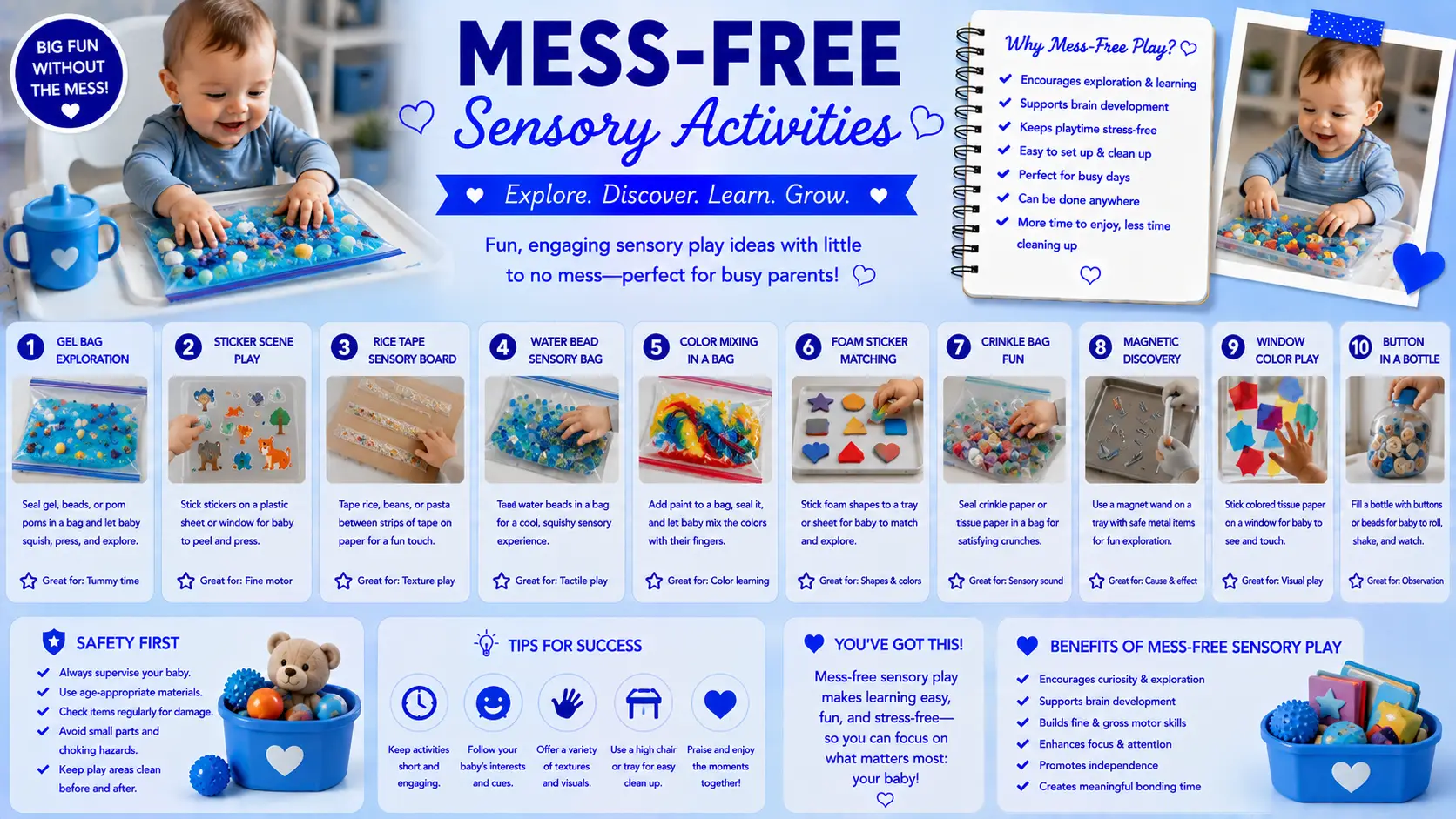
Sensory Bags These rank among the most popular no-mess options. Fill a heavy-duty resealable plastic bag with hair gel, non-toxic paint, or a mix of oil and colored water. Add beads, glitter, small toys, or buttons for extra interest. Seal tightly, reinforce with duct tape, and tape the bag to a table or highchair tray. Kids squish, press, and move the contents with their fingers.
Variations include color-mixing bags or “I spy” bags with hidden objects. They’re ideal for babies who still mouth everything and for toddlers practicing fine motor control. Double-bag for extra security and supervise closely.
Sensory Bottles (Discovery Bottles) Clear plastic bottles filled with water, oil, glitter, beads, rice, or small objects create calming visual and auditory play. Secure the lid with strong glue or tape. Kids shake, roll, and watch items float or settle. Themes work well: ocean bottles with blue water and shells, or rainbow rice bottles. These travel easily and double as quiet-time tools.
Dry Texture Exploration and “Bins” Skip wet fillers. Use cotton balls, pom-poms, tissue paper, fabric scraps, or dried pasta in a shallow tray or muffin tin. Add tongs, cups, or scoops for pouring and sorting. A cotton-ball “snow” bin or pom-pom color-sorting tray is quiet, calming, and vacuum-friendly. For even less mess, place items inside balloons for squeezeable texture play or use a muffin tin for organized sorting of shapes, letters, or natural objects.
Contact Paper and Sticker Play Tape contact paper sticky-side out to a wall, window, or table. Let kids stick leaves, fabric pieces, paper shapes, or lightweight toys onto it. Stickers alone provide sticky tactile feedback while encouraging creativity and hand strength. Both activities stay contained and peel up cleanly.
Texture Walks, Books, and Mystery Boxes Create a simple sensory path with different flooring, cushions, bubble wrap, or rugs for kids to walk or crawl across barefoot. Sensory books with touch-and-feel elements, scents, or sounds offer portable exploration. Mystery boxes or bags filled with everyday objects (soft scarf, hard block, crinkly paper) encourage guessing by touch only—great for language development and zero cleanup.
Musical and Movement Play Pots, pans, wooden spoons, or simple shakers deliver auditory and proprioceptive input. Dance parties, balloon tapping (supervise carefully), or flashlight “light play” in a dim room engage multiple senses without any materials left behind. Yoga poses or balance activities on cushions also count as vestibular sensory work.
Contained Water or Paint Options When you want a bit of wet play, keep it controlled: bathtub water play with cups and toys, or tempera paint sticks that draw like crayons but feel paint-like. Finger painting sealed inside a bag still gives the tactile experience without the aftermath.
Practical Tips for Success
Contain the space: Use a tray, highchair, or shower curtain liner underneath even dry activities.
Supervise and set clear boundaries: Teach kids that materials stay in the bag, bottle, or tray.
Rotate materials: Fresh items keep interest high without needing new purchases.
Match to age: Babies need sealed bags and soft textures; older toddlers can handle sorting and tools.
Taste-safe when needed: For mouthers, stick to edible or sealed options and avoid small choking hazards.
These activities answer common searches such as “mess free sensory activities for babies,” “clean sensory fun,” and “no mess sensory play ideas.” They prove sensory exploration does not require a big cleanup.
FAQ
What are the best mess-free sensory activities for toddlers?
Sensory bags, discovery bottles, pom-pom or cotton-ball trays, contact paper sticking, and sticker play top the list. They engage touch and fine motor skills while staying contained.
How do I make DIY sensory bags that won’t leak?
Use heavy freezer bags, fill only halfway, press out excess air, seal, then reinforce the seal with duct tape. Double-bagging adds security. Supervise play and store flat when not in use.
Are mess-free sensory activities as beneficial as traditional messy play?
Yes. Children still receive rich sensory input through different textures, visual tracking, sound, and movement. The key is variety and engagement, not the mess level.
What can I use instead of rice or beans for low-mess bins?
Cotton balls, tissue paper, large pom-poms, fabric scraps, pasta shapes, or items sealed inside balloons or bottles. These create interesting textures with minimal scattering.
How can I do sensory play in a small apartment or with limited time?
Focus on portable options: sensory bags taped to a highchair, bottles for the car, contact paper on a wall, or a five-minute texture tray. Cleanup is usually just putting items away or wiping a surface.