
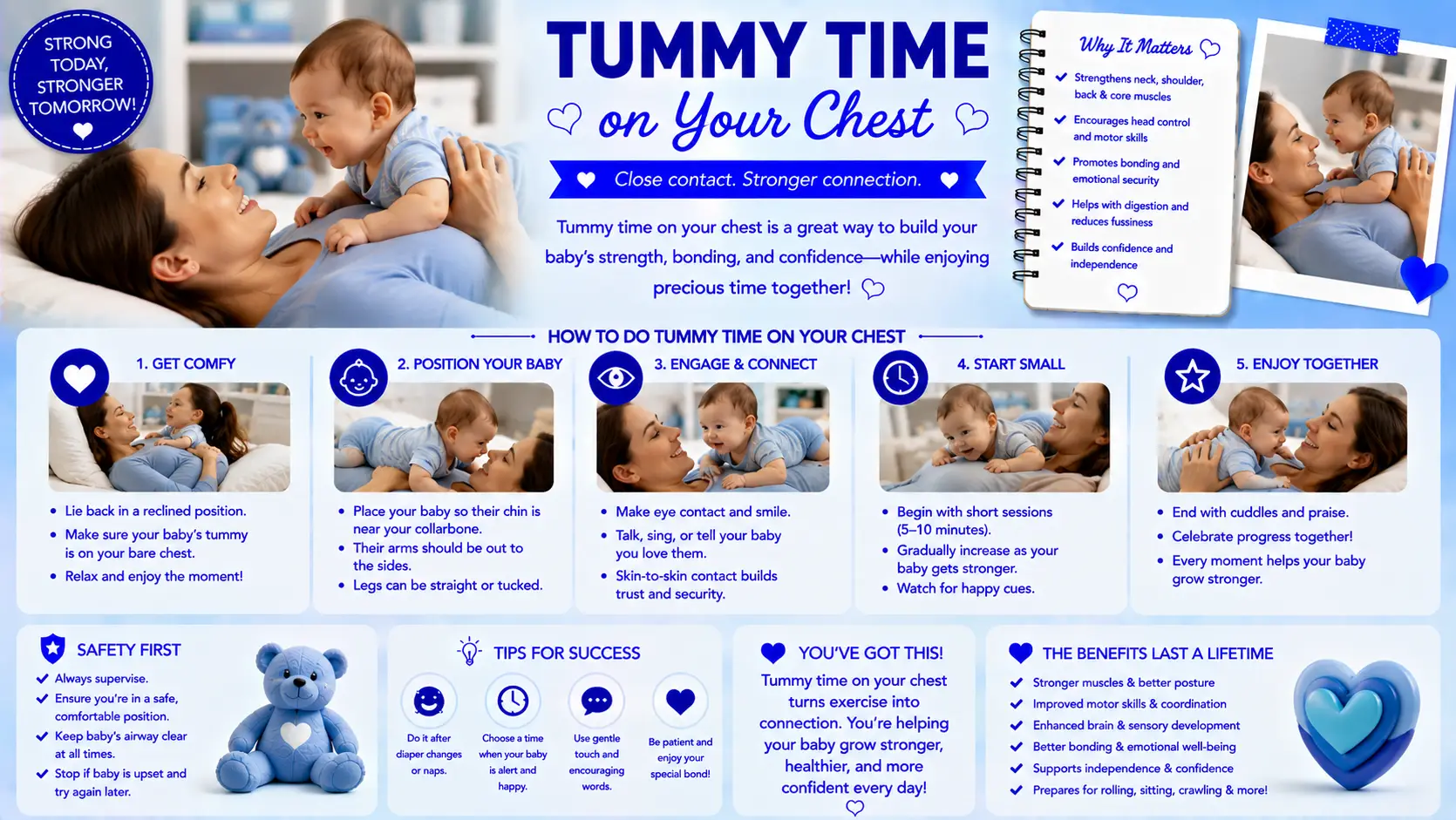

Tummy Time on Your Chest is one of the easiest, most effective ways to introduce this essential practice to a newborn. It combines muscle-building benefits with the comfort of close contact, making it ideal for the earliest days when floor time may feel too challenging.
Why Tummy Time Matters
Babies spend a lot of time on their backs for safe sleep, which is important for reducing the risk of SIDS. That back time, however, means they need intentional awake periods on their tummies to build strength. Tummy time strengthens the neck, shoulders, arms, back, and core muscles. These muscles form the foundation for later skills like rolling, sitting, crawling, and eventually walking. It also helps prevent positional plagiocephaly (flat spots on the head) and supports sensory and visual development as babies lift and turn their heads to explore.
Many parents wonder if tummy time on the chest counts. Yes, it does—especially in the newborn stage. Experts and pediatric physical therapists consistently recommend chest-to-chest (or tummy-to-tummy) positioning as a valid and often preferred starting point. The slight incline makes it easier for a baby to lift their head, and the warmth, smell, and sound of a parent provide natural motivation and comfort.
How to Do Tummy Time on Your Chest
Start as soon as your baby comes home from the hospital (or even earlier with skin-to-skin in the hospital), provided they are healthy and full-term. Always supervise and only practice when both of you are awake.
Recline comfortably on a couch, bed, or floor with pillows supporting your back so you’re at a gentle incline rather than completely flat.
Place your baby tummy-down on your chest, face-to-face. Their chest should rest against yours.
Position their arms forward so they can push up if ready.
Support them with your hands for safety. Talk, sing, smile, or make eye contact to encourage head lifting.
Keep sessions short at first—1–5 minutes, a few times a day. Gradually work toward longer periods as your baby gains strength.
You can also try a slight variation: place a small rolled towel or soft blanket under the baby’s chest (from armpit to armpit) for extra support that makes head-lifting easier. This “Superman” style support is especially helpful in the early weeks.
As your baby grows stronger (around 1–2 months), begin transitioning some sessions to the floor on a firm blanket or play mat while continuing chest time for bonding and variety.
Benefits Specific to Chest Tummy Time
Beyond general muscle development, chest tummy time offers unique advantages:
Bonding and regulation: Skin-to-skin or close contact helps regulate your baby’s temperature, breathing, and heart rate while promoting calm.
Easier head control: The incline reduces the full force of gravity, so even newborns can practice brief lifts more successfully.
Reduced frustration: Many babies who cry on the floor tolerate (and even enjoy) chest time because they can see your face and feel secure.
Sensory input: Feeling your breathing, hearing your voice, and smelling you provides rich sensory experiences that support overall development.
Parents often report that babies who “hate” traditional tummy time settle more readily on a chest. This makes it an excellent entry point when floor sessions feel like a battle.
Practical Tips for Success
Time it well: Try after a diaper change or when your baby is calm and alert, not right after feeding (to reduce spit-up risk) or when overtired.
Keep it positive: End the session before crying escalates so your baby associates the position with pleasant interaction.
Increase gradually: Aim for short, frequent sessions that add up. Many guidelines suggest working toward about 20–30 minutes total daily by a few months of age, broken into multiple short bursts. By around 3 months, many babies benefit from closer to an hour total across the day.
Mix positions: Combine chest time with lap tummy time, carrying in a tummy-down “football” hold, or supervised floor time as strength grows.
Watch for cues: Stop if your baby seems distressed, and always ensure clear breathing space.
If your baby has medical concerns, was premature, or has issues like torticollis, check with your pediatrician or a physical therapist before starting or progressing.
Transitioning Beyond the Chest
Chest tummy time is perfect for newborns, but floor time becomes increasingly important for freer movement and exploration. Use toys, mirrors, or your own face at floor level to keep interest high. Many families successfully blend both approaches for months.
Tummy time on your chest is simple, free, and highly effective. It turns a developmental necessity into a moment of connection. Consistency with short, positive sessions helps most babies build the strength and confidence they need for the next milestones.
FAQ
Does tummy time on my chest really count?
Yes. Pediatric sources and therapists confirm that supervised tummy-to-chest positioning counts toward daily tummy time, especially for newborns. It builds the same muscles while offering comfort and bonding.
When should I start tummy time on my chest?
You can begin as early as the first day home from the hospital (or with skin-to-skin contact right after birth) for healthy full-term babies. Start with very short sessions of 1–3 minutes a few times a day.
How much tummy time does my newborn need?
Begin with several short sessions totaling around 15–20 minutes spread throughout the day. Increase gradually as your baby tolerates more. By 3 months, many guidelines suggest aiming for closer to 60 minutes total in short bursts.
What if my baby hates tummy time even on my chest?
Keep sessions very brief and positive, use a slight incline or rolled support under the chest, and focus on face-to-face interaction. Some babies simply need more time to build strength. If resistance continues or you have concerns about development, consult your pediatrician.
Is chest tummy time safe?
Yes, when both of you are awake and you are actively supervising and supporting your baby. Never leave a baby unattended on your chest, and always place them on their back for sleep.