
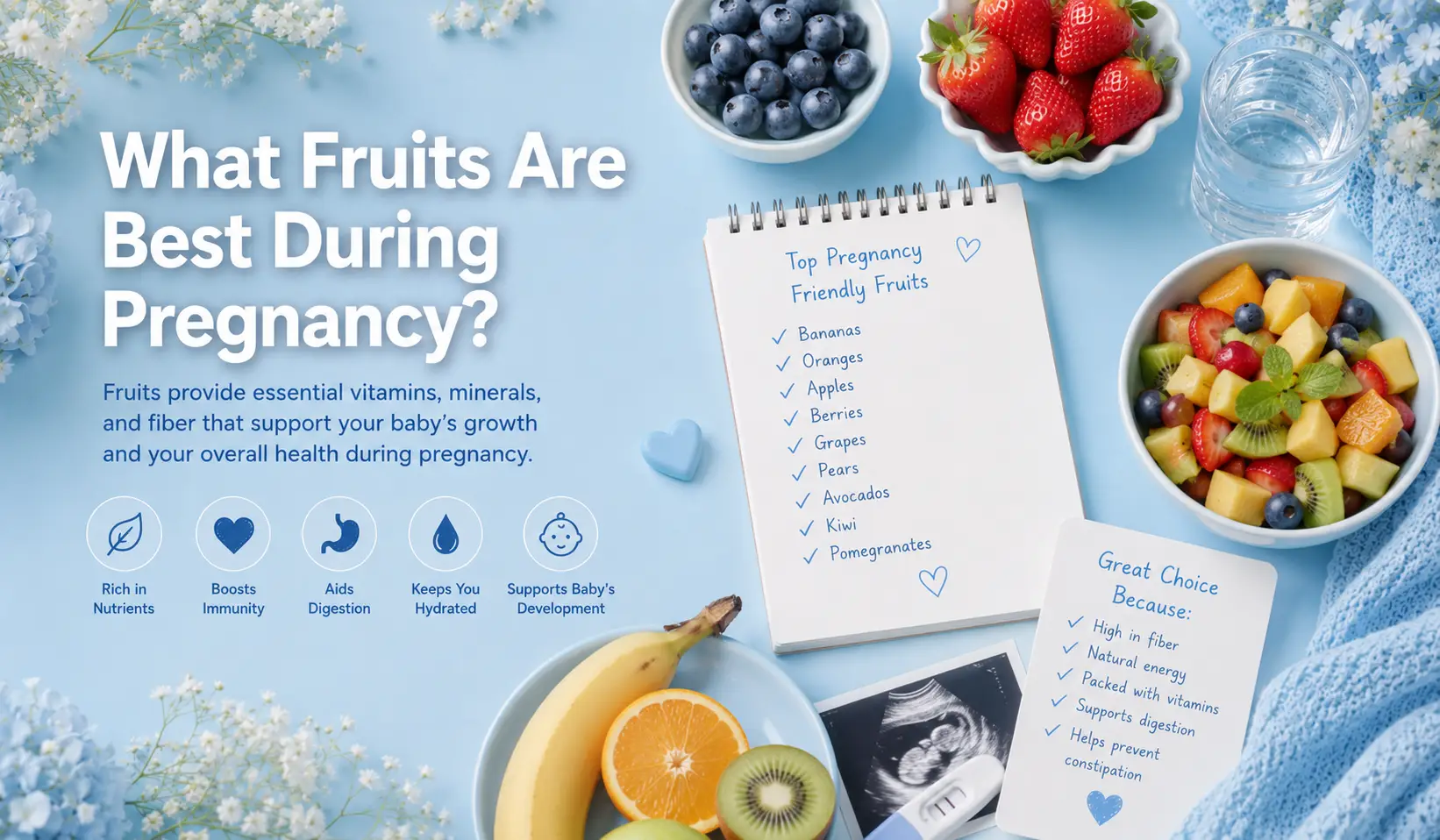

Fruit is one of the easiest wins in a pregnancy diet — it’s naturally sweet, packed with nutrients your body needs more of right now, and genuinely helpful for common pregnancy complaints like constipation and fatigue. Here’s a look at the best fruits to eat during pregnancy, the specific benefits each one offers, and a few things worth knowing about portions and food safety.
Why Fruit Matters During Pregnancy
Beyond vitamins and minerals, fruit provides fiber, water, and natural sugars that can satisfy cravings in a more nutrient-dense way than packaged snacks. Getting a variety of fruit supports your baby’s growth through nutrients like folate, vitamin C, and potassium, while also helping manage pregnancy symptoms like constipation, fatigue, and swelling. Whole fruit is generally the better choice over juice, since juice lacks the fiber that helps with digestion and doesn’t keep you as full.
The Best Fruits to Eat During Pregnancy
Bananas. A pregnancy staple for good reason. Bananas are rich in potassium, which helps combat fluid retention and can ease the leg cramps that tend to show up at night in later pregnancy. They’re also gentle on the stomach, making them a go-to when nausea strikes, and vitamin B6 in bananas may help ease morning sickness specifically.
Oranges and citrus. Oranges are high in vitamin C, which supports immune function and helps your body absorb iron more efficiently — a useful pairing given how important iron is during pregnancy. They also contribute to hydration and folate intake, both relevant to a healthy pregnancy diet.
Berries. Strawberries, blueberries, and raspberries pack a lot of nutrition — including antioxidants, fiber, and vitamin C — into a relatively low-calorie, high-water-content package. Their natural sweetness also makes them a satisfying way to handle sugar cravings.
Apples. Apples are a solid source of fiber, particularly in the skin, along with vitamins A and C. The soluble fiber (pectin) supports healthy digestion, which is useful given how common constipation is during pregnancy.
Avocados. Technically a fruit, avocados stand out for their healthy fats, fiber, potassium, and folate — a nutrient combination that’s especially valuable in the first trimester when folate needs are highest.
Pomegranates. Pomegranates are rich in vitamin C, potassium, folate, and antioxidants, with research suggesting they contain notably higher antioxidant levels than many other fruits.
Kiwis. Kiwis are high in folate and vitamin C, and they may help with iron absorption, which supports your body’s increased blood volume during pregnancy. Both the skin and seeds are edible if you want the extra fiber.
Mangoes. Mangoes deliver a strong dose of vitamin C and vitamin A, though their natural sugar content is higher than many other fruits, so portion size is worth keeping in mind, especially if you’re watching blood sugar.
Guava. Guava is exceptionally high in vitamin C — often cited as containing more than an orange — and supports digestion and immune function.
Watermelon. Watermelon offers hydration along with potassium and magnesium, which may help with muscle cramping. Its high water content also makes it a refreshing option if nausea makes heavier foods unappealing.
Pears. Like apples, pears are a good source of fiber and vitamin C, and they contain folate as well, making them a useful addition especially early in pregnancy.
How Much Fruit Should You Eat?
General dietary guidelines suggest around 2 cups of fruit per day during pregnancy, though needs can vary by individual calorie requirements. Variety matters more than any single “best” fruit — rotating through different options helps you get a broader range of nutrients rather than relying on just one or two.
A Note on Sugar and Gestational Diabetes
Fruit contains natural sugar, and while it’s a healthier source of sweetness than processed snacks, portion awareness still matters — particularly for higher-sugar fruits like mangoes and grapes, and especially if you’ve been diagnosed with or are at risk for gestational diabetes. If you have gestational diabetes, your provider or a dietitian can help you figure out which fruits and portions fit your specific blood sugar targets; whole fruit paired with a protein or fat source (like fruit with nut butter or yogurt) can also help moderate blood sugar response.
Fruit Safety Tips During Pregnancy
Wash all produce thoroughly to reduce exposure to bacteria, parasites, and pesticide residue.
Avoid pre-cut fruit from salad bars or unrefrigerated displays, which carries a higher contamination risk.
Choose whole fruit over juice when possible, for the added fiber and lower sugar concentration.
Skip unpasteurized fruit juices and ciders, which carry the same bacterial risks as unpasteurized dairy.
The Bottom Line
There’s no single “best” fruit during pregnancy — bananas, citrus, berries, apples, avocados, kiwis, and pomegranates all bring valuable nutrients to the table, from potassium and fiber to folate and vitamin C. Aim for variety, wash produce well, and keep portions in mind if you’re managing blood sugar. A colorful mix of fruit is one of the simplest ways to support both your own well-being and your baby’s development throughout pregnancy.
FAQ
What fruit is best for morning sickness during pregnancy?
Bananas and citrus fruits like lemons and oranges are commonly recommended, since bananas are gentle on the stomach and citrus scents and flavors have been shown to help ease nausea for some people.
Can I eat fruit every day during pregnancy?
Yes, most guidelines recommend around 2 cups of fruit per day as part of a balanced pregnancy diet, prioritizing variety to get a broad range of nutrients.
Are there any fruits to avoid during pregnancy?
Most fruits are safe in normal amounts. The main precautions are washing produce thoroughly, avoiding unpasteurized fruit juice or cider, and being mindful of portions with higher-sugar fruits if you have gestational diabetes.
Is fruit juice as healthy as whole fruit during pregnancy?
No, whole fruit is generally the better choice since it retains the fiber that juice lacks, which supports digestion and helps you feel fuller, while also providing a more gradual release of natural sugar.
What fruit is highest in folate for pregnancy?
Avocados, kiwis, and pears are among the fruits with notable folate content, making them useful additions alongside other folate-rich foods like leafy greens and legumes, especially in early pregnancy.