
Eggs are one of the easiest, most nutrient-dense foods to lean on during pregnancy — but the question of “raw vs. cooked” trips a lot of people up. Here’s the clear answer: fully cooked eggs are safe and genuinely beneficial during pregnancy. Raw or undercooked eggs are where the caution comes in, and the reasoning below explains exactly why.
The Quick Answer
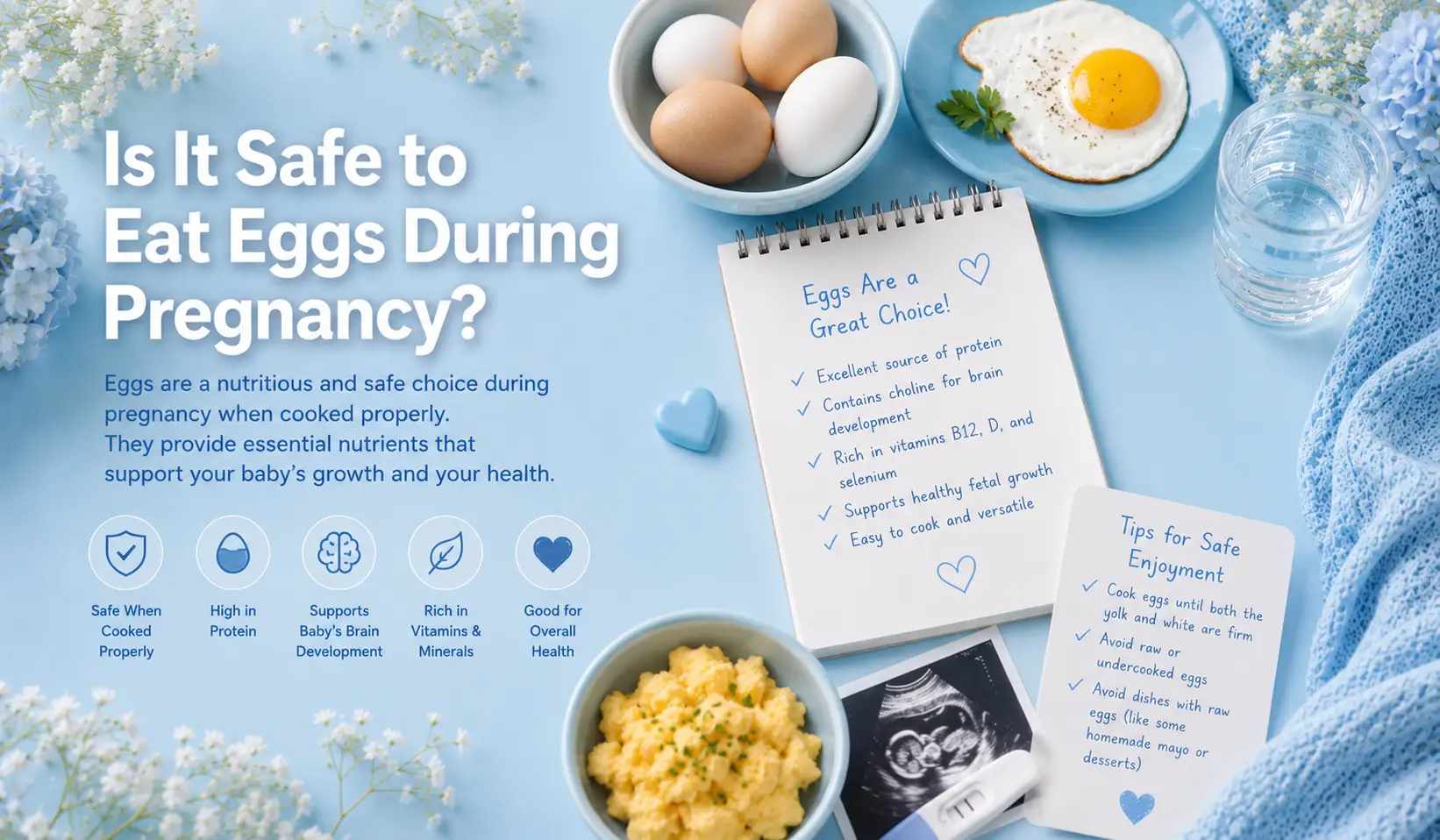
Yes, eggs are safe to eat during pregnancy — as long as they’re fully cooked, with both the yolk and white firm. The concern with eggs isn’t the food itself, it’s Salmonella, a bacterium that can be present in raw or undercooked eggs. Cooking eggs thoroughly (or using pasteurized eggs) eliminates that risk, so eggs can and should be part of a healthy pregnancy diet.
Why Cooked Eggs Are So Beneficial in Pregnancy
Eggs punch well above their weight nutritionally, which is part of why they show up on nearly every list of top pregnancy foods:
Choline — Eggs are one of the richest dietary sources of choline, a nutrient that works alongside folate to support your baby’s brain and neural tube development. Most pregnant people don’t get enough choline from diet alone, making eggs an especially valuable food.
High-quality protein — One egg provides complete protein with all essential amino acids, supporting both fetal growth and your own increased protein needs.
Vitamin D — Important for your baby’s bone development and your own immune function.
B12 and other B vitamins — Support red blood cell formation and nervous system development.
Eating the yolk matters here — that’s where most of the choline, vitamin D, and other key nutrients are concentrated, so skipping to egg whites only misses out on much of the nutritional benefit.
Why Raw Eggs Are the Concern
Raw or undercooked eggs can carry Salmonella enteritidis, a bacterium that causes food poisoning. For anyone, Salmonella infection typically means fever, nausea, vomiting, and diarrhea. During pregnancy, the concern is slightly different: pregnancy’s naturally altered immune response can make infections harder to fight off, and in more severe or untreated cases, symptoms like dehydration and fever could potentially contribute to complications such as preterm contractions. It’s worth noting that Salmonella itself doesn’t typically cross the placenta the way Listeria does, but the general illness and dehydration risk is still reason enough for U.S. health authorities, including the FDA and CDC, to recommend against raw eggs during pregnancy.
How to Cook Eggs Safely During Pregnancy
Scrambled eggs: Cook until firm throughout, with no runny or wet texture.
Fried eggs: Cook both sides (or cover the pan) until the yolk is fully set, not runny.
Boiled eggs: Hard-boil rather than soft-boil, until the yolk is solid.
Egg dishes like casseroles or quiche: Cook to an internal temperature of 160°F to ensure the eggs are fully set throughout.
Poached eggs: These are often served with a runny yolk, so ask for a fully cooked version when dining out if you’re unsure.
Hidden Sources of Raw Egg to Watch For
Raw eggs show up in more places than people expect. Foods to be cautious of unless made with pasteurized eggs include:
Homemade Caesar dressing, hollandaise sauce, and mayonnaise
Raw cookie dough or cake batter (yes, even a “taste test”)
Homemade eggnog
Tiramisu and certain mousses
Some homemade ice cream recipes
Most store-bought versions of these products use pasteurized eggs and are considered safe — but it’s worth checking the label or ingredient list if you’re unsure, especially with anything homemade.
What About Pasteurized Eggs?
Pasteurized eggs are heated to a temperature that kills Salmonella without fully cooking the egg, making them safe to eat raw or lightly cooked. They’re sold in cartons labeled “pasteurized” and are commonly used commercially in products like packaged Caesar dressing or store-bought cookie dough. If a recipe calls for raw or lightly cooked egg — like homemade mayonnaise or a soft custard — using pasteurized eggs is the safest way to make it pregnancy-friendly.
A Note on International Guidance
If you’ve come across advice that raw eggs are fine during pregnancy, it may be based on UK guidance rather than U.S. standards. In the UK, eggs bearing the British Lion quality mark come from hens vaccinated against Salmonella and are considered safe to eat raw or runny, based on a significant, documented reduction in Salmonella risk. U.S. guidance from the FDA doesn’t currently extend the same allowance, so raw eggs — Lion-marked or not — are generally advised against for pregnant people in the U.S. When in doubt, cooking eggs thoroughly is the universally safe choice regardless of where you live.
The Bottom Line
Fully cooked eggs are not just safe during pregnancy — they’re one of the most nutrient-dense foods you can eat, particularly for choline and protein. The rule to remember is simple: cook until both the yolk and white are firm, watch out for hidden raw egg in dressings and desserts, and reach for pasteurized eggs if a recipe calls for a raw or lightly cooked one.
FAQ
Can I eat a soft-boiled or over-easy egg while pregnant?
It’s best to avoid runny yolks unless the eggs are pasteurized, since a runny yolk means the egg hasn’t reached the temperature needed to kill Salmonella. Hard-boiled or fully cooked over-easy eggs (with a firm yolk) are the safer choice.
Is store-bought mayonnaise safe during pregnancy?
Yes. Commercial mayonnaise is made with pasteurized eggs and is considered safe. Homemade mayonnaise made with raw, unpasteurized eggs is the one to avoid.
Raw cookie dough made with regular eggs isn’t recommended due to Salmonella risk. Some brands sell “edible” cookie dough made with pasteurized eggs and heat-treated flour specifically formulated to be eaten raw — check the label if you’re craving it.
How many eggs can I eat per day during pregnancy?
There’s no strict limit for most people; many sources suggest up to 1–2 eggs a day as part of a balanced diet is perfectly reasonable, though your individual needs may vary, especially if you have cholesterol concerns — worth a quick check with your provider if that applies to you.
What are the symptoms of Salmonella infection during pregnancy?
Symptoms typically include fever, nausea, vomiting, diarrhea, and stomach cramps, usually appearing within 6 hours to 6 days of exposure. If you experience these symptoms while pregnant, contact your healthcare provider.