
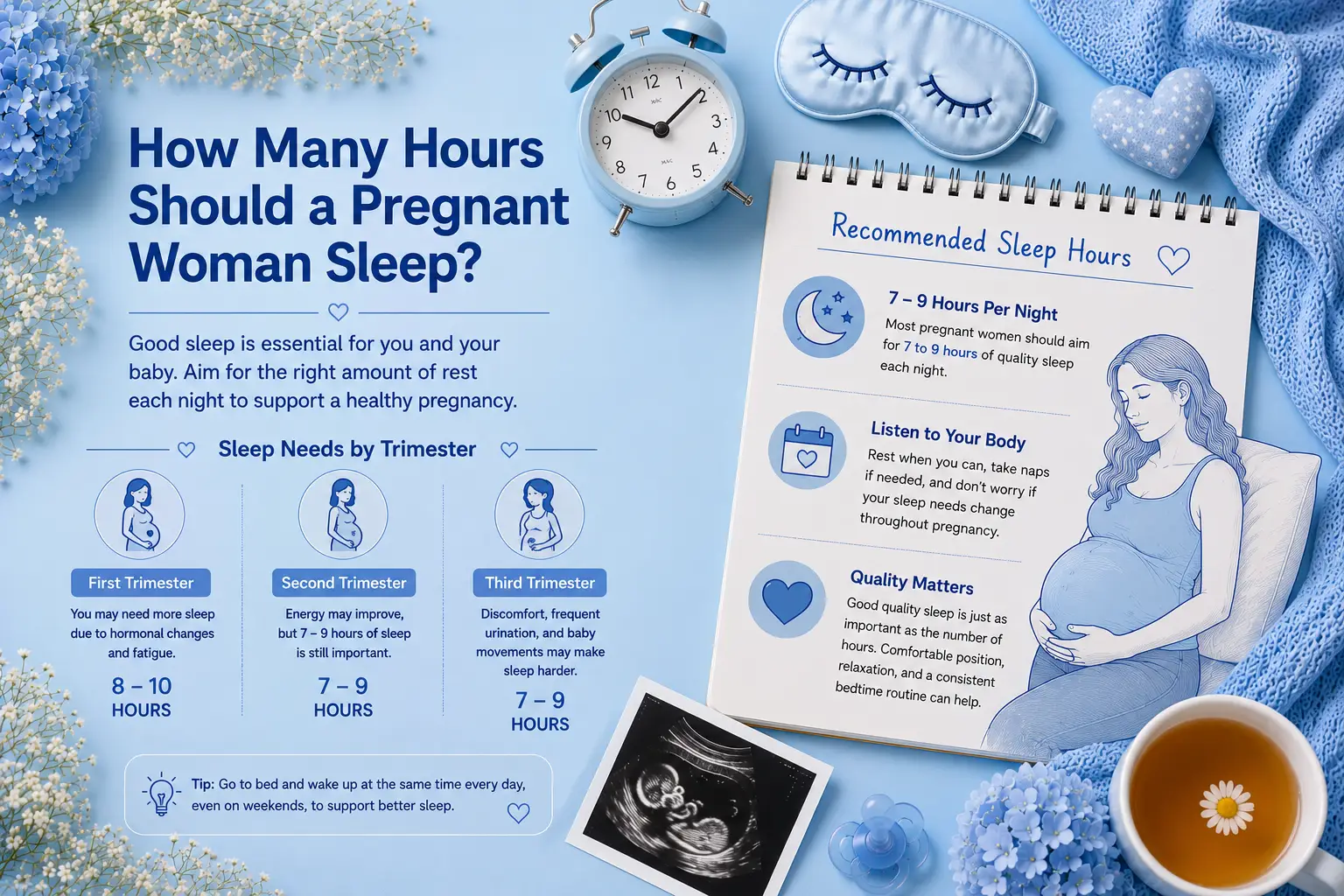

Most adults need 7 to 9 hours of sleep a night for good health. During pregnancy, that baseline often shifts upward. Many experts and medical sources recommend aiming for 8 to 10 hours of sleep per night, or at least 7 to 8 solid hours plus short daytime naps when needed. The exact number varies by person, trimester, and how restful the sleep actually is.
Quality matters as much as quantity. Interrupted nights from bathroom trips, heartburn, or leg cramps mean you may spend more time in bed to get the restorative rest your body and baby need.
Why sleep needs often increase in pregnancy
Pregnancy places extra demands on your body. Rising progesterone in the first trimester has a natural sedative effect and contributes to the intense fatigue many women feel. Your body is also building the placenta, increasing blood volume, and supporting rapid fetal growth—all energy-intensive processes. By the third trimester, the growing belly, frequent urination, back pain, and restless legs can fragment sleep, so you may need more total rest to compensate.
Research links short sleep (often defined as less than 6 or 7 hours in a 24-hour period) with higher risks of longer labors, cesarean delivery, gestational diabetes, and elevated blood pressure. Some studies also suggest associations with developmental outcomes in children. On the other end, routinely sleeping more than 9–10 continuous, uninterrupted hours in late pregnancy has been examined in a few studies, but experts emphasize that poor-quality or excessive sleep can sometimes reflect other issues rather than cause them. The practical takeaway is to prioritize consistent, restorative sleep without forcing extreme long stretches if they leave you feeling groggy.
Sleep recommendations by trimester
First trimester: Fatigue is often strongest here. Many women naturally sleep more—sometimes 9 or more hours plus naps—and this is generally healthy. Listen to your body and rest when you need to.
Second trimester: Energy often rebounds for many people. Aim for the standard 7–9 hours of nighttime sleep. Continue short naps if helpful.
Third trimester: Discomfort peaks and sleep becomes lighter and more interrupted. Target 8 hours at night if possible, and use daytime naps to reach a total of 8–10 hours of rest across 24 hours. Side sleeping (especially the left side) is recommended once the belly grows, as it supports better blood flow.
Is it normal to sleep a lot during pregnancy?
Yes. Needing more sleep—especially in the first and third trimesters—is a common and expected part of pregnancy. If you find yourself sleeping 9–10 hours and still feeling tired, it is usually a sign your body is working hard rather than a problem. Persistent extreme sleepiness that interferes with daily life or is paired with other symptoms (such as shortness of breath or dizziness) warrants a conversation with your healthcare provider to rule out anemia, thyroid issues, or sleep apnea.
Practical tips for getting enough rest
Keep a consistent bedtime and wake time when possible.
Create a cool, dark, quiet bedroom. A supportive pregnancy pillow can make side sleeping more comfortable.
Limit fluids close to bedtime to reduce nighttime bathroom trips, while staying well hydrated during the day.
Eat smaller evening meals to lessen heartburn.
Move gently during the day—walking or prenatal yoga often improves nighttime sleep.
Short naps (20–30 minutes) earlier in the day can help without disrupting night rest.
Cut caffeine after midday and avoid screens right before bed.
If insomnia is severe, talk with your provider before trying any over-the-counter aids.
The bottom line
There is no single perfect number that fits every pregnant woman, but most benefit from aiming for 8–10 hours of total sleep in a 24-hour period, or at least solid 7–8 hour nights supplemented by naps. Getting enough restorative rest supports both your well-being and your baby’s development. Pay attention to how you feel: if you wake refreshed and can function well, you are likely in a good range. If sleep problems persist or leave you exhausted, reach out to your doctor or midwife for personalized guidance.
FAQ
How many hours of sleep do pregnant women need each night?
Most sources recommend 8 to 10 hours during pregnancy, or at least 7–9 hours of quality nighttime sleep plus short naps as needed. Individual needs vary by trimester and personal factors.
Is it normal to sleep more than 9 hours while pregnant?
Yes, especially in the first trimester when fatigue is intense. Spending more time in bed is often necessary if night sleep is fragmented. Extremely long, uninterrupted sleep in late pregnancy is less common and worth discussing with a provider if it feels excessive.
Can sleeping too little during pregnancy harm the baby?
Chronic short sleep (under 6–7 hours) has been linked in studies to longer labors, higher cesarean rates, and other pregnancy complications. Aiming for adequate rest is one of the best ways to support a healthy pregnancy.
Should I nap if I’m not getting enough sleep at night?
Yes. Short daytime naps are a helpful and recommended way to make up for interrupted nighttime rest, particularly in the first and third trimesters.
Does the recommended amount of sleep change by trimester?
Yes. Many women need and want more sleep in the first trimester due to hormonal fatigue and again in the third trimester because of physical discomfort. The second trimester often brings a temporary energy boost and more typical 7–9 hour nights.