
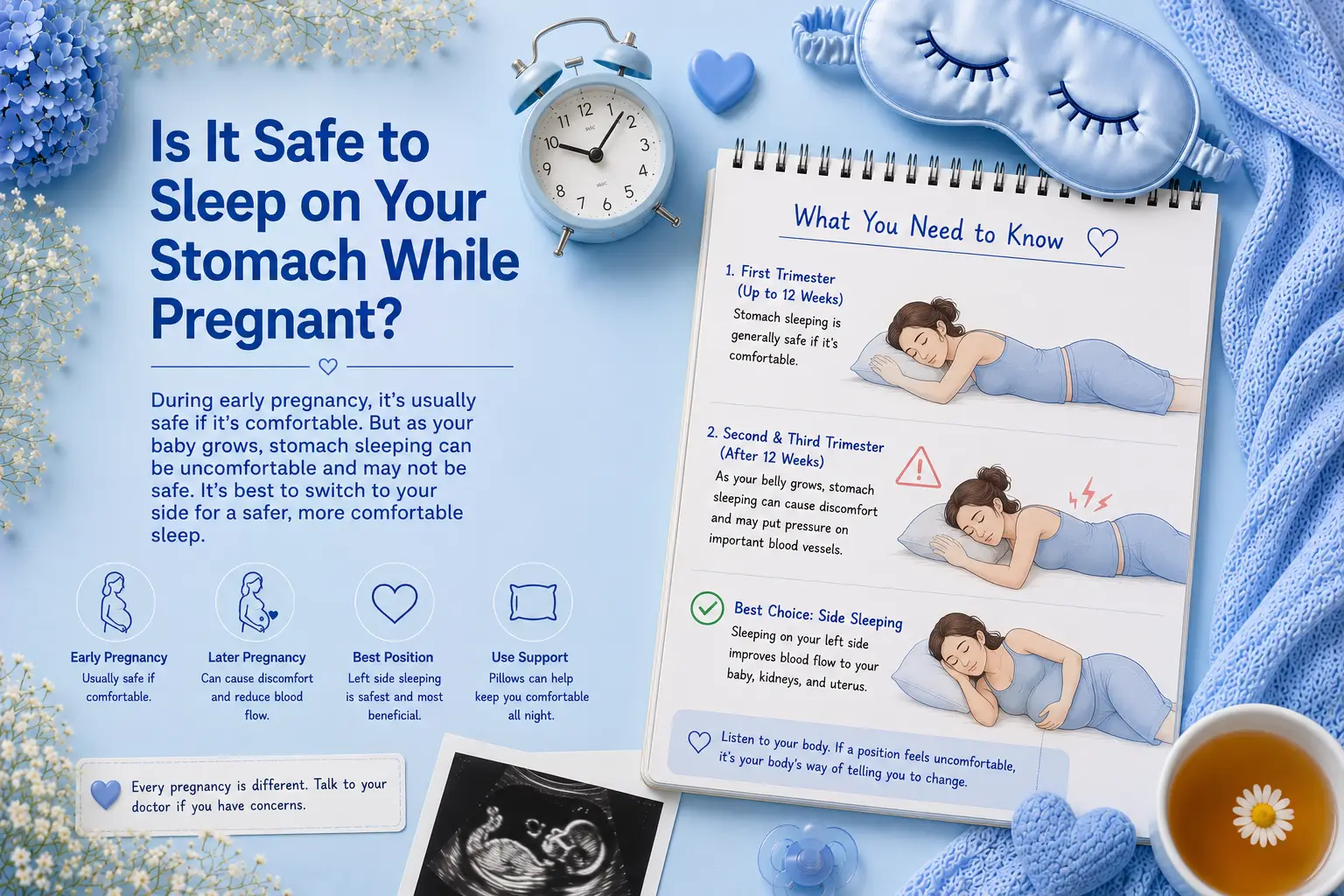

If you’re a lifelong stomach sleeper, the idea of giving up your favorite position during pregnancy can feel frustrating. The good news is that sleeping on your stomach is generally safe in the early weeks. As your pregnancy progresses, comfort—and eventually practicality—will guide you toward other positions.
Safety by trimester
First trimester (weeks 1–12): Yes, it is safe. At this stage the uterus is still small and protected behind the pelvic bone. The baby is cushioned by amniotic fluid and your body’s natural padding, so lying on your stomach does not put harmful pressure on the pregnancy. Many women continue their usual stomach-sleeping habit without issue, though breast tenderness can make it less appealing for some.
Second trimester (weeks 13–27): Most experts say you can keep sleeping on your stomach as long as it remains comfortable. Once your bump starts to show—often between 16 and 20 weeks—lying face-down becomes increasingly awkward. At that point the growing uterus begins to rise out of the pelvis, and the position can put mild pressure on your abdomen and internal organs. There is no strict medical cutoff that applies to every woman, but the consensus is to transition away from stomach sleeping once the belly makes it uncomfortable.
Third trimester (weeks 28 onward): Sleeping on your stomach is no longer practical or recommended. The large bump makes the position nearly impossible, and the weight of the uterus can compress organs and restrict comfortable breathing. Side sleeping (preferably the left side) becomes the preferred choice for better blood flow to the uterus and placenta.
What happens if you wake up on your stomach later in pregnancy?
Don’t panic. Occasional brief periods on your stomach (or even your back) while asleep are common and not considered dangerous. Research on sleep position and pregnancy outcomes focuses mainly on the position you fall asleep in, not every movement during the night. If you wake up on your stomach, simply roll onto your side and go back to sleep. Your growing belly usually makes prolonged stomach sleeping uncomfortable enough that you won’t stay there long.
Why side sleeping becomes the better option
Once the uterus expands significantly, side sleeping—especially on the left side—supports healthier circulation. It helps keep the weight of the uterus off major blood vessels (the inferior vena cava and aorta), which improves blood flow to both you and the baby and can reduce swelling in the legs and ankles. Right-side sleeping is also considered safe if left-side feels unnatural. Using a pregnancy pillow between your knees and under your belly can make the transition much easier.
Tips for stomach sleepers transitioning to side sleeping
Start practicing side sleeping earlier in the second trimester so the change feels gradual.
Place a firm pillow or pregnancy wedge behind your back to discourage rolling onto your stomach or back.
Put a pillow between your knees and another under your belly for support and spinal alignment.
Experiment with a body pillow or U-shaped pregnancy pillow designed for side sleepers.
Keep the bedroom cool and dark, and stick to a consistent bedtime routine to improve overall sleep quality.
The bottom line
Sleeping on your stomach is safe in the first trimester and often into the early second trimester while it still feels comfortable. After that, the physical changes of pregnancy naturally push most women toward side sleeping, which is the position experts recommend for the remainder of pregnancy. Listen to your body—if a position causes discomfort or restricts your breathing, switch. And if you have specific concerns about sleep positions or discomfort, discuss them with your healthcare provider for personalized advice.
FAQ
When should I stop sleeping on my stomach during pregnancy?
Most women find it becomes uncomfortable between 16 and 20 weeks, when the bump starts to show. Many sources suggest transitioning to side sleeping by the middle of the second trimester.
Can sleeping on my stomach hurt the baby?
In early pregnancy, no. The uterus is protected by the pelvis and the baby is well cushioned. Later on, the position becomes impractical rather than directly harmful, and side sleeping is preferred for optimal blood flow.
Is it okay if I accidentally sleep on my stomach in the third trimester?
Yes. Waking up on your stomach is common and not a cause for alarm. Simply roll onto your side. Prolonged intentional stomach sleeping is unlikely because of the size of the bump.
What is the best sleeping position in pregnancy?
Side sleeping—preferably on the left side with knees slightly bent—is widely recommended once the belly grows. It supports better circulation to the uterus and placenta.
Are there any pillows that help stomach sleepers during pregnancy?
Some women try a donut-shaped or cutout pillow in early pregnancy to relieve pressure on the breasts and abdomen. Once the bump grows, full-body or U-shaped pregnancy pillows designed for side sleeping are far more useful.