Skip to content
DidYouSearch DidYouSearch
  • did you search?
  • Baby Plus+
    • Baby Activities
      • Arts & Crafts
      • Indoor Activities
      • Montessori
      • Music
      • Outdoor Activities
      • Reading
      • Sensory Play
      • Tummy Time
    • Baby Development
      • Brain Development
      • Cognitive Development
      • Emotional Development
      • Fine Motor Skills
      • Growth Milestones
      • Monthly Milestones
      • Motor Skills
      • Physical Development
      • Social Development
      • Speech Development
    • Baby Feeding
      • Allergies
      • Baby Led Weaning
      • Bottle Feeding
      • Breast feeding
        • Breastfeeding Diet
        • Breastfeeding Positions
        • Latch Problems
        • Low Milk Supply
        • Mastitis
        • Pumping Schedule
        • Weaning
      • Burping
      • Cluster Feeding
      • Feeding Schedule
      • Formula Feeding
        • Formula Amount
        • Formula Brands
        • Formula Comparison
        • Formula Preparation
        • Formula Storage
      • Hydration
      • Pumping
      • Solid Foods
    • Baby Gear Reviews
      • Best Baby Carrier
      • Best Baby Monitor
      • Best Baby Strollers
      • Best Bottles
      • Best Breast Pump
      • Best Car Seat
      • Best Cribs
      • Best Diapers
      • Best Formula
      • Best Toys
    • Baby Growth
      • Growth Spurts
      • Height Charts
      • Monthly Growth
      • Percentiles
      • Weight Charts
    • Baby Health
      • Allergies
      • Cold
      • Constipation
      • Cough
      • Diarrhea
      • Ear Infection
      • Fever
      • Flu
      • Pediatric Visits
      • Rashes
      • Teething
      • Vaccines
      • Vomiting
    • Baby Nutrition
      • Dairy
      • Drinks
      • Eggs
      • Fish
      • Fruits
      • Healthy Recipes
      • Meat
      • Snacks
      • Vegetables
      • Vitamins
    • Baby Products
      • Baby Carriers
      • Bassinets
      • Bottles
      • Breast Pumps
      • Car Seats
      • Cribs
      • Diaper Bags
      • High Chairs
      • Monitors
      • Strollers
      • Swings
      • Toys
      • Walkers
    • Baby Recipes
      • BLW Recipes
      • Breakfast
      • Dinner
      • Finger Foods
      • Lunch
      • Purees
      • Snacks
    • Baby Safety
      • Baby Proofing
      • Car Seats
      • Choking Hazards
      • CPR
      • Home Safety
      • Poison Prevention
      • Safe Sleep
      • Sun Protection
      • Water Safety
  • Baby Names
    • Boy Names
    • Girl Names
    • American baby boy names
    • American baby girl names
    • Biblical Names
    • Middle Names
    • Modern Names
    • Short Names
    • Unique Names
    • Unisex Names
  • Recommended
    • Baby Shopping
      • Baby Registry
      • Budget Baby Shopping
      • Hospital Bag
      • Must Have Products
      • Newborn Checklist
      • Nursery Ideas
    • Baby Sleep
      • Bedtime Routine
      • Co Sleeping
      • Crib Safety
      • Nap Schedules
      • Night Wakings
      • Sleep Environment
      • Sleep Products
      • Sleep Regression
      • Sleep Training
      • Wake Windows
      • White Noise
    • Childcare
      • Daycare
      • Babysitters
      • Kindergarten
      • Nannies
      • Preschool
    • Newborn Care
      • Nail Care
      • Baby Hygiene
      • Bathing
      • Crying
      • Diapering
      • Ear Care
      • Eye Care
      • Skin Care
      • Soothing Techniques
      • Temperature
      • Umbilical Cord
    • Special Needs
      • Premature Babies
      • Autism Signs
      • Developmental Delays
      • Down Syndrome
      • NICU
      • Twins
    • Seasonal Baby Care
      • Spring
      • Summer
      • Travel
      • Fall
      • Holidays
      • Winter
  • Parenting
    • Bonding
    • Discipline
    • Emotional Intelligence
    • First Time Parents
    • Gentle Parenting
    • Positive Parenting
    • Routines
    • Single Parents
    • Working Parents
  • Pregnancy
    • Pregnancy Complications
    • Labor & Delivery
    • Postpartum Recovery
    • Pregnancy Exercises
    • Pregnancy Medications
    • Pregnancy Nutrition
    • Pregnancy Sleep
    • Pregnancy Symptoms
    • Pregnancy Tests
    • Pregnancy Vitamins
    • Pregnancy Weeks
  • Toddler
    • Preschool
    • Speech
    • Tantrums
    • Toddler Food
    • Toddler Sleep
    • Behavior
    • Independence
    • Learning
    • Potty Training
  • Traveling with Baby
    • Road Trips
    • Beach
    • Camping
    • Flying
    • Hotels
    • Packing Lists
  • did you search?
  • Baby Plus+
    • Baby Activities
      • Arts & Crafts
      • Indoor Activities
      • Montessori
      • Music
      • Outdoor Activities
      • Reading
      • Sensory Play
      • Tummy Time
    • Baby Development
      • Brain Development
      • Cognitive Development
      • Emotional Development
      • Fine Motor Skills
      • Growth Milestones
      • Monthly Milestones
      • Motor Skills
      • Physical Development
      • Social Development
      • Speech Development
    • Baby Feeding
      • Allergies
      • Baby Led Weaning
      • Bottle Feeding
      • Breast feeding
        • Breastfeeding Diet
        • Breastfeeding Positions
        • Latch Problems
        • Low Milk Supply
        • Mastitis
        • Pumping Schedule
        • Weaning
      • Burping
      • Cluster Feeding
      • Feeding Schedule
      • Formula Feeding
        • Formula Amount
        • Formula Brands
        • Formula Comparison
        • Formula Preparation
        • Formula Storage
      • Hydration
      • Pumping
      • Solid Foods
    • Baby Gear Reviews
      • Best Baby Carrier
      • Best Baby Monitor
      • Best Baby Strollers
      • Best Bottles
      • Best Breast Pump
      • Best Car Seat
      • Best Cribs
      • Best Diapers
      • Best Formula
      • Best Toys
    • Baby Growth
      • Growth Spurts
      • Height Charts
      • Monthly Growth
      • Percentiles
      • Weight Charts
    • Baby Health
      • Allergies
      • Cold
      • Constipation
      • Cough
      • Diarrhea
      • Ear Infection
      • Fever
      • Flu
      • Pediatric Visits
      • Rashes
      • Teething
      • Vaccines
      • Vomiting
    • Baby Nutrition
      • Dairy
      • Drinks
      • Eggs
      • Fish
      • Fruits
      • Healthy Recipes
      • Meat
      • Snacks
      • Vegetables
      • Vitamins
    • Baby Products
      • Baby Carriers
      • Bassinets
      • Bottles
      • Breast Pumps
      • Car Seats
      • Cribs
      • Diaper Bags
      • High Chairs
      • Monitors
      • Strollers
      • Swings
      • Toys
      • Walkers
    • Baby Recipes
      • BLW Recipes
      • Breakfast
      • Dinner
      • Finger Foods
      • Lunch
      • Purees
      • Snacks
    • Baby Safety
      • Baby Proofing
      • Car Seats
      • Choking Hazards
      • CPR
      • Home Safety
      • Poison Prevention
      • Safe Sleep
      • Sun Protection
      • Water Safety
  • Baby Names
    • Boy Names
    • Girl Names
    • American baby boy names
    • American baby girl names
    • Biblical Names
    • Middle Names
    • Modern Names
    • Short Names
    • Unique Names
    • Unisex Names
  • Recommended
    • Baby Shopping
      • Baby Registry
      • Budget Baby Shopping
      • Hospital Bag
      • Must Have Products
      • Newborn Checklist
      • Nursery Ideas
    • Baby Sleep
      • Bedtime Routine
      • Co Sleeping
      • Crib Safety
      • Nap Schedules
      • Night Wakings
      • Sleep Environment
      • Sleep Products
      • Sleep Regression
      • Sleep Training
      • Wake Windows
      • White Noise
    • Childcare
      • Daycare
      • Babysitters
      • Kindergarten
      • Nannies
      • Preschool
    • Newborn Care
      • Nail Care
      • Baby Hygiene
      • Bathing
      • Crying
      • Diapering
      • Ear Care
      • Eye Care
      • Skin Care
      • Soothing Techniques
      • Temperature
      • Umbilical Cord
    • Special Needs
      • Premature Babies
      • Autism Signs
      • Developmental Delays
      • Down Syndrome
      • NICU
      • Twins
    • Seasonal Baby Care
      • Spring
      • Summer
      • Travel
      • Fall
      • Holidays
      • Winter
  • Parenting
    • Bonding
    • Discipline
    • Emotional Intelligence
    • First Time Parents
    • Gentle Parenting
    • Positive Parenting
    • Routines
    • Single Parents
    • Working Parents
  • Pregnancy
    • Pregnancy Complications
    • Labor & Delivery
    • Postpartum Recovery
    • Pregnancy Exercises
    • Pregnancy Medications
    • Pregnancy Nutrition
    • Pregnancy Sleep
    • Pregnancy Symptoms
    • Pregnancy Tests
    • Pregnancy Vitamins
    • Pregnancy Weeks
  • Toddler
    • Preschool
    • Speech
    • Tantrums
    • Toddler Food
    • Toddler Sleep
    • Behavior
    • Independence
    • Learning
    • Potty Training
  • Traveling with Baby
    • Road Trips
    • Beach
    • Camping
    • Flying
    • Hotels
    • Packing Lists
Close

Search

Home/Pregnancy/Pregnancy Sleep/Can lack of sleep affect my baby during pregnancy?
Pregnancy Sleep

Can lack of sleep affect my baby during pregnancy?

By DrAdam
August 5, 2026 4 Min Read
0

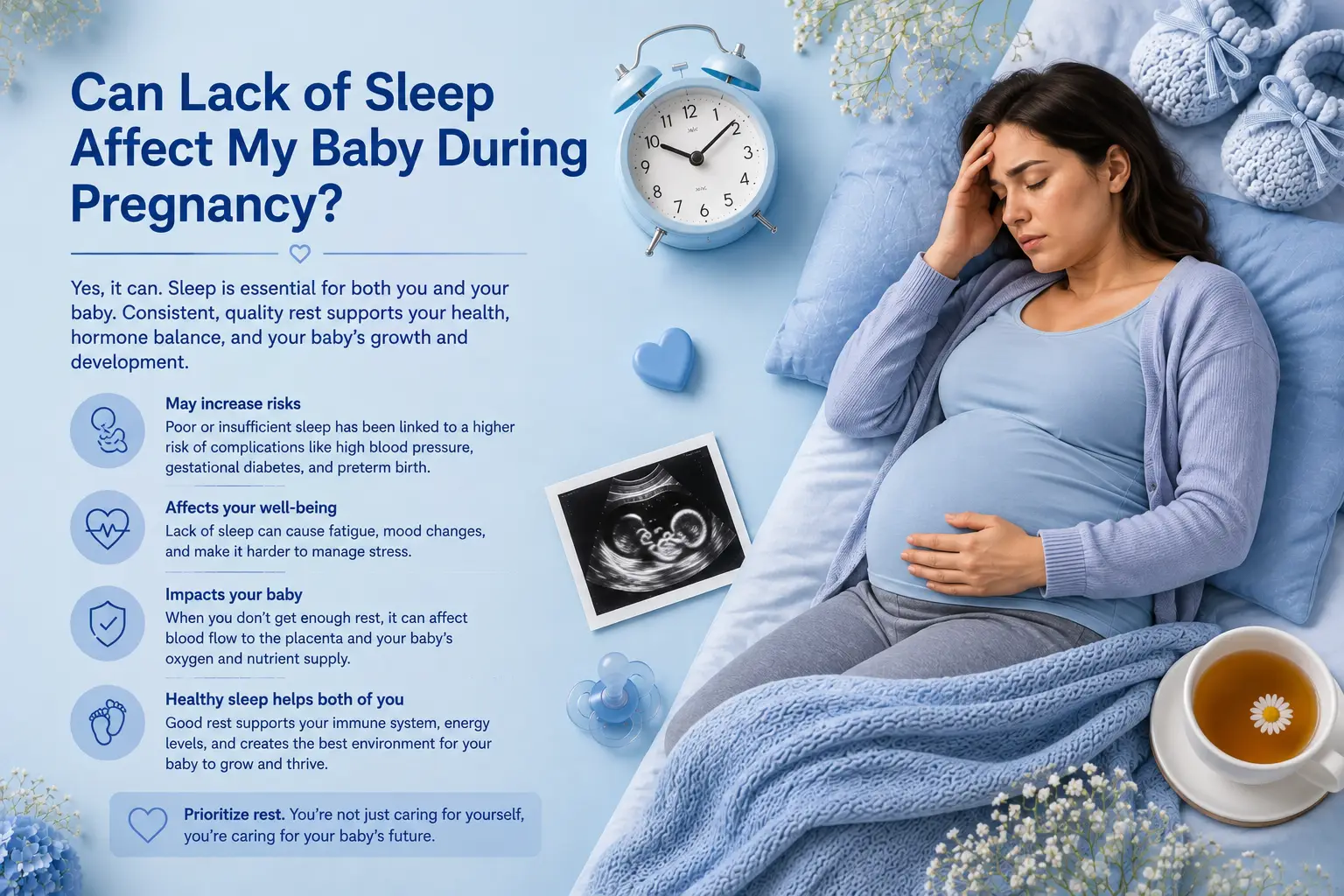
Yes. While the occasional restless night is common and usually not harmful, consistent short or poor-quality sleep during pregnancy can influence both maternal health and fetal outcomes. Research links chronic sleep deprivation to higher risks of pregnancy complications and, in some studies, effects on the baby’s growth, delivery, and longer-term development.

How Maternal Sleep Influences the Baby

Contents hide
1 How Maternal Sleep Influences the Baby
2 How Much Sleep Do Pregnant Women Need?
3 Practical Ways to Improve Sleep During Pregnancy
4 Addressing Common Worries
5 FAQ
5.1 Can lack of sleep during pregnancy cause developmental delays in the baby?
5.2 How much sleep should I get while pregnant?
5.3 Does poor sleep increase the risk of preterm birth or low birth weight?
5.4 Is it dangerous if I only sleep a few hours some nights?
5.5 What can I do if pregnancy insomnia is severe?

Sleep is when the body repairs tissues, regulates hormones, and supports immune function. During pregnancy these processes also affect the placenta and the developing fetus. Deep sleep helps release growth hormone, which supports both maternal recovery and fetal growth. Disrupted sleep can alter stress hormones (like cortisol), glucose metabolism, blood pressure regulation, and inflammatory signals that reach the baby.

Key associations from studies include:

Pregnancy complications that indirectly affect the baby: Women who sleep less than six to seven hours per night show higher rates of preeclampsia (high blood pressure), gestational diabetes, and insulin resistance. These conditions can restrict blood flow and nutrient delivery to the placenta.

Delivery and newborn outcomes: Sleep deprivation is linked to longer labors, higher rates of cesarean delivery, preterm birth, intrauterine growth restriction (IUGR), lower Apgar scores, and increased likelihood of NICU admission. Poor sleep quality in the third trimester has also been associated with reduced fetal movements and, in some research, higher stillbirth risk.

Neurodevelopmental effects: A 2024 study of more than 7,000 mother-child pairs found that short sleep duration (under seven hours) during pregnancy was associated with higher risk of neurodevelopmental delays in children up to age three, including slower progress in cognitive, social, emotional, motor, and speech skills. Boys appeared more vulnerable. Other research points to second-trimester sleep problems as particularly linked to later ADHD symptoms, sleep difficulties, and emotional regulation issues in preschoolers. Mechanisms may involve changes in maternal glucose metabolism and fetal insulin signaling (reflected in cord-blood markers).

These findings are associative rather than strictly causal. Many factors (stress, socioeconomic status, underlying health conditions) can contribute. Still, the pattern across multiple studies is consistent enough that experts view maternal sleep as a modifiable factor that can support healthier fetal development.

How Much Sleep Do Pregnant Women Need?

Most guidelines recommend 7–9 hours of sleep per night for adults, with many clinicians advising pregnant women aim for closer to 8–10 hours when possible. Nearly 40% of pregnant people report short sleep duration. Sleep needs and challenges shift across trimesters:

First trimester: Rising progesterone often causes fatigue and daytime sleepiness, yet frequent bathroom trips and nausea disrupt nights.

Second trimester: Many experience temporary relief, though this window appears especially important for fetal brain development.

Third trimester: Physical discomfort, heartburn, restless legs syndrome, and snoring or sleep apnea become more common.

Quality matters as much as quantity. Fragmented sleep or untreated sleep apnea can reduce oxygen delivery to the fetus even if total hours look adequate.

Practical Ways to Improve Sleep During Pregnancy

Keep a consistent bedtime and wake time, including weekends.

Sleep on your left side (especially later in pregnancy) to optimize blood flow to the uterus and kidneys; use pillows between knees and under the belly for support.

Limit screens, caffeine, and large meals close to bedtime. A dark, cool, quiet bedroom helps.

Address restless legs by checking iron and folate levels with your provider; prenatal vitamins often help.

Practice gentle stress reduction—short walks, prenatal yoga, or a simple to-do list before bed can quiet racing thoughts.

If snoring, gasping, or excessive daytime sleepiness occurs, discuss sleep apnea evaluation; treatment can improve oxygen levels for both mother and baby.

Over-the-counter antihistamines containing diphenhydramine are sometimes used short-term under medical guidance. Always check with your obstetric provider before taking anything.

Addressing Common Worries

Many people ask whether a few nights of poor sleep can cause miscarriage. Occasional short sleep is unlikely to be the primary cause—most early losses stem from chromosomal factors. However, chronic sleep deprivation, night-shift work, and severe insomnia have been associated with modestly elevated miscarriage risk in some studies, possibly through hormonal or inflammatory pathways. The stronger and more consistent evidence centers on later pregnancy complications and developmental outcomes rather than isolated early losses.

If sleep problems feel overwhelming, talk with your healthcare provider. They can rule out underlying issues (anemia, thyroid changes, depression, or sleep disorders) and offer tailored support. Prioritizing rest is one concrete way to care for both yourself and your baby.

Getting enough quality sleep will not eliminate every pregnancy challenge, but it is a practical, evidence-supported step that benefits maternal well-being and creates a healthier environment for fetal growth and development.

FAQ

Can lack of sleep during pregnancy cause developmental delays in the baby?

Some research, including large cohort studies, links short maternal sleep (under seven hours) with higher chances of neurodevelopmental delays in early childhood. Effects appear stronger for certain skills and may be more pronounced in boys. Improving sleep habits is a reasonable preventive step.

How much sleep should I get while pregnant?

Aim for 7–9 hours, ideally closer to 8–10 when possible. Consistency and quality are as important as total hours. Listen to your body—daytime rest can help if nights are interrupted.

Does poor sleep increase the risk of preterm birth or low birth weight?

Yes. Multiple studies associate inadequate or disrupted sleep with higher rates of preterm labor, intrauterine growth restriction, and related complications. Addressing sleep issues may help lower these risks.

Is it dangerous if I only sleep a few hours some nights?

An occasional bad night is common and generally not harmful. Chronic short sleep or untreated sleep disorders carry more concern. Focus on overall patterns rather than single nights, and seek help if problems persist.

What can I do if pregnancy insomnia is severe?

Start with sleep hygiene (consistent schedule, comfortable position, limited screens). Discuss symptoms with your provider—they may evaluate for restless legs, sleep apnea, or other treatable causes and suggest safe short-term options or referrals. Never hesitate to ask for support.


Author

DrAdam

Dr. Adam. Obstetrician and Gynecologist

Follow Me
Other Articles
Previous

Is it safe to sleep on your stomach while pregnant?

Next

Best sleeping positions by trimester

No Comment! Be the first one.

Leave a Reply Cancel reply

Your email address will not be published. Required fields are marked *

What is Did You Search?

The “Did You Search” website was created for all mothers and families. Just search to find all your needs about your children.

Links

  • about
  • contact
  • privacy policy
  • medical disclaimer
  • sitemap
Copyright 2026 — DidYouSearch. All rights reserved.