
If you’re lying awake at 2 a.m. wondering why you can’t sleep while pregnant, you’re far from alone. Pregnancy insomnia is extremely common. Roughly one in four women experiences significant sleep disruption in the first trimester, and by the third trimester that number climbs as high as 60–80%.
Hormonal shifts, a growing belly, frequent bathroom trips, heartburn, and racing thoughts about the baby all conspire against restful nights. The good news: most pregnancy insomnia is manageable with practical, non-medication strategies. Here’s what actually helps.
Why Sleep Gets Harder During Pregnancy
In early pregnancy, rising levels of progesterone and estrogen disrupt normal sleep cycles and can leave you feeling exhausted by day yet wired at night. As the pregnancy progresses, physical factors take over: pressure on the bladder, back pain, leg cramps or restless legs, heartburn from the expanding uterus, and difficulty finding a comfortable position. Anxiety about labor, parenting, or the pregnancy itself often spikes cortisol and keeps the mind spinning.
These challenges are normal, but chronic poor sleep isn’t ideal. Inadequate rest has been linked to higher risks of gestational diabetes, preeclampsia, longer labor, and postpartum mood issues. Aiming for 8–10 hours of sleep (including short daytime naps if needed) supports both you and the baby.
Practical Ways to Sleep Better While Pregnant
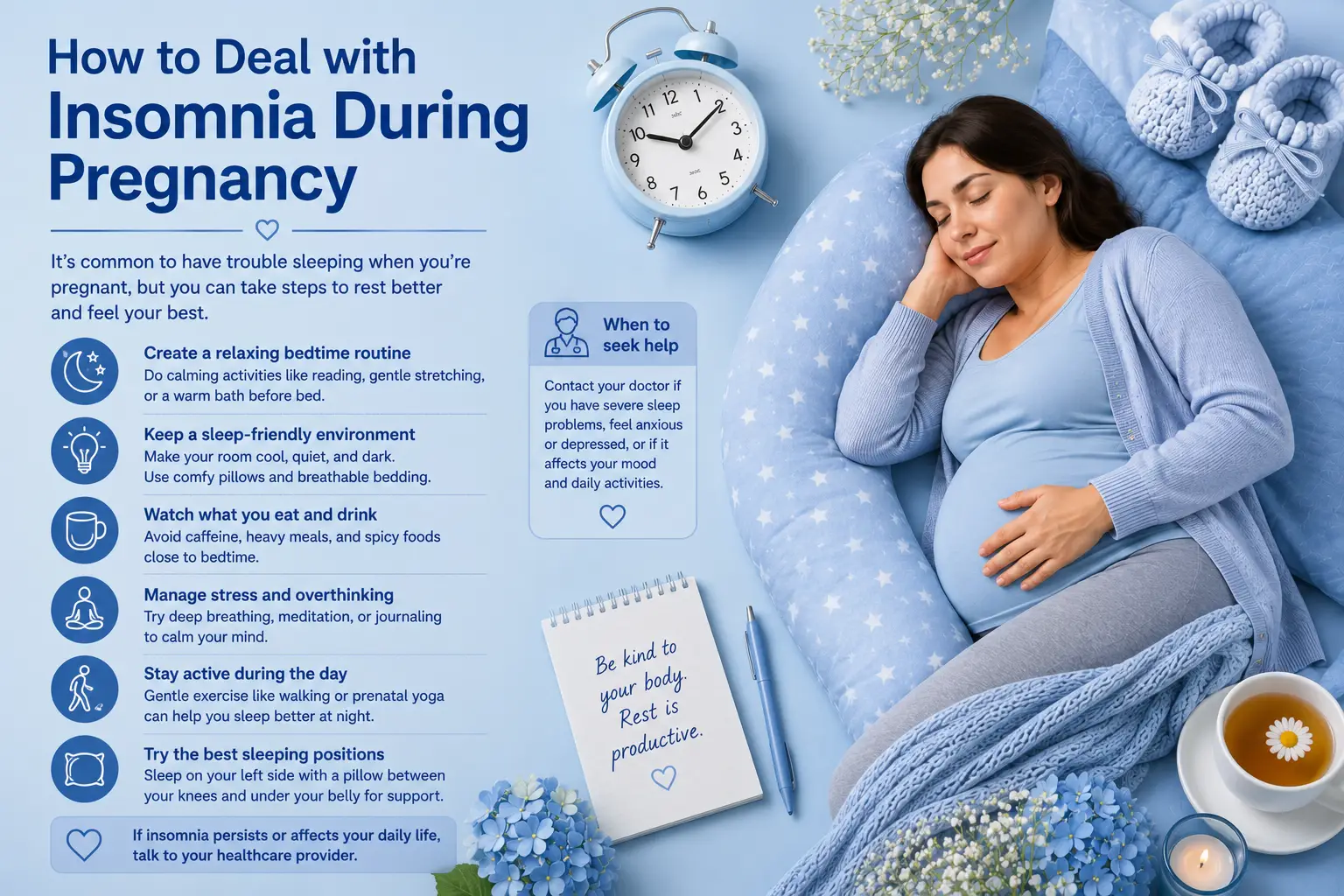
Master sleep hygiene and a consistent schedule Go to bed and wake up at roughly the same times every day, even on weekends. This trains your body’s internal clock. Make your bedroom a true sleep sanctuary: cool (around 65°F/18°C), dark, and quiet. Blackout curtains, a white-noise machine, or a fan can help. Keep phones and screens out of the bedroom—blue light suppresses melatonin.
Get the position right After the first trimester, sleeping on your left side is generally recommended. It improves blood flow to the uterus, placenta, and kidneys while reducing pressure on major blood vessels. Place a pillow between your knees and another under your belly or lower back for support. A full-length pregnancy pillow makes this far easier. If you wake up on your back, simply roll over—don’t stress about it.
Time fluids, food, and caffeine carefully Stay well hydrated during the day, but taper fluid intake a couple of hours before bed to cut down on nighttime bathroom runs. Avoid large, spicy, or acidic meals close to bedtime to minimize heartburn. A small protein-and-complex-carb snack (like a banana with nut butter) can stabilize blood sugar. Cut caffeine by early afternoon; it stays in your system longer than you think.
Move your body (but not too late) Gentle exercise—walking, swimming, or prenatal yoga—earlier in the day improves sleep quality and eases stress. Avoid vigorous workouts close to bedtime. Stretching the calves before bed can reduce nighttime leg cramps.
Wind down with relaxation techniques A warm (not hot) bath, progressive muscle relaxation, deep breathing, or a short guided meditation can signal to your nervous system that it’s time to rest. Journaling worries before bed often helps empty a racing mind. If you can’t fall asleep within 20–30 minutes, get up and do something calm under low light until you feel drowsy again—lying in bed frustrated only reinforces the association between bed and wakefulness.
Smart napping Short power naps (20–30 minutes) earlier in the day can help you catch up without sabotaging nighttime sleep. Longer or late-afternoon naps often backfire.
Most experts prefer these lifestyle approaches first. Over-the-counter options such as certain antihistamines (e.g., doxylamine or diphenhydramine) are sometimes considered safe for occasional use, but always check with your healthcare provider before taking any sleep aid, including melatonin or herbal teas. Cognitive behavioral therapy for insomnia (CBT-I) is highly effective and pregnancy-safe when available.
When to Reach Out for Help
Occasional restless nights are expected. Contact your doctor or midwife if insomnia is severe, lasts for weeks, or comes with loud snoring, gasping, extreme daytime sleepiness, or symptoms of depression/anxiety. Underlying issues like sleep apnea, restless legs syndrome, or significant reflux may need specific treatment.
Pregnancy insomnia usually eases after birth (though new-parent sleep presents its own challenges). In the meantime, small consistent changes often produce the biggest improvements. Be patient with yourself—this phase is temporary, and prioritizing rest is one of the kindest things you can do for both of you.
FAQ
Is insomnia normal during pregnancy?
Yes. It affects the majority of pregnant people at some point, becoming more common as the pregnancy advances. While normal, it still deserves attention so it doesn’t affect your well-being.
When does pregnancy insomnia usually start?
It can begin in the first trimester due to hormonal changes and nausea, but it is most disruptive in the second and especially third trimesters as physical discomfort increases.
What is the best sleeping position for pregnancy insomnia?
Left-side sleeping with supportive pillows is generally recommended after the first trimester for optimal circulation. Right-side is also acceptable; avoid prolonged back sleeping later in pregnancy.
Are there safe sleep aids I can take while pregnant?
Lifestyle strategies come first. Some antihistamines may be approved by your provider for short-term use. Melatonin and most prescription sleep medications require individualized medical advice—never self-medicate.
Does pregnancy insomnia harm the baby?
Mild, occasional poor sleep is unlikely to cause problems. Chronic severe insomnia, however, has been associated with higher risks of certain complications, which is why improving sleep is worthwhile for both of you.