
If you’ve suddenly started waking up from intense, colorful, or downright bizarre dreams since becoming pregnant, you’re experiencing one of the most common (and least talked-about) side effects of pregnancy. Vivid dreams during pregnancy are normal for many people. In fact, studies and anecdotal reports show that pregnant women often remember more dreams, experience greater emotional intensity in them, and notice themes tied directly to the pregnancy itself.
These dreams can feel more real, more emotional, or more unsettling than anything you’ve experienced before. The reasons behind them are a mix of biology, sleep changes, and the emotional weight of preparing for a baby.
What Causes Vivid Dreams While Pregnant?
Several overlapping factors make pregnancy dreams so memorable and intense.
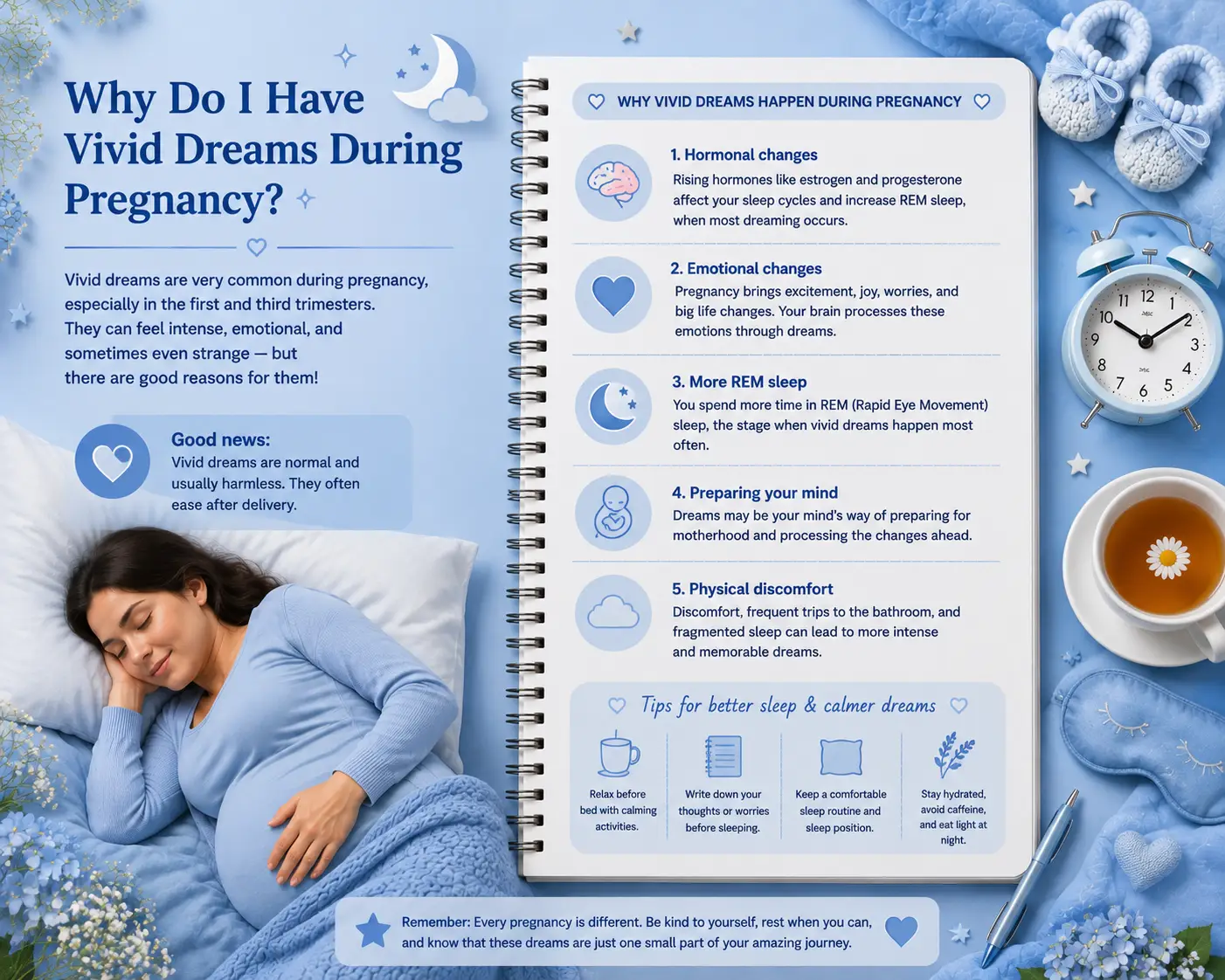
Hormonal shifts play a big role. Rising levels of progesterone and estrogen affect brain chemistry and sleep architecture. These hormones influence neurotransmitters involved in REM sleep—the stage where most vivid dreaming occurs. While they don’t necessarily increase total REM time, they contribute to lighter, more fragmented sleep overall, which makes dream recall stronger.
Interrupted sleep is a major contributor. Pregnancy often brings frequent nighttime awakenings from bathroom trips, heartburn, leg cramps, back pain, or the baby’s movements. When you wake up during or right after a REM cycle, the dream is fresh in your mind and far easier to remember. In non-pregnant sleep, many dreams simply fade before morning. During pregnancy, those interruptions turn ordinary dreams into vivid, lingering memories.
Emotional processing intensifies everything. Pregnancy is a time of profound physical, identity, and lifestyle change. Dreams often serve as the brain’s way of working through hopes, fears, excitement, and anxiety. First-time parents tend to report more pregnancy-related dreams than those who have already had children. Anxiety about labor, the baby’s health, or new responsibilities frequently shows up symbolically—sometimes as nightmares.
Interestingly, some research suggests that people who experience more negative or stressful dreams during pregnancy may actually have shorter labors or lower rates of postpartum depression. The dreams appear to help process difficult emotions ahead of time.
How Dreams Change Across the Trimesters
Dream content often shifts with the stage of pregnancy.
In the first trimester, many people notice fertility imagery—gardens, fruit, water, flowers—or themes of new beginnings. Early hormonal changes and the shock of the pregnancy itself can make these dreams especially vivid and memorable, even as early as 5–9 weeks.
During the second trimester, dreams may become more narrative and emotional as the pregnancy feels more real and the baby’s movements begin.
In the third trimester, themes often turn toward preparation, journeys, packing, or anxiety about birth and the baby’s arrival. Nightmares about losing the baby, giving birth to something unexpected, or feeling unprepared are common and usually reflect the natural stress of the approaching due date rather than any prediction of real events.
Are Vivid Pregnancy Dreams Something to Worry About?
In almost all cases, no. Vivid dreams and even occasional nightmares are a normal part of the pregnancy experience. They do not harm the baby and are not a sign that something is wrong. They simply reflect the major internal and external changes your body and mind are navigating.
That said, if nightmares become frequent, extremely distressing, or start interfering with your ability to sleep and function during the day, talk to your healthcare provider or a therapist. Recurring nightmares can sometimes point to underlying anxiety that benefits from support. Keeping a simple dream journal can also help you spot patterns and process the emotions behind them.
Improving overall sleep quality—consistent bedtime, left-side sleeping with supportive pillows, limiting late fluids and heavy meals, and practicing relaxation techniques—may reduce the intensity or frequency of memorable dreams by cutting down on nighttime awakenings.
Making Peace with Your Pregnancy Dreams
Many people find that simply knowing these dreams are normal takes away much of the worry. Sharing a particularly strange or funny dream with a partner or friend can turn an unsettling experience into a bonding moment. Others use the dreams as a gentle prompt to address daytime worries through journaling, prenatal classes, or conversations with their care team.
Pregnancy dreams are one of the more colorful ways your mind adapts to the huge transition underway. While they can feel exhausting or confusing in the moment, they are usually a healthy sign that your brain is actively processing this life-changing chapter. The intensity typically eases after birth, though new-parent sleep brings its own unique dream landscape.
You’re not imagining how real and detailed these dreams feel—your body and mind are simply working overtime in more ways than one.
FAQ
Is it normal to have vivid dreams during pregnancy?
Yes. Increased dream recall and more intense, emotional dreams are very common due to hormonal changes, fragmented sleep, and the emotional processing of pregnancy.
When do vivid dreams usually start in pregnancy?
They can begin as early as the first trimester (sometimes around 5–9 weeks) when hormone levels rise sharply, and they often continue or intensify through the later stages.
What do vivid pregnancy dreams mean?
Most experts view them as the brain’s way of sorting through emotions, fears, and excitement related to the pregnancy and upcoming parenthood. Specific symbols (water, journeys, the baby) often reflect current physical or psychological experiences rather than literal predictions.
Do pregnancy hormones cause more dreams?
Hormones like progesterone and estrogen contribute by altering sleep patterns and emotional intensity, making dreams more memorable even if total REM sleep doesn’t increase dramatically.
Should I be concerned about nightmares while pregnant?
Occasional nightmares are normal. If they become frequent, highly distressing, or disrupt your daytime functioning, discuss them with your doctor or a mental health professional for support.