
Skip to content
DidYouSearch DidYouSearch
  • did you search?
  • Baby Plus+
    • Baby Activities
      • Arts & Crafts
      • Indoor Activities
      • Montessori
      • Music
      • Outdoor Activities
      • Reading
      • Sensory Play
      • Tummy Time
    • Baby Development
      • Brain Development
      • Cognitive Development
      • Emotional Development
      • Fine Motor Skills
      • Growth Milestones
      • Monthly Milestones
      • Motor Skills
      • Physical Development
      • Social Development
      • Speech Development
    • Baby Feeding
      • Allergies
      • Baby Led Weaning
      • Bottle Feeding
      • Breast feeding
        • Breastfeeding Diet
        • Breastfeeding Positions
        • Latch Problems
        • Low Milk Supply
        • Mastitis
        • Pumping Schedule
        • Weaning
      • Burping
      • Cluster Feeding
      • Feeding Schedule
      • Formula Feeding
        • Formula Amount
        • Formula Brands
        • Formula Comparison
        • Formula Preparation
        • Formula Storage
      • Hydration
      • Pumping
      • Solid Foods
    • Baby Gear Reviews
      • Best Baby Carrier
      • Best Baby Monitor
      • Best Baby Strollers
      • Best Bottles
      • Best Breast Pump
      • Best Car Seat
      • Best Cribs
      • Best Diapers
      • Best Formula
      • Best Toys
    • Baby Growth
      • Growth Spurts
      • Height Charts
      • Monthly Growth
      • Percentiles
      • Weight Charts
    • Baby Health
      • Allergies
      • Cold
      • Constipation
      • Cough
      • Diarrhea
      • Ear Infection
      • Fever
      • Flu
      • Pediatric Visits
      • Rashes
      • Teething
      • Vaccines
      • Vomiting
    • Baby Nutrition
      • Dairy
      • Drinks
      • Eggs
      • Fish
      • Fruits
      • Healthy Recipes
      • Meat
      • Snacks
      • Vegetables
      • Vitamins
    • Baby Products
      • Baby Carriers
      • Bassinets
      • Bottles
      • Breast Pumps
      • Car Seats
      • Cribs
      • Diaper Bags
      • High Chairs
      • Monitors
      • Strollers
      • Swings
      • Toys
      • Walkers
    • Baby Recipes
      • BLW Recipes
      • Breakfast
      • Dinner
      • Finger Foods
      • Lunch
      • Purees
      • Snacks
    • Baby Safety
      • Baby Proofing
      • Car Seats
      • Choking Hazards
      • CPR
      • Home Safety
      • Poison Prevention
      • Safe Sleep
      • Sun Protection
      • Water Safety
  • Baby Names
    • Boy Names
    • Girl Names
    • American baby boy names
    • American baby girl names
    • Biblical Names
    • Middle Names
    • Modern Names
    • Short Names
    • Unique Names
    • Unisex Names
  • Recommended
    • Baby Shopping
      • Baby Registry
      • Budget Baby Shopping
      • Hospital Bag
      • Must Have Products
      • Newborn Checklist
      • Nursery Ideas
    • Baby Sleep
      • Bedtime Routine
      • Co Sleeping
      • Crib Safety
      • Nap Schedules
      • Night Wakings
      • Sleep Environment
      • Sleep Products
      • Sleep Regression
      • Sleep Training
      • Wake Windows
      • White Noise
    • Childcare
      • Daycare
      • Babysitters
      • Kindergarten
      • Nannies
      • Preschool
    • Newborn Care
      • Nail Care
      • Baby Hygiene
      • Bathing
      • Crying
      • Diapering
      • Ear Care
      • Eye Care
      • Skin Care
      • Soothing Techniques
      • Temperature
      • Umbilical Cord
    • Special Needs
      • Premature Babies
      • Autism Signs
      • Developmental Delays
      • Down Syndrome
      • NICU
      • Twins
    • Seasonal Baby Care
      • Spring
      • Summer
      • Travel
      • Fall
      • Holidays
      • Winter
  • Parenting
    • Bonding
    • Discipline
    • Emotional Intelligence
    • First Time Parents
    • Gentle Parenting
    • Positive Parenting
    • Routines
    • Single Parents
    • Working Parents
  • Pregnancy
    • Pregnancy Complications
    • Labor & Delivery
    • Postpartum Recovery
    • Pregnancy Exercises
    • Pregnancy Medications
    • Pregnancy Nutrition
    • Pregnancy Sleep
    • Pregnancy Symptoms
    • Pregnancy Tests
    • Pregnancy Vitamins
    • Pregnancy Weeks
  • Toddler
    • Preschool
    • Speech
    • Tantrums
    • Toddler Food
    • Toddler Sleep
    • Behavior
    • Independence
    • Learning
    • Potty Training
  • Traveling with Baby
    • Road Trips
    • Beach
    • Camping
    • Flying
    • Hotels
    • Packing Lists
  • did you search?
  • Baby Plus+
    • Baby Activities
      • Arts & Crafts
      • Indoor Activities
      • Montessori
      • Music
      • Outdoor Activities
      • Reading
      • Sensory Play
      • Tummy Time
    • Baby Development
      • Brain Development
      • Cognitive Development
      • Emotional Development
      • Fine Motor Skills
      • Growth Milestones
      • Monthly Milestones
      • Motor Skills
      • Physical Development
      • Social Development
      • Speech Development
    • Baby Feeding
      • Allergies
      • Baby Led Weaning
      • Bottle Feeding
      • Breast feeding
        • Breastfeeding Diet
        • Breastfeeding Positions
        • Latch Problems
        • Low Milk Supply
        • Mastitis
        • Pumping Schedule
        • Weaning
      • Burping
      • Cluster Feeding
      • Feeding Schedule
      • Formula Feeding
        • Formula Amount
        • Formula Brands
        • Formula Comparison
        • Formula Preparation
        • Formula Storage
      • Hydration
      • Pumping
      • Solid Foods
    • Baby Gear Reviews
      • Best Baby Carrier
      • Best Baby Monitor
      • Best Baby Strollers
      • Best Bottles
      • Best Breast Pump
      • Best Car Seat
      • Best Cribs
      • Best Diapers
      • Best Formula
      • Best Toys
    • Baby Growth
      • Growth Spurts
      • Height Charts
      • Monthly Growth
      • Percentiles
      • Weight Charts
    • Baby Health
      • Allergies
      • Cold
      • Constipation
      • Cough
      • Diarrhea
      • Ear Infection
      • Fever
      • Flu
      • Pediatric Visits
      • Rashes
      • Teething
      • Vaccines
      • Vomiting
    • Baby Nutrition
      • Dairy
      • Drinks
      • Eggs
      • Fish
      • Fruits
      • Healthy Recipes
      • Meat
      • Snacks
      • Vegetables
      • Vitamins
    • Baby Products
      • Baby Carriers
      • Bassinets
      • Bottles
      • Breast Pumps
      • Car Seats
      • Cribs
      • Diaper Bags
      • High Chairs
      • Monitors
      • Strollers
      • Swings
      • Toys
      • Walkers
    • Baby Recipes
      • BLW Recipes
      • Breakfast
      • Dinner
      • Finger Foods
      • Lunch
      • Purees
      • Snacks
    • Baby Safety
      • Baby Proofing
      • Car Seats
      • Choking Hazards
      • CPR
      • Home Safety
      • Poison Prevention
      • Safe Sleep
      • Sun Protection
      • Water Safety
  • Baby Names
    • Boy Names
    • Girl Names
    • American baby boy names
    • American baby girl names
    • Biblical Names
    • Middle Names
    • Modern Names
    • Short Names
    • Unique Names
    • Unisex Names
  • Recommended
    • Baby Shopping
      • Baby Registry
      • Budget Baby Shopping
      • Hospital Bag
      • Must Have Products
      • Newborn Checklist
      • Nursery Ideas
    • Baby Sleep
      • Bedtime Routine
      • Co Sleeping
      • Crib Safety
      • Nap Schedules
      • Night Wakings
      • Sleep Environment
      • Sleep Products
      • Sleep Regression
      • Sleep Training
      • Wake Windows
      • White Noise
    • Childcare
      • Daycare
      • Babysitters
      • Kindergarten
      • Nannies
      • Preschool
    • Newborn Care
      • Nail Care
      • Baby Hygiene
      • Bathing
      • Crying
      • Diapering
      • Ear Care
      • Eye Care
      • Skin Care
      • Soothing Techniques
      • Temperature
      • Umbilical Cord
    • Special Needs
      • Premature Babies
      • Autism Signs
      • Developmental Delays
      • Down Syndrome
      • NICU
      • Twins
    • Seasonal Baby Care
      • Spring
      • Summer
      • Travel
      • Fall
      • Holidays
      • Winter
  • Parenting
    • Bonding
    • Discipline
    • Emotional Intelligence
    • First Time Parents
    • Gentle Parenting
    • Positive Parenting
    • Routines
    • Single Parents
    • Working Parents
  • Pregnancy
    • Pregnancy Complications
    • Labor & Delivery
    • Postpartum Recovery
    • Pregnancy Exercises
    • Pregnancy Medications
    • Pregnancy Nutrition
    • Pregnancy Sleep
    • Pregnancy Symptoms
    • Pregnancy Tests
    • Pregnancy Vitamins
    • Pregnancy Weeks
  • Toddler
    • Preschool
    • Speech
    • Tantrums
    • Toddler Food
    • Toddler Sleep
    • Behavior
    • Independence
    • Learning
    • Potty Training
  • Traveling with Baby
    • Road Trips
    • Beach
    • Camping
    • Flying
    • Hotels
    • Packing Lists
Close

Search

Home/Baby Activities/Baby Play Ideas for Every Stage
Baby Activities

Baby Play Ideas for Every Stage

By DrAdam
August 10, 2026 4 Min Read
0

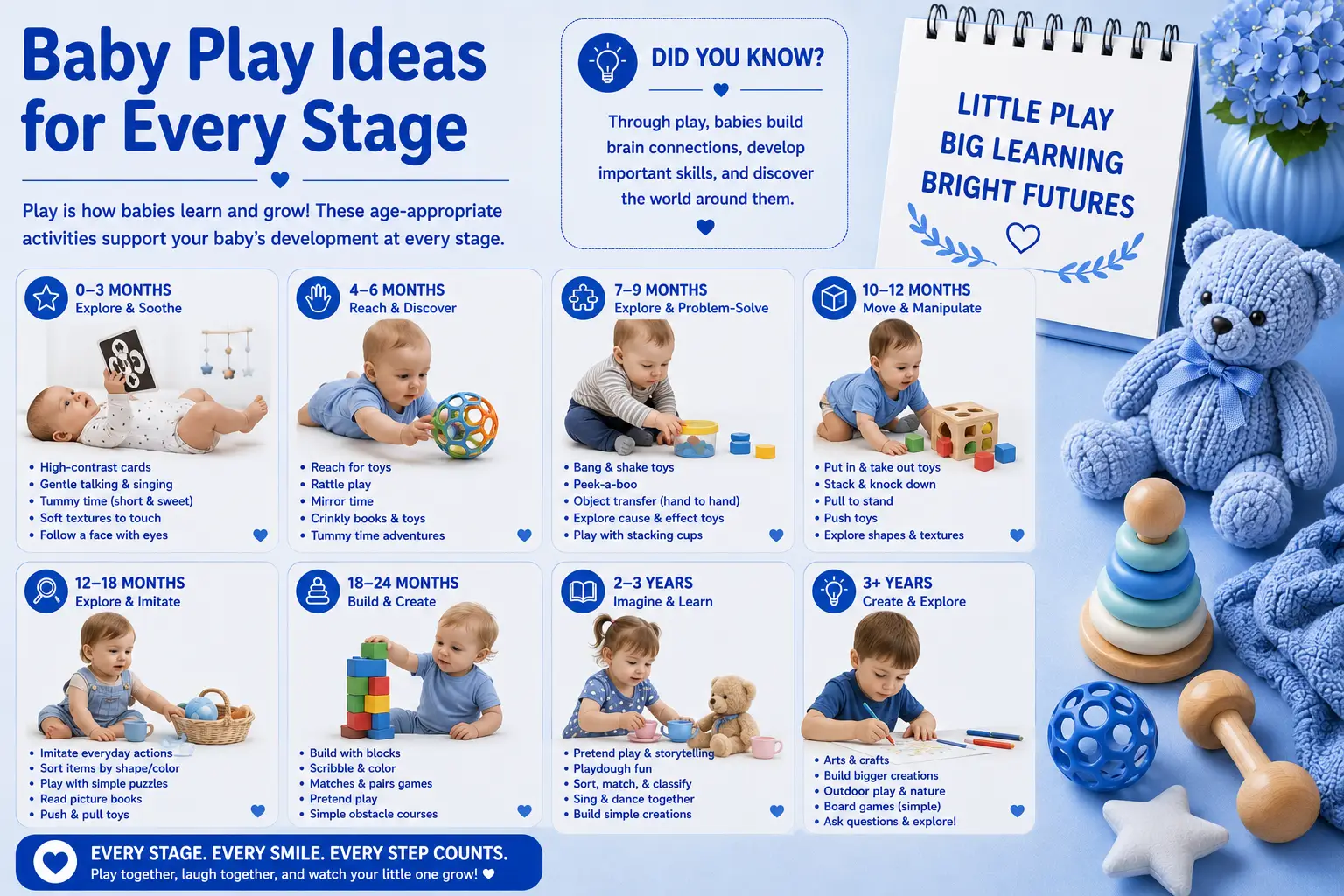
“Play” looks wildly different at 2 weeks old than it does at 10 months old — and that’s by design. Child development researchers describe play as unfolding in recognizable stages, starting with simple, unstructured exploration and gradually building toward focused, independent activity. Understanding which stage your baby is in makes it much easier to choose play ideas that actually hold their attention, instead of guessing.

This guide covers baby play ideas for every stage — both the developmental play stages identified by researchers and the age-based milestones most parents search for — so you can match activities to where your baby actually is right now.

The Stages of Play, Explained

Contents hide
1 The Stages of Play, Explained
2 Unoccupied Play Ideas (0–3 Months)
3 Solitary Play Ideas (3–9 Months)
4 Onlooker & Early Social Play Ideas (9–12 Months)
5 Independent Play vs. Interactive Play: Do Babies Need Both?
6 Tips for Matching Play to Your Baby’s Stage
7 FAQ
7.1 What are the main stages of play in babies?
7.2 At what age do babies start playing with toys on their own?
7.3 Is it normal for a baby to only play alone and ignore other babies?
7.4 How much independent play should a baby get each day?
7.5 What play ideas work best for a 6-month-old?

Child development theorist Mildred Parten identified several stages of play that children move through, and the first two apply directly to babies:

Unoccupied play (birth–3 months): Baby moves, watches, and reacts to their surroundings without a clear goal — think watching shadows on the wall, squeezing a blanket, or simply gazing at your face.

Solitary play (3 months–2 years): Baby begins actively engaging with toys and objects on their own, fully absorbed in the activity, even when you’re in the room.

Onlooker play (toward the end of the first year): Baby starts watching others play with real interest, even if they’re not joining in yet — an early bridge toward social play.

Every baby moves through these at their own pace, and it’s completely normal for a baby to dip back into an earlier stage, especially when tired or overstimulated.

Unoccupied Play Ideas (0–3 Months)

At this stage, play is about sensory exposure, not “activities” in the traditional sense.

Tummy time on a mat or your chest

High-contrast black-and-white cards or books

Talking, singing, and face-to-face interaction

Gentle textured fabrics against the skin

Watching light and shadow patterns on a wall or ceiling

Soft rattle sounds nearby

Solitary Play Ideas (3–9 Months)

As babies enter solitary play, they start reaching for, grasping, and exploring objects with real focus — the beginning of independent play.

Reaching and grasping toys of different textures

Rolling and batting at a hanging toy on a play gym

Sensory bins or texture boards (for babies past the mouthing stage, supervised)

Container play — putting objects in and taking them out

Peekaboo and simple hide-and-reveal games

Crawling toward a rolling ball

Solitary play is also a good time to practice stepping back a little. Parents don’t need to hover constantly — giving babies room to explore independently (within safe reach) builds focus, confidence, and early problem-solving skills.

Onlooker & Early Social Play Ideas (9–12 Months)

Toward the end of the first year, babies start showing real interest in watching others play, even before they can join in.

Sitting near a sibling or other baby during floor play, without pressure to interact

Simple “give and take” games with toys

Copy-me games, like clapping or waving

Watching and imitating your daily activities (stacking cups, “helping” with chores)

Group settings like a baby music class or playgroup, where observing counts as participating

Independent Play vs. Interactive Play: Do Babies Need Both?

Yes — and most days naturally include a mix of both. Independent (solitary) play teaches babies to self-soothe, focus, and entertain themselves, which becomes increasingly valuable as they grow. Interactive play with a caregiver builds language, emotional connection, and social skills. Neither one should crowd out the other; a healthy daily rhythm typically includes stretches of both.

Tips for Matching Play to Your Baby’s Stage

Watch engagement, not just age. If an activity seems too advanced or too simple, adjust rather than sticking strictly to an age chart.

Let solitary play happen. Resist the urge to jump in and “fix” a wobbly block tower — the struggle is part of the learning.

Rotate a small set of toys rather than introducing something new constantly; babies often build deeper focus with familiar objects.

Follow their cues for a break. Turning away, fussing, or losing interest are all signs it’s time to pause, regardless of the “ideal” stage-based activity.

FAQ

What are the main stages of play in babies?

The first two stages of play researchers identify are unoccupied play (birth to about 3 months), where babies explore without a clear goal, and solitary play (roughly 3 months to 2 years), where babies engage independently and intently with toys and objects.

At what age do babies start playing with toys on their own?

Babies typically begin solitary, independent play around 3 to 6 months, once they can reliably reach for and grasp objects, though the exact timing varies by baby.

Is it normal for a baby to only play alone and ignore other babies?

Yes — solitary play is completely normal and expected for babies and young toddlers, since the social skills needed for interactive play typically develop later, closer to 2 to 3 years old.

How much independent play should a baby get each day?

There’s no strict rule, but many experts recommend building in regular short stretches of unstructured, independent play daily, alongside interactive play with a caregiver, to support both focus and bonding.

What play ideas work best for a 6-month-old?

Around 6 months, most babies are in the solitary play stage and enjoy reaching and grasping activities, textured toys, sensory play, container play, and early peekaboo games.

Author

DrAdam

Dr. Adam. Obstetrician and Gynecologist

Follow Me
Other Articles
Previous

Educational Activities for Babies

Next

Developmental Activities for Babies

No Comment! Be the first one.

Leave a Reply Cancel reply

Your email address will not be published. Required fields are marked *

What is Did You Search?

The “Did You Search” website was created for all mothers and families. Just search to find all your needs about your children.

Links

  • about
  • contact
  • privacy policy
  • medical disclaimer
  • sitemap
Copyright 2026 — DidYouSearch. All rights reserved.