
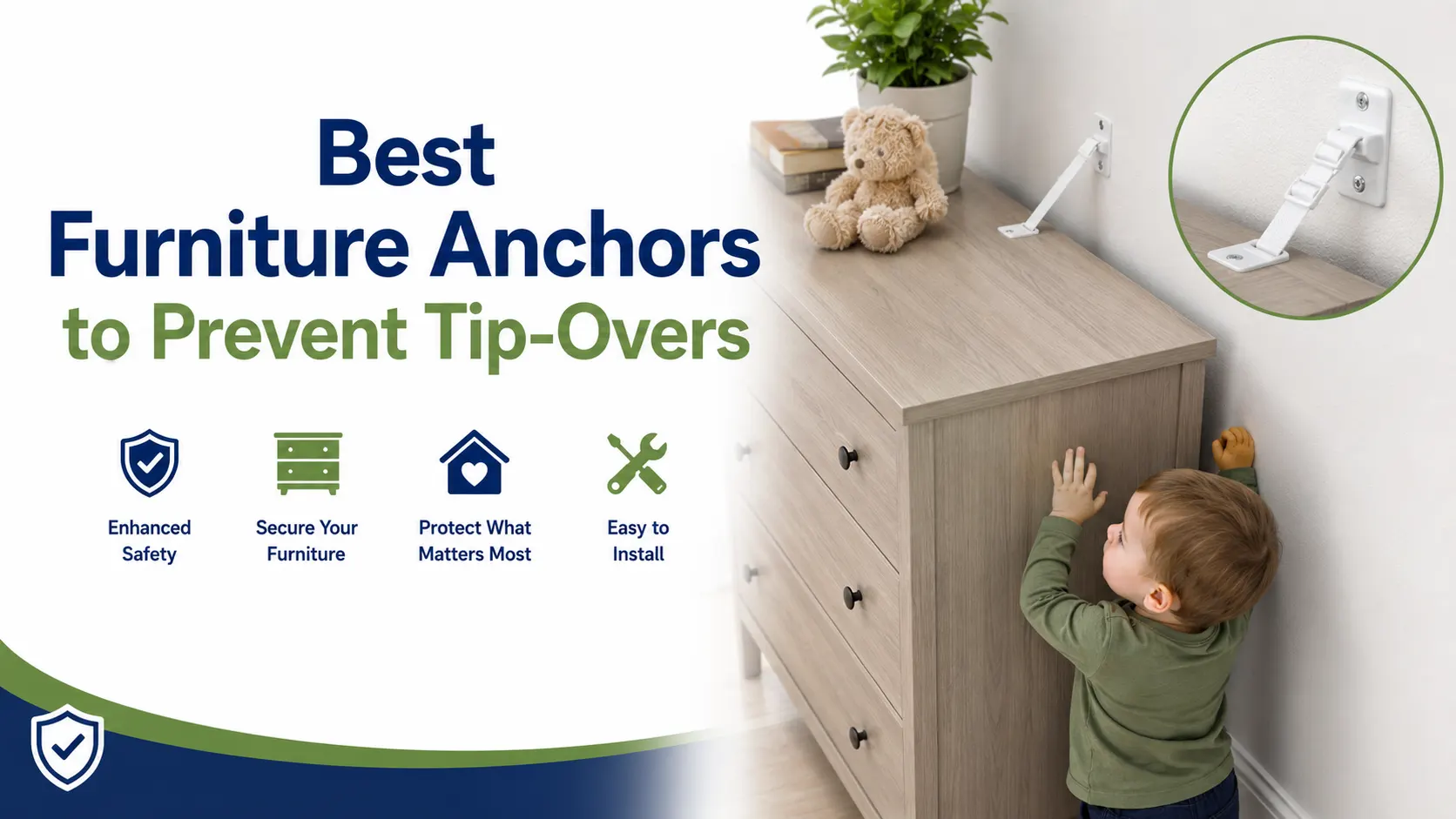

Not all furniture anchors are built to the same standard, and the gap between the best and worst performers is larger than most parents assume. In independent lab testing, a metal anchor kit held 347 pounds of force before failing, while a plastic strap-and-drywall-anchor kit failed at just 23 pounds — roughly the force of one determined toddler pulling on a drawer. This guide breaks down what actually holds, based on that kind of testing rather than marketing claims.
Quick answer: Metal strap or L-bracket kits installed into a wall stud consistently outperform plastic components and adhesive-only kits. Look for a kit that meets ASTM F3096-23, the industry strength standard for anti-tip restraints, and buy two anchor points per piece of furniture rather than one.
What the Testing Actually Shows
Consumer testing organizations have pulled various anchor kits with a calibrated force machine to see how much pressure each withstands before failing. The pattern across this testing is consistent:
- Metal bracket and strap kits, installed into a wood stud, performed best — one metal strap-and-bracket kit averaged 347 pounds of force before its ends crimped and detached
- A plastic strap with drywall-only anchors performed the worst in the same testing, popping out of the wall after just 23 pounds
- Kits using adhesive pads instead of screws consistently ranked as the weakest category overall
The takeaway isn’t that every plastic or adhesive product is useless — it’s that the material and mounting method matter more than price or brand recognition, and it’s worth checking for real test data rather than assuming any anchor kit performs the same as any other.
The Recall You Should Know About
In January 2024, the CPSC and a group of furniture manufacturers recalled millions of zip-tie style anchor kits — the free kits that sometimes ship in the box with new dressers and bookcases — after discovering the plastic zip ties could grow brittle over time and break. This matters for a specific reason: a strap that looks installed can quietly stop providing real protection years later, without any visible sign of failure. If your furniture came with an included plastic zip-tie anchor kit, it’s worth checking the CPSC recall database or upgrading to a metal kit rather than assuming the free hardware is still doing its job.
Separately, several plastic tip-restraint kits have received CPSC stop-use warnings after consumers reported the plastic brackets breaking — in some cases while a child was actively climbing the furniture the strap was meant to protect.
Anchor Types Compared
| Type | Typical Rating | Best For | Watch Out For |
|---|---|---|---|
| Metal strap + bracket kit | Highest tested loads (300+ lbs when installed into a stud) | Dressers, bookcases, most furniture | Requires screwing into furniture and wall |
| Steel L-bracket | Very high (400+ lbs) | Heavier or antique furniture; visible mounting acceptable | More visible than a strap |
| Braided steel cable kit | High, comparable to metal straps | Same uses as strap kits, slightly more flexible | Similar installation requirements |
| Plastic strap + drywall anchor | Low (as little as 23 lbs in testing) | Not recommended as primary protection | Frequently the weakest tested category |
| Adhesive-only (“no-drill”) kit | Low to moderate, highly variable | Renters needing a no-damage option, as an interim measure | Weakest category overall in independent testing; not a substitute for a stud-mounted kit long-term |
Stud vs. Drywall vs. Brick/Concrete
Where and how an anchor is mounted matters as much as the anchor itself:
- Always mount into a wall stud when possible — drywall alone, even with a drywall anchor plug, has no meaningful strength requirement and is a common point of failure in testing
- Use a stud finder before drilling, and aim for at least 1.5 inches of screw depth into the stud itself, not just the drywall layer in front of it
- Brick or concrete walls are genuinely difficult to anchor into safely without the right tools and hardware — this is a reasonable case to call in a professional rather than improvising
- If your furniture’s stud position doesn’t line up with a wall stud, look for a kit with an adjustable or horizontally-mountable wall plate rather than compromising on a non-stud anchor point
TVs Need a Different Kind of Strap
A furniture anti-tip strap and a TV anti-tip strap are not interchangeable. A flat-screen TV needs a strap specifically designed to bolt into the VESA mounting holes on the back of the television, not a generic furniture strap looped around it. Look for a kit with metal end plates and hardware (not plastic in the load-bearing path), and confirm it includes VESA-standard screws sized for your specific TV. If your TV sits on furniture rather than being wall-mounted, both the TV and the furniture underneath it need separate anchor points.
How Many Anchors Per Piece
A single anchor point is common in included/free kits, but testing and installation guides consistently recommend two anchor points per piece of furniture, particularly for wider dressers and bookcases. A single strap concentrates all the holding force at one point; two points spread that force and reduce the chance of one anchor being overwhelmed during a determined climbing attempt.
Installation Basics That Actually Matter
- Confirm the kit includes mounting brackets or plates plus a connecting strap or cable — check the packaging description if you’re unsure a specific product includes everything needed
- If a kit feels flimsy in hand before installation, that’s a reasonable reason to choose a different one rather than assuming it will perform once mounted
- Skip any drywall plugs included with a budget kit if you have the option to locate and use a stud instead — the stud connection is doing the real work
- Re-check tension and hardware periodically, especially for straps, since repeated pulling over months can loosen a connection that was snug at installation
Continue exploring: browse the full Baby Safety hub.
Frequently Asked
Common Questions