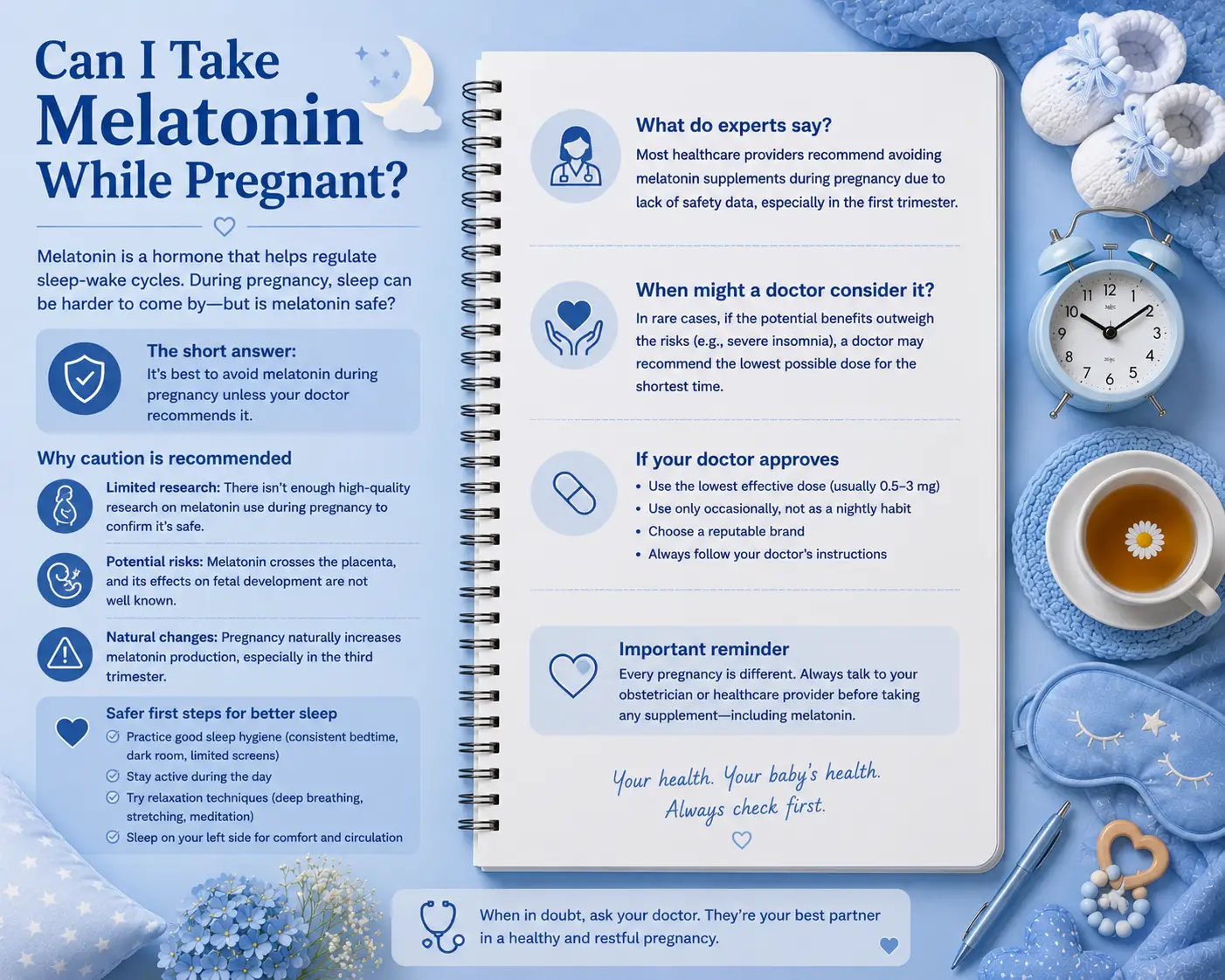

Most experts recommend against taking melatonin supplements during pregnancy unless your doctor specifically advises it. While your body naturally produces more melatonin as pregnancy progresses—and this hormone plays helpful roles—there simply isn’t enough solid research on supplemental melatonin to confirm it’s safe for the developing baby.
Sleep struggles are extremely common in pregnancy (affecting up to 80% of people by the third trimester), so it’s understandable to look for relief. Melatonin is marketed as a “natural” sleep aid, but “natural” does not automatically equal safe when you’re pregnant. Here’s a clear look at what we know and what you can do instead.
What Melatonin Does in Pregnancy
Melatonin is a hormone your pineal gland produces in response to darkness. It helps regulate your sleep-wake cycle. During pregnancy, levels rise steadily, especially after about 24 weeks, and the placenta also produces it. This maternal melatonin crosses the placenta and appears to support fetal development, help establish the baby’s circadian rhythms, and may offer antioxidant protection.
Low melatonin has been linked in some research to conditions like preeclampsia. Early studies (mostly animal or small human trials) are exploring whether supplemental melatonin might help in certain high-risk situations, such as preeclampsia or fetal growth restriction. However, these potential benefits are still being investigated and do not mean routine supplementation is appropriate for most pregnancies.
Why Caution Is Advised for Melatonin Supplements
Over-the-counter melatonin doses (typically 1–5 mg or higher) raise blood levels far above what the body normally produces—sometimes 20 times higher. We do not fully understand how these elevated amounts affect a developing fetus.
Key concerns include:
Limited human safety data specifically for pregnancy.
Melatonin crosses the placenta, so the baby is exposed.
Supplements are not tightly regulated by the FDA in the same way as medications, meaning actual content can vary from what’s listed on the label.
Animal studies have raised questions about effects on litter size, growth, and survival in some cases (though results may not directly apply to humans).
Reliable sources such as the NHS, MotherToBaby, and the MGH Center for Women’s Mental Health generally advise against routine use. They note that while short-term use has not shown major red flags in the limited available studies, the lack of robust evidence means safer, better-studied options are preferred for insomnia.
If you were already taking melatonin before becoming pregnant, talk to your healthcare provider right away about whether to continue or stop.
Safer Ways to Improve Sleep During Pregnancy
Instead of reaching for a supplement, try these evidence-based approaches first:
Stick to a consistent sleep and wake schedule, even on weekends.
Dim lights and put away screens (phones, tablets, TVs) at least an hour before bed—blue light suppresses your natural melatonin.
Create a cool, dark, quiet bedroom. Blackout curtains, a white-noise machine, or a fan can help.
Use a pregnancy pillow to support your growing belly and make side-sleeping (preferably left side) more comfortable.
Try relaxation techniques such as deep breathing, progressive muscle relaxation, gentle prenatal yoga, or guided imagery.
Limit caffeine after midday and avoid large meals close to bedtime to reduce heartburn and nighttime bathroom trips.
Consider cognitive behavioral therapy for insomnia (CBT-I), which has stronger evidence for pregnancy-related sleep issues than supplements.
If sleep problems are severe and affecting your daily functioning, speak with your obstetrician or midwife. They can discuss whether other options with more pregnancy safety data (such as certain antihistamines sometimes used short-term) might be appropriate for your situation.
Bottom Line
Your body’s own melatonin production increases naturally during pregnancy and serves important purposes. Supplemental melatonin, however, remains an area with insufficient research. Most medical organizations and pregnancy experts recommend avoiding it unless a healthcare provider determines the potential benefits outweigh the unknowns in your specific case. Prioritize non-drug strategies and always check with your doctor before taking any supplement while pregnant.
FAQ
Is melatonin safe during pregnancy?
There is not enough high-quality research to confirm safety. Most experts advise against using melatonin supplements during pregnancy unless specifically recommended by your healthcare provider.
Can melatonin cause birth defects or other pregnancy problems?
Limited human studies have not clearly shown an increased risk of birth defects or miscarriage, but data are sparse. Because melatonin crosses the placenta and supplemental doses create much higher levels than normal, caution is the standard recommendation.
Does melatonin help with pregnancy insomnia?
Evidence that melatonin meaningfully improves sleep (even outside pregnancy) is modest at best. It may slightly shorten the time it takes to fall asleep for some people, but it is not a proven solution for the complex sleep disruptions of pregnancy.
What are safer alternatives to melatonin for sleep while pregnant?
Good sleep hygiene, consistent routines, screen limits before bed, pregnancy pillows, relaxation techniques, and CBT-I are preferred first-line approaches. Discuss persistent insomnia with your provider for personalized advice.
Can I take melatonin while breastfeeding?
Breast milk naturally contains melatonin, and small amounts from supplements are thought to pass into milk. The NHS notes it is sometimes considered acceptable if the baby is healthy, but it may cause drowsiness in the infant with longer use. Always consult your doctor or lactation specialist first.