
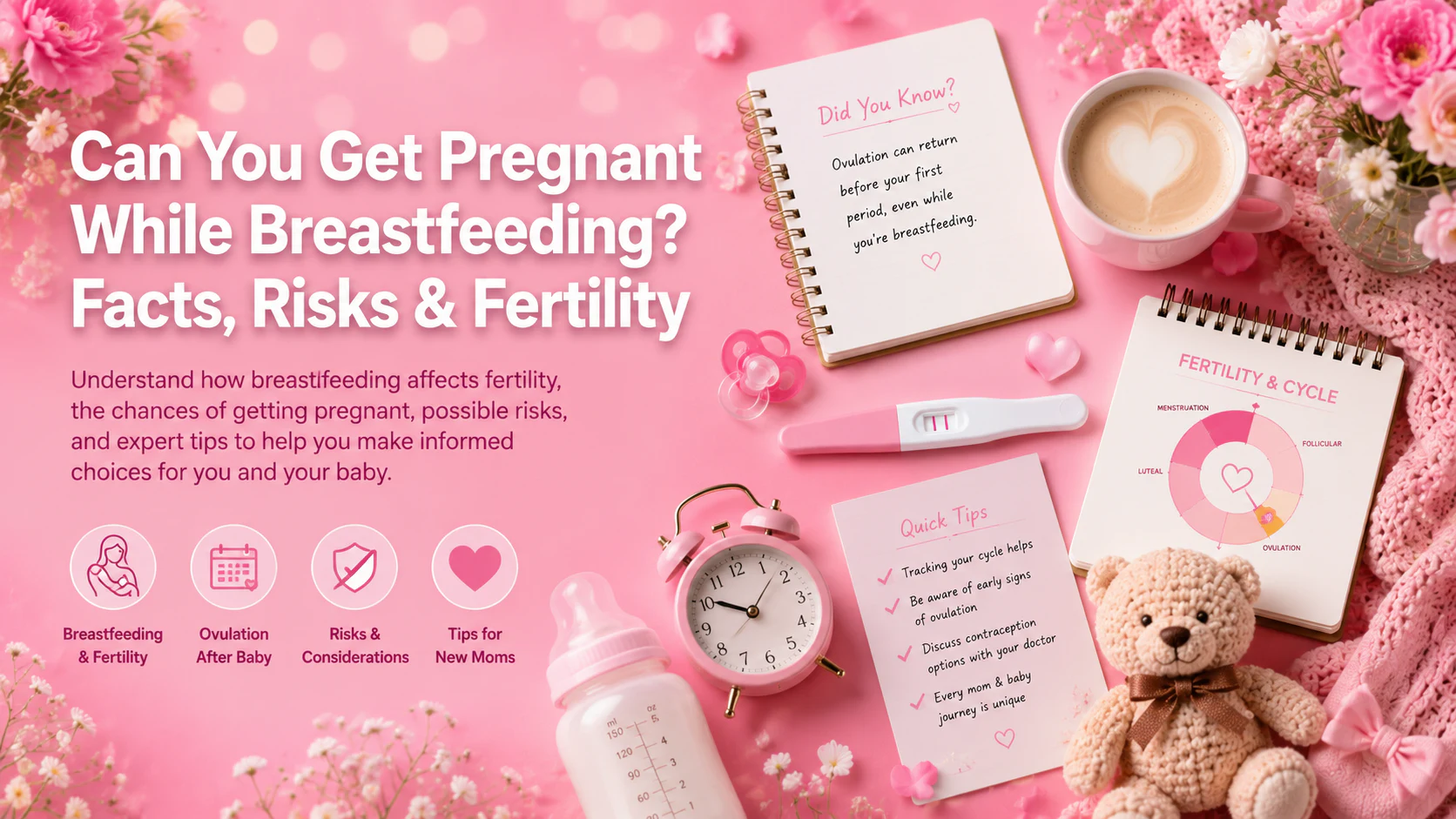

Many new parents believe breastfeeding completely prevents pregnancy. While breastfeeding can temporarily reduce fertility, it is not a guaranteed form of birth control. In fact, it’s possible to become pregnant while breastfeeding—even if your menstrual period hasn’t returned yet.
Understanding how breastfeeding affects ovulation and fertility can help you make informed decisions whether you’re planning another pregnancy or trying to avoid one. explore DidYouSearch!
The Short Answer
Yes, you can get pregnant while breastfeeding.
Breastfeeding increases levels of the hormone prolactin, which suppresses ovulation. However, this effect varies from person to person and doesn’t always prevent the release of an egg. Once ovulation resumes, pregnancy becomes possible—even before your first postpartum period.
How Does Breastfeeding Affect Fertility?
After childbirth, your body produces more prolactin to stimulate milk production.
High prolactin levels can:
- Delay ovulation
- Delay the return of menstrual periods
- Reduce fertility temporarily
However, breastfeeding doesn’t stop ovulation forever. As your baby grows and feeds less often, prolactin levels gradually decrease, allowing ovulation to return.
Can You Get Pregnant Before Your First Period?
Yes.
Many people assume they’re not fertile until their first postpartum period arrives. In reality, ovulation occurs before menstruation, meaning you can release an egg and become pregnant before you ever notice your first period after giving birth.
What Is the Lactational Amenorrhea Method (LAM)?
The Lactational Amenorrhea Method (LAM) is a temporary form of natural birth control based on exclusive breastfeeding.
LAM can be up to 98% effective—but only if all of these conditions are met:
- Your baby is under 6 months old
- You are exclusively or almost exclusively breastfeeding
- Feedings occur at least every 4 hours during the day
- Feedings occur at least every 6 hours at night
- Your menstrual periods have not returned
If any of these conditions change, LAM is no longer considered a reliable contraceptive method.
When Does Fertility Return While Breastfeeding?
There’s no universal timeline.
Ovulation may return:
- Within a few weeks if you’re not breastfeeding
- Several months after birth if you’re exclusively breastfeeding
- Around six months postpartum for many breastfeeding parents
- Earlier or later depending on individual hormone levels and feeding patterns
Every person is different, so it’s impossible to predict exactly when fertility will return.
Factors That Increase Your Chances of Pregnancy
Your fertility is more likely to return if:
- Your baby begins eating solid foods
- Feedings become less frequent
- Your baby sleeps through the night
- You’re pumping instead of nursing directly for many feeds
- Your menstrual periods return
- Your baby is older than six months
Each of these reduces the hormonal suppression of ovulation.
Signs Your Fertility May Be Returning
Watch for these signs:
- Return of your menstrual period
- Changes in cervical mucus (clear and stretchy)
- Mild ovulation pain
- Increased libido
- Positive ovulation predictor test
Remember that you can ovulate before experiencing any bleeding.
Is Breastfeeding a Reliable Birth Control Method?
Only under the strict conditions required for LAM.
Outside of those conditions, breastfeeding alone should not be relied upon to prevent pregnancy.
Healthcare providers recommend discussing postpartum contraception before leaving the hospital or during your postpartum visits.
Safe Birth Control Options While Breastfeeding
Several contraceptive methods are considered safe while breastfeeding, including:
- Copper IUD
- Hormonal IUD
- Birth control implant
- Progestin-only pill (mini-pill)
- Condoms
- Diaphragm (after postpartum healing)
- Contraceptive injection (progestin)
Some estrogen-containing contraceptives may affect milk supply during the early weeks after birth, so discuss the best option with your healthcare provider.
Can You Continue Breastfeeding If You Become Pregnant?
In most healthy pregnancies, yes.
Many people safely continue breastfeeding while pregnant. However, pregnancy hormones often cause:
- Reduced milk supply
- Changes in the taste of breast milk
- Tender nipples
- Increased fatigue
If you have a high-risk pregnancy, your healthcare provider may recommend changes based on your individual situation.
Tips If You’re Trying to Avoid Pregnancy
- Don’t assume breastfeeding prevents pregnancy.
- Use an effective birth control method if pregnancy isn’t planned.
- Talk to your healthcare provider before leaving the hospital about postpartum contraception.
- Remember that ovulation can happen before your first postpartum period.
Tips If You’re Trying to Conceive While Breastfeeding
If you’re hoping to become pregnant again:
- Continue tracking signs of ovulation.
- Reduce breastfeeding gradually if recommended by your healthcare provider.
- Maintain a healthy diet and take prenatal vitamins.
- Speak with your healthcare provider if your menstrual cycles haven’t returned after your baby is older.
Frequently Asked Questions (FAQ)
Can I get pregnant while breastfeeding and not having a period?
Yes. Ovulation can occur before your first postpartum period, making pregnancy possible even if you haven’t menstruated yet.
How effective is breastfeeding as birth control?
When all LAM criteria are met, it is about 98% effective during the first six months after childbirth.
Can exclusive breastfeeding prevent pregnancy?
Exclusive breastfeeding significantly reduces fertility but only provides reliable contraception when all LAM conditions are satisfied.
Can I breastfeed while pregnant?
Yes. Most healthy pregnancies allow continued breastfeeding, although milk supply and taste may change.
When should I start birth control after having a baby?
Many birth control methods can be started immediately after delivery or within the first few weeks postpartum. Your healthcare provider can recommend the safest option based on your health and breastfeeding goals.