
Most Father’s Day handprint tutorials are written for toddlers and preschoolers who can hold their hand in a specific shape — a “fish hook,” a guitar neck, a fist for a heart. A baby can’t do any of that on command. This guide only includes designs that work with a flat, uncooperative, possibly-fisted infant hand, plus safe paint guidance and a newborn option for babies who can’t yet make a clean print at all.
Why Baby Handprint Crafts Need a Different Approach Than Kid Crafts
- No posing required — every idea below works with a simple, flat palm press, not a hand held in a precise shape.
- Shorter tolerance window — babies won’t sit through multi-step painting the way a 4-year-old will, so setup speed matters more than design complexity.
- Skin-safety comes first — a baby’s skin is thinner and more reactive than a toddler’s, so the paint itself deserves more scrutiny than most kid-craft posts give it.
- A true “once in a lifetime” size — unlike an older child’s handprint, a baby’s hand shape and size change noticeably within weeks, which is part of why these keepsakes matter so much to dads specifically.
Safety First: Paint and a Baby’s Skin
- Use paint labeled non-toxic and made for skin contact — a washable, water-based craft paint or a baby-safe finger paint, not standard acrylic craft paint.
- Patch-test on a small area of skin the day before, especially if your baby has eczema or sensitive skin.
- Keep paint away from your baby’s mouth — hands go to faces reflexively, so work quickly and have a wipe ready before you start.
- Skip fragranced, metallic, or glitter paints, which carry more irritation and ingestion risk.
- Clean up immediately with a warm washcloth, followed by soap and water once you’re away from the craft area.
- If your baby has broken skin, a rash, or a known sensitivity, use one of the no-paint options below instead.
Getting a Clean Print From a Baby Who Won’t Cooperate
- Prep everything before your baby is in position — canvas or paper taped down, paint in a shallow dish, wipes within reach, and ideally a second person to help.
- Paint the hand, not the paper — coat palm and fingers with a foam brush or your fingers while someone gently steadies baby’s arm.
- Press once, firmly, straight down, then lift straight up — dragging or repositioning smears the print.
- Do 2–3 practice prints on scrap paper first, so you’re not learning on the piece you actually want to keep.
- If baby’s hand is fisted, don’t force it open — a fisted print can become its own design (see idea #6 below) rather than a failed attempt.
13 Handprint Craft Ideas That Work With a Baby’s Real Hand
Simple Presses (No Shape or Positioning Needed)
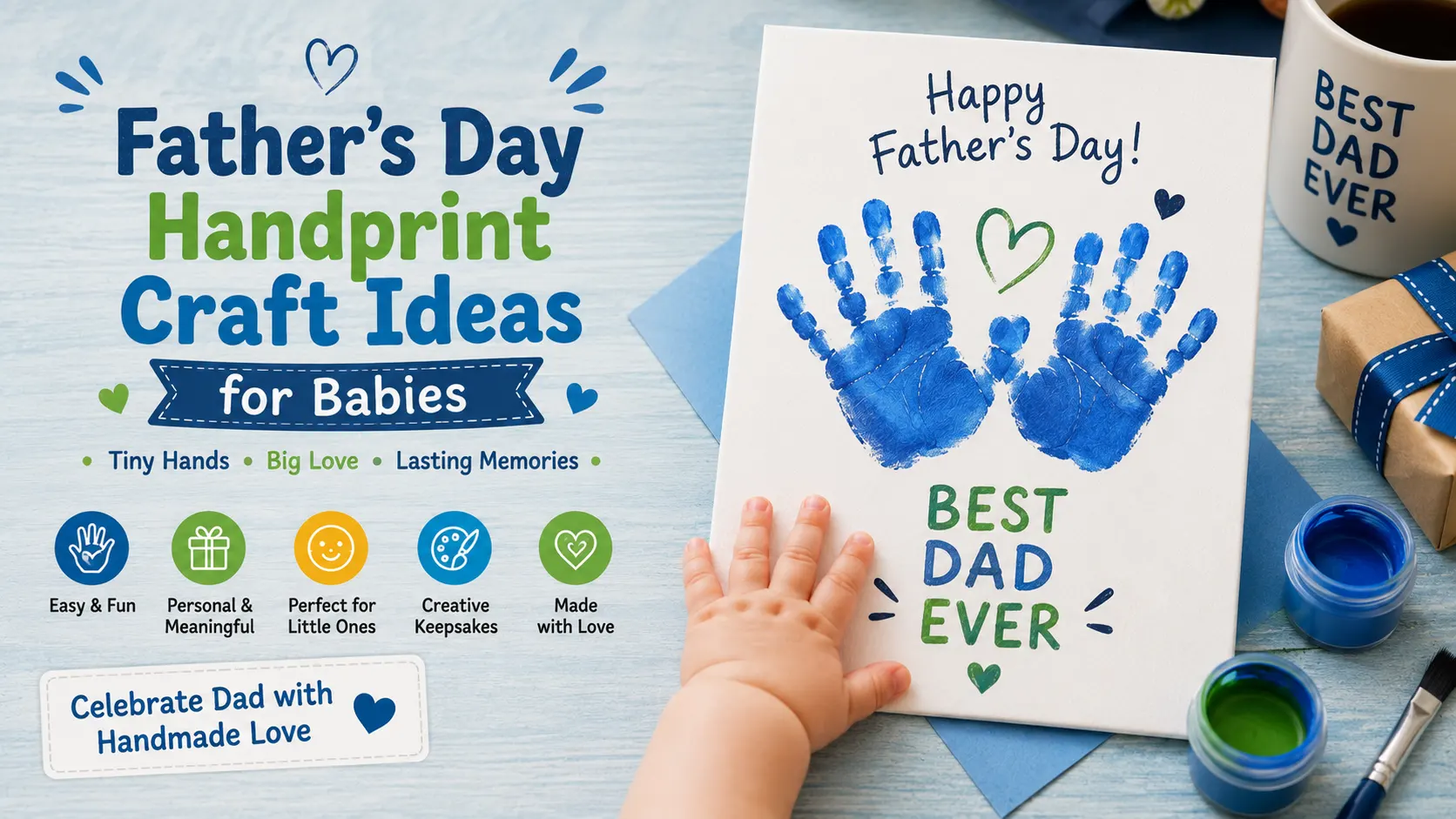
1. “World’s Best Dad” card A single flat handprint centered on folded cardstock with the phrase written around it by hand or printed template — the fastest option and a good first attempt.
2. Handprint necktie card Print baby’s palm sideways on cardstock, and the natural handprint shape already resembles a tie outline once you add a knot at the top — no finger-shape precision required.
3. Watercolor-wash background with handprint on top Do a loose watercolor wash first, let it dry, then press the handprint in a solid contrasting color on top for a more polished look with zero extra positioning skill needed.
4. Handprint on a wood slice Press directly onto a smooth wood slice or coaster-sized round for a rustic, ready-to-display keepsake — the natural wood grain does the “design” work.
Designs Built From an Imperfect or Fisted Print
5. Handprint “crab” or “sea creature” A flat handprint pressed at an angle naturally reads as a crab or sea creature once you add eyes and a smile — forgiving of smudges or an uneven press.
6. Fisted handprint as a heart If your baby’s hand won’t open, press the fisted hand as-is and outline it into a heart shape afterward — this turns the “failed” open-palm attempt into a usable design rather than starting over.
7. Handprint plant pot A single handprint becomes the “leaves” growing out of a small drawn or paper flowerpot — works with any hand angle or pressure.
Framed & Long-Lasting
8. Handprint canvas for the office or garage Paint directly onto a small stretched canvas so Dad has something sturdy enough for a desk or workbench, not just a paper keepsake that lives in a drawer.
9. Handprint in a photo frame mat Press onto cardstock cut to fit a standard frame mat, then slide in a photo of baby and Dad — combines two keepsakes in one frame.
10. Clay handprint impression Press baby’s hand into air-dry clay for a 3D impression Dad can keep on a desk — more durable than paper and doesn’t need paint at all.
Functional Gifts Dad Will Actually Use
11. Handprint mug Use a ceramic paint pen or a pre-made handprint mug kit so Dad has something he uses daily, not something stored in a box.
12. Handprint keychain A small clay or shrink-plastic keychain with baby’s handprint travels with Dad every day — one of the few keepsakes that isn’t just displayed once and put away.
13. Handprint phone or desk stand Print or engrave (via a photo print service) baby’s handprint onto a phone stand or desk organizer for a gift that stays visible at work.
The “Hand-in-Hand” Size Comparison Idea
One of the most requested Father’s Day handprint formats — and one most craft blogs skip — is a side-by-side size comparison: Dad presses his own handprint next to baby’s on the same page or canvas. It requires no extra materials beyond what’s already used for a single print, and the size contrast (not the design) is what makes it emotionally effective. This works especially well as a card, a canvas, or the first page of a keepsake book that gets a new comparison print every year.
What to Do for a Newborn’s First Father’s Day
A newborn often can’t make a clean handprint at all — hands are usually fisted, and skin is too delicate for repeated pressing and wiping. Two options work better than forcing a print:
- Footprints instead of handprints — a newborn’s foot is easier to press flat than a fisted hand, and most “first Father’s Day” keepsake kits are actually footprint-based for this reason.
- Ink-free “clean touch” kits — these use a pressure-sensitive paper instead of wet paint or ink, capturing an impression with a single gentle press and no cleanup, which is gentler on newborn skin and easier when a baby can’t stay still.
No-Paint Alternatives
- Ink-free handprint kits — leave no residue and wipe off dry, good for babies with sensitive skin.
- Air-dry clay or salt dough impressions — the imprint itself is the finished piece, no paint step at all.
- Digital handprint tracing — trace or photograph baby’s hand against a ruler for scale, then create a printed or digital keepsake without any product touching skin.
Tips for a Smoother Craft Session
- Time it around a nap and feeding, not before either — a fed, rested baby cooperates far more than a hungry or tired one.
- Get a second person to help if at all possible — one to steady the hand, one to manage paper and timing.
- Make more prints than you need on scrap paper and pick the best one afterward instead of expecting the first try to be the keeper.
- Label and date the keepsake immediately — hand size changes fast enough that it’s easy to lose track of which print belongs to which month.
The Bottom Line
The best Father’s Day handprint craft for a baby isn’t the most elaborate design — it’s the one that works with whatever shape their hand naturally makes. Start with a single flat press, keep the paint genuinely skin-safe, and if your baby’s hand won’t cooperate, work with the fist or switch to a footprint or ink-free kit instead of forcing the “perfect” open-palm print.
Continue exploring: browse the full Baby Activities hub.
Frequently Asked
Common Questions