
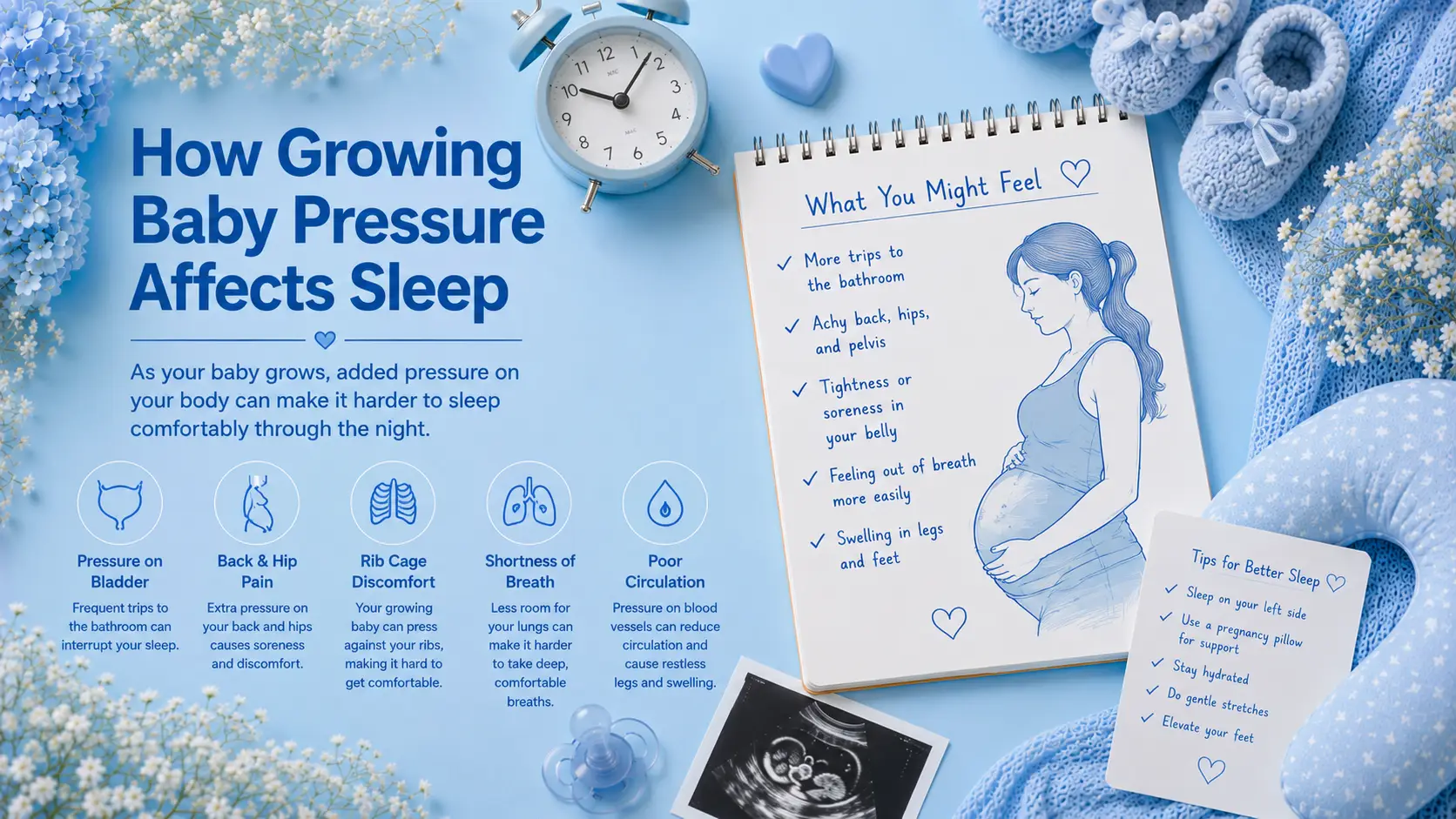

Somewhere around the second half of pregnancy, a lot of people notice their sleep struggles shift. It’s no longer just hormones and nausea keeping you up — it’s the sheer physical presence of your growing baby. As your uterus expands, it takes up more room, pushes on nearby organs, and puts real pressure on your bladder, diaphragm, ribs, and major blood vessels. Understanding exactly how that pressure affects your body can make it a lot easier to find relief.
Pressure on Your Bladder
One of the earliest and most persistent effects of baby’s growth is on your bladder. As your uterus expands, it presses directly against it, meaning your bladder can’t hold as much urine as it used to before you feel the urge to go. This is why so many pregnant women find themselves making repeated bathroom trips through the night — often the single biggest reason for interrupted sleep in both early and late pregnancy.
What can help: Stay well-hydrated during the day, but taper off fluids in the hour or two before bed. Leaning forward while you urinate can also help you empty your bladder more completely, reducing how often you need to get up.
Pressure on Your Diaphragm and Lungs
As your baby grows and your uterus rises higher in your abdomen, it can start pushing up against your diaphragm — the muscle that helps you breathe. This is especially noticeable in the third trimester and can leave you feeling short of breath, particularly when lying flat.
This upward pressure is also a common reason pregnant women start snoring for the first time. Combined with swelling in the nasal passages from rising estrogen, breathing can feel more restricted overnight, and in some cases, this can escalate into mild sleep apnea, which is worth mentioning to your doctor if you notice loud snoring, gasping, or pauses in breathing.
What can help: Sleeping slightly propped up with pillows, rather than flat, gives your diaphragm more room to move and can noticeably ease breathlessness at night.
Pressure on Your Ribs
By the third trimester, many women experience genuine rib pain — a result of the uterus reaching up under the rib cage as it runs out of room lower in the abdomen. Since babies are often positioned head-down late in pregnancy, their feet and knees frequently end up tucked right under mom’s ribs, meaning nighttime kicks can land directly on already-tender tissue.
This pressure is usually a normal, if uncomfortable, part of pregnancy rather than a sign of a problem — true rib fractures from uterine pressure are extremely rare. That said, sudden or severe rib pain paired with symptoms like headache, vision changes, or swelling should always be checked out, as these can occasionally point to conditions like preeclampsia.
What can help: Side-lying with a pillow supporting your belly and back can reduce direct pressure on your ribs. Some women also find relief by placing a small pillow or rolled towel just under the ribs for extra cushioning. Rib pain often eases once the baby “drops” lower into the pelvis in preparation for labor.
Pressure on Major Blood Vessels
Your baby’s growing weight doesn’t just affect the organs directly around your uterus — it can also compress the inferior vena cava, the large vein that returns blood to your heart, particularly when you’re lying flat on your back. This is why side sleeping (especially on the left) becomes so strongly recommended in the second half of pregnancy: it takes your baby’s weight off this vein, keeping circulation to you and your baby steady.
Pressure That Affects Digestion
The hormone relaxin loosens the muscles around your esophagus to help your body prepare for birth, and your growing uterus adds physical pressure on your stomach on top of that. Together, this combination makes heartburn and acid reflux far more common at night, especially after larger meals close to bedtime.
What can help: Eating smaller, earlier dinners and avoiding spicy, fatty, or acidic foods in the evening can go a long way. A slightly elevated sleeping position also helps keep stomach acid where it belongs.
Pressure That Contributes to General Discomfort
Beyond these specific pressure points, the simple physical reality of carrying more weight changes how your body feels lying down. Your center of gravity shifts, your lower back and hips take on more strain, and finding any position that feels genuinely comfortable can take real trial and error by the third trimester.
What can help: A full-body or C-shaped pregnancy pillow can support your belly, back, and knees simultaneously, cutting down on the number of separate pillows you need to juggle through the night.
The Bottom Line
Much of the sleep disruption in the second half of pregnancy comes down to simple physics: your baby is growing, and that growth puts real, physical pressure on your bladder, diaphragm, ribs, blood vessels, and digestive system. None of this means something is wrong — it’s a normal, expected part of how your body makes room for your baby. Side sleeping, supportive pillows, smaller evening meals, and slightly elevating your upper body are some of the most effective ways to ease that pressure and sleep a little more comfortably.
FAQ
Why do I have to pee so often at night during pregnancy?
Your growing baby and uterus press directly on your bladder, reducing how much urine it can hold before you feel the urge to go. This is especially common in the first and third trimesters.
Is it normal to feel short of breath lying down while pregnant?
Yes. As your uterus grows, it can press up against your diaphragm, especially in the third trimester, making it harder to take deep breaths while lying flat. Sleeping propped up can help.
Why does my baby’s pressure cause rib pain at night?
As the uterus runs out of room in the abdomen, it extends upward toward the rib cage. Since babies are often positioned head-down late in pregnancy, kicks can land directly under the ribs, adding to the discomfort.
Can the baby’s weight affect my blood flow while I sleep?
Yes. Lying flat on your back allows your baby’s weight to press on the inferior vena cava, a major vein that returns blood to your heart. This is why side sleeping, especially on the left, is recommended in the second half of pregnancy.
Most of these pressure-related symptoms become more noticeable in the third trimester, as the uterus grows large enough to significantly affect nearby organs and blood vessels.