
Skip to content
DidYouSearch DidYouSearch
  • did you search?
  • Baby Plus+
    • Baby Activities
      • Arts & Crafts
      • Indoor Activities
      • Montessori
      • Music
      • Outdoor Activities
      • Reading
      • Sensory Play
      • Tummy Time
    • Baby Development
      • Brain Development
      • Cognitive Development
      • Emotional Development
      • Fine Motor Skills
      • Growth Milestones
      • Monthly Milestones
      • Motor Skills
      • Physical Development
      • Social Development
      • Speech Development
    • Baby Feeding
      • Allergies
      • Baby Led Weaning
      • Bottle Feeding
      • Breast feeding
        • Breastfeeding Diet
        • Breastfeeding Positions
        • Latch Problems
        • Low Milk Supply
        • Mastitis
        • Pumping Schedule
        • Weaning
      • Burping
      • Cluster Feeding
      • Feeding Schedule
      • Formula Feeding
        • Formula Amount
        • Formula Brands
        • Formula Comparison
        • Formula Preparation
        • Formula Storage
      • Hydration
      • Pumping
      • Solid Foods
    • Baby Gear Reviews
      • Best Baby Carrier
      • Best Baby Monitor
      • Best Baby Strollers
      • Best Bottles
      • Best Breast Pump
      • Best Car Seat
      • Best Cribs
      • Best Diapers
      • Best Formula
      • Best Toys
    • Baby Growth
      • Growth Spurts
      • Height Charts
      • Monthly Growth
      • Percentiles
      • Weight Charts
    • Baby Health
      • Allergies
      • Cold
      • Constipation
      • Cough
      • Diarrhea
      • Ear Infection
      • Fever
      • Flu
      • Pediatric Visits
      • Rashes
      • Teething
      • Vaccines
      • Vomiting
    • Baby Nutrition
      • Dairy
      • Drinks
      • Eggs
      • Fish
      • Fruits
      • Healthy Recipes
      • Meat
      • Snacks
      • Vegetables
      • Vitamins
    • Baby Products
      • Baby Carriers
      • Bassinets
      • Bottles
      • Breast Pumps
      • Car Seats
      • Cribs
      • Diaper Bags
      • High Chairs
      • Monitors
      • Strollers
      • Swings
      • Toys
      • Walkers
    • Baby Recipes
      • BLW Recipes
      • Breakfast
      • Dinner
      • Finger Foods
      • Lunch
      • Purees
      • Snacks
    • Baby Safety
      • Baby Proofing
      • Car Seats
      • Choking Hazards
      • CPR
      • Home Safety
      • Poison Prevention
      • Safe Sleep
      • Sun Protection
      • Water Safety
  • Baby Names
    • Boy Names
    • Girl Names
    • Biblical Names
    • Middle Names
    • Modern Names
    • Short Names
    • Unique Names
    • Unisex Names
  • Recommended
    • Baby Shopping
      • Baby Registry
      • Budget Baby Shopping
      • Hospital Bag
      • Must Have Products
      • Newborn Checklist
      • Nursery Ideas
    • Baby Sleep
      • Bedtime Routine
      • Co Sleeping
      • Crib Safety
      • Nap Schedules
      • Night Wakings
      • Sleep Environment
      • Sleep Products
      • Sleep Regression
      • Sleep Training
      • Wake Windows
      • White Noise
    • Childcare
      • Daycare
      • Babysitters
      • Kindergarten
      • Nannies
      • Preschool
    • Newborn Care
      • Nail Care
      • Baby Hygiene
      • Bathing
      • Crying
      • Diapering
      • Ear Care
      • Eye Care
      • Skin Care
      • Soothing Techniques
      • Temperature
      • Umbilical Cord
    • Special Needs
      • Premature Babies
      • Autism Signs
      • Developmental Delays
      • Down Syndrome
      • NICU
      • Twins
    • Seasonal Baby Care
      • Spring
      • Summer
      • Travel
      • Fall
      • Holidays
      • Winter
  • Parenting
    • Bonding
    • Discipline
    • Emotional Intelligence
    • First Time Parents
    • Gentle Parenting
    • Positive Parenting
    • Routines
    • Single Parents
    • Working Parents
  • Pregnancy
    • Pregnancy Complications
    • Labor & Delivery
    • Postpartum Recovery
    • Pregnancy Exercises
    • Pregnancy Medications
    • Pregnancy Nutrition
    • Pregnancy Sleep
    • Pregnancy Symptoms
    • Pregnancy Tests
    • Pregnancy Vitamins
    • Pregnancy Weeks
  • Toddler
    • Preschool
    • Speech
    • Tantrums
    • Toddler Food
    • Toddler Sleep
    • Behavior
    • Independence
    • Learning
    • Potty Training
  • Traveling with Baby
    • Road Trips
    • Beach
    • Camping
    • Flying
    • Hotels
    • Packing Lists
  • did you search?
  • Baby Plus+
    • Baby Activities
      • Arts & Crafts
      • Indoor Activities
      • Montessori
      • Music
      • Outdoor Activities
      • Reading
      • Sensory Play
      • Tummy Time
    • Baby Development
      • Brain Development
      • Cognitive Development
      • Emotional Development
      • Fine Motor Skills
      • Growth Milestones
      • Monthly Milestones
      • Motor Skills
      • Physical Development
      • Social Development
      • Speech Development
    • Baby Feeding
      • Allergies
      • Baby Led Weaning
      • Bottle Feeding
      • Breast feeding
        • Breastfeeding Diet
        • Breastfeeding Positions
        • Latch Problems
        • Low Milk Supply
        • Mastitis
        • Pumping Schedule
        • Weaning
      • Burping
      • Cluster Feeding
      • Feeding Schedule
      • Formula Feeding
        • Formula Amount
        • Formula Brands
        • Formula Comparison
        • Formula Preparation
        • Formula Storage
      • Hydration
      • Pumping
      • Solid Foods
    • Baby Gear Reviews
      • Best Baby Carrier
      • Best Baby Monitor
      • Best Baby Strollers
      • Best Bottles
      • Best Breast Pump
      • Best Car Seat
      • Best Cribs
      • Best Diapers
      • Best Formula
      • Best Toys
    • Baby Growth
      • Growth Spurts
      • Height Charts
      • Monthly Growth
      • Percentiles
      • Weight Charts
    • Baby Health
      • Allergies
      • Cold
      • Constipation
      • Cough
      • Diarrhea
      • Ear Infection
      • Fever
      • Flu
      • Pediatric Visits
      • Rashes
      • Teething
      • Vaccines
      • Vomiting
    • Baby Nutrition
      • Dairy
      • Drinks
      • Eggs
      • Fish
      • Fruits
      • Healthy Recipes
      • Meat
      • Snacks
      • Vegetables
      • Vitamins
    • Baby Products
      • Baby Carriers
      • Bassinets
      • Bottles
      • Breast Pumps
      • Car Seats
      • Cribs
      • Diaper Bags
      • High Chairs
      • Monitors
      • Strollers
      • Swings
      • Toys
      • Walkers
    • Baby Recipes
      • BLW Recipes
      • Breakfast
      • Dinner
      • Finger Foods
      • Lunch
      • Purees
      • Snacks
    • Baby Safety
      • Baby Proofing
      • Car Seats
      • Choking Hazards
      • CPR
      • Home Safety
      • Poison Prevention
      • Safe Sleep
      • Sun Protection
      • Water Safety
  • Baby Names
    • Boy Names
    • Girl Names
    • Biblical Names
    • Middle Names
    • Modern Names
    • Short Names
    • Unique Names
    • Unisex Names
  • Recommended
    • Baby Shopping
      • Baby Registry
      • Budget Baby Shopping
      • Hospital Bag
      • Must Have Products
      • Newborn Checklist
      • Nursery Ideas
    • Baby Sleep
      • Bedtime Routine
      • Co Sleeping
      • Crib Safety
      • Nap Schedules
      • Night Wakings
      • Sleep Environment
      • Sleep Products
      • Sleep Regression
      • Sleep Training
      • Wake Windows
      • White Noise
    • Childcare
      • Daycare
      • Babysitters
      • Kindergarten
      • Nannies
      • Preschool
    • Newborn Care
      • Nail Care
      • Baby Hygiene
      • Bathing
      • Crying
      • Diapering
      • Ear Care
      • Eye Care
      • Skin Care
      • Soothing Techniques
      • Temperature
      • Umbilical Cord
    • Special Needs
      • Premature Babies
      • Autism Signs
      • Developmental Delays
      • Down Syndrome
      • NICU
      • Twins
    • Seasonal Baby Care
      • Spring
      • Summer
      • Travel
      • Fall
      • Holidays
      • Winter
  • Parenting
    • Bonding
    • Discipline
    • Emotional Intelligence
    • First Time Parents
    • Gentle Parenting
    • Positive Parenting
    • Routines
    • Single Parents
    • Working Parents
  • Pregnancy
    • Pregnancy Complications
    • Labor & Delivery
    • Postpartum Recovery
    • Pregnancy Exercises
    • Pregnancy Medications
    • Pregnancy Nutrition
    • Pregnancy Sleep
    • Pregnancy Symptoms
    • Pregnancy Tests
    • Pregnancy Vitamins
    • Pregnancy Weeks
  • Toddler
    • Preschool
    • Speech
    • Tantrums
    • Toddler Food
    • Toddler Sleep
    • Behavior
    • Independence
    • Learning
    • Potty Training
  • Traveling with Baby
    • Road Trips
    • Beach
    • Camping
    • Flying
    • Hotels
    • Packing Lists
Close

Search

Home/Pregnancy/How Long Does Pregnancy Last Exactly? A Week-by-Week Guide
Pregnancy

How Long Does Pregnancy Last Exactly? A Week-by-Week Guide

By phillip
July 30, 2026 4 Min Read
0

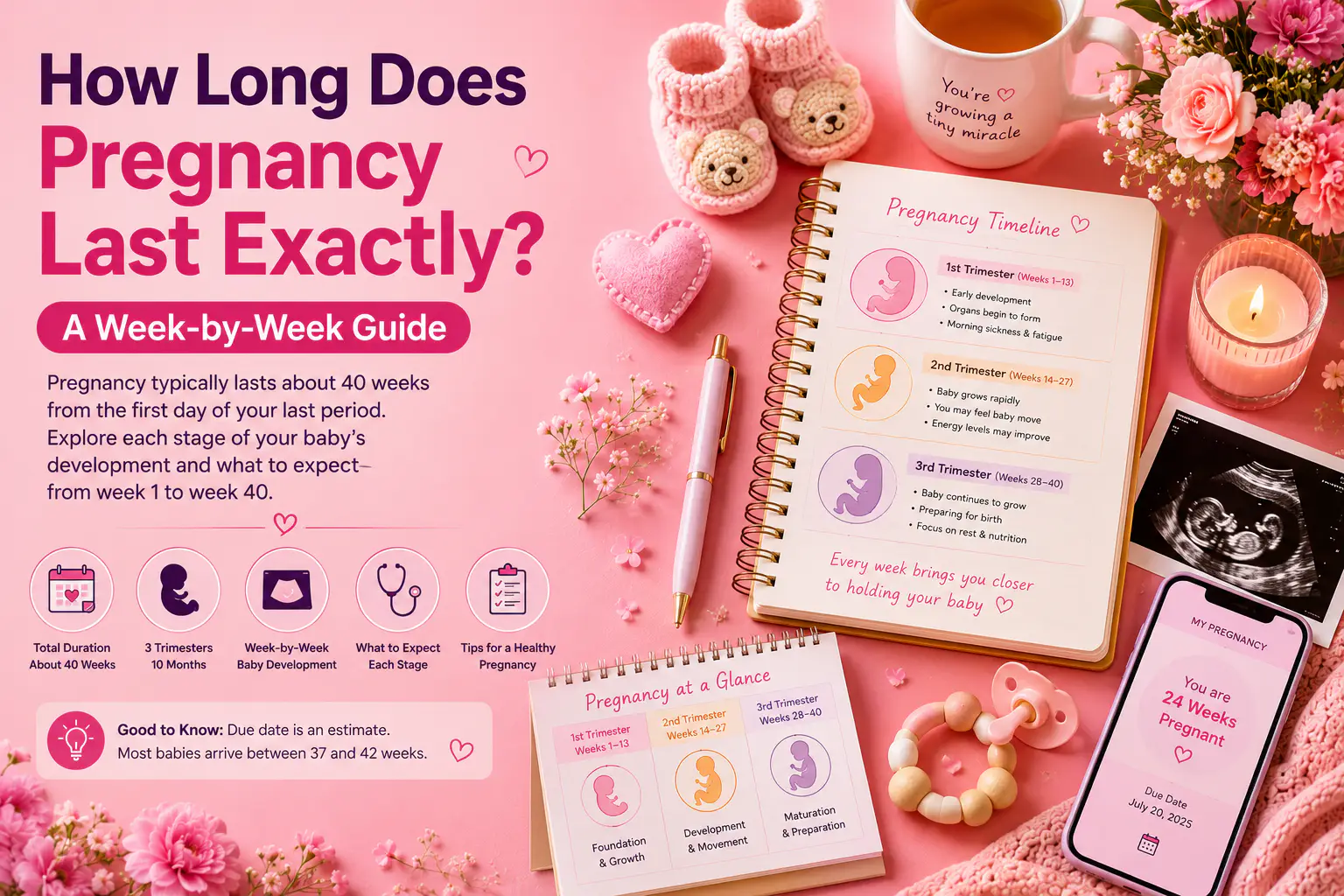
Pregnancy is an exciting journey that raises many questions, especially for first-time parents. One of the most common is: How long does pregnancy last exactly?

Although many people say pregnancy lasts nine months, healthcare providers actually measure pregnancy in weeks. A typical pregnancy lasts about 40 weeks, starting from the first day of your last menstrual period (LMP) rather than the day of conception. Since ovulation and fertilization usually occur about two weeks after your last period, the baby develops for approximately 38 weeks.

Every pregnancy is unique, and it’s completely normal for labor to begin a little earlier or later than the estimated due date. explore DidYouSearch!

How Is Pregnancy Calculated?

Contents hide
1 How Is Pregnancy Calculated?
2 How Many Weeks Does Pregnancy Last?
2.1 Pregnancy Length Categories
3 Why Is Pregnancy Said to Last Nine Months?
4 The Three Trimesters of Pregnancy
5 First Trimester (Weeks 1–12)
5.1 Common Symptoms
5.2 Baby’s Development
6 Second Trimester (Weeks 13–26)
6.1 Common Symptoms
6.2 Baby’s Development
7 Third Trimester (Weeks 27–40)
7.1 Common Symptoms
7.2 Baby’s Development
8 What Is a Due Date?
9 Can Pregnancy Last Longer Than 40 Weeks?
10 Can a Baby Be Born Before 40 Weeks?
11 Factors That Can Affect Pregnancy Length
12 How Accurate Is the Due Date?
13 How Can You Support a Healthy Pregnancy?
14 Eat a Nutritious Diet
15 Take Prenatal Vitamins
16 Stay Active
17 Attend Prenatal Checkups
18 When Should You Contact Your Healthcare Provider?
19 Frequently Asked Questions (FAQ)
20 Is pregnancy exactly 9 months?
21 How many days is a normal pregnancy?
22 Why do doctors count pregnancy from the last period?
23 Can pregnancy last 41 weeks?
24 When is a baby considered full-term?
25 Can babies be born before the due date?

Doctors calculate pregnancy from the first day of your last menstrual period (LMP) because it’s easier to identify than the exact date of conception.

This means:

  • Pregnancy officially starts before fertilization occurs.
  • Ovulation usually happens around week 2.
  • Fertilization typically occurs shortly after ovulation.
  • The estimated due date is approximately 40 weeks after the LMP.

This standardized method helps healthcare providers monitor fetal growth and schedule important prenatal tests.

How Many Weeks Does Pregnancy Last?

A full pregnancy typically lasts:

  • 40 weeks
  • About 280 days
  • Approximately 9 months and 1 week

However, not every baby arrives exactly on the due date.

Pregnancy Length Categories

Pregnancy Stage Weeks
Early Term 37 weeks 0 days – 38 weeks 6 days
Full Term 39 weeks 0 days – 40 weeks 6 days
Late Term 41 weeks 0 days – 41 weeks 6 days
Post-Term 42 weeks or more

Most babies are born between 37 and 41 weeks.

Why Is Pregnancy Said to Last Nine Months?

People commonly refer to pregnancy as lasting nine months, but months vary in length.

Because pregnancy is measured in weeks rather than calendar months, 40 weeks equals slightly more than nine calendar months.

This is why many parents notice that pregnancy feels longer than expected.

The Three Trimesters of Pregnancy

Pregnancy is divided into three stages called trimesters.

First Trimester (Weeks 1–12)

The first trimester is when the baby’s major organs begin forming.

Common Symptoms

  • Missed period
  • Morning sickness
  • Fatigue
  • Breast tenderness
  • Frequent urination
  • Food cravings or aversions

Baby’s Development

By the end of week 12:

  • The heart is beating.
  • Arms and legs have formed.
  • Fingers and toes are visible.
  • Most major organs have developed.

Second Trimester (Weeks 13–26)

Many women consider this the most comfortable stage of pregnancy.

Common Symptoms

  • Increased energy
  • Growing baby bump
  • Reduced nausea
  • Back pain
  • Skin changes
  • Feeling the baby’s first movements

Baby’s Development

During this trimester:

  • Bones become stronger.
  • Hair begins growing.
  • Hearing develops.
  • The baby becomes more active.

Third Trimester (Weeks 27–40)

This is the final stage before birth.

Common Symptoms

  • Shortness of breath
  • Swollen feet
  • Braxton Hicks contractions
  • Trouble sleeping
  • Frequent urination
  • Pelvic pressure

Baby’s Development

The baby continues to:

  • Gain weight
  • Develop the lungs
  • Build body fat
  • Move into the head-down position for birth

What Is a Due Date?

A due date is an estimated date when labor is expected to begin.

Only a small percentage of babies are born exactly on their due date.

Most healthy pregnancies result in delivery within two weeks before or after the estimated due date.

Can Pregnancy Last Longer Than 40 Weeks?

Yes.

Some pregnancies naturally continue beyond 40 weeks.

Doctors may closely monitor pregnancies that extend past 41 weeks to ensure both mother and baby remain healthy.

If pregnancy reaches 42 weeks, labor may be induced because the risks of complications increase.

Can a Baby Be Born Before 40 Weeks?

Yes.

Babies born before 37 weeks are considered preterm.

Some preterm babies require specialized medical care, especially those born very early.

Babies born between 37 and 39 weeks are generally healthy, though those born at 39 to 40 weeks often have the lowest risk of breathing and feeding problems.

Factors That Can Affect Pregnancy Length

Several factors may influence when labor begins, including:

  • First pregnancy
  • Previous pregnancies
  • Maternal age
  • Multiple pregnancy (twins or triplets)
  • Medical conditions
  • Baby’s growth
  • Lifestyle and overall health

Every pregnancy follows its own timeline.

How Accurate Is the Due Date?

A due date is only an estimate.

Many babies arrive:

  • A few days early
  • A few days late
  • Up to two weeks before or after the due date

An early ultrasound during the first trimester often provides the most accurate estimate of gestational age.

How Can You Support a Healthy Pregnancy?

Healthy habits throughout pregnancy can benefit both mother and baby.

Eat a Nutritious Diet

Choose foods rich in:

  • Fruits
  • Vegetables
  • Whole grains
  • Lean proteins
  • Healthy fats

Take Prenatal Vitamins

A prenatal vitamin containing 400–800 mcg of folic acid helps support healthy fetal development.

Stay Active

Regular, moderate exercise can help improve:

  • Energy levels
  • Sleep quality
  • Mood
  • Circulation

Always follow your healthcare provider’s recommendations.

Attend Prenatal Checkups

Routine prenatal appointments help monitor:

  • Baby’s growth
  • Mother’s health
  • Blood pressure
  • Fetal heartbeat
  • Pregnancy progress

When Should You Contact Your Healthcare Provider?

Seek medical advice immediately if you experience:

  • Heavy vaginal bleeding
  • Severe abdominal pain
  • Persistent headache
  • Leaking amniotic fluid
  • Reduced fetal movement (later in pregnancy)
  • Signs of labor before 37 weeks

Prompt medical attention can help protect both mother and baby.

Frequently Asked Questions (FAQ)

Is pregnancy exactly 9 months?

Not exactly. A typical pregnancy lasts about 40 weeks, which is slightly longer than nine calendar months.

How many days is a normal pregnancy?

A full-term pregnancy lasts approximately 280 days from the first day of the last menstrual period.

Why do doctors count pregnancy from the last period?

Because the exact day of conception is often unknown, using the first day of the last menstrual period provides a consistent way to calculate gestational age and the estimated due date.

Can pregnancy last 41 weeks?

Yes. Many healthy pregnancies continue to 41 weeks, but healthcare providers may monitor mother and baby more closely.

When is a baby considered full-term?

A baby is considered full-term between 39 weeks 0 days and 40 weeks 6 days.

Can babies be born before the due date?

Yes. Many healthy babies are born before the due date, especially between 37 and 40 weeks.

Author

phillip

Researcher in maternal and child health and psychology with programming experience.

Follow Me
Other Articles
Previous

9 Powerful Baby Girl Names Inspired by Superheroes

Next

20 Elegant Arabic Baby Girl Names with Beautiful Meanings

No Comment! Be the first one.

Leave a Reply Cancel reply

Your email address will not be published. Required fields are marked *

What is Did You Search?

The “Did You Search” website was created for all mothers and families. Just search to find all your needs about your children.

Links

  • about
  • contact
  • privacy policy
  • medical disclaimer
  • sitemap
Copyright 2026 — DidYouSearch. All rights reserved.