Skip to content
DidYouSearch DidYouSearch
  • did you search?
  • Baby Plus+
    • Baby Activities
      • Arts & Crafts
      • Indoor Activities
      • Montessori
      • Music
      • Outdoor Activities
      • Reading
      • Sensory Play
      • Tummy Time
    • Baby Development
      • Brain Development
      • Cognitive Development
      • Emotional Development
      • Fine Motor Skills
      • Growth Milestones
      • Monthly Milestones
      • Motor Skills
      • Physical Development
      • Social Development
      • Speech Development
    • Baby Feeding
      • Allergies
      • Baby Led Weaning
      • Bottle Feeding
      • Breast feeding
        • Breastfeeding Diet
        • Breastfeeding Positions
        • Latch Problems
        • Low Milk Supply
        • Mastitis
        • Pumping Schedule
        • Weaning
      • Burping
      • Cluster Feeding
      • Feeding Schedule
      • Formula Feeding
        • Formula Amount
        • Formula Brands
        • Formula Comparison
        • Formula Preparation
        • Formula Storage
      • Hydration
      • Pumping
      • Solid Foods
    • Baby Gear Reviews
      • Best Baby Carrier
      • Best Baby Monitor
      • Best Baby Strollers
      • Best Bottles
      • Best Breast Pump
      • Best Car Seat
      • Best Cribs
      • Best Diapers
      • Best Formula
      • Best Toys
    • Baby Growth
      • Growth Spurts
      • Height Charts
      • Monthly Growth
      • Percentiles
      • Weight Charts
    • Baby Health
      • Allergies
      • Cold
      • Constipation
      • Cough
      • Diarrhea
      • Ear Infection
      • Fever
      • Flu
      • Pediatric Visits
      • Rashes
      • Teething
      • Vaccines
      • Vomiting
    • Baby Nutrition
      • Dairy
      • Drinks
      • Eggs
      • Fish
      • Fruits
      • Healthy Recipes
      • Meat
      • Snacks
      • Vegetables
      • Vitamins
    • Baby Products
      • Baby Carriers
      • Bassinets
      • Bottles
      • Breast Pumps
      • Car Seats
      • Cribs
      • Diaper Bags
      • High Chairs
      • Monitors
      • Strollers
      • Swings
      • Toys
      • Walkers
    • Baby Recipes
      • BLW Recipes
      • Breakfast
      • Dinner
      • Finger Foods
      • Lunch
      • Purees
      • Snacks
    • Baby Safety
      • Baby Proofing
      • Car Seats
      • Choking Hazards
      • CPR
      • Home Safety
      • Poison Prevention
      • Safe Sleep
      • Sun Protection
      • Water Safety
  • Baby Names
    • Boy Names
    • Girl Names
    • American baby boy names
    • American baby girl names
    • Biblical Names
    • Middle Names
    • Modern Names
    • Short Names
    • Unique Names
    • Unisex Names
  • Recommended
    • Baby Shopping
      • Baby Registry
      • Budget Baby Shopping
      • Hospital Bag
      • Must Have Products
      • Newborn Checklist
      • Nursery Ideas
    • Baby Sleep
      • Bedtime Routine
      • Co Sleeping
      • Crib Safety
      • Nap Schedules
      • Night Wakings
      • Sleep Environment
      • Sleep Products
      • Sleep Regression
      • Sleep Training
      • Wake Windows
      • White Noise
    • Childcare
      • Daycare
      • Babysitters
      • Kindergarten
      • Nannies
      • Preschool
    • Newborn Care
      • Nail Care
      • Baby Hygiene
      • Bathing
      • Crying
      • Diapering
      • Ear Care
      • Eye Care
      • Skin Care
      • Soothing Techniques
      • Temperature
      • Umbilical Cord
    • Special Needs
      • Premature Babies
      • Autism Signs
      • Developmental Delays
      • Down Syndrome
      • NICU
      • Twins
    • Seasonal Baby Care
      • Spring
      • Summer
      • Travel
      • Fall
      • Holidays
      • Winter
  • Parenting
    • Bonding
    • Discipline
    • Emotional Intelligence
    • First Time Parents
    • Gentle Parenting
    • Positive Parenting
    • Routines
    • Single Parents
    • Working Parents
  • Pregnancy
    • Pregnancy Complications
    • Labor & Delivery
    • Postpartum Recovery
    • Pregnancy Exercises
    • Pregnancy Medications
    • Pregnancy Nutrition
    • Pregnancy Sleep
    • Pregnancy Symptoms
    • Pregnancy Tests
    • Pregnancy Vitamins
    • Pregnancy Weeks
  • Toddler
    • Preschool
    • Speech
    • Tantrums
    • Toddler Food
    • Toddler Sleep
    • Behavior
    • Independence
    • Learning
    • Potty Training
  • Traveling with Baby
    • Road Trips
    • Beach
    • Camping
    • Flying
    • Hotels
    • Packing Lists
  • did you search?
  • Baby Plus+
    • Baby Activities
      • Arts & Crafts
      • Indoor Activities
      • Montessori
      • Music
      • Outdoor Activities
      • Reading
      • Sensory Play
      • Tummy Time
    • Baby Development
      • Brain Development
      • Cognitive Development
      • Emotional Development
      • Fine Motor Skills
      • Growth Milestones
      • Monthly Milestones
      • Motor Skills
      • Physical Development
      • Social Development
      • Speech Development
    • Baby Feeding
      • Allergies
      • Baby Led Weaning
      • Bottle Feeding
      • Breast feeding
        • Breastfeeding Diet
        • Breastfeeding Positions
        • Latch Problems
        • Low Milk Supply
        • Mastitis
        • Pumping Schedule
        • Weaning
      • Burping
      • Cluster Feeding
      • Feeding Schedule
      • Formula Feeding
        • Formula Amount
        • Formula Brands
        • Formula Comparison
        • Formula Preparation
        • Formula Storage
      • Hydration
      • Pumping
      • Solid Foods
    • Baby Gear Reviews
      • Best Baby Carrier
      • Best Baby Monitor
      • Best Baby Strollers
      • Best Bottles
      • Best Breast Pump
      • Best Car Seat
      • Best Cribs
      • Best Diapers
      • Best Formula
      • Best Toys
    • Baby Growth
      • Growth Spurts
      • Height Charts
      • Monthly Growth
      • Percentiles
      • Weight Charts
    • Baby Health
      • Allergies
      • Cold
      • Constipation
      • Cough
      • Diarrhea
      • Ear Infection
      • Fever
      • Flu
      • Pediatric Visits
      • Rashes
      • Teething
      • Vaccines
      • Vomiting
    • Baby Nutrition
      • Dairy
      • Drinks
      • Eggs
      • Fish
      • Fruits
      • Healthy Recipes
      • Meat
      • Snacks
      • Vegetables
      • Vitamins
    • Baby Products
      • Baby Carriers
      • Bassinets
      • Bottles
      • Breast Pumps
      • Car Seats
      • Cribs
      • Diaper Bags
      • High Chairs
      • Monitors
      • Strollers
      • Swings
      • Toys
      • Walkers
    • Baby Recipes
      • BLW Recipes
      • Breakfast
      • Dinner
      • Finger Foods
      • Lunch
      • Purees
      • Snacks
    • Baby Safety
      • Baby Proofing
      • Car Seats
      • Choking Hazards
      • CPR
      • Home Safety
      • Poison Prevention
      • Safe Sleep
      • Sun Protection
      • Water Safety
  • Baby Names
    • Boy Names
    • Girl Names
    • American baby boy names
    • American baby girl names
    • Biblical Names
    • Middle Names
    • Modern Names
    • Short Names
    • Unique Names
    • Unisex Names
  • Recommended
    • Baby Shopping
      • Baby Registry
      • Budget Baby Shopping
      • Hospital Bag
      • Must Have Products
      • Newborn Checklist
      • Nursery Ideas
    • Baby Sleep
      • Bedtime Routine
      • Co Sleeping
      • Crib Safety
      • Nap Schedules
      • Night Wakings
      • Sleep Environment
      • Sleep Products
      • Sleep Regression
      • Sleep Training
      • Wake Windows
      • White Noise
    • Childcare
      • Daycare
      • Babysitters
      • Kindergarten
      • Nannies
      • Preschool
    • Newborn Care
      • Nail Care
      • Baby Hygiene
      • Bathing
      • Crying
      • Diapering
      • Ear Care
      • Eye Care
      • Skin Care
      • Soothing Techniques
      • Temperature
      • Umbilical Cord
    • Special Needs
      • Premature Babies
      • Autism Signs
      • Developmental Delays
      • Down Syndrome
      • NICU
      • Twins
    • Seasonal Baby Care
      • Spring
      • Summer
      • Travel
      • Fall
      • Holidays
      • Winter
  • Parenting
    • Bonding
    • Discipline
    • Emotional Intelligence
    • First Time Parents
    • Gentle Parenting
    • Positive Parenting
    • Routines
    • Single Parents
    • Working Parents
  • Pregnancy
    • Pregnancy Complications
    • Labor & Delivery
    • Postpartum Recovery
    • Pregnancy Exercises
    • Pregnancy Medications
    • Pregnancy Nutrition
    • Pregnancy Sleep
    • Pregnancy Symptoms
    • Pregnancy Tests
    • Pregnancy Vitamins
    • Pregnancy Weeks
  • Toddler
    • Preschool
    • Speech
    • Tantrums
    • Toddler Food
    • Toddler Sleep
    • Behavior
    • Independence
    • Learning
    • Potty Training
  • Traveling with Baby
    • Road Trips
    • Beach
    • Camping
    • Flying
    • Hotels
    • Packing Lists
Close

Search

Home/Baby Activities/Reading/Interactive Books for Babies
Reading

Interactive Books for Babies

By DrAdam
August 14, 2026 5 Min Read
0

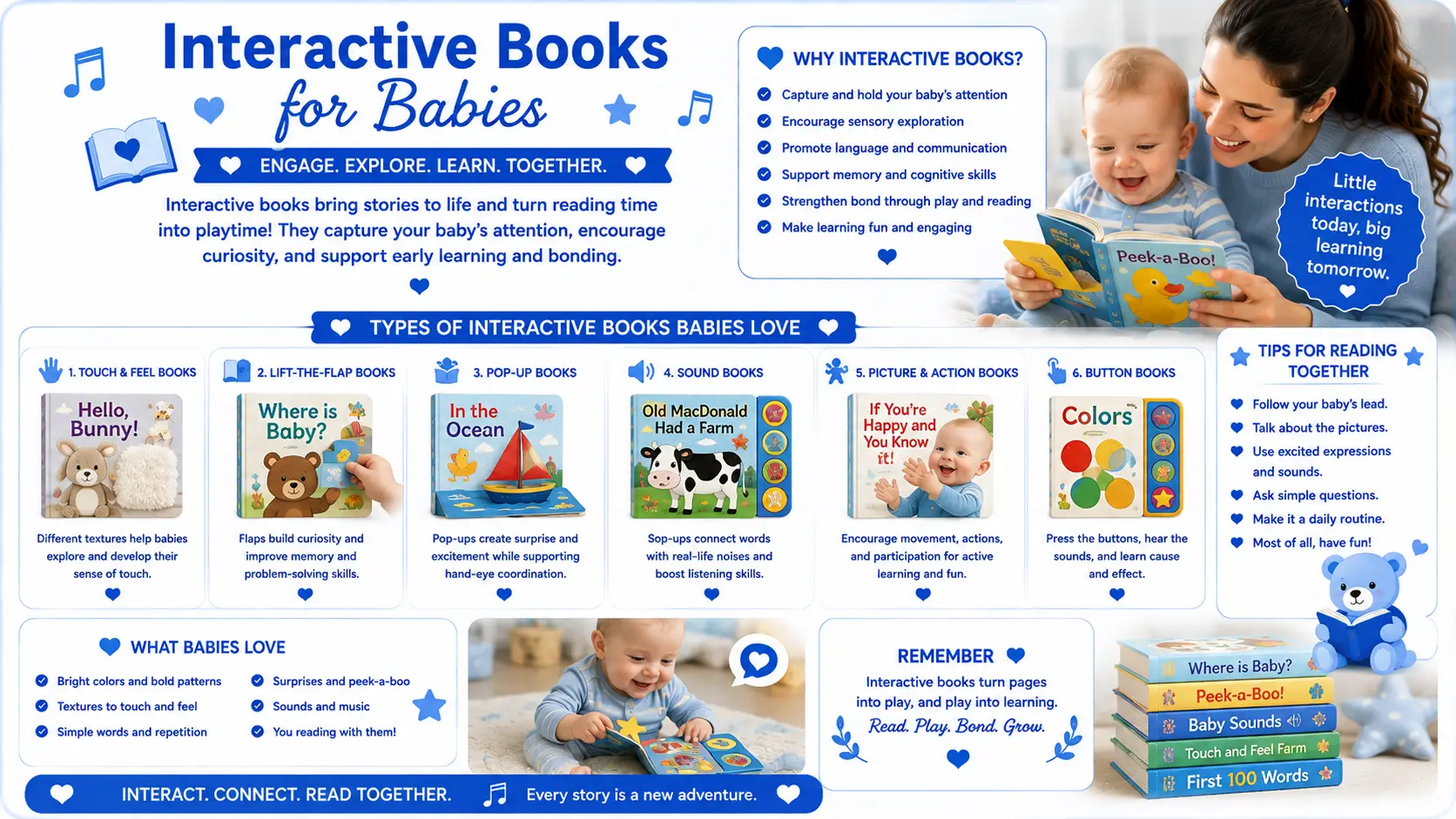
Not every book needs to be read cover to cover to be worthwhile. Some of the best reading time happens when a baby is lifting a flap, poking at a texture, or squealing at a page that squeaks. That’s the appeal of interactive books for babies — they turn story time from something a baby passively listens to into something they actively do.

If you’re wondering what makes a book “interactive,” which types are worth adding to your shelf, and when babies actually start engaging with them, here’s a full rundown based on what early-literacy experts and parents consistently recommend.

What Is an Interactive Book, Exactly?

Contents hide
1 What Is an Interactive Book, Exactly?
2 Why Interactive Books Matter for Baby Development
3 Types of Interactive Books for Babies
3.1 Touch-and-Feel Books
3.2 Lift-the-Flap Books
3.3 Sound and Button Books
3.4 Pull-Tab and Slider Books
3.5 Textured and Puppet Books
4 When Should You Introduce Interactive Books?
5 Tips for Reading Interactive Books with Your Baby
6 The Bottom Line
7 FAQ
7.1 What age should babies start using interactive books?
7.2 What are the benefits of interactive books for babies?
7.3 Are touch-and-feel books the same as interactive books?
7.4 Are interactive books safe for babies to chew on?
7.5 How do interactive books help with language development?

An interactive book is any book that invites a baby to physically engage with it — not just look and listen. That could mean lifting a flap to reveal a hidden picture, feeling different textures embedded in the pages, pressing a button that plays a sound, pulling a tab, or even helping decide what happens next. Unlike traditional picture books, interactive books are built around the idea that babies learn best when they’re using their hands, not just their eyes and ears.

Why Interactive Books Matter for Baby Development

Interactive books aren’t just a fun gimmick — they support real developmental milestones, and this is one of the most commonly searched reasons parents look into them in the first place.

Multi-sensory learning. By combining touch, sound, and sight, interactive books stimulate multiple areas of a baby’s brain at once, which helps strengthen neural connections during a critical window of development.

Fine motor skill development. Lifting flaps, pulling tabs, and pressing buttons all require the kind of small, precise hand movements babies are working to master. Every page turn is essentially hand-eye coordination practice.

Early language and vocabulary growth. The simple, repetitive text found in most interactive books helps babies build vocabulary and recognize language patterns, even before they can talk.

Cause-and-effect learning. Pressing a button and hearing a sound, or lifting a flap and seeing a picture appear, teaches babies one of their earliest lessons in cause and effect — that their actions produce a result.

Focus and attention span. The novelty of an interactive element tends to hold a baby’s attention longer than static pages, which helps build the concentration skills they’ll need later for longer stories.

Bonding and shared engagement. Interactive books naturally invite back-and-forth interaction between parent and baby — pointing, naming, waiting for a reaction — which deepens connection in a way that goes beyond simply reading words aloud.

Types of Interactive Books for Babies

Touch-and-Feel Books

These are often the very first interactive books babies encounter, since textured patches — soft, bumpy, crinkly, or fuzzy — appeal to a baby’s natural instinct to explore with their hands (and mouth). Touch-and-feel books typically work well starting around three to six months, once babies begin reaching for and grasping objects.

Lift-the-Flap Books

Lift-the-flap books turn every page into a small surprise. Classics in this category — like the beloved story of a lost puppy hiding behind doors and boxes — tap into a baby’s growing understanding of object permanence: the idea that something still exists even when it’s hidden from view.

Sound and Button Books

Books with sound buttons, animal noises, or musical elements add an auditory layer that keeps babies engaged, especially once they start associating specific sounds with specific pictures — a moo for the cow, a honk for the truck.

Pull-Tab and Slider Books

A step up in complexity, pull-tab books let babies (and toddlers) physically move a part of the illustration — sliding a tab to make an animal’s mouth open, for example. These require a bit more fine motor control, so they tend to shine a little later, closer to the first birthday.

Textured and Puppet Books

Some interactive books go a step further with embedded finger puppets, mirrors, or unusual textures that mimic real-world surfaces. These add novelty and sensory richness that keeps even reluctant “readers” engaged.

When Should You Introduce Interactive Books?

There’s no single right age, but a general pattern shows up across expert recommendations:

3 to 6 months: Simple touch-and-feel books with bold visuals are a great starting point, as babies begin reaching and grasping.

6 to 12 months: Lift-the-flap and sound books become favorites as babies grasp cause-and-effect and object permanence.

12 months and up: Pull-tab, slider, and more complex interactive books suit growing fine motor skills and longer attention spans.

Tips for Reading Interactive Books with Your Baby

Let them lead. If your baby wants to flip straight to their favorite flap or texture instead of following the story in order, that’s completely fine — exploration is the point.

Narrate as you go. Name what’s under the flap, describe the texture, or repeat the sound — this reinforces the language-building benefits of the book.

Choose durable materials. Board books, cloth books, and thick paper flaps hold up far better than delicate paper against baby hands and teething mouths.

Rotate books occasionally. A small, rotating collection keeps things fresh without overwhelming your baby with too many choices at once.

The Bottom Line

Interactive books for babies do more than entertain — they build fine motor skills, support early language development, and turn reading time into something babies actively participate in rather than just observe. Whether it’s a simple touch-and-feel book at three months or a pull-tab favorite at their first birthday, these hands-on books are a genuinely valuable addition to any baby’s shelf.

FAQ

What age should babies start using interactive books?

Many babies show interest in touch-and-feel books as early as three to six months, once they begin reaching and grasping. More complex interactive elements, like lift-the-flap or pull-tab features, tend to engage babies more from around six months onward.

What are the benefits of interactive books for babies?

Interactive books support fine motor skill development, early language and vocabulary growth, cause-and-effect learning, and multi-sensory stimulation, all while helping build focus and attention span.

Are touch-and-feel books the same as interactive books?

Touch-and-feel books are one type of interactive book. Other types include lift-the-flap, sound and button books, pull-tab or slider books, and books with embedded textures or puppets.

Are interactive books safe for babies to chew on?

Most interactive books designed for babies use sturdy board pages, cloth, or safe textured materials made to withstand mouthing and chewing, but it’s still worth checking for small, detachable parts before handing one to a very young baby.

How do interactive books help with language development?

The simple, repetitive text paired with hands-on elements helps babies connect words with actions and objects, reinforcing vocabulary and language patterns well before they start talking themselves.


Author

DrAdam

Dr. Adam. Obstetrician and Gynecologist

Follow Me
Other Articles
Previous

Best Books for 1-Year-Olds

Next

Reading Routine for Babies

No Comment! Be the first one.

Leave a Reply Cancel reply

Your email address will not be published. Required fields are marked *

What is Did You Search?

The “Did You Search” website was created for all mothers and families. Just search to find all your needs about your children.

Links

  • about
  • contact
  • privacy policy
  • medical disclaimer
  • sitemap
Copyright 2026 — DidYouSearch. All rights reserved.