
Skip to content
DidYouSearch DidYouSearch
  • did you search?
  • Baby Plus+
    • Baby Activities
      • Arts & Crafts
      • Indoor Activities
      • Montessori
      • Music
      • Outdoor Activities
      • Reading
      • Sensory Play
      • Tummy Time
    • Baby Development
      • Brain Development
      • Cognitive Development
      • Emotional Development
      • Fine Motor Skills
      • Growth Milestones
      • Monthly Milestones
      • Motor Skills
      • Physical Development
      • Social Development
      • Speech Development
    • Baby Feeding
      • Allergies
      • Baby Led Weaning
      • Bottle Feeding
      • Breast feeding
        • Breastfeeding Diet
        • Breastfeeding Positions
        • Latch Problems
        • Low Milk Supply
        • Mastitis
        • Pumping Schedule
        • Weaning
      • Burping
      • Cluster Feeding
      • Feeding Schedule
      • Formula Feeding
        • Formula Amount
        • Formula Brands
        • Formula Comparison
        • Formula Preparation
        • Formula Storage
      • Hydration
      • Pumping
      • Solid Foods
    • Baby Gear Reviews
      • Best Baby Carrier
      • Best Baby Monitor
      • Best Baby Strollers
      • Best Bottles
      • Best Breast Pump
      • Best Car Seat
      • Best Cribs
      • Best Diapers
      • Best Formula
      • Best Toys
    • Baby Growth
      • Growth Spurts
      • Height Charts
      • Monthly Growth
      • Percentiles
      • Weight Charts
    • Baby Health
      • Allergies
      • Cold
      • Constipation
      • Cough
      • Diarrhea
      • Ear Infection
      • Fever
      • Flu
      • Pediatric Visits
      • Rashes
      • Teething
      • Vaccines
      • Vomiting
    • Baby Nutrition
      • Dairy
      • Drinks
      • Eggs
      • Fish
      • Fruits
      • Healthy Recipes
      • Meat
      • Snacks
      • Vegetables
      • Vitamins
    • Baby Products
      • Baby Carriers
      • Bassinets
      • Bottles
      • Breast Pumps
      • Car Seats
      • Cribs
      • Diaper Bags
      • High Chairs
      • Monitors
      • Strollers
      • Swings
      • Toys
      • Walkers
    • Baby Recipes
      • BLW Recipes
      • Breakfast
      • Dinner
      • Finger Foods
      • Lunch
      • Purees
      • Snacks
    • Baby Safety
      • Baby Proofing
      • Car Seats
      • Choking Hazards
      • CPR
      • Home Safety
      • Poison Prevention
      • Safe Sleep
      • Sun Protection
      • Water Safety
  • Baby Names
    • Boy Names
    • Girl Names
    • American baby boy names
    • American baby girl names
    • Biblical Names
    • Middle Names
    • Modern Names
    • Short Names
    • Unique Names
    • Unisex Names
  • Recommended
    • Baby Shopping
      • Baby Registry
      • Budget Baby Shopping
      • Hospital Bag
      • Must Have Products
      • Newborn Checklist
      • Nursery Ideas
    • Baby Sleep
      • Bedtime Routine
      • Co Sleeping
      • Crib Safety
      • Nap Schedules
      • Night Wakings
      • Sleep Environment
      • Sleep Products
      • Sleep Regression
      • Sleep Training
      • Wake Windows
      • White Noise
    • Childcare
      • Daycare
      • Babysitters
      • Kindergarten
      • Nannies
      • Preschool
    • Newborn Care
      • Nail Care
      • Baby Hygiene
      • Bathing
      • Crying
      • Diapering
      • Ear Care
      • Eye Care
      • Skin Care
      • Soothing Techniques
      • Temperature
      • Umbilical Cord
    • Special Needs
      • Premature Babies
      • Autism Signs
      • Developmental Delays
      • Down Syndrome
      • NICU
      • Twins
    • Seasonal Baby Care
      • Spring
      • Summer
      • Travel
      • Fall
      • Holidays
      • Winter
  • Parenting
    • Bonding
    • Discipline
    • Emotional Intelligence
    • First Time Parents
    • Gentle Parenting
    • Positive Parenting
    • Routines
    • Single Parents
    • Working Parents
  • Pregnancy
    • Pregnancy Complications
    • Labor & Delivery
    • Postpartum Recovery
    • Pregnancy Exercises
    • Pregnancy Medications
    • Pregnancy Nutrition
    • Pregnancy Sleep
    • Pregnancy Symptoms
    • Pregnancy Tests
    • Pregnancy Vitamins
    • Pregnancy Weeks
  • Toddler
    • Preschool
    • Speech
    • Tantrums
    • Toddler Food
    • Toddler Sleep
    • Behavior
    • Independence
    • Learning
    • Potty Training
  • Traveling with Baby
    • Road Trips
    • Beach
    • Camping
    • Flying
    • Hotels
    • Packing Lists
  • did you search?
  • Baby Plus+
    • Baby Activities
      • Arts & Crafts
      • Indoor Activities
      • Montessori
      • Music
      • Outdoor Activities
      • Reading
      • Sensory Play
      • Tummy Time
    • Baby Development
      • Brain Development
      • Cognitive Development
      • Emotional Development
      • Fine Motor Skills
      • Growth Milestones
      • Monthly Milestones
      • Motor Skills
      • Physical Development
      • Social Development
      • Speech Development
    • Baby Feeding
      • Allergies
      • Baby Led Weaning
      • Bottle Feeding
      • Breast feeding
        • Breastfeeding Diet
        • Breastfeeding Positions
        • Latch Problems
        • Low Milk Supply
        • Mastitis
        • Pumping Schedule
        • Weaning
      • Burping
      • Cluster Feeding
      • Feeding Schedule
      • Formula Feeding
        • Formula Amount
        • Formula Brands
        • Formula Comparison
        • Formula Preparation
        • Formula Storage
      • Hydration
      • Pumping
      • Solid Foods
    • Baby Gear Reviews
      • Best Baby Carrier
      • Best Baby Monitor
      • Best Baby Strollers
      • Best Bottles
      • Best Breast Pump
      • Best Car Seat
      • Best Cribs
      • Best Diapers
      • Best Formula
      • Best Toys
    • Baby Growth
      • Growth Spurts
      • Height Charts
      • Monthly Growth
      • Percentiles
      • Weight Charts
    • Baby Health
      • Allergies
      • Cold
      • Constipation
      • Cough
      • Diarrhea
      • Ear Infection
      • Fever
      • Flu
      • Pediatric Visits
      • Rashes
      • Teething
      • Vaccines
      • Vomiting
    • Baby Nutrition
      • Dairy
      • Drinks
      • Eggs
      • Fish
      • Fruits
      • Healthy Recipes
      • Meat
      • Snacks
      • Vegetables
      • Vitamins
    • Baby Products
      • Baby Carriers
      • Bassinets
      • Bottles
      • Breast Pumps
      • Car Seats
      • Cribs
      • Diaper Bags
      • High Chairs
      • Monitors
      • Strollers
      • Swings
      • Toys
      • Walkers
    • Baby Recipes
      • BLW Recipes
      • Breakfast
      • Dinner
      • Finger Foods
      • Lunch
      • Purees
      • Snacks
    • Baby Safety
      • Baby Proofing
      • Car Seats
      • Choking Hazards
      • CPR
      • Home Safety
      • Poison Prevention
      • Safe Sleep
      • Sun Protection
      • Water Safety
  • Baby Names
    • Boy Names
    • Girl Names
    • American baby boy names
    • American baby girl names
    • Biblical Names
    • Middle Names
    • Modern Names
    • Short Names
    • Unique Names
    • Unisex Names
  • Recommended
    • Baby Shopping
      • Baby Registry
      • Budget Baby Shopping
      • Hospital Bag
      • Must Have Products
      • Newborn Checklist
      • Nursery Ideas
    • Baby Sleep
      • Bedtime Routine
      • Co Sleeping
      • Crib Safety
      • Nap Schedules
      • Night Wakings
      • Sleep Environment
      • Sleep Products
      • Sleep Regression
      • Sleep Training
      • Wake Windows
      • White Noise
    • Childcare
      • Daycare
      • Babysitters
      • Kindergarten
      • Nannies
      • Preschool
    • Newborn Care
      • Nail Care
      • Baby Hygiene
      • Bathing
      • Crying
      • Diapering
      • Ear Care
      • Eye Care
      • Skin Care
      • Soothing Techniques
      • Temperature
      • Umbilical Cord
    • Special Needs
      • Premature Babies
      • Autism Signs
      • Developmental Delays
      • Down Syndrome
      • NICU
      • Twins
    • Seasonal Baby Care
      • Spring
      • Summer
      • Travel
      • Fall
      • Holidays
      • Winter
  • Parenting
    • Bonding
    • Discipline
    • Emotional Intelligence
    • First Time Parents
    • Gentle Parenting
    • Positive Parenting
    • Routines
    • Single Parents
    • Working Parents
  • Pregnancy
    • Pregnancy Complications
    • Labor & Delivery
    • Postpartum Recovery
    • Pregnancy Exercises
    • Pregnancy Medications
    • Pregnancy Nutrition
    • Pregnancy Sleep
    • Pregnancy Symptoms
    • Pregnancy Tests
    • Pregnancy Vitamins
    • Pregnancy Weeks
  • Toddler
    • Preschool
    • Speech
    • Tantrums
    • Toddler Food
    • Toddler Sleep
    • Behavior
    • Independence
    • Learning
    • Potty Training
  • Traveling with Baby
    • Road Trips
    • Beach
    • Camping
    • Flying
    • Hotels
    • Packing Lists
Close

Search

Home/Pregnancy/Pregnancy Sleep/Is it safe to lay on your back when pregnant?
Pregnancy Sleep

Is it safe to lay on your back when pregnant?

By DrAdam
August 5, 2026 5 Min Read
0

If you’ve spent your whole life as a back sleeper, pregnancy can throw a real wrench into your routine. You’ve probably heard that back sleeping is off-limits once you’re expecting — but is that actually true, or is it one of those pregnancy “rules” that gets exaggerated online? Here’s what the research actually says, and how worried you really need to be.

The Short Answer

Contents hide
1 The Short Answer
2 Why Back Sleeping Becomes a Concern Later in Pregnancy
3 What the Stillbirth Research Actually Shows
4 Is Back Sleeping Ever Okay During Pregnancy?
5 What If You Wake Up on Your Back?
6 Tips to Help You Stay Off Your Back
7 The Bottom Line
8 FAQ
8.1 Is it safe to sleep on my back in the first trimester?
8.2 What week of pregnancy should I stop sleeping on my back?
8.3 Does sleeping on my back really increase the risk of stillbirth?
8.4 Is it dangerous if I wake up on my back during the night?
8.5 What should I do if I feel dizzy while lying on my back?

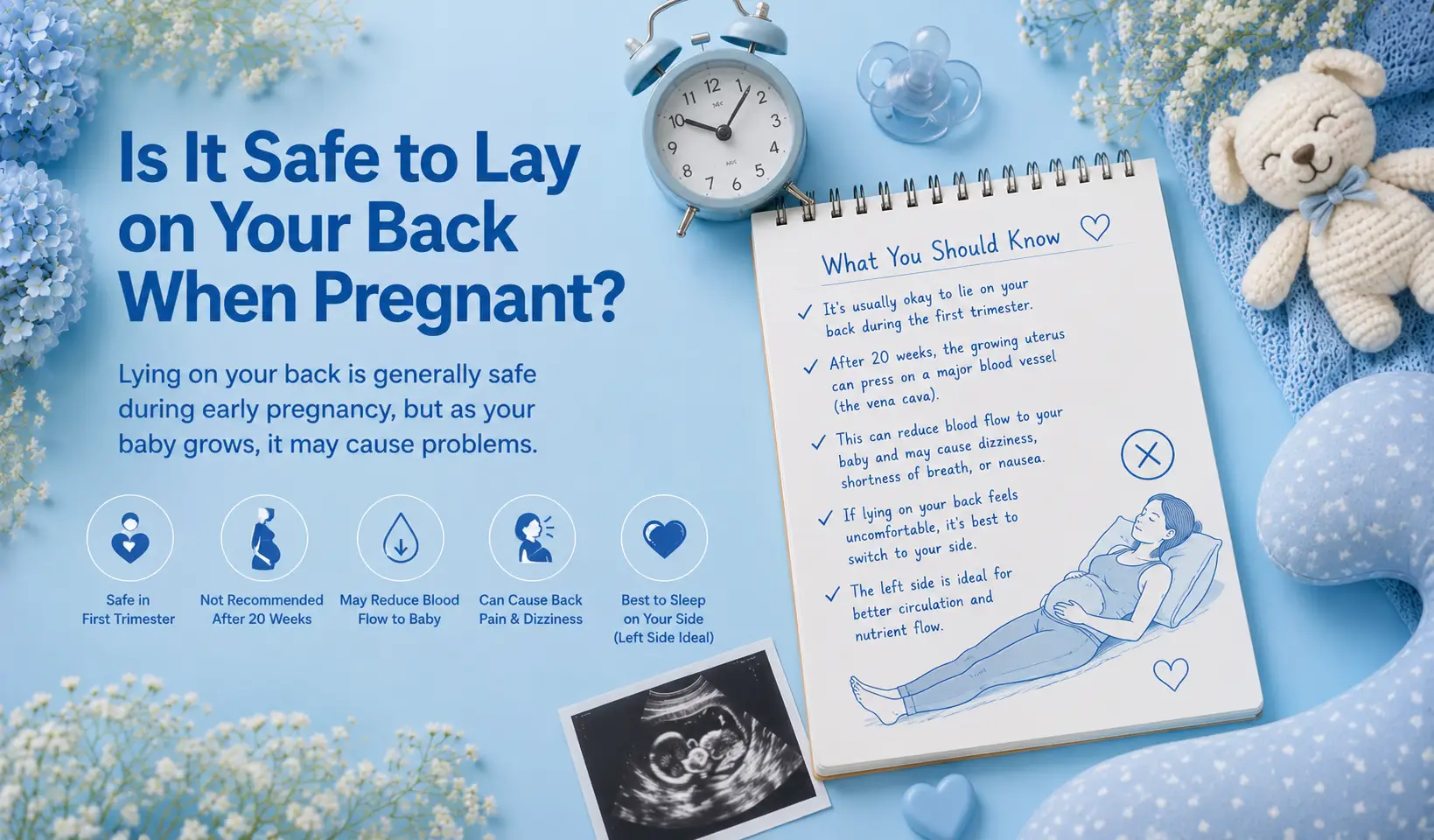
In early pregnancy, sleeping on your back is generally considered safe. But most OB-GYNs recommend switching to side sleeping by the second trimester, and especially by the third trimester — typically from around 28 weeks onward. After that point, several studies have linked back sleeping with a higher risk of stillbirth and other complications, though experts stress the overall risk is still low and this shouldn’t cause panic.

Why Back Sleeping Becomes a Concern Later in Pregnancy

The issue isn’t back sleeping itself — it’s what your growing uterus does to the blood vessels underneath it. As your baby and uterus get bigger, lying flat on your back means their combined weight rests directly on two major blood vessels that run along your spine: the inferior vena cava (which returns blood to your heart) and the aorta (which carries oxygen-rich blood out to your body).

When these vessels get compressed, less blood makes it back to your heart, so your heart pumps out less blood overall. That can mean reduced blood flow and oxygen to your uterus and baby. In some cases, this compression causes a condition called supine hypotensive syndrome, where your blood pressure drops and you may feel:

  • Dizzy or lightheaded
  • Nauseous
  • Short of breath
  • Sweaty or pale
  • A racing heartbeat

If this happens, simply rolling onto your side usually resolves the symptoms within a minute or two.

What the Stillbirth Research Actually Shows

This is the part that tends to worry expectant parents the most, so it’s worth looking at directly. Several observational studies — including a large UK study known as MiNESS, and research published in the journal eClinicalMedicine — have found a link between going to sleep on your back after 28 weeks and an increased risk of late stillbirth, with some studies estimating a risk that’s roughly 2 to 3 times higher.

A few important context points, though:

These studies looked specifically at the position you fell asleep in, not every position you were in throughout the night. Waking up on your back doesn’t carry the same associations.

Overall stillbirth risk remains low. Even with the increased relative risk, the UK’s Tommy’s charity notes that side sleeping simply lowers an already-small baseline risk even further.

Some researchers, including experts at University of Utah Health, have pointed out that these studies were observational, relatively small, and not randomized — meaning they show an association, not proof that back sleeping directly causes stillbirth.

A separate, NIH-funded study found no increased risk of stillbirth, low birth weight, or preeclampsia when sleep position was assessed only up to 30 weeks of pregnancy, though it didn’t examine risk in later pregnancy specifically.

Taken together, the guidance from most obstetric organizations is straightforward: it’s not about achieving a perfect night glued to one side. It’s about falling asleep on your side rather than your back, especially in the third trimester.

Is Back Sleeping Ever Okay During Pregnancy?

Yes — context matters:

First trimester: Back sleeping is generally fine. Your uterus is still small and low in the pelvis, so it isn’t yet pressing on major blood vessels.

Second trimester: This is when most doctors recommend transitioning to side sleeping, as your uterus grows large enough to start affecting circulation when you’re flat on your back.

Third trimester: Side sleeping is considered the safest choice for both naps and nighttime sleep. This is when the research on stillbirth risk becomes most relevant.

What If You Wake Up on Your Back?

Take a breath — this is completely normal and not something to lose sleep over (literally). You can’t control your movements while unconscious, and shifting positions throughout the night is expected for everyone, pregnant or not. Research has focused on the position people fall asleep in, not brief or occasional time spent on the back overnight. If you wake up on your back, just roll onto your side and go back to sleep.

Tips to Help You Stay Off Your Back

Practice side sleeping early, even in the first trimester, so it feels more natural once it matters most.

Use a body pillow or wedge pillow behind your back to physically block yourself from rolling into a supine position.

Try the “tennis ball trick” — some people sew a pocket onto the back of their sleepwear and tuck a small pillow or ball inside to discourage rolling onto their back.

Place a pillow between your knees to make side sleeping more comfortable and reduce hip and lower back strain.

Don’t stress over every position change. The goal is progress, not perfection — falling asleep on your side is what matters most.

The Bottom Line

Back sleeping isn’t dangerous early in pregnancy, but by the second and especially third trimester, it’s best to fall asleep on your side instead. This isn’t about strict, anxiety-inducing rules — it’s a small, evidence-based habit that supports healthy blood flow to your baby. If you wake up on your back occasionally, don’t panic; just roll over and settle back in on your side.

FAQ

Is it safe to sleep on my back in the first trimester?

Yes. In early pregnancy, your uterus is still small and hasn’t grown large enough to compress major blood vessels, so back sleeping is generally considered safe at this stage.

What week of pregnancy should I stop sleeping on my back?

Most doctors recommend transitioning to side sleeping by the second trimester, and it becomes especially important from around 28 weeks (the start of the third trimester) onward.

Does sleeping on my back really increase the risk of stillbirth?

Several studies have found an association between falling asleep on your back after 28 weeks and increased stillbirth risk. However, overall risk remains low, and some experts note the research has limitations. The safest choice is still to fall asleep on your side.

Is it dangerous if I wake up on my back during the night?

No. This is very common and not linked to the same risks studied in research, which focused on the position people fell asleep in. Just roll onto your side and continue sleeping.

What should I do if I feel dizzy while lying on my back?

This may be a sign of supine hypotensive syndrome, caused by pressure on major blood vessels. Roll onto your side right away — symptoms typically improve quickly once you do.


Author

DrAdam

Dr. Adam. Obstetrician and Gynecologist

Follow Me
Other Articles
Previous

Why sleeping on your left side is best during pregnancy

Next

Why can’t I sleep during pregnancy?

No Comment! Be the first one.

Leave a Reply Cancel reply

Your email address will not be published. Required fields are marked *

What is Did You Search?

The “Did You Search” website was created for all mothers and families. Just search to find all your needs about your children.

Links

  • about
  • contact
  • privacy policy
  • medical disclaimer
  • sitemap
Copyright 2026 — DidYouSearch. All rights reserved.