
Between three and six months, babies change quickly. Vision improves, hands begin to open and grasp with intention, and many start rolling or showing stronger head control. Play emerges in a new way. Montessori activities for this stage focus on supporting these emerging skills through free movement, simple grasping materials, language, and a calm, ordered environment—always following the child’s interest and readiness rather than a rigid schedule.
The core principles remain the same: respect the child, offer freedom within safe limits, and prepare an environment that invites exploration without overwhelm. At this age the emphasis shifts from primarily visual work toward hand development, cause-and-effect, and sensory mouthing.
What Babies Are Working On
Around three months many babies can grasp objects that fit their palm and bring them to the mouth. Hand-eye coordination strengthens. They track moving objects more smoothly and respond to sounds with greater awareness. Language continues to grow through conversation—repeating their coos, narrating daily care, and reading simple books with real images or faces. Movement expands: floor time becomes more active as rolling begins and reaching grows purposeful.
By five to six months some babies sit with support or show early signs of sitting. Interest in people and familiar faces deepens. The absorbent mind is still fully active, so calm, consistent experiences matter more than variety for its own sake.
Preparing the Environment
Continue with a defined movement area: a firm mat or rug, a low child-safe mirror, and open floor space. Many families introduce a low shelf or small basket at this stage so the baby can begin to see and eventually choose from a few carefully selected materials. Keep only a handful of items available at once to support concentration and a sense of order.
Clothing remains loose and practical. Bare feet help with sensory feedback and early movement. Outdoor time on a blanket under a tree or in gentle shade offers rich natural sensory input—leaves moving, temperature changes, textures under hands and feet.
Key Montessori Activities and Materials
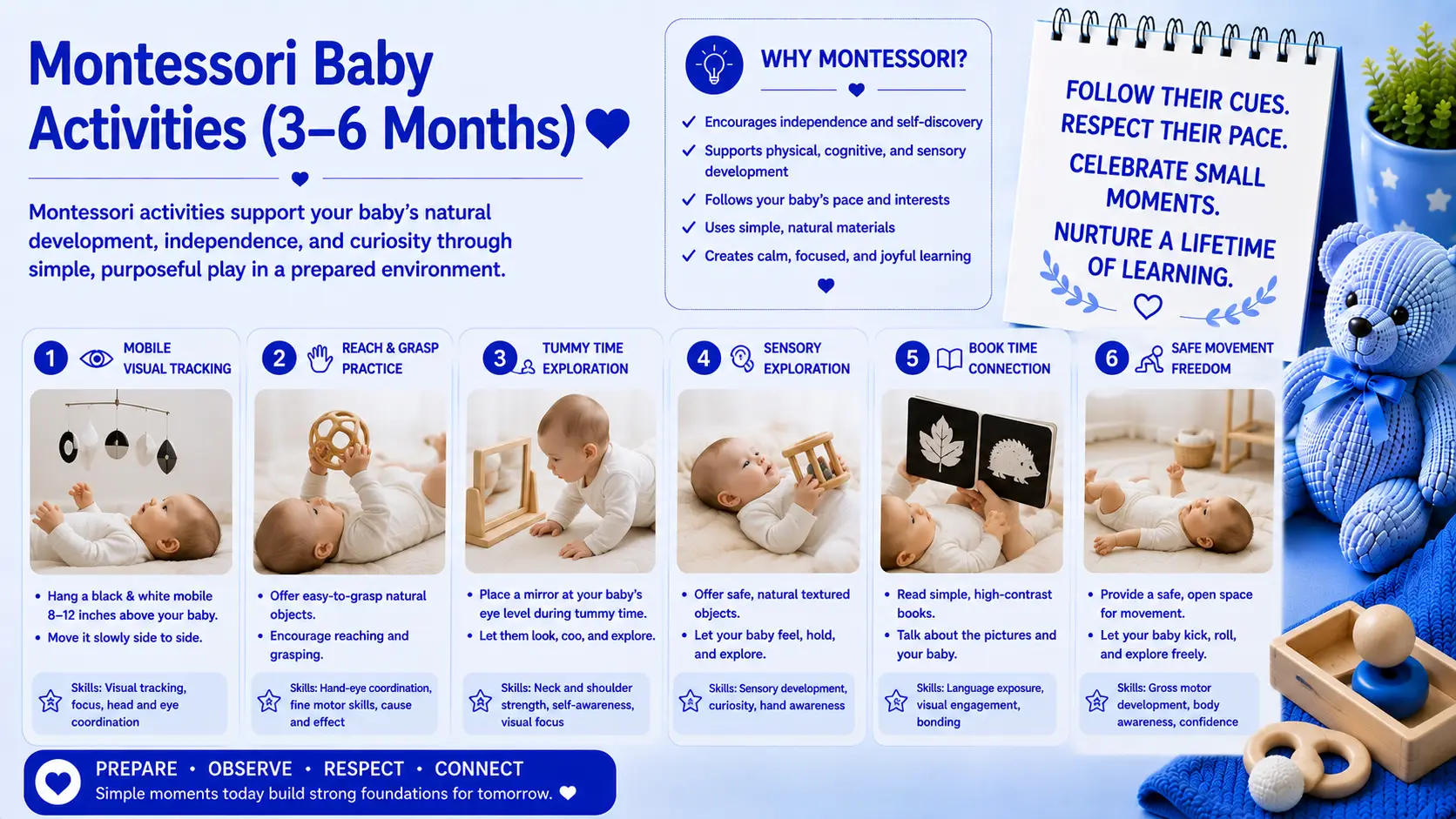
Continue and expand mobiles. The Gobbi mobile (graduated shades of one color) often holds interest at the start of this period and supports visual discrimination. Transition toward tactile mobiles: a wooden ring or bell on a ribbon, hanging ribbons, or a puzzle ball suspended so the baby can bat, grasp, and pull. These encourage reaching and early cause-and-effect. Hang one item at a time at an appropriate height during short alert periods.
Grasping and hand development. Interlocking discs (two discs joined at right angles) are a classic choice. They fit the hand, encourage intentional grasp, and support early hand-to-hand transfer. Grasping beads or a simple wooden ring serve a similar purpose. Lightweight wooden or metal rattles—especially those with a gentle bell—help the baby discover that their movement produces sound. The Skwish or similar flexible wooden rattles offer multiple grip points and pleasing movement.
Teethers and mouthing materials. Everything goes to the mouth at this age. Safe wooden teethers, natural rubber balls with interesting textures, or teethers with soft ribbons provide both oral exploration and grasp practice. Offer one at a time and supervise closely.
Treasure basket (simple version). A shallow basket with two or three real, sensory-rich objects (a metal spoon, a wooden ring, a textured natural rubber ball, a soft brush) invites focused exploration. Keep the selection small and rotate based on interest. Place the basket near the baby during floor time so they can reach in.
Mirror work and suspended objects. A low mirror still captivates as babies study their movements. Suspend a single ring or bell from a play gym or elastic so the baby can bat and grasp, experiencing the object return when released.
Language and connection. Read simple board books with clear, realistic images. Talk about what you see and what the baby is doing. Play gentle anticipation games—“I’m going to get you!” with pauses—that build connection and early prediction skills. Outdoor walks and face-to-face time remain among the richest activities.
Early practical life near six months. Once a baby can sit with support, simple water play (a shallow tray of water during supervised tummy or sitting time) or washing a vegetable can be introduced carefully. These are secondary to movement and grasping work.
Keep sessions short and observe closely. When the baby turns away or grows fussy, the activity is finished. Rotate materials rather than adding more. Passive toys that invite the baby to act are preferred over battery-powered items that entertain.
Everyday Montessori Practice
Floor time remains central. Limit restrictive containers so the baby can practice rolling, reaching, and stretching. Narrate care routines. Respond to sounds and expressions as conversation. A consistent daily rhythm supports the emerging sense of order.
By six months many babies show longer concentration, stronger intentional reach, and growing interest in the wider world. The simple, respectful foundation of free movement, meaningful materials, and responsive care prepares them for the more mobile exploration that follows.
FAQ
What are the best Montessori activities for 3–6 month olds?
Focus on free floor movement, grasping materials such as interlocking discs and simple rattles, tactile mobiles, a low mirror, short treasure basket exploration, language through talking and simple books, and outdoor time. The best activity is the one that matches your baby’s current interest and developmental readiness.
When should I introduce a treasure basket?
Many families begin a very simple version with two or three safe, sensory objects around four to five months once intentional reaching and grasping appear. Keep the selection limited and always supervise.
What Montessori toys are recommended for 3–6 months?
Interlocking discs, grasping beads or rings, lightweight wooden or bell rattles, safe teethers, a puzzle ball, and simple tactile hanging objects. Choose natural materials when possible and offer only a few at a time.
Is a Montessori shelf useful at this age?
Yes. Introducing a low shelf or basket helps establish order even if the baby cannot yet crawl to it. Placing the baby nearby allows them to see and reach preferred items, supporting choice and concentration.
How much free movement time does a 3–6 month old need?
As much as is practical and safe during awake periods. Regular floor time on a firm surface supports rolling, reaching, and strength. Short, frequent sessions often work better than long ones. Always supervise and follow the baby’s cues for rest.