
Bonding with a baby isn’t a single moment — it’s not just the “golden hour” right after birth, and it doesn’t have to happen instantly to be real. For most parents, it builds gradually through hundreds of small, repeated moments: a shared gaze during a feed, a familiar voice during a diaper change, the warmth of skin-to-skin contact. The good news is that the activities that build this connection are simple, free, and easy to weave into everyday care.
Here’s a guide to parent and baby bonding activities backed by pediatric and attachment research, along with a note for parents who feel like bonding hasn’t “clicked” yet.
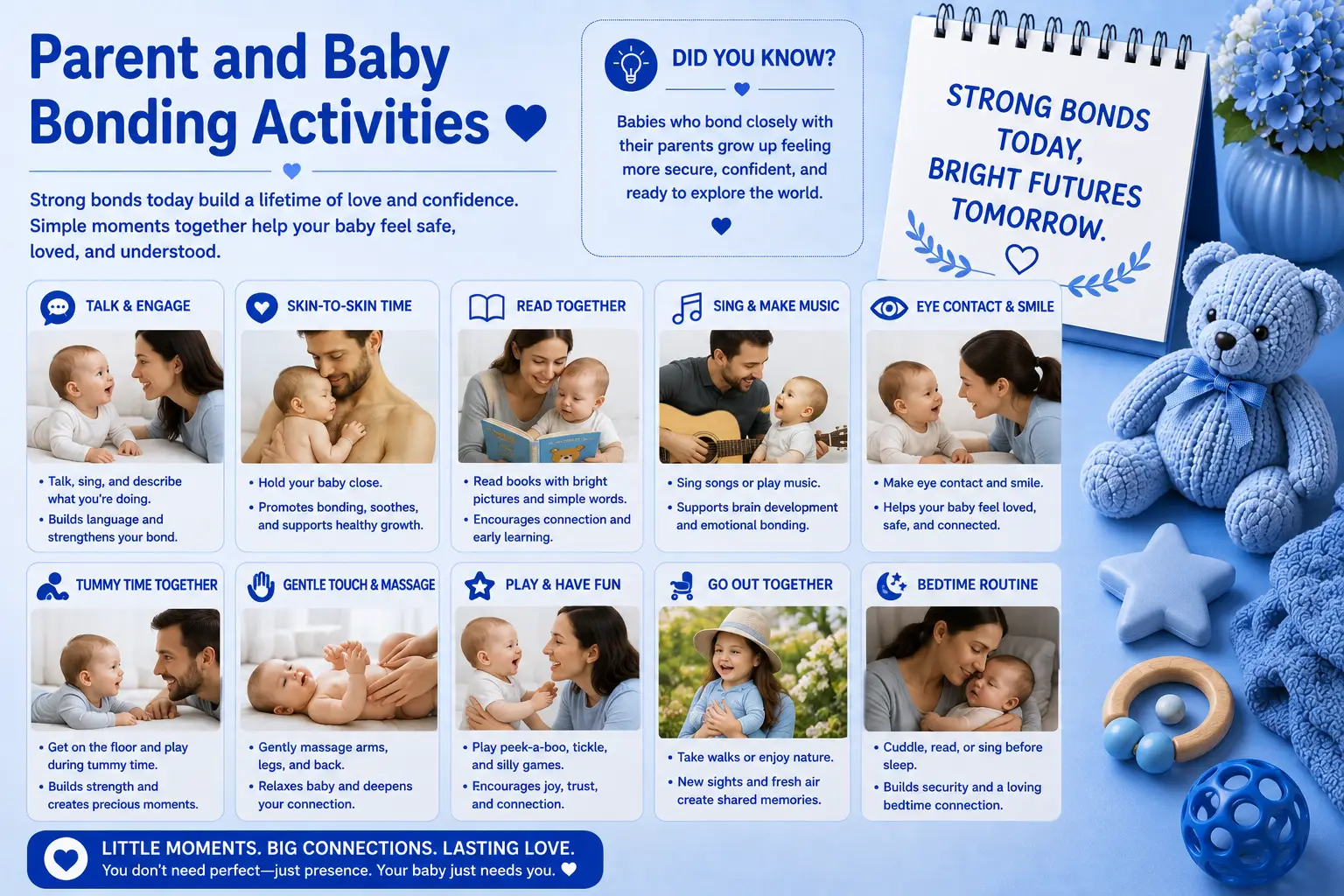
Skin-to-Skin Contact
Often called kangaroo care, skin-to-skin contact is one of the most powerful bonding activities available to parents, and it’s not limited to the newborn stage.
Hold your baby against your bare chest during calm, wakeful moments
Continue skin-to-skin during feeds, whether breastfeeding or bottle-feeding
Both parents and partners can practice this — it’s not exclusive to breastfeeding parents
Skin-to-skin contact helps regulate a baby’s heart rate, temperature, and breathing, and it releases oxytocin — sometimes called the “bonding hormone” — in both parent and baby.
Eye Contact and Facial Connection
Babies are drawn to faces from birth, and eye contact is one of their earliest forms of communication.
Make eye contact during feeds, diaper changes, or any moment you’re already close together — it doesn’t need to be a dedicated activity
Smile and gently mimic your baby’s expressions to encourage social smiling
Try mirror play, watching your baby’s reactions to their own reflection together
Infant Massage
Baby massage is a long-practiced bonding ritual with real, documented benefits: better sleep, reduced stress, and improved parent-child communication.
Use gentle, circular motions on your baby’s tummy, arms, legs, and back
Choose a baby-safe oil, like coconut or almond oil, and only massage when baby is calm and relaxed
Make it part of a bedtime or after-bath ritual for consistency
Babywearing
Babywearing keeps your baby physically close during everyday tasks, offering near-constant bonding time without requiring dedicated “activity” moments.
Use a soft wrap or structured carrier to keep baby close during chores, errands, or walks
The closeness to your heartbeat, warmth, and movement is naturally soothing for babies
It’s a favorite bonding tool for partners and dads especially, offering hands-on closeness beyond feeding time
Talking, Singing, and Reading
Your voice is one of the first things your baby learns to recognize, and narrating your day builds both language skills and connection.
Narrate everyday routines — diaper changes, baths, getting dressed — in a warm, familiar tone
Sing softly, even if it’s just made-up tunes
Read aloud daily, even to a newborn; the closeness and rhythm of your voice matter more than comprehension at this stage
Feeding Time as Bonding Time
Whether breastfeeding or bottle-feeding, feeding offers a natural, repeated bonding opportunity multiple times a day.
Hold your baby close and make eye contact during feeds
Switch arms periodically to mimic a natural breastfeeding position, even when bottle-feeding
Use feeding time to learn your baby’s hunger and fullness cues
Everyday Rituals That Build Connection Over Time
Morning snuggles to start the day with quiet, unhurried closeness
Bedtime routines, like a bath, massage, or story, that become predictable and comforting
Shared bath time, a calming, hands-on activity that combines touch, eye contact, and play
Including partners and siblings in bonding rituals, so the connection grows as a family, not just one caregiver
If Bonding Doesn’t Feel Instant
Not every parent feels an overwhelming rush of connection right away, and that’s more common than it might seem — especially after a difficult birth, a NICU stay, or in the exhausting early weeks. Bonding is something that grows through repetition, not a milestone you either hit or miss. If you’re still feeling disconnected after several weeks, or you’re noticing signs of ongoing sadness, anxiety, or difficulty coping, it’s worth talking to your doctor or a perinatal mental health professional — support is available, and reaching out is a sign of strength, not failure.
FAQ
What are the best bonding activities for a newborn?
Skin-to-skin contact, eye contact during feeds, talking or singing, and infant massage are among the most effective and well-researched bonding activities for newborns.
How long does it take to bond with a baby?
Bonding varies widely between parents — some feel a strong connection immediately, while others build it gradually over weeks or months through repeated, everyday interactions. Both experiences are normal.
Can dads or partners bond with a baby the same way as breastfeeding parents?
Yes — skin-to-skin contact, babywearing, bottle-feeding with eye contact, massage, and bath time are all effective, non-breastfeeding-dependent ways for any parent or partner to bond with a baby.
Does babywearing actually help with bonding?
Yes — babywearing keeps a baby close to a caregiver’s warmth, heartbeat, and movement throughout daily activities, which supports both physical regulation and emotional closeness over time.
What should I do if I don’t feel bonded with my baby yet?
It’s common not to feel an instant bond, especially in the early weeks. Keep engaging in small, repeated bonding activities, and talk to your doctor or a perinatal mental health professional if the disconnected feeling persists or is accompanied by ongoing sadness or anxiety.