
Skip to content
DidYouSearch DidYouSearch
  • did you search?
  • Baby Plus+
    • Baby Activities
      • Arts & Crafts
      • Indoor Activities
      • Montessori
      • Music
      • Outdoor Activities
      • Reading
      • Sensory Play
      • Tummy Time
    • Baby Development
      • Brain Development
      • Cognitive Development
      • Emotional Development
      • Fine Motor Skills
      • Growth Milestones
      • Monthly Milestones
      • Motor Skills
      • Physical Development
      • Social Development
      • Speech Development
    • Baby Feeding
      • Allergies
      • Baby Led Weaning
      • Bottle Feeding
      • Breast feeding
        • Breastfeeding Diet
        • Breastfeeding Positions
        • Latch Problems
        • Low Milk Supply
        • Mastitis
        • Pumping Schedule
        • Weaning
      • Burping
      • Cluster Feeding
      • Feeding Schedule
      • Formula Feeding
        • Formula Amount
        • Formula Brands
        • Formula Comparison
        • Formula Preparation
        • Formula Storage
      • Hydration
      • Pumping
      • Solid Foods
    • Baby Gear Reviews
      • Best Baby Carrier
      • Best Baby Monitor
      • Best Baby Strollers
      • Best Bottles
      • Best Breast Pump
      • Best Car Seat
      • Best Cribs
      • Best Diapers
      • Best Formula
      • Best Toys
    • Baby Growth
      • Growth Spurts
      • Height Charts
      • Monthly Growth
      • Percentiles
      • Weight Charts
    • Baby Health
      • Allergies
      • Cold
      • Constipation
      • Cough
      • Diarrhea
      • Ear Infection
      • Fever
      • Flu
      • Pediatric Visits
      • Rashes
      • Teething
      • Vaccines
      • Vomiting
    • Baby Nutrition
      • Dairy
      • Drinks
      • Eggs
      • Fish
      • Fruits
      • Healthy Recipes
      • Meat
      • Snacks
      • Vegetables
      • Vitamins
    • Baby Products
      • Baby Carriers
      • Bassinets
      • Bottles
      • Breast Pumps
      • Car Seats
      • Cribs
      • Diaper Bags
      • High Chairs
      • Monitors
      • Strollers
      • Swings
      • Toys
      • Walkers
    • Baby Recipes
      • BLW Recipes
      • Breakfast
      • Dinner
      • Finger Foods
      • Lunch
      • Purees
      • Snacks
    • Baby Safety
      • Baby Proofing
      • Car Seats
      • Choking Hazards
      • CPR
      • Home Safety
      • Poison Prevention
      • Safe Sleep
      • Sun Protection
      • Water Safety
  • Baby Names
    • Boy Names
    • Girl Names
    • American baby boy names
    • American baby girl names
    • Biblical Names
    • Middle Names
    • Modern Names
    • Short Names
    • Unique Names
    • Unisex Names
  • Recommended
    • Baby Shopping
      • Baby Registry
      • Budget Baby Shopping
      • Hospital Bag
      • Must Have Products
      • Newborn Checklist
      • Nursery Ideas
    • Baby Sleep
      • Bedtime Routine
      • Co Sleeping
      • Crib Safety
      • Nap Schedules
      • Night Wakings
      • Sleep Environment
      • Sleep Products
      • Sleep Regression
      • Sleep Training
      • Wake Windows
      • White Noise
    • Childcare
      • Daycare
      • Babysitters
      • Kindergarten
      • Nannies
      • Preschool
    • Newborn Care
      • Nail Care
      • Baby Hygiene
      • Bathing
      • Crying
      • Diapering
      • Ear Care
      • Eye Care
      • Skin Care
      • Soothing Techniques
      • Temperature
      • Umbilical Cord
    • Special Needs
      • Premature Babies
      • Autism Signs
      • Developmental Delays
      • Down Syndrome
      • NICU
      • Twins
    • Seasonal Baby Care
      • Spring
      • Summer
      • Travel
      • Fall
      • Holidays
      • Winter
  • Parenting
    • Bonding
    • Discipline
    • Emotional Intelligence
    • First Time Parents
    • Gentle Parenting
    • Positive Parenting
    • Routines
    • Single Parents
    • Working Parents
  • Pregnancy
    • Pregnancy Complications
    • Labor & Delivery
    • Postpartum Recovery
    • Pregnancy Exercises
    • Pregnancy Medications
    • Pregnancy Nutrition
    • Pregnancy Sleep
    • Pregnancy Symptoms
    • Pregnancy Tests
    • Pregnancy Vitamins
    • Pregnancy Weeks
  • Toddler
    • Preschool
    • Speech
    • Tantrums
    • Toddler Food
    • Toddler Sleep
    • Behavior
    • Independence
    • Learning
    • Potty Training
  • Traveling with Baby
    • Road Trips
    • Beach
    • Camping
    • Flying
    • Hotels
    • Packing Lists
  • did you search?
  • Baby Plus+
    • Baby Activities
      • Arts & Crafts
      • Indoor Activities
      • Montessori
      • Music
      • Outdoor Activities
      • Reading
      • Sensory Play
      • Tummy Time
    • Baby Development
      • Brain Development
      • Cognitive Development
      • Emotional Development
      • Fine Motor Skills
      • Growth Milestones
      • Monthly Milestones
      • Motor Skills
      • Physical Development
      • Social Development
      • Speech Development
    • Baby Feeding
      • Allergies
      • Baby Led Weaning
      • Bottle Feeding
      • Breast feeding
        • Breastfeeding Diet
        • Breastfeeding Positions
        • Latch Problems
        • Low Milk Supply
        • Mastitis
        • Pumping Schedule
        • Weaning
      • Burping
      • Cluster Feeding
      • Feeding Schedule
      • Formula Feeding
        • Formula Amount
        • Formula Brands
        • Formula Comparison
        • Formula Preparation
        • Formula Storage
      • Hydration
      • Pumping
      • Solid Foods
    • Baby Gear Reviews
      • Best Baby Carrier
      • Best Baby Monitor
      • Best Baby Strollers
      • Best Bottles
      • Best Breast Pump
      • Best Car Seat
      • Best Cribs
      • Best Diapers
      • Best Formula
      • Best Toys
    • Baby Growth
      • Growth Spurts
      • Height Charts
      • Monthly Growth
      • Percentiles
      • Weight Charts
    • Baby Health
      • Allergies
      • Cold
      • Constipation
      • Cough
      • Diarrhea
      • Ear Infection
      • Fever
      • Flu
      • Pediatric Visits
      • Rashes
      • Teething
      • Vaccines
      • Vomiting
    • Baby Nutrition
      • Dairy
      • Drinks
      • Eggs
      • Fish
      • Fruits
      • Healthy Recipes
      • Meat
      • Snacks
      • Vegetables
      • Vitamins
    • Baby Products
      • Baby Carriers
      • Bassinets
      • Bottles
      • Breast Pumps
      • Car Seats
      • Cribs
      • Diaper Bags
      • High Chairs
      • Monitors
      • Strollers
      • Swings
      • Toys
      • Walkers
    • Baby Recipes
      • BLW Recipes
      • Breakfast
      • Dinner
      • Finger Foods
      • Lunch
      • Purees
      • Snacks
    • Baby Safety
      • Baby Proofing
      • Car Seats
      • Choking Hazards
      • CPR
      • Home Safety
      • Poison Prevention
      • Safe Sleep
      • Sun Protection
      • Water Safety
  • Baby Names
    • Boy Names
    • Girl Names
    • American baby boy names
    • American baby girl names
    • Biblical Names
    • Middle Names
    • Modern Names
    • Short Names
    • Unique Names
    • Unisex Names
  • Recommended
    • Baby Shopping
      • Baby Registry
      • Budget Baby Shopping
      • Hospital Bag
      • Must Have Products
      • Newborn Checklist
      • Nursery Ideas
    • Baby Sleep
      • Bedtime Routine
      • Co Sleeping
      • Crib Safety
      • Nap Schedules
      • Night Wakings
      • Sleep Environment
      • Sleep Products
      • Sleep Regression
      • Sleep Training
      • Wake Windows
      • White Noise
    • Childcare
      • Daycare
      • Babysitters
      • Kindergarten
      • Nannies
      • Preschool
    • Newborn Care
      • Nail Care
      • Baby Hygiene
      • Bathing
      • Crying
      • Diapering
      • Ear Care
      • Eye Care
      • Skin Care
      • Soothing Techniques
      • Temperature
      • Umbilical Cord
    • Special Needs
      • Premature Babies
      • Autism Signs
      • Developmental Delays
      • Down Syndrome
      • NICU
      • Twins
    • Seasonal Baby Care
      • Spring
      • Summer
      • Travel
      • Fall
      • Holidays
      • Winter
  • Parenting
    • Bonding
    • Discipline
    • Emotional Intelligence
    • First Time Parents
    • Gentle Parenting
    • Positive Parenting
    • Routines
    • Single Parents
    • Working Parents
  • Pregnancy
    • Pregnancy Complications
    • Labor & Delivery
    • Postpartum Recovery
    • Pregnancy Exercises
    • Pregnancy Medications
    • Pregnancy Nutrition
    • Pregnancy Sleep
    • Pregnancy Symptoms
    • Pregnancy Tests
    • Pregnancy Vitamins
    • Pregnancy Weeks
  • Toddler
    • Preschool
    • Speech
    • Tantrums
    • Toddler Food
    • Toddler Sleep
    • Behavior
    • Independence
    • Learning
    • Potty Training
  • Traveling with Baby
    • Road Trips
    • Beach
    • Camping
    • Flying
    • Hotels
    • Packing Lists
Close

Search

Home/Pregnancy/Pregnancy Tests/What does a faint line on a pregnancy test mean?
Pregnancy Tests

What does a faint line on a pregnancy test mean?

By DrAdam
August 6, 2026 4 Min Read
0

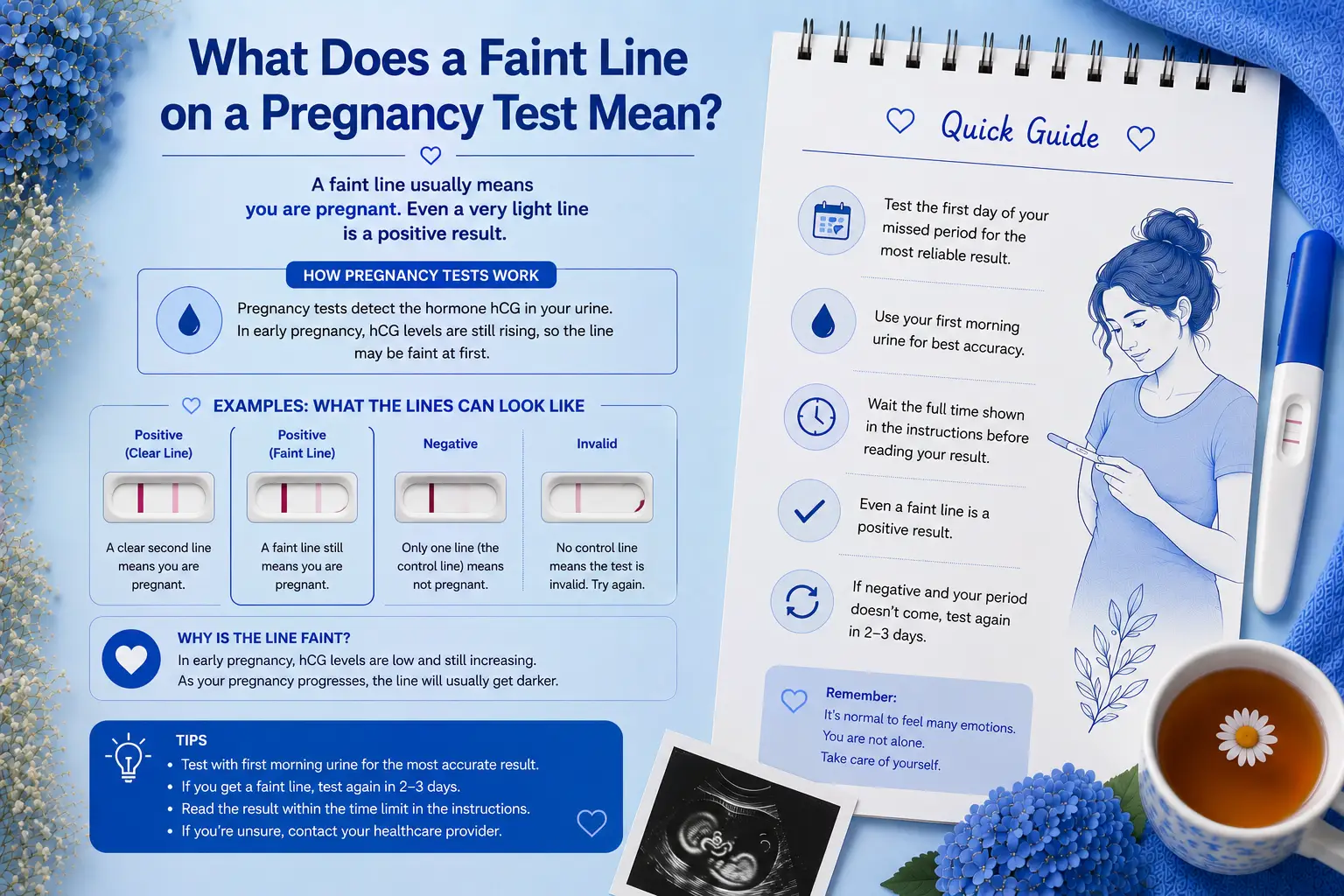
You take the test, wait a few nervous minutes, and there it is — not a bold, unmistakable line, but a faint one you have to tilt toward the light to even confirm you’re seeing it. Is it a positive? A trick of the eye? Here’s what a faint line actually means, how to tell it apart from an evaporation line, and what to do next.

The Short Answer

Contents hide
1 The Short Answer
2 Why Does a Positive Line Show Up Faint in the First Place?
3 Faint Positive vs. Evaporation Line: How to Tell the Difference
4 Could a Faint Line Still Mean Something Is Wrong?
5 What Should You Do After Seeing a Faint Line?
6 FAQ
6.1 Does a faint line always mean I’m pregnant?
6.2 How can I tell a faint positive from an evaporation line?
6.3 Why is my pregnancy test line so light?
6.4 Should I take another test if I get a faint line?
6.5 Can a faint line mean a miscarriage or chemical pregnancy?

In most cases, a faint line means you’re pregnant. Pregnancy tests work by detecting the hormone hCG (human chorionic gonadotropin), and the test only produces a colored line — however light — when hCG is present. As long as the line has actual color (pink or blue, depending on the brand) and shows up within the test’s recommended reading window, it generally counts as a positive result, even if it’s much lighter than the control line.

The one big exception: if the line shows up after the recommended reading time and has no real color, it’s likely something else entirely — an evaporation line.

Why Does a Positive Line Show Up Faint in the First Place?

hCG starts at very low levels right after implantation and rises steadily over the following days and weeks, often doubling every two to three days in early pregnancy. A faint line usually just means your hCG level is on the lower end of what the test can detect — not that anything is wrong. Common reasons include:

Testing early. If you test before your missed period, or just a few days after, hCG may only just be crossing the test’s detection threshold.

Diluted urine. Drinking a lot of fluids before testing lowers the concentration of hCG in your sample, which can lighten the line even if hCG is genuinely rising well.

Test sensitivity. Some tests are built to detect very low hCG levels (as low as 10–20 mIU/mL), which means they’re more likely to show a faint line early on, before a less sensitive test would show anything at all.

Faint Positive vs. Evaporation Line: How to Tell the Difference

This is where most of the confusion comes from, and it’s worth understanding clearly:

Faint Positive Evaporation Line
Timing Appears within the test’s reading window (usually 3–5 minutes) Appears after the window, often 10+ minutes later
Color Has visible color — pink or blue Colorless, grey, or translucent
Cause hCG activating the test’s dye Urine residue drying on the strip
What it means Likely pregnant Not a reliable result either way

The simplest rule: color plus timing. If the line appeared with color inside the recommended window, trust it. If it only showed up later, or looks like a colorless smudge, it’s probably an evaporation line and shouldn’t be treated as a result at all.

To avoid the confusion altogether, always read your test within the exact window listed in the instructions, and avoid checking back on a test hours later — that’s the single most common way evaporation lines get misread as faint positives.

Could a Faint Line Still Mean Something Is Wrong?

Occasionally, yes — though this isn’t the most common explanation. A faint positive followed shortly after by a negative test or the start of your period can indicate a chemical pregnancy, a very early pregnancy loss that happens shortly after implantation, often before you’d otherwise know you were pregnant. hCG was genuinely present, which is why the test picked it up, but the pregnancy didn’t continue. This is upsetting, but it’s also common — many chemical pregnancies happen before someone even realizes they conceived.

A faint line that doesn’t get noticeably darker over the following days is also worth mentioning to a doctor, since it can sometimes be worth checking hCG levels with a blood test to see how they’re trending.

What Should You Do After Seeing a Faint Line?

Retest in 2–3 days using first-morning urine, which is more concentrated and gives hCG the best chance of showing up clearly.

Watch whether the line gets darker. In a typical progressing pregnancy, hCG roughly doubles every few days, so a repeat test should show a noticeably stronger line.

Try a digital test if you want a clearer answer. Digital tests remove the guesswork by displaying “Pregnant” or “Not Pregnant” instead of a line you have to interpret.

See a doctor for a blood test if you want definitive confirmation or if you’re experiencing symptoms like unusual pain or bleeding. Blood tests are more sensitive than urine tests and can measure your exact hCG level.

FAQ

Does a faint line always mean I’m pregnant?

If the line has visible color and appeared within the test’s recommended reading window, it’s very likely a true positive. A colorless line that shows up after that window is probably an evaporation line, not a pregnancy indicator.

How can I tell a faint positive from an evaporation line?

Check the timing and the color. A faint positive appears within minutes and has a pink or blue tint. An evaporation line shows up later, after the urine has dried, and is usually grey or colorless.

Why is my pregnancy test line so light?

A light line usually just means your hCG level is still relatively low, which is common if you’re testing early or your urine is diluted. It typically gets darker over the following days as hCG rises.

Should I take another test if I get a faint line?

Yes, retesting in 2–3 days with first-morning urine is a good way to confirm. A true pregnancy should show a darker line as hCG levels rise.

Can a faint line mean a miscarriage or chemical pregnancy?

It’s possible, especially if the line doesn’t darken on a repeat test or is followed by bleeding similar to a period. This is called a chemical pregnancy. If you’re concerned, a blood test at your doctor’s office can track your hCG levels more precisely.

Author

DrAdam

Dr. Adam. Obstetrician and Gynecologist

Follow Me
Other Articles
Previous

When should you take a pregnancy test?

Next

Best pregnancy test brands — most accurate

No Comment! Be the first one.

Leave a Reply Cancel reply

Your email address will not be published. Required fields are marked *

What is Did You Search?

The “Did You Search” website was created for all mothers and families. Just search to find all your needs about your children.

Links

  • about
  • contact
  • privacy policy
  • medical disclaimer
  • sitemap
Copyright 2026 — DidYouSearch. All rights reserved.