

Wondering what a positive pregnancy test looks like? Learn how to read line, digital, and plus-sign tests, what faint lines mean, and when to test for the most accurate results.
What Does a Positive Pregnancy Test Look Like?
Quick Answer
A positive pregnancy test means the test has detected the pregnancy hormone hCG (human chorionic gonadotropin) in your urine.
Depending on the type of test, a positive result may appear as:
- Two pink or blue lines
- A plus (+) sign
- The word “Pregnant” on a digital test
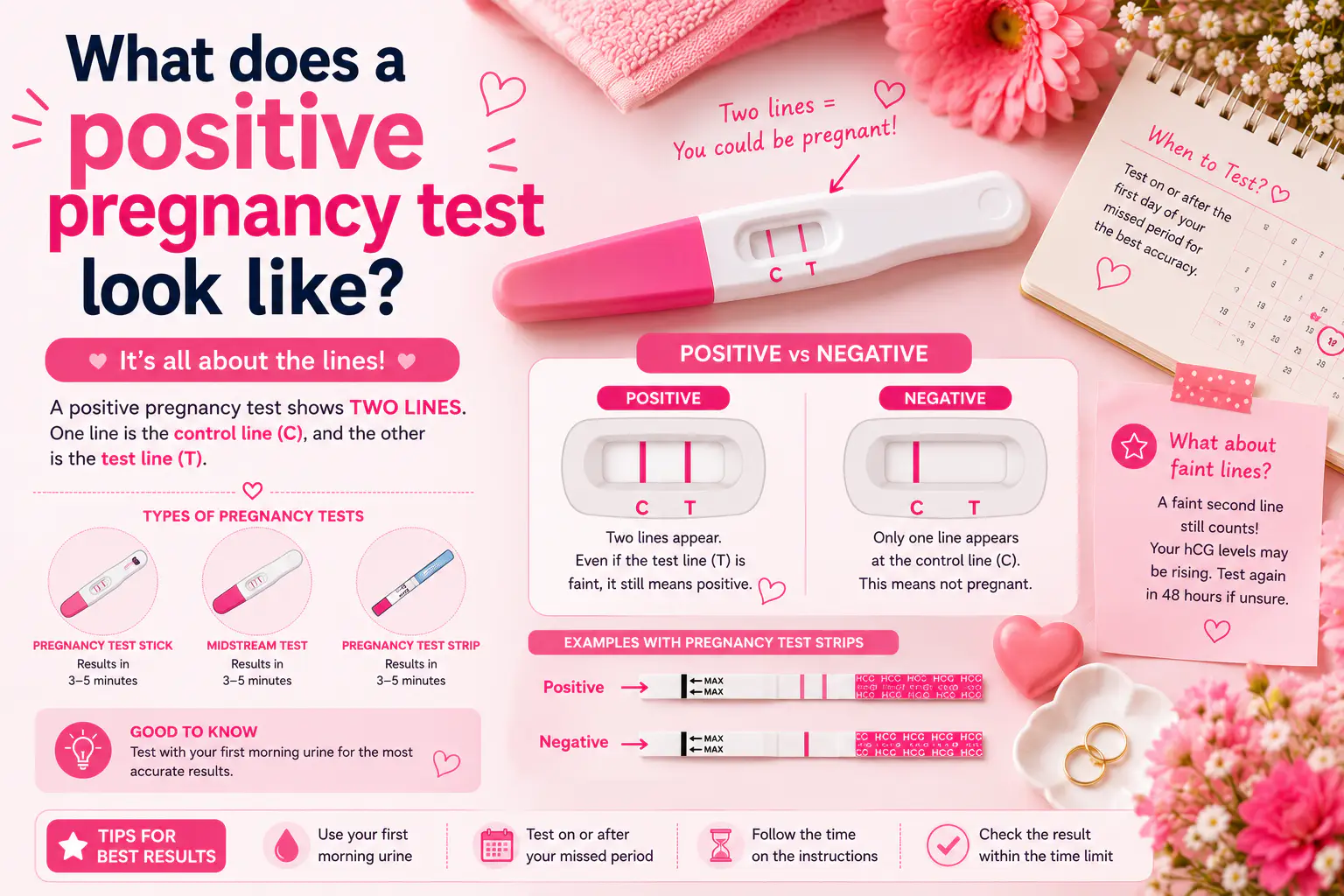
Even a very faint second line usually means you’re pregnant if it’s read within the test’s recommended time frame.
What Does a Positive Line Test Look Like?
Most home pregnancy tests use lines to show the result.
Positive Result
✅ Two visible lines
- One control line (shows the test worked)
- One test line (shows hCG was detected)
The second line can be dark or very faint.
Negative Result
❌ Only one control line appears.
No second line means the test did not detect pregnancy.
Invalid Result
If the control line doesn’t appear, the test is invalid.
You’ll need to use a new pregnancy test.
What Does a Digital Pregnancy Test Look Like?
Digital tests are easier to read because they display words instead of lines.
A positive result may show:
- Pregnant
- Yes+
- +
A negative result may show:
- Not Pregnant
- No
- –
Is a Faint Positive Line Still Positive?
Yes.
A faint second line usually means you’re pregnant.
This often happens because:
- You tested very early.
- Your hCG levels are still low.
- Your urine was diluted.
If the line appeared within the time listed in the instructions, it should generally be considered a positive result.
How Soon Can a Pregnancy Test Turn Positive?
Most home pregnancy tests can detect pregnancy:
- Around the first day of a missed period
- Sometimes 5–6 days before a missed period with early-result tests
Testing too early may produce a false-negative result because hCG levels haven’t risen enough.
What If the Positive Line Is Very Light?
A light line is common in early pregnancy.
Wait 48 hours and test again.
Since hCG usually increases every two to three days in early pregnancy, the line often becomes darker over time.
Can a Pregnancy Test Give a False Positive?
False positives are uncommon but can happen.
Possible reasons include:
- Recent pregnancy or miscarriage
- Certain fertility medications containing hCG
- Rare medical conditions
- Reading the test after the recommended time (evaporation line)
Always follow the instructions included with your test.
What Is an Evaporation Line?
An evaporation line is a faint, colorless mark that may appear after the test has dried.
Unlike a true positive:
- It often has no color.
- It appears after the reading time.
- It should not be considered a positive result.
Read your pregnancy test only within the time window recommended by the manufacturer.
What Should You Do After a Positive Pregnancy Test?
If your result is positive:
- Take another test in 1–2 days if you’re unsure.
- Schedule an appointment with your healthcare provider.
- Start taking a prenatal vitamin with folic acid if you haven’t already.
- Avoid alcohol, smoking, and recreational drugs.
A healthcare provider can confirm the pregnancy with additional testing if needed.
When Should You Take a Pregnancy Test?
For the most accurate result:
- Test after your missed period.
- Use your first morning urine.
- Follow the instructions carefully.
- Don’t read the result too early or too late.
FAQs
Does a faint second line mean I’m pregnant?
Yes. A colored faint second line that appears within the test’s reading time usually means the result is positive.
Can two lines appear if you’re not pregnant?
Sometimes an evaporation line can look like a second line, but it’s usually colorless and appears after the recommended reading time.
How accurate are home pregnancy tests?
Most home pregnancy tests are over 99% accurate when used correctly after a missed period.
Can a positive test become negative later?
Yes. If an early pregnancy ends very soon after implantation (sometimes called a chemical pregnancy), a later test may become negative. Contact your healthcare provider if you have concerns.
Should I test again after a positive result?
If the result is faint or you’re unsure, repeat the test after 48 hours or follow up with your healthcare provider.