
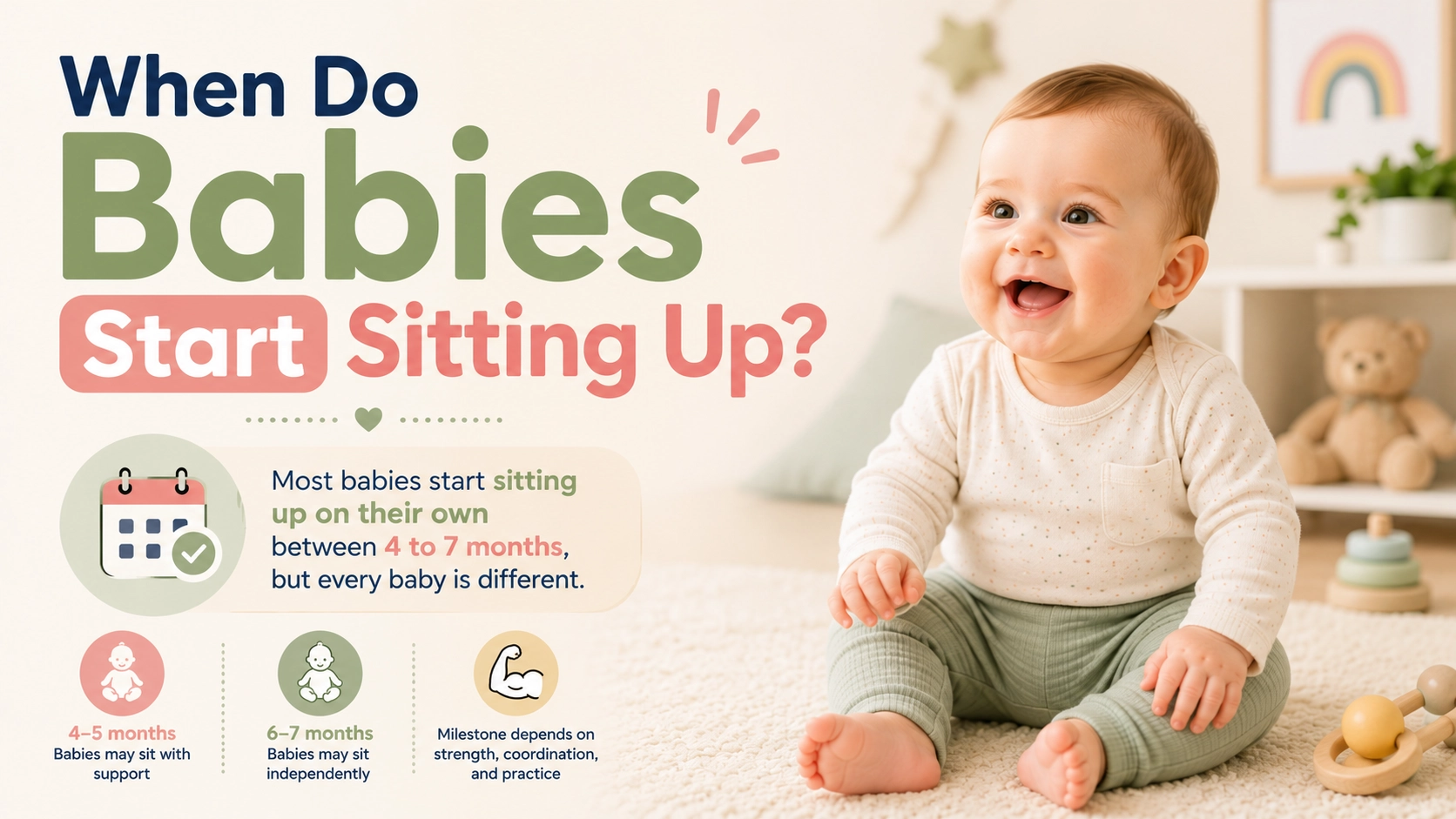

Most babies begin sitting with support around 4 to 5 months of age and sit independently between 6 and 8 months. Every baby develops at their own pace, so it’s normal if your little one reaches this milestone a bit earlier or later.
Learning to sit up is an important developmental milestone because it strengthens your baby’s core muscles, improves balance, and allows them to explore the world from a new perspective. Sitting also prepares babies for future milestones like crawling, pulling up, and walking.
When Do Babies Sit Up Without Support?
Most babies can sit without support by 6 to 8 months.
Before reaching this milestone, babies typically progress through several stages:
- Around 3–4 months: Better head and neck control.
- Around 4–5 months: Can sit with support from a parent or infant seat.
- Around 5–6 months: May briefly sit independently before tipping over.
- Around 6–8 months: Sits steadily without support for several minutes.
- Around 8–9 months: Easily changes positions while sitting and reaches for toys.
Remember that every baby develops on their own timeline.
Signs Your Baby Is Ready to Sit Up
Before sitting independently, babies usually show several developmental signs.
These include:
- Good head and neck control.
- Rolling over in both directions.
- Pushing up during tummy time.
- Supporting themselves with their arms while sitting.
- Stronger back and core muscles.
- Reaching for toys while maintaining balance.
These skills develop gradually through daily movement and play.
Why Sitting Up Is Important
Sitting independently is more than just a milestone—it supports many areas of development.
Benefits include:
- Strengthens core and back muscles.
- Improves balance and coordination.
- Frees the hands for reaching and playing.
- Encourages exploration and learning.
- Supports fine motor skill development.
- Prepares babies for crawling and other movements.
The ability to sit also helps babies participate more comfortably during mealtimes and playtime.
How to Help Your Baby Learn to Sit
You can encourage this milestone through safe, supervised activities.
Try these ideas:
- Give your baby plenty of tummy time every day.
- Allow floor play on a firm, safe surface.
- Place toys slightly out of reach to encourage balance.
- Support your baby in a seated position using your hands or a nursing pillow.
- Limit prolonged time in swings, bouncers, or infant seats.
Avoid forcing your baby into a sitting position before they are ready, as they need to develop the necessary muscle strength naturally.
What If My Baby Isn’t Sitting Yet?
Some babies reach this milestone later than others, and that can still be perfectly normal.
You may want to talk to your pediatrician if your baby:
- Has poor head control after about 4 months.
- Cannot sit with support by around 7 months.
- Is not sitting independently by about 9 months.
- Appears unusually stiff or floppy.
- Loses skills they previously mastered.
Early evaluation can help identify whether additional support or therapy is needed.
Can Babies Sit Before Crawling?
Yes. Most babies learn to sit independently before they start crawling.
A common order of gross motor milestones is:
- Head control
- Rolling over
- Sitting independently
- Crawling
- Pulling up
- Standing
- Walking
However, some babies skip crawling altogether and move directly toward standing and walking.
Tips for Supporting Healthy Development
To help your baby build the strength needed for sitting:
- Practice tummy time every day.
- Encourage active floor play.
- Give your baby opportunities to reach and grasp toys.
- Avoid relying too heavily on supportive equipment.
- Celebrate progress without comparing your baby to others.
Every baby develops at their own pace, and consistent opportunities for movement are the best way to support healthy motor development.
Final Answer
Most babies begin sitting with support around 4 to 5 months and can sit independently between 6 and 8 months. Strong head control, tummy time, and regular floor play all help babies develop the balance and core strength needed for this milestone. While every child follows their own developmental timeline, sitting up is an important step that prepares babies for crawling, standing, and eventually walking.