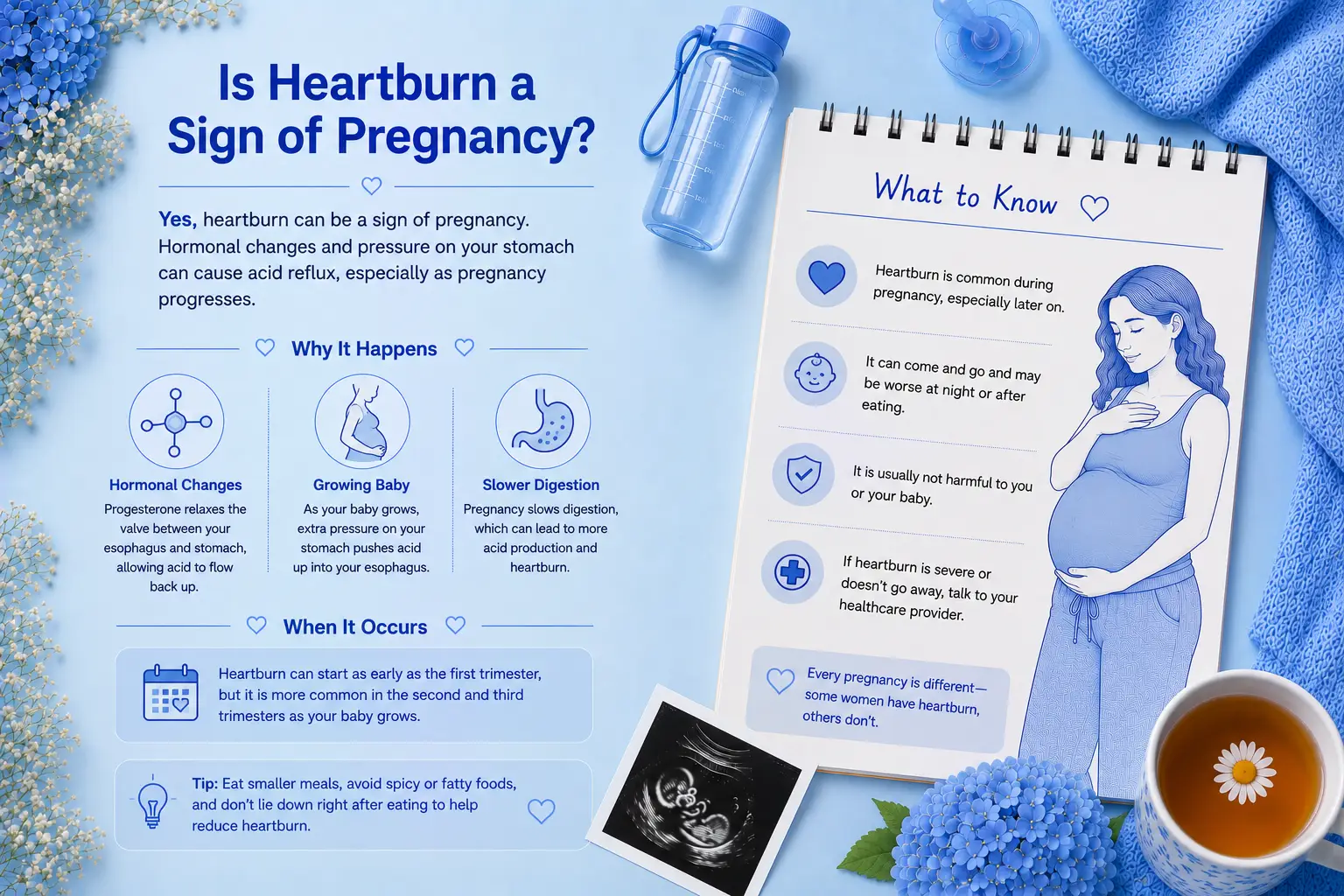

Yes, heartburn can be a sign of pregnancy, and for some people it shows up surprisingly early, sometimes even before they know they’re pregnant. It’s more commonly associated with the second and third trimesters, when it becomes genuinely widespread, but the hormonal shifts that cause it start right at the beginning. Here’s why it happens, when to expect it, and how to find relief.
Why Pregnancy Causes Heartburn
Heartburn happens when stomach acid flows back up into the esophagus, causing that familiar burning sensation in the chest or throat. During pregnancy, rising progesterone is the main culprit. This hormone relaxes smooth muscle throughout your body, including the lower esophageal sphincter, the muscular valve that normally keeps stomach contents where they belong. When that valve relaxes more than usual, acid has an easier path upward.
Progesterone also slows digestion overall, which means food sits in your stomach longer than it normally would. That extra time increases the odds of acid making its way back up. Later in pregnancy, a second factor joins in: your growing uterus physically crowds your abdominal organs, pushing the stomach out of its usual position and putting additional pressure on it, which makes reflux even more likely.
Can Heartburn Really Start in Early Pregnancy?
Yes. While it’s most strongly associated with later pregnancy, some people notice heartburn or indigestion as one of their first pregnancy symptoms, sometimes before a positive test. It’s especially likely to feel notable if you don’t normally deal with acid reflux or indigestion. That said, in the first trimester, symptoms tend to be relatively mild and infrequent for most people, one study found that roughly one in eight pregnant people experience heartburn weekly or more during this stage, compared to the majority who deal with it regularly by the third trimester.
How Common Is Pregnancy Heartburn by Trimester?
Heartburn tends to build steadily as pregnancy progresses:
First trimester: Around 1 in 5 people experience heartburn, often mild and occasional.
Second trimester: Roughly 2 in 5 people report symptoms, as hormone levels climb further.
Third trimester: The majority, well over half, experience heartburn regularly, often several times a week or even daily, as the growing uterus adds physical pressure on top of the hormonal cause.
What Pregnancy Heartburn Feels Like
Most people describe it as a burning sensation in the middle of the chest, just behind the breastbone, sometimes rising toward the throat. It often shows up after eating, when lying down, or when bending over, and episodes can last anywhere from a few minutes to several hours.
Common Triggers
A few foods and habits tend to make pregnancy heartburn worse:
- Spicy foods
- Citrus fruits and juices
- Caffeine
- Fried or fatty foods
- Chocolate
- Carbonated drinks
- Eating large meals or lying down soon after eating
- Finding Relief
While pregnancy heartburn can be genuinely uncomfortable, a number of simple strategies can help:
Eat smaller, more frequent meals instead of a few large ones, which reduces pressure on your stomach
Avoid trigger foods you notice worsen your symptoms
Stay upright after eating and avoid lying down for at least a couple of hours after a meal
Sip milk or eat a small amount of yogurt, which some people find soothing
Try ginger, a commonly used natural remedy for digestive discomfort in pregnancy
Sleep with your head slightly elevated, especially in later pregnancy
Avoid drinking large amounts of fluid with meals, which can add to stomach volume
If lifestyle changes aren’t enough, talk to your healthcare provider before taking any medication. Antacids containing calcium carbonate or magnesium are generally considered safe during pregnancy, but options like sodium bicarbonate or aspirin-containing antacids should be avoided, and your provider can guide you toward what’s appropriate for your specific situation and stage of pregnancy.
When Heartburn Might Signal Something Else
Heartburn on its own, even when frequent, is rarely dangerous and doesn’t put your baby at risk. However, it’s worth contacting your provider if:
Burning is paired with intense pain under the ribs or on the right side of your abdomen, which could point to a different issue requiring evaluation
You have new or unusual symptoms alongside chest discomfort, such as severe headache, vision changes, or swelling, particularly in the third trimester, since these can occasionally be linked to more serious conditions like preeclampsia
Symptoms are severe, persistent, or unresponsive to lifestyle changes
If chest burning is truly your only symptom, it’s overwhelmingly likely to be ordinary pregnancy heartburn rather than anything more serious, but any new or concerning symptom combination is always worth a call.
The Bottom Line
Heartburn is a genuine and very common pregnancy symptom, driven early on by rising progesterone relaxing the valve between your stomach and esophagus, and compounded later by physical pressure from your growing baby. It can start as early as the first trimester for some people, though it typically becomes more frequent and intense as pregnancy progresses. The good news: for most people, it resolves fairly quickly after delivery once hormone levels return to normal.
FAQ
Can heartburn be an early sign of pregnancy?
Yes, some people notice heartburn or indigestion in early pregnancy, occasionally even before a positive test, though it’s usually mild at this stage and becomes more common later on.
Why does pregnancy cause heartburn?
Rising progesterone relaxes the valve between your stomach and esophagus, allowing acid to flow backward, and later in pregnancy, your growing uterus adds physical pressure that worsens the problem.
Which trimester has the worst heartburn?
The third trimester, when the majority of pregnant people experience heartburn regularly, often several times a week or daily, due to the combined effect of hormones and physical pressure from the growing baby.
Is it safe to take heartburn medication during pregnancy?
Some antacids, like those containing calcium carbonate or magnesium, are generally considered safe, but you should always check with your healthcare provider before taking any medication during pregnancy.
Does pregnancy heartburn go away after delivery?
Yes, for most people symptoms resolve fairly quickly after birth as hormone levels return to their pre-pregnancy baseline.