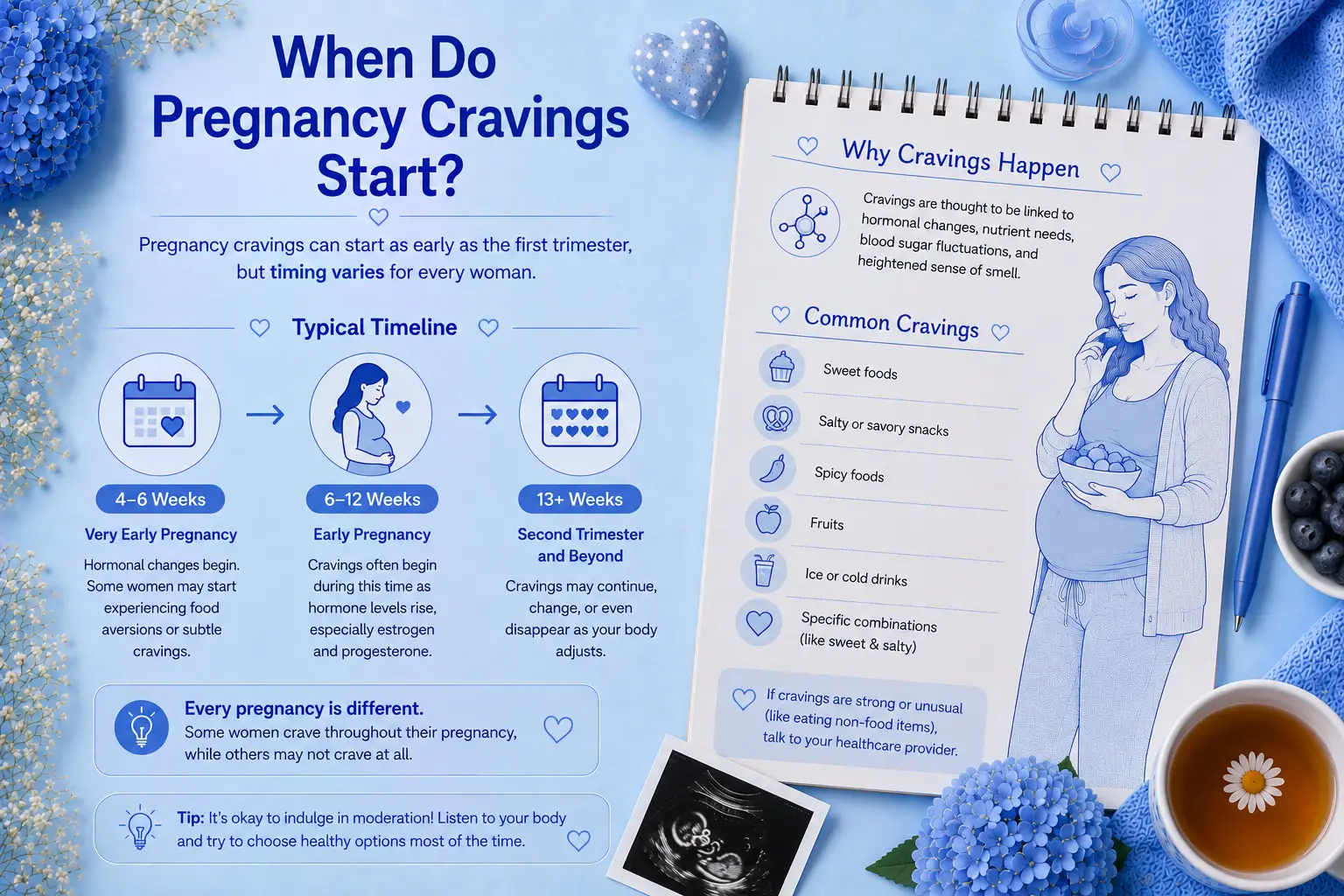

For most people, food cravings begin sometime in the first trimester, often as early as week 5, though anywhere from week 4 to 8 is common. They tend to build gradually, peak during the second trimester, and ease off, though not always disappear, by the third. Cravings are one of the most talked-about pregnancy symptoms, affecting an estimated 50 to 90% of pregnant people, but the timing, intensity, and specific foods involved vary enormously from person to person.
A General Timeline
Weeks 4–8: Early cravings begin. As hCG and estrogen rise rapidly, some people notice sudden urges for specific foods, often sweet or high-calorie ones, right alongside other early symptoms like nausea and fatigue. This is also when food aversions commonly show up, sometimes to foods you previously loved, as your sense of smell becomes more sensitive.
Weeks 9–20: Cravings intensify. This stretch, spanning the end of the first trimester into the heart of the second, is when many people report their strongest and most frequent cravings. This is also the period when unusual combinations tend to show up, think pickles and ice cream, or nachos followed by strawberries and whipped cream.
Third trimester: Cravings often ease, but not always. For many people, the intensity of cravings tapers off as pregnancy progresses, though some continue to experience strong food urges right up until delivery. Everyone’s pattern is different, and there’s no single “normal” timeline.
After birth: Cravings generally fade fairly quickly after delivery as hormone levels return to their pre-pregnancy baseline, though people who are breastfeeding sometimes notice an increased appetite or occasional cravings tied to the extra caloric demands of nursing.
Why Cravings Happen
The exact mechanism isn’t fully understood, but a few factors are believed to play a role:
Hormonal changes. Rapidly rising estrogen and progesterone are thought to influence how your brain responds to food, and research suggests the brain’s reward and energy-regulation centers become more active during pregnancy.
Nutritional needs. Your body’s demand for calories, certain nutrients, and energy increases during pregnancy, which may partly explain sudden urges for specific foods.
Heightened senses. An intensified sense of smell and taste, common in early pregnancy, can make certain foods more appealing (or repulsive) than they were before.
Emotional factors. Stress, mood changes, and general emotional shifts during pregnancy can also influence food preferences.
Cultural and dietary background. Some research suggests that the foods you crave during pregnancy often reflect your usual dietary patterns and cultural food environment rather than being entirely random.
Common Pregnancy Cravings
While cravings are highly individual, a few patterns show up often:
Sweets — chocolate, candy, ice cream, baked goods
Salty and savory snacks — chips, pickles, fries
Dairy — cheese, milk, ice cream
Spicy foods — sometimes appealing when other foods taste bland, and occasionally helpful with nasal congestion
Carbohydrates — bread, pasta, and starchy comfort foods
Fruit — particularly citrus or very sweet varieties
Unusual combinations — mixing sweet and savory or otherwise unexpected pairings
What About Food Aversions?
Cravings often show up alongside their opposite: sudden distaste for foods you normally enjoy. Meat is one of the most commonly reported aversions, likely tied to its smell and texture, and some research suggests eating larger amounts of meat is associated with more intense nausea in early pregnancy. Coffee, eggs, and strongly flavored foods are other common aversions.
Do Cravings Mean Anything About the Baby?
There’s a popular idea that specific cravings can reveal your baby’s sex or reflect a nutrient deficiency your body is trying to correct. Neither claim holds up well to evidence. Cravings aren’t reliably linked to fetal sex, and while a genuine nutrient deficiency can occasionally influence cravings, most cravings are simply a normal part of pregnancy’s hormonal and sensory shifts rather than your body sending a specific nutritional message.
Managing Cravings in a Healthy Way
Giving in to cravings occasionally is generally fine and completely normal, but a few habits can help keep things balanced:
Practice moderation rather than restriction, since denying cravings entirely often backfires
Look for healthier swaps, like frozen yogurt instead of ice cream or dark chocolate instead of a full candy bar
Avoid high-risk foods, including raw or undercooked meat, eggs, and seafood, unpasteurized dairy, alcohol, and excessive caffeine
Stay ahead of hunger with regular meals and snacks, since cravings can intensify when you’re overly hungry
Don’t worry if you don’t experience cravings at all. Research hasn’t linked the absence of cravings to any negative outcomes for you or your baby.
When to Talk to a Doctor
Most cravings are harmless, but reach out to your healthcare provider if you notice:
Cravings for non-food items like ice, clay, dirt, or laundry starch, a condition called pica, which can sometimes signal an underlying nutrient deficiency like iron-deficiency anemia
Cravings that seem tied to significant emotional distress or anxiety, where talking to a counselor alongside your provider may help
Concerns about nutrition, where a registered dietitian can help ensure you’re meeting your needs despite strong food preferences
FAQ
What week do pregnancy cravings usually start?
Most people notice cravings beginning around week 5, though anywhere from week 4 to 8 is common, often alongside other early symptoms like nausea.
When are pregnancy cravings the strongest?
Cravings tend to peak during the second trimester, roughly weeks 9 to 20, before often easing somewhat in the third trimester.
Can cravings start before a missed period?
It’s possible but less common. Most cravings develop a bit further into the first trimester rather than in the earliest days after conception.
Do pregnancy cravings mean I’m having a boy or girl?
No, there’s no reliable evidence linking specific cravings to fetal sex, despite the popular belief.
When should I be concerned about a pregnancy craving?
Cravings for non-food items like ice, dirt, or clay (pica) are worth mentioning to your doctor, since they can sometimes indicate a nutrient deficiency that needs attention.