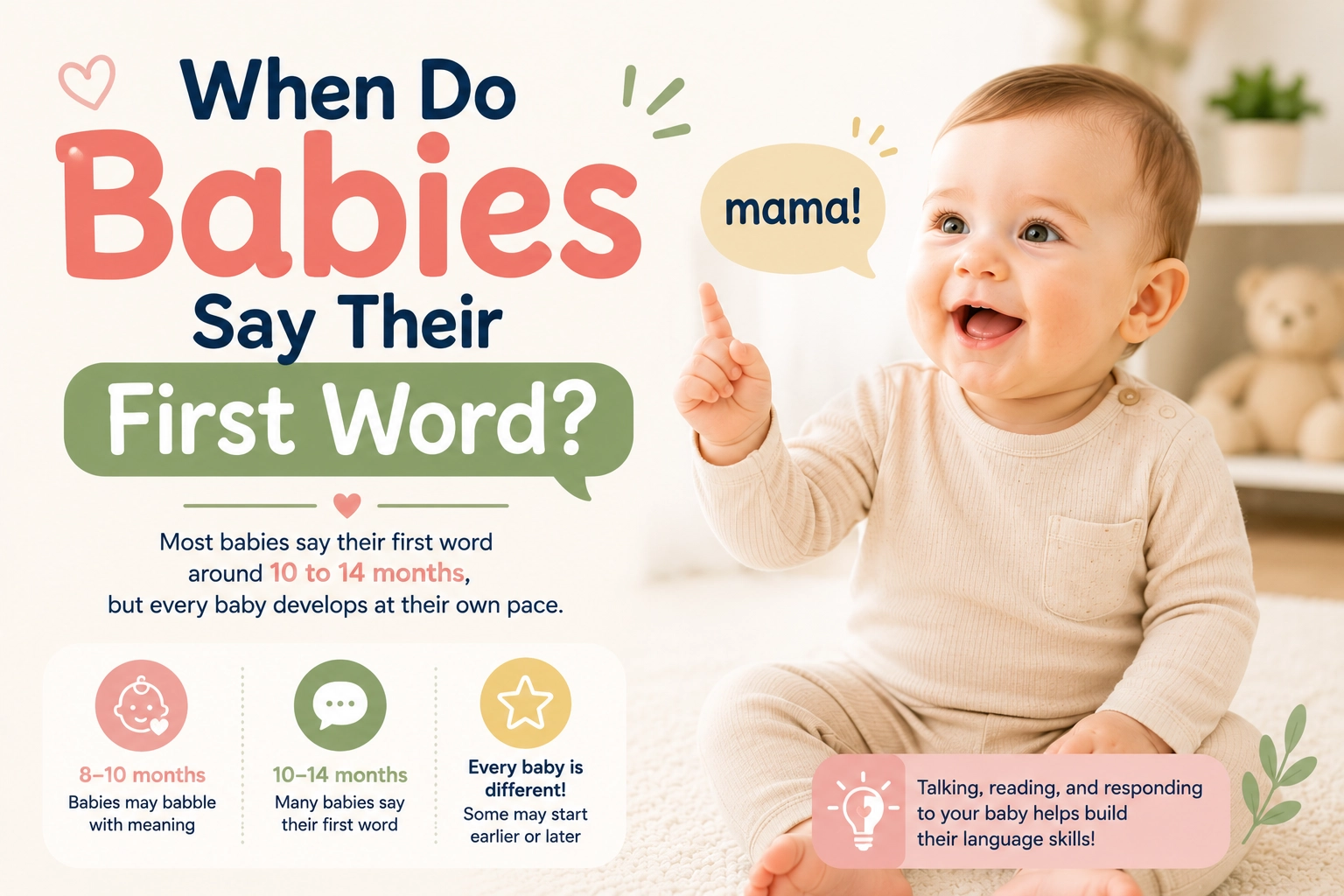

Most babies say their first real word between 10 and 14 months of age, although some may say a recognizable word as early as 9 months, while others may not speak until 15 months or later. Every child develops at their own pace, and there is a wide range of what is considered normal.
Before saying their first word, babies spend many months learning to communicate through cooing, babbling, gestures, and understanding the words they hear every day.
What Counts as a Baby’s First Word?
A baby’s first word is a word they use consistently and with meaning.
Examples include:
- Mama
- Dada
- Bye-bye
- Hi
- Ball
- Dog
- Milk
- Up
For example, if your baby says “Mama” every time they want you—not just random sounds—it is considered a true first word.
Language Development Before the First Word
Speech develops gradually during the first year.
A typical timeline looks like this:
- 0–3 months: Cries, coos, and responds to familiar voices.
- 4–6 months: Laughs, squeals, and begins babbling.
- 6–9 months: Repeats sounds like “ba-ba” or “da-da.”
- 9–12 months: Understands simple words, responds to their name, points, and may say their first meaningful word.
- 12–18 months: Vocabulary begins growing steadily.
Many babies understand dozens of words before they can speak them.
Signs Your Baby Is Getting Ready to Talk
Before speaking, babies often show important communication skills.
These include:
- Responding to their name.
- Making eye contact.
- Pointing to objects.
- Babbling with different sounds.
- Copying facial expressions.
- Using gestures like waving or clapping.
- Understanding simple instructions.
These skills show that language development is progressing.
How to Encourage Your Baby to Talk
Parents play an important role in language development.
You can encourage speech by:
- Talking to your baby throughout the day.
- Reading books together every day.
- Singing songs and nursery rhymes.
- Naming everyday objects.
- Responding to your baby’s sounds.
- Giving your baby time to “answer” during conversations.
- Limiting screen time and encouraging face-to-face interaction.
The more language babies hear, the more opportunities they have to learn.
What If My Baby Isn’t Talking Yet?
Some babies simply develop language later than others.
However, you should discuss your concerns with your pediatrician if your baby:
- Does not babble by around 9 months.
- Does not use gestures such as pointing or waving by 12 months.
- Has no meaningful words by around 16 months.
- Loses speech or communication skills they previously had.
- Does not respond to their name or familiar voices.
Early evaluation can identify hearing problems or speech and language delays if they are present.
Does “Mama” or “Dada” Count?
Yes—but only if your baby uses the word intentionally.
Many babies babble “mama” or “dada” long before they understand what the sounds mean. Once they consistently use the word to refer to a specific person, it is considered a true first word.
Tips for Supporting Language Development
Help your baby build communication skills by:
- Reading aloud every day.
- Talking during daily routines.
- Describing what you see and do.
- Playing interactive games like peekaboo.
- Encouraging gestures and imitation.
- Praising your baby’s communication attempts.
Consistent interaction is one of the best ways to support healthy speech and language development.
Final Answer
Most babies say their first meaningful word between 10 and 14 months of age, although a normal range extends from about 9 to 15 months. Before speaking, babies spend months learning through listening, babbling, gestures, and social interaction. Talking, reading, singing, and responding to your baby’s communication every day can help encourage healthy language development, while regular checkups with your pediatrician can ensure milestones are progressing as expected.
Frequently Asked
Common Questions