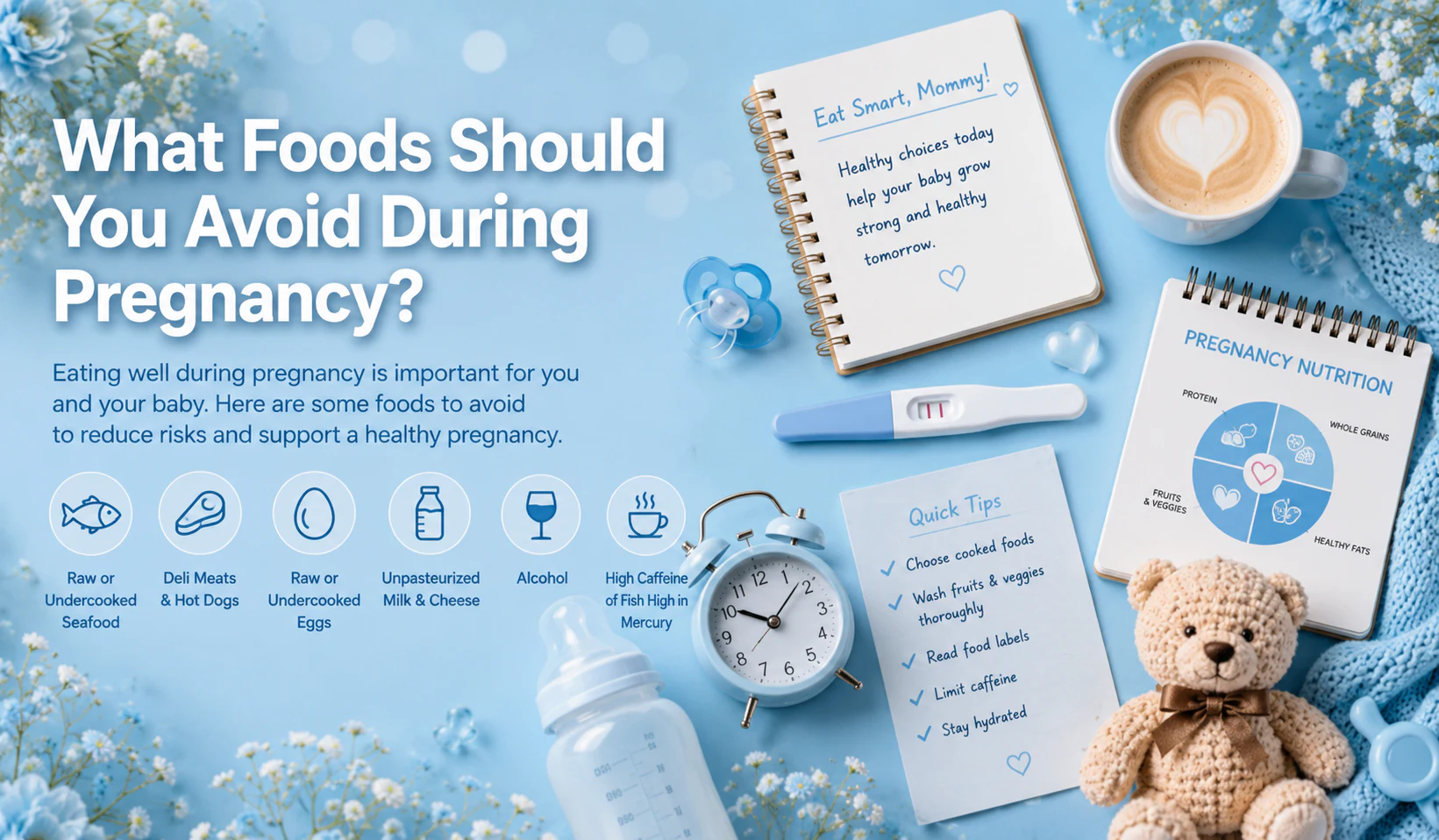

Pregnancy changes the way your body handles bacteria, parasites, and even everyday ingredients like caffeine. What felt like a harmless snack before can suddenly carry real risk — not because your immune system got weaker, but because a developing baby has no defenses of its own yet. Knowing which foods to avoid when pregnant is one of the simplest ways to lower the odds of complications like miscarriage, preterm labor, or foodborne illness.
Here’s a practical, up-to-date breakdown of what to skip, what to limit, and what’s actually fine.
High-Mercury Fish
Mercury builds up in certain fish and can affect a baby’s developing brain and nervous system. Avoid:
- Shark
- Swordfish
- King mackerel
- Tilefish
- Bigeye tuna
Lower-mercury choices like salmon, shrimp, cod, and canned light tuna are safe in moderation — most guidelines suggest 8 to 12 ounces of low-mercury seafood per week, since fish also delivers omega-3s that support fetal brain development.
Raw or Undercooked Meat, Poultry, and Eggs
Undercooked meat can carry Toxoplasma, Salmonella, and E. coli, all of which can cross the placenta. This means steering clear of:
Rare or medium-rare steak, and any pink poultry
Sushi or sashimi made with raw fish
Raw or runny eggs — including soft-boiled, sunny-side-up, and homemade Caesar dressing or mayonnaise
Cookie dough or cake batter made with raw eggs
Use a meat thermometer when in doubt: poultry should hit 165°F, ground meat 160°F, and steaks or roasts at least 145°F with a rest time.
Deli Meat and Refrigerated Pate
Cold cuts, hot dogs, and refrigerated pâté are common carriers of Listeria, a bacterium that thrives even in the fridge. Listeria infection is rare, but it’s disproportionately dangerous in pregnancy, sometimes causing preterm birth or pregnancy loss. Deli meat is fine if it’s heated until steaming hot right before eating; canned or shelf-stable pâté is also considered safe.
Unpasteurized Dairy and Soft Cheeses
Raw milk and cheeses made from it can harbor Listeria, Salmonella, and E. coli. That includes soft, mold-ripened cheeses like brie, camembert, feta, queso fresco, and blue cheese — unless the label confirms they’re made with pasteurized milk. Hard cheeses (cheddar, Parmesan, Swiss) are naturally low-moisture and safe regardless of the milk source.
Raw Sprouts
Alfalfa, bean, clover, and radish sprouts grow in warm, damp conditions that are ideal for bacteria — and washing doesn’t reliably remove it, since bacteria can get inside the seed itself. Cooked sprouts are safe.
Unwashed Produce
Fruits and vegetables can pick up Listeria or Toxoplasma from soil. Wash everything thoroughly under running water, even produce you plan to peel.
Alcohol
There’s no known safe amount of alcohol during pregnancy. It crosses the placenta freely and is the leading preventable cause of birth defects and developmental disorders, collectively known as Fetal Alcohol Spectrum Disorders. Every major medical body — ACOG, the CDC, and the WHO — recommends complete abstinence for the full nine months.
Excess Caffeine
You don’t have to cut caffeine entirely, but ACOG recommends staying under 200 mg a day — roughly one 12-ounce cup of coffee. Remember that tea, soda, energy drinks, and chocolate all count toward that total, and higher intake has been linked to low birth weight and increased miscarriage risk.
Unpasteurized Juice
Fresh-squeezed or unpasteurized juices sold at farm stands or juice bars can carry E. coli or Salmonella if they haven’t been treated to kill bacteria. Stick to pasteurized, bottled versions.
A Quick Reference Table
| Category | Avoid | Generally Safe |
| Fish | Shark, swordfish, king mackerel, tilefish | Salmon, shrimp, canned light tuna (8–12 oz/week) |
| Meat/Eggs | Raw, rare, or undercooked | Fully cooked to safe temperatures |
| Deli/Processed | Cold deli meat, refrigerated pâté | Heated deli meat, canned pâté |
| Dairy | Unpasteurized soft cheeses, raw milk | Pasteurized cheese, hard cheeses |
| Drinks | Alcohol, high caffeine, unpasteurized juice | Water, pasteurized juice, ≤200 mg caffeine/day |
The Bottom Line
Most pregnancy food risks come down to two things: bacteria and toxins that your baby can’t fight off yet. Cooking food thoroughly, choosing pasteurized dairy and juice, skipping alcohol, and watching your caffeine intake covers the vast majority of the guidance. When you’re unsure about a specific food, it’s always worth a quick check with your OB-GYN or midwife — they can tailor advice to your specific pregnancy and any risk factors you may have.
FAQ
Can I eat sushi while pregnant?
Sushi made with raw fish is best avoided due to the risk of parasites and bacteria. Cooked rolls (like tempura or California rolls made with pasteurized crab) are generally safe.
Is it safe to drink coffee during pregnancy?
Yes, in moderation. ACOG recommends keeping total caffeine intake — from coffee, tea, soda, and chocolate combined — under 200 mg per day.
Can I eat deli meat if I heat it up first?
Yes. Heating deli meat until it’s steaming hot (about 165°F) kills the Listeria bacteria that raw or cold deli meat can carry.
What cheeses are safe to eat during pregnancy?
Hard cheeses like cheddar, Swiss, and Parmesan are safe regardless of milk source. Soft cheeses like brie, feta, and blue cheese are only safe if made with pasteurized milk — check the label.
Is any amount of alcohol safe during pregnancy?
No. Medical experts agree there’s no known safe amount or safe time to drink alcohol during pregnancy, since it can cause lasting harm to a developing baby.