
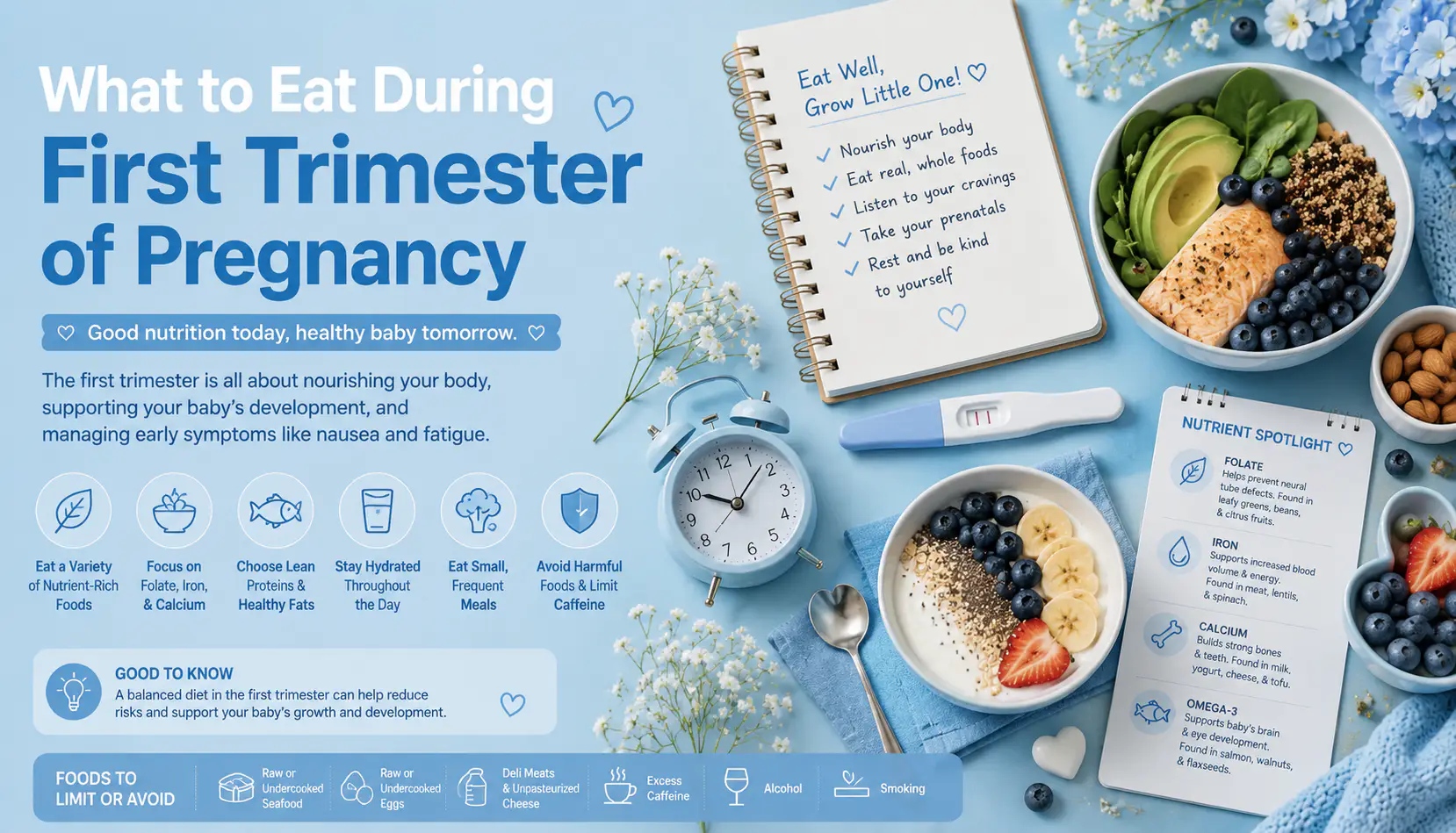

Finding out you’re pregnant often comes with an immediate question: what should you actually be eating now? Between morning sickness, food aversions, and a flood of conflicting advice online, first trimester nutrition can feel overwhelming. Here’s the good news — you don’t need a perfect diet. You just need a realistic, nutrient-focused approach that supports your baby’s early development while working with (not against) how you’re feeling.
Do You Need to Eat More in the First Trimester?
Not really. One of the most common myths about early pregnancy nutrition is that you’re “eating for two.” In truth, calorie needs barely change during the first trimester — most people don’t need any extra calories at all until the second trimester, when an additional 300–450 calories a day is typically recommended.
What matters far more right now is nutrient density. Your baby’s brain, spinal cord, heart, and other essential organs are forming during these early weeks, which makes certain nutrients especially important.
Key Nutrients to Prioritize
Folate (or folic acid). This is arguably the most important nutrient in early pregnancy, since it helps prevent neural tube defects. Look for it in leafy greens, citrus fruits, beans, lentils, and fortified cereals — and continue taking a prenatal vitamin with folic acid, ideally one you started before conception.
Iron. Your blood volume increases significantly in pregnancy, and iron needs rise along with it. Good sources include lean red meat, poultry, beans, and fortified grains. Pairing iron-rich foods with vitamin C (think spinach with citrus, or beans with tomatoes) helps your body absorb it more efficiently.
Choline. Often overlooked, choline works alongside folate to support your baby’s brain development. Eggs are one of the best sources — a compelling reason to keep them in your rotation if you can tolerate them.
Calcium and vitamin D. These two work together to build your baby’s bones and teeth. Dairy products, fortified plant milks, leafy greens, and fatty fish all contribute here.
Protein. Early pregnancy calls for roughly 60 grams of protein a day — only a modest increase over typical needs, but worth spreading across meals and snacks to help keep blood sugar (and nausea) steadier. Eggs, beans, Greek yogurt, and lean meats are easy options.
Iodine and DHA (omega-3s). Iodine supports your baby’s developing thyroid and nervous system, while DHA is important for brain development. Both are found in seafood, eggs, and dairy — just be mindful of mercury levels, and stick to low-mercury fish like salmon, shrimp, and sardines while avoiding king mackerel, shark, and swordfish.
Eating Through Nausea and Food Aversions
If the thought of a big, balanced plate makes your stomach turn, you’re not alone — nausea affects most people in the first trimester, and it doesn’t mean you’re failing at nutrition. A few strategies that tend to help:
Eat small, frequent meals. Aim for something every 2–4 hours rather than three large meals, which can help stabilize blood sugar and ease queasiness.
Keep a snack by the bed. Crackers, dry cereal, or a small handful of nuts eaten before you get up can take the edge off morning sickness.
Lean on bland, comforting foods on hard days. Toast, rice, bananas, and broth-based soups are easier to tolerate and still provide some nutrition.
Ginger and citrus can help. Ginger tea, ginger candies, or a squeeze of lemon in water are commonly used for nausea relief.
Don’t force the “perfect” diet. If all you can manage some days is crackers and fruit, that’s okay — consistency matters more than perfection, and your prenatal vitamin helps fill gaps.
Hydration Matters Too
Water supports digestion, circulation, and energy levels, all of which can feel harder to manage in early pregnancy. Sip fluids throughout the day rather than large amounts at once if nausea is an issue, and remember that soda and sugary drinks don’t count toward good hydration.
Foods and Drinks to Limit or Avoid
While the focus of the first trimester should be on what to add to your plate, it’s worth knowing what to scale back:
Raw or undercooked meat, eggs, and seafood
Unpasteurized dairy and juices
Deli meats and soft cheeses, unless heated thoroughly
High-mercury fish (swordfish, shark, king mackerel, tilefish)
Alcohol — no amount is considered safe during pregnancy
Caffeine — generally capped at around 200 mg per day, roughly one 12-ounce cup of coffee
The Bottom Line
You don’t need extra calories or a flawless diet in the first trimester — you need consistency, nutrient-dense choices when you can manage them, and grace on the days you can’t. Prioritizing folate, iron, choline, calcium, protein, and DHA, staying hydrated, and leaning on small, frequent meals will go a long way. If nausea or food aversions are making it hard to eat well, a registered dietitian or your prenatal care provider can help you build a plan that fits your specific needs and symptoms.
FAQ
Do I need to eat more food in the first trimester?
No. Calorie needs stay roughly the same as before pregnancy during the first trimester. The extra-calorie recommendation doesn’t typically start until the second trimester.
What foods help with morning sickness in the first trimester?
Bland, easy-to-digest foods like crackers, toast, rice, and bananas tend to be well tolerated. Ginger tea or ginger candies, small frequent meals, and a snack before getting out of bed can also help manage nausea.
Is it safe to eat eggs during the first trimester?
Yes, as long as they’re fully cooked. Eggs are an excellent source of protein and choline, both of which support your baby’s early development.
Can I drink coffee during the first trimester?
Most guidelines recommend limiting caffeine to about 200 mg per day, which is roughly one 12-ounce cup of coffee. This includes caffeine from tea, chocolate, and soda as well.
What foods should I avoid completely during the first trimester?
Alcohol, raw or undercooked meat and eggs, unpasteurized dairy and juice, and high-mercury fish like swordfish and shark should be avoided entirely throughout pregnancy, not just the first trimester.