
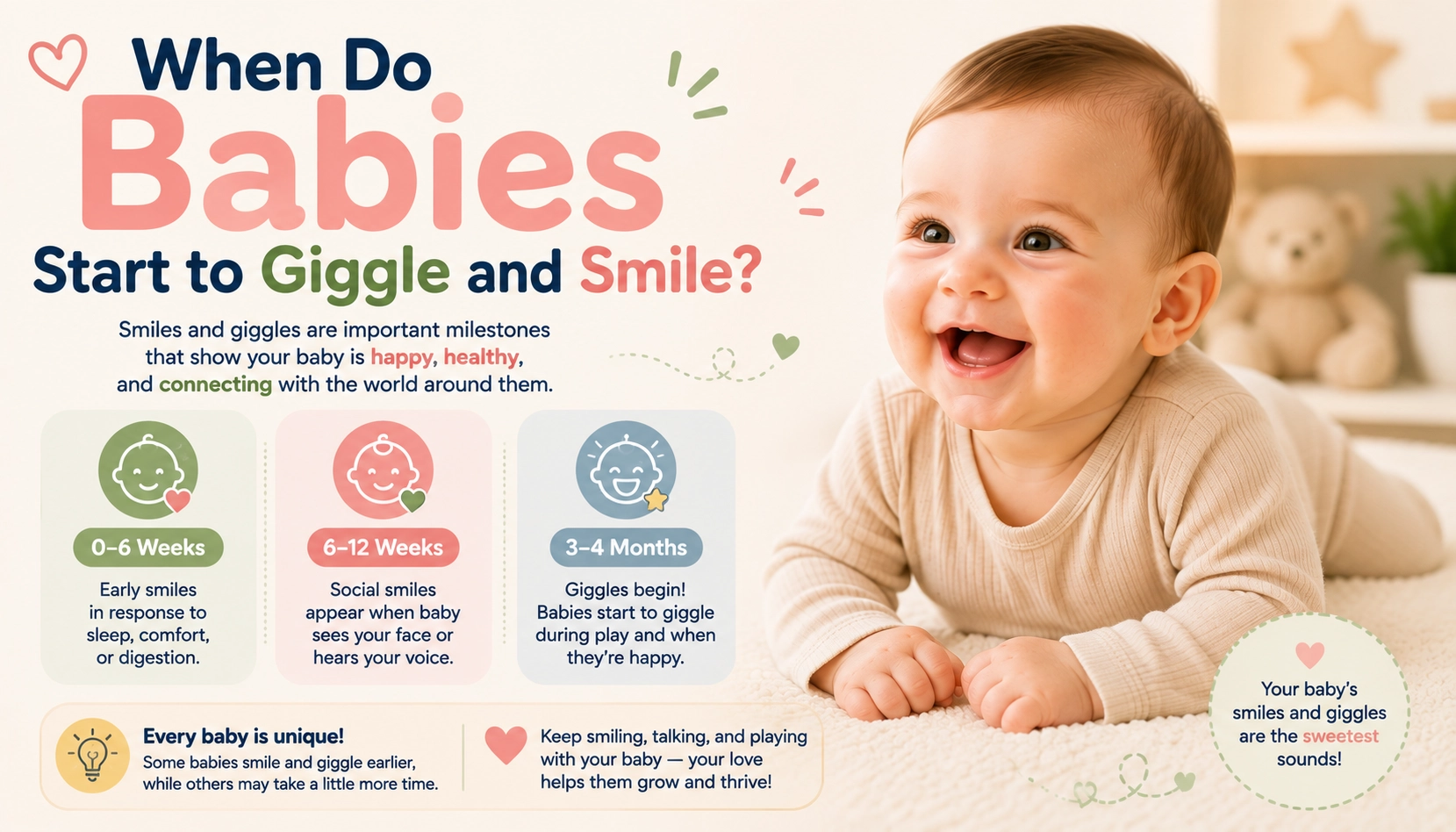

Most babies begin smiling socially between 6 and 8 weeks of age and start giggling or laughing between 3 and 4 months. These milestones are exciting signs that your baby is developing socially, emotionally, and cognitively.
While every baby develops at their own pace, smiling and laughing are important ways babies begin communicating with the people around them.
When Do Babies Start Smiling?
Babies often show different types of smiles during the first few months.
Reflex Smiles (Birth to 6 Weeks)
Newborns may smile while sleeping or during quiet, relaxed moments. These reflex smiles are automatic and are not yet a response to people or emotions.
Social Smiles (6–8 Weeks)
Around 6 to 8 weeks, most babies begin smiling in response to familiar faces, voices, or interactions. This is known as a social smile and is one of the first signs that your baby is engaging with the world.
Some babies smile a little earlier, while others may take a few extra weeks.
When Do Babies Start Giggling?
Most babies begin giggling or laughing between 3 and 4 months of age.
Your baby may laugh when:
- You smile or laugh at them.
- You play peekaboo.
- You make funny faces.
- You tickle them gently.
- They hear a silly sound or funny voice.
At first, giggles may be quiet or infrequent, but they usually become more frequent as your baby’s personality develops.
Why Smiling and Laughing Are Important
Smiling and laughing are more than adorable milestones—they support healthy development.
These behaviors help babies:
- Build emotional bonds with caregivers.
- Learn social interaction.
- Develop communication skills.
- Express happiness and excitement.
- Strengthen relationships through positive interactions.
They are also signs that your baby’s brain and nervous system are developing.
How to Encourage Smiles and Giggles
You can encourage your baby’s social development through everyday interactions.
Try these activities:
- Smile often at your baby.
- Make eye contact during feedings and playtime.
- Talk and sing throughout the day.
- Play peekaboo.
- Make funny sounds and facial expressions.
- Gently imitate your baby’s sounds.
- Read colorful picture books together.
Simple face-to-face interaction is one of the best ways to encourage early communication.
What If My Baby Isn’t Smiling Yet?
Every baby reaches milestones at their own pace.
You may want to speak with your pediatrician if your baby:
- Does not show a social smile by around 3 months.
- Rarely makes eye contact.
- Does not respond to familiar voices.
- Shows little interest in interacting with people.
- Loses social or communication skills they previously had.
Your pediatrician can determine whether additional evaluation is needed.
Tips for Supporting Social Development
Help your baby develop communication and emotional skills by:
- Spending plenty of face-to-face time together.
- Talking, singing, and reading every day.
- Responding to your baby’s smiles and sounds.
- Creating a calm, loving environment.
- Encouraging play without relying on screens.
Consistent interaction helps babies build strong social and emotional connections.
Final Answer
Most babies begin smiling socially between 6 and 8 weeks of age and start giggling or laughing between 3 and 4 months. These milestones are important signs of healthy social, emotional, and brain development. Every baby develops at their own pace, so slight variations are normal. Regular talking, smiling, playing, and responding to your baby’s cues can help encourage these joyful milestones.