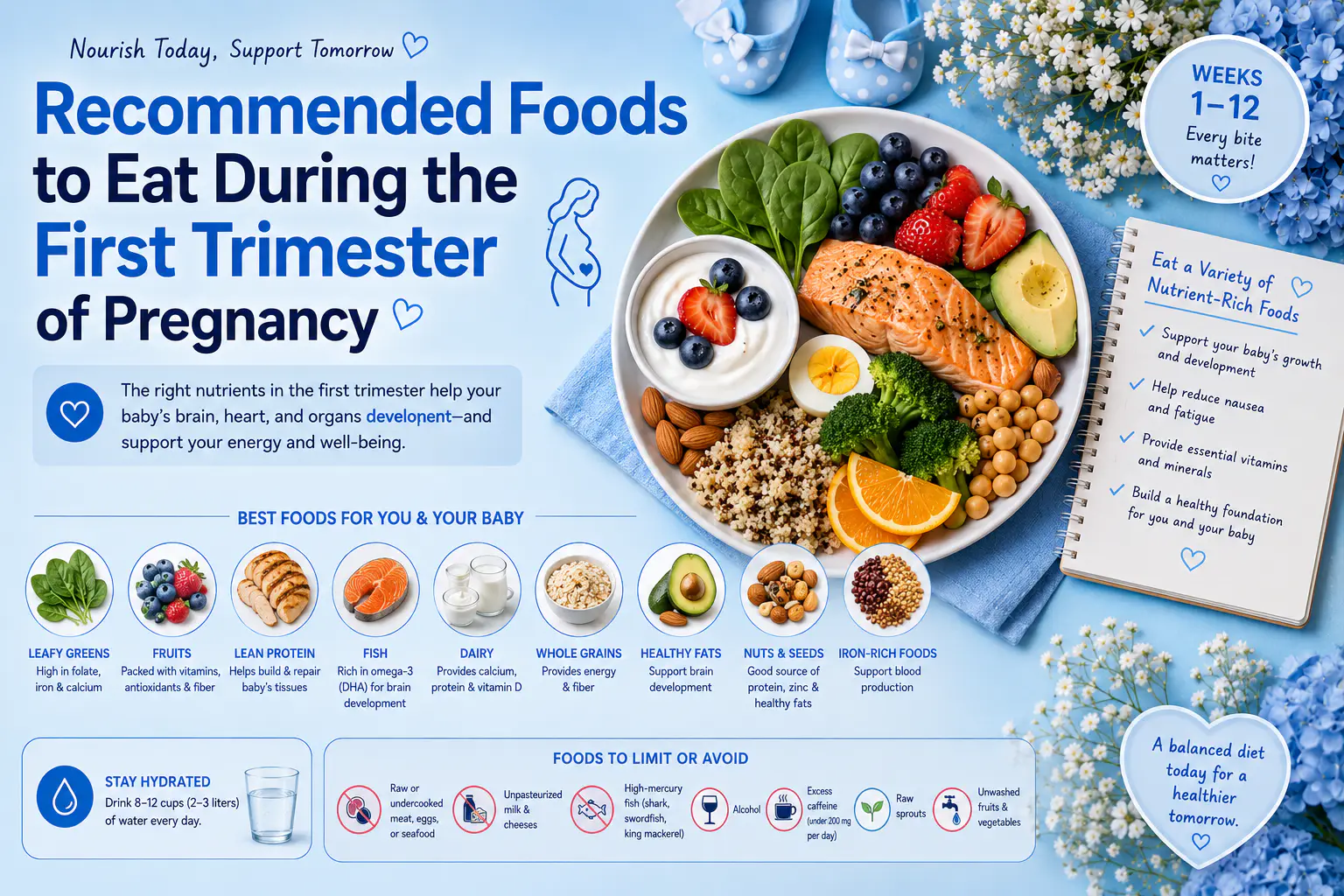
What are some recommended foods to eat during the first trimester of pregnancy to support the health of both the mother and developing baby?

The first trimester is a short window with a big job: your baby’s brain, spinal cord, heart, and other essential organs are all taking shape in these early weeks. At the same time, you might be dealing with nausea, fatigue, and food aversions that make “eating well” feel like a moving target. The good news is that a handful of everyday foods can cover most of what you and your baby need right now — no complicated meal plan required.
Here’s a practical, doctor-and-dietitian-informed list of the best foods to eat when pregnant in the first trimester, plus why each one matters.
Leafy Greens
Spinach, kale, and arugula are loaded with folate, iron, and calcium — three nutrients central to your baby’s early brain and nervous system development. Folate in particular helps prevent neural tube defects, which makes leafy greens one of the most important additions to your first trimester grocery list. Toss a handful into a smoothie if raw greens aren’t appealing on their own.
Eggs
Eggs are one of the most efficient foods you can eat in early pregnancy. A single egg delivers protein, vitamin D, B12, and choline — a nutrient that works alongside folate to support your baby’s brain development but is easy to fall short on. Just make sure eggs are fully cooked, as raw or runny yolks carry a foodborne illness risk.
Greek Yogurt and Dairy
Greek yogurt is a great source of protein and calcium, both essential for your baby’s developing bones and teeth. Milk and cheese round out your calcium and iodine intake too — just stick to pasteurized dairy and firmer cheeses like cheddar or mozzarella rather than soft, unpasteurized varieties.
Beans and Lentils
Beans and lentils are nutritional multitaskers: they’re rich in folate, iron, fiber, and plant-based protein. One cup of cooked lentils covers roughly half your daily folate needs. As a bonus, the fiber in beans and lentils can help with pregnancy-related constipation, which tends to show up early and often.
Lean Meats
Chicken, turkey, and lean beef are strong sources of protein and iron, and iron needs rise noticeably during pregnancy as your blood volume increases. If you’re craving red meat, that’s fine as long as it’s cooked well-done to avoid any bacterial risk.
Salmon and Low-Mercury Fish
Cooked salmon (skip the sushi for now) is one of the best sources of DHA, an omega-3 fatty acid tied to your baby’s brain and eye development. Other low-mercury options like shrimp, sardines, and cod are safe choices too. Just steer clear of high-mercury fish such as swordfish, shark, and king mackerel.
Berries
Berries bring antioxidants, vitamin C, and fiber to the table, and their natural sweetness makes them an easy win if you’re dealing with food aversions to heavier meals. Vitamin C also helps your body absorb iron more efficiently, so pairing berries with an iron-rich meal is a smart combo.
Cruciferous Vegetables
Broccoli, cauliflower, and Brussels sprouts are packed with fiber and folate. Roasting them tends to mellow their flavor and smell, which can make them more tolerable if certain vegetable smells are triggering nausea right now.
Nuts and Seeds
Walnuts, chia seeds, and pumpkin seeds are compact sources of healthy fats, protein, and fiber. Chia seeds in particular are useful for constipation relief, while pumpkin seeds provide zinc, a mineral linked to a lower risk of pregnancy complications.
Whole Grains
Oatmeal, whole wheat bread, and brown rice provide fiber and steady energy, and they’re often gentle on a queasy stomach. Oatmeal in particular is a popular first trimester breakfast because it’s easy to keep down and easy to fortify with fruit, nuts, or yogurt.
Citrus Fruits and Bell Peppers
A red bell pepper actually contains more vitamin C than an orange, but both are excellent choices for boosting immune support and iron absorption. Citrus can also help settle nausea for some people, making it a useful snack on tougher days.
Ginger
Ginger tea, ginger candies, or even ginger added to meals is one of the most commonly recommended natural remedies for morning sickness. It won’t replace a balanced diet, but it can make eating balanced meals more manageable.
Crackers and Dry, Bland Foods
They’re not glamorous, but plain crackers, dry toast, and pretzels are often the most reliably tolerated foods when nausea is at its worst. Keeping something small on your nightstand to eat before getting out of bed can take the edge off morning sickness.
A Quick Note on Prenatal Vitamins
Even with a solid diet, a prenatal vitamin helps close any nutritional gaps — particularly for folate, iron, and DHA. It’s meant to complement your diet, not replace it, so continue focusing on real food first.
The Bottom Line
You don’t need to overhaul your entire diet in the first trimester. Building meals and snacks around leafy greens, eggs, dairy, beans, lean protein, low-mercury fish, and whole grains covers the nutrients that matter most right now — folate, iron, choline, calcium, and DHA. On days when nausea makes that feel impossible, bland, tolerable foods like crackers and toast are a perfectly reasonable fallback. If you’re struggling to eat consistently, a prenatal dietitian or your OB can help tailor a plan to your symptoms.
FAQ
What foods should I prioritize in the first trimester?
Focus on folate-rich foods (leafy greens, beans, lentils), iron sources (lean meat, beans), choline (eggs), calcium (dairy), and DHA (low-mercury fish like salmon). These support your baby’s early brain, spinal cord, and organ development.
Is it safe to eat eggs during the first trimester?
Yes, as long as they’re fully cooked. Eggs are one of the best sources of choline and protein, both important for early fetal brain development.
What snacks are good for first trimester nausea?
Plain crackers, dry toast, bananas, and ginger candies are commonly well-tolerated. Keeping a small snack by your bed and eating something before getting up can help ease morning sickness.
Can I eat fish during the first trimester?
Yes — low-mercury options like salmon, shrimp, sardines, and cod are safe and provide important DHA for your baby’s brain and eye development. Avoid high-mercury fish like swordfish, shark, and king mackerel, and skip raw fish and sushi.
Do I need to take a prenatal vitamin if I’m eating well?
Most doctors still recommend a prenatal vitamin even with a nutrient-dense diet, since it helps ensure you’re consistently getting enough folate, iron, and DHA — especially on days when nausea limits what you can eat.