
Skip to content
DidYouSearch DidYouSearch
  • did you search?
  • Baby Plus+
    • Baby Activities
      • Arts & Crafts
      • Indoor Activities
      • Montessori
      • Music
      • Outdoor Activities
      • Reading
      • Sensory Play
      • Tummy Time
    • Baby Development
      • Brain Development
      • Cognitive Development
      • Emotional Development
      • Fine Motor Skills
      • Growth Milestones
      • Monthly Milestones
      • Motor Skills
      • Physical Development
      • Social Development
      • Speech Development
    • Baby Feeding
      • Allergies
      • Baby Led Weaning
      • Bottle Feeding
      • Breast feeding
        • Breastfeeding Diet
        • Breastfeeding Positions
        • Latch Problems
        • Low Milk Supply
        • Mastitis
        • Pumping Schedule
        • Weaning
      • Burping
      • Cluster Feeding
      • Feeding Schedule
      • Formula Feeding
        • Formula Amount
        • Formula Brands
        • Formula Comparison
        • Formula Preparation
        • Formula Storage
      • Hydration
      • Pumping
      • Solid Foods
    • Baby Gear Reviews
      • Best Baby Carrier
      • Best Baby Monitor
      • Best Baby Strollers
      • Best Bottles
      • Best Breast Pump
      • Best Car Seat
      • Best Cribs
      • Best Diapers
      • Best Formula
      • Best Toys
    • Baby Growth
      • Growth Spurts
      • Height Charts
      • Monthly Growth
      • Percentiles
      • Weight Charts
    • Baby Health
      • Allergies
      • Cold
      • Constipation
      • Cough
      • Diarrhea
      • Ear Infection
      • Fever
      • Flu
      • Pediatric Visits
      • Rashes
      • Teething
      • Vaccines
      • Vomiting
    • Baby Nutrition
      • Dairy
      • Drinks
      • Eggs
      • Fish
      • Fruits
      • Healthy Recipes
      • Meat
      • Snacks
      • Vegetables
      • Vitamins
    • Baby Products
      • Baby Carriers
      • Bassinets
      • Bottles
      • Breast Pumps
      • Car Seats
      • Cribs
      • Diaper Bags
      • High Chairs
      • Monitors
      • Strollers
      • Swings
      • Toys
      • Walkers
    • Baby Recipes
      • BLW Recipes
      • Breakfast
      • Dinner
      • Finger Foods
      • Lunch
      • Purees
      • Snacks
    • Baby Safety
      • Baby Proofing
      • Car Seats
      • Choking Hazards
      • CPR
      • Home Safety
      • Poison Prevention
      • Safe Sleep
      • Sun Protection
      • Water Safety
  • Baby Names
    • Boy Names
    • Girl Names
    • American baby boy names
    • American baby girl names
    • Biblical Names
    • Middle Names
    • Modern Names
    • Short Names
    • Unique Names
    • Unisex Names
  • Recommended
    • Baby Shopping
      • Baby Registry
      • Budget Baby Shopping
      • Hospital Bag
      • Must Have Products
      • Newborn Checklist
      • Nursery Ideas
    • Baby Sleep
      • Bedtime Routine
      • Co Sleeping
      • Crib Safety
      • Nap Schedules
      • Night Wakings
      • Sleep Environment
      • Sleep Products
      • Sleep Regression
      • Sleep Training
      • Wake Windows
      • White Noise
    • Childcare
      • Daycare
      • Babysitters
      • Kindergarten
      • Nannies
      • Preschool
    • Newborn Care
      • Nail Care
      • Baby Hygiene
      • Bathing
      • Crying
      • Diapering
      • Ear Care
      • Eye Care
      • Skin Care
      • Soothing Techniques
      • Temperature
      • Umbilical Cord
    • Special Needs
      • Premature Babies
      • Autism Signs
      • Developmental Delays
      • Down Syndrome
      • NICU
      • Twins
    • Seasonal Baby Care
      • Spring
      • Summer
      • Travel
      • Fall
      • Holidays
      • Winter
  • Parenting
    • Bonding
    • Discipline
    • Emotional Intelligence
    • First Time Parents
    • Gentle Parenting
    • Positive Parenting
    • Routines
    • Single Parents
    • Working Parents
  • Pregnancy
    • Pregnancy Complications
    • Labor & Delivery
    • Postpartum Recovery
    • Pregnancy Exercises
    • Pregnancy Medications
    • Pregnancy Nutrition
    • Pregnancy Sleep
    • Pregnancy Symptoms
    • Pregnancy Tests
    • Pregnancy Vitamins
    • Pregnancy Weeks
  • Toddler
    • Preschool
    • Speech
    • Tantrums
    • Toddler Food
    • Toddler Sleep
    • Behavior
    • Independence
    • Learning
    • Potty Training
  • Traveling with Baby
    • Road Trips
    • Beach
    • Camping
    • Flying
    • Hotels
    • Packing Lists
  • did you search?
  • Baby Plus+
    • Baby Activities
      • Arts & Crafts
      • Indoor Activities
      • Montessori
      • Music
      • Outdoor Activities
      • Reading
      • Sensory Play
      • Tummy Time
    • Baby Development
      • Brain Development
      • Cognitive Development
      • Emotional Development
      • Fine Motor Skills
      • Growth Milestones
      • Monthly Milestones
      • Motor Skills
      • Physical Development
      • Social Development
      • Speech Development
    • Baby Feeding
      • Allergies
      • Baby Led Weaning
      • Bottle Feeding
      • Breast feeding
        • Breastfeeding Diet
        • Breastfeeding Positions
        • Latch Problems
        • Low Milk Supply
        • Mastitis
        • Pumping Schedule
        • Weaning
      • Burping
      • Cluster Feeding
      • Feeding Schedule
      • Formula Feeding
        • Formula Amount
        • Formula Brands
        • Formula Comparison
        • Formula Preparation
        • Formula Storage
      • Hydration
      • Pumping
      • Solid Foods
    • Baby Gear Reviews
      • Best Baby Carrier
      • Best Baby Monitor
      • Best Baby Strollers
      • Best Bottles
      • Best Breast Pump
      • Best Car Seat
      • Best Cribs
      • Best Diapers
      • Best Formula
      • Best Toys
    • Baby Growth
      • Growth Spurts
      • Height Charts
      • Monthly Growth
      • Percentiles
      • Weight Charts
    • Baby Health
      • Allergies
      • Cold
      • Constipation
      • Cough
      • Diarrhea
      • Ear Infection
      • Fever
      • Flu
      • Pediatric Visits
      • Rashes
      • Teething
      • Vaccines
      • Vomiting
    • Baby Nutrition
      • Dairy
      • Drinks
      • Eggs
      • Fish
      • Fruits
      • Healthy Recipes
      • Meat
      • Snacks
      • Vegetables
      • Vitamins
    • Baby Products
      • Baby Carriers
      • Bassinets
      • Bottles
      • Breast Pumps
      • Car Seats
      • Cribs
      • Diaper Bags
      • High Chairs
      • Monitors
      • Strollers
      • Swings
      • Toys
      • Walkers
    • Baby Recipes
      • BLW Recipes
      • Breakfast
      • Dinner
      • Finger Foods
      • Lunch
      • Purees
      • Snacks
    • Baby Safety
      • Baby Proofing
      • Car Seats
      • Choking Hazards
      • CPR
      • Home Safety
      • Poison Prevention
      • Safe Sleep
      • Sun Protection
      • Water Safety
  • Baby Names
    • Boy Names
    • Girl Names
    • American baby boy names
    • American baby girl names
    • Biblical Names
    • Middle Names
    • Modern Names
    • Short Names
    • Unique Names
    • Unisex Names
  • Recommended
    • Baby Shopping
      • Baby Registry
      • Budget Baby Shopping
      • Hospital Bag
      • Must Have Products
      • Newborn Checklist
      • Nursery Ideas
    • Baby Sleep
      • Bedtime Routine
      • Co Sleeping
      • Crib Safety
      • Nap Schedules
      • Night Wakings
      • Sleep Environment
      • Sleep Products
      • Sleep Regression
      • Sleep Training
      • Wake Windows
      • White Noise
    • Childcare
      • Daycare
      • Babysitters
      • Kindergarten
      • Nannies
      • Preschool
    • Newborn Care
      • Nail Care
      • Baby Hygiene
      • Bathing
      • Crying
      • Diapering
      • Ear Care
      • Eye Care
      • Skin Care
      • Soothing Techniques
      • Temperature
      • Umbilical Cord
    • Special Needs
      • Premature Babies
      • Autism Signs
      • Developmental Delays
      • Down Syndrome
      • NICU
      • Twins
    • Seasonal Baby Care
      • Spring
      • Summer
      • Travel
      • Fall
      • Holidays
      • Winter
  • Parenting
    • Bonding
    • Discipline
    • Emotional Intelligence
    • First Time Parents
    • Gentle Parenting
    • Positive Parenting
    • Routines
    • Single Parents
    • Working Parents
  • Pregnancy
    • Pregnancy Complications
    • Labor & Delivery
    • Postpartum Recovery
    • Pregnancy Exercises
    • Pregnancy Medications
    • Pregnancy Nutrition
    • Pregnancy Sleep
    • Pregnancy Symptoms
    • Pregnancy Tests
    • Pregnancy Vitamins
    • Pregnancy Weeks
  • Toddler
    • Preschool
    • Speech
    • Tantrums
    • Toddler Food
    • Toddler Sleep
    • Behavior
    • Independence
    • Learning
    • Potty Training
  • Traveling with Baby
    • Road Trips
    • Beach
    • Camping
    • Flying
    • Hotels
    • Packing Lists
Close

Search

Home/Baby Health/why does my baby have so much earwax?
Baby Health

why does my baby have so much earwax?

By alisan
August 1, 2026 3 Min Read
0

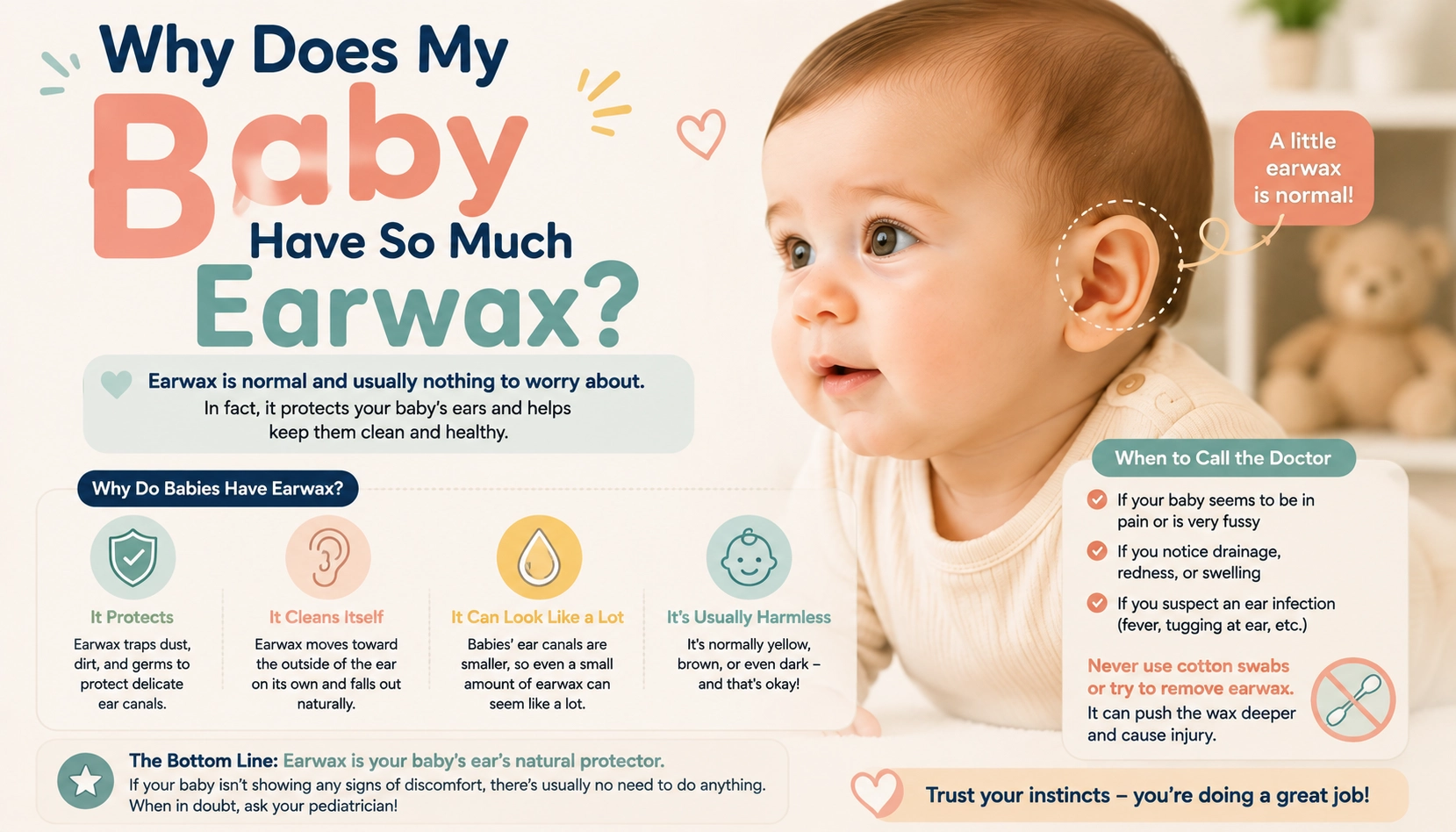
Seeing a large amount of earwax in your baby’s ears can be surprising, but in most cases, it’s completely normal. Earwax, also called cerumen, is a natural substance that helps protect your baby’s ears by trapping dust, dirt, and germs before they can reach the eardrum.

Some babies naturally produce more earwax than others, and having a lot of earwax does not necessarily mean there is a problem. However, there are times when excessive earwax may need medical attention, especially if it causes discomfort or affects hearing.

What Is Earwax?

Contents hide
1 What Is Earwax?
2 Why Does My Baby Produce So Much Earwax?
2.1 Natural Differences
2.2 Small Ear Canals
2.3 Normal Ear Cleaning Process
2.4 Frequent Use of Earbuds or Cotton Swabs
3 Is Excessive Earwax Normal?
4 When Should You Be Concerned?
5 How to Clean Your Baby’s Ears Safely
6 Should You Use Cotton Swabs?
7 Can Earwax Cause Hearing Problems?
8 Can Earwax Be a Sign of an Ear Infection?
9 Tips for Healthy Ear Care
10 Final Answer
11 Frequently Asked
12 Common Questions

Earwax is a mixture of natural oils, sweat, and dead skin cells produced by glands inside the ear canal.

Although many people think earwax is dirty, it actually serves several important purposes:

  • Protects the ear canal from dust and debris.
  • Traps bacteria and other germs.
  • Helps prevent infections.
  • Lubricates the skin inside the ear.
  • Naturally moves out of the ear as the jaw moves during eating and talking.

In healthy ears, earwax usually cleans itself without any help.

Why Does My Baby Produce So Much Earwax?

There are several reasons why your baby may seem to have a lot of earwax.

Natural Differences

Just like hair and skin, earwax production varies from person to person. Some babies simply produce more earwax than others.

Small Ear Canals

Babies have tiny ear canals, so even a small amount of wax can look like a lot.

Normal Ear Cleaning Process

As old earwax moves toward the outer ear, it may become more visible. This is a sign that the ear is cleaning itself naturally.

Frequent Use of Earbuds or Cotton Swabs

Putting anything inside your baby’s ear can push wax deeper into the ear canal instead of removing it, leading to buildup.

Is Excessive Earwax Normal?

Yes. In most cases, having a noticeable amount of earwax is perfectly healthy.

Normal earwax may be:

  • Yellow
  • Orange
  • Brown
  • Soft or slightly sticky
  • Visible near the outer ear

Unless your baby seems uncomfortable or has other symptoms, there is usually no need to remove it.

When Should You Be Concerned?

While earwax is usually harmless, contact your pediatrician if your baby has:

  • Ear pain.
  • Fever.
  • Fluid or pus coming from the ear.
  • Blood in the ear.
  • Difficulty hearing.
  • Frequent ear pulling along with fussiness.
  • A foul-smelling discharge.
  • A large wax blockage that seems to affect hearing.

These symptoms may indicate an ear infection or another condition rather than simply excess earwax.

How to Clean Your Baby’s Ears Safely

The safest approach is to clean only the outside of the ear.

You can:

  • Wipe the outer ear gently with a soft, damp washcloth during bath time.
  • Let earwax come out naturally on its own.
  • Dry the outside of the ear after bathing.

Avoid putting anything inside the ear canal.

Should You Use Cotton Swabs?

No.

Cotton swabs (Q-tips), hairpins, or other objects should never be inserted into your baby’s ears.

Using cotton swabs can:

  • Push wax deeper into the ear.
  • Damage the ear canal.
  • Injure the eardrum.
  • Increase the risk of infection.

If earwax needs to be removed, it should be done by a healthcare professional.

Can Earwax Cause Hearing Problems?

Sometimes.

If a large amount of earwax completely blocks the ear canal, your baby may experience:

  • Reduced hearing.
  • Difficulty responding to sounds.
  • Irritability.
  • Pulling at the ears.

A pediatrician can safely determine whether earwax is causing the problem.

Can Earwax Be a Sign of an Ear Infection?

Not usually.

Ear infections are more likely to cause symptoms such as:

  • Fever.
  • Ear pain.
  • Crying more than usual.
  • Trouble sleeping.
  • Drainage of fluid or pus.
  • Loss of appetite.

Earwax by itself is generally not a sign of infection.

Tips for Healthy Ear Care

To keep your baby’s ears healthy:

  • Clean only the outer ear.
  • Never insert cotton swabs into the ear canal.
  • Watch for signs of infection.
  • Attend routine well-baby checkups.
  • Contact your pediatrician if you notice hearing problems or persistent discomfort.

Most babies never need routine earwax removal.

Final Answer

Having a lot of earwax is usually normal and healthy for babies. Earwax protects the ears by trapping dirt, dust, and germs while keeping the ear canal lubricated. In most cases, there is no need to remove it—simply clean the outside of the ear and let the ear clean itself naturally. If your baby develops pain, fever, hearing problems, foul-smelling drainage, or other concerning symptoms, consult your pediatrician for an evaluation.


Frequently Asked

Common Questions

Yes. Earwax often becomes darker as it ages. Brown earwax is usually completely normal.
Normal earwax has little or no odor. A strong or foul smell, especially with drainage or fever, should be evaluated by a pediatrician.
Only clean the outside of the ears during regular baths. The inside of the ear usually cleans itself naturally.
Do not use ear drops unless your pediatrician recommends them. Some products are not suitable for young infants or babies with certain ear conditions.
Author

alisan

Researcher in education, spychology, and data analysis with programming experience.

Follow Me
Other Articles
Previous

What are some recommended foods to eat during the first trimester of pregnancy to support the health of both the mother and developing baby?

Next

Can you eat sushi while pregnant?

No Comment! Be the first one.

Leave a Reply Cancel reply

Your email address will not be published. Required fields are marked *

What is Did You Search?

The “Did You Search” website was created for all mothers and families. Just search to find all your needs about your children.

Links

  • about
  • contact
  • privacy policy
  • medical disclaimer
  • sitemap
Copyright 2026 — DidYouSearch. All rights reserved.