
If sushi was a weekly staple before your pregnancy, this is probably one of the first questions you searched after seeing those two lines. The short answer: yes, you can still eat sushi while pregnant — just not the raw kind. Here’s what’s actually safe to order, what to avoid, and why the guidance around raw fish and pregnancy exists in the first place.
The Quick Answer
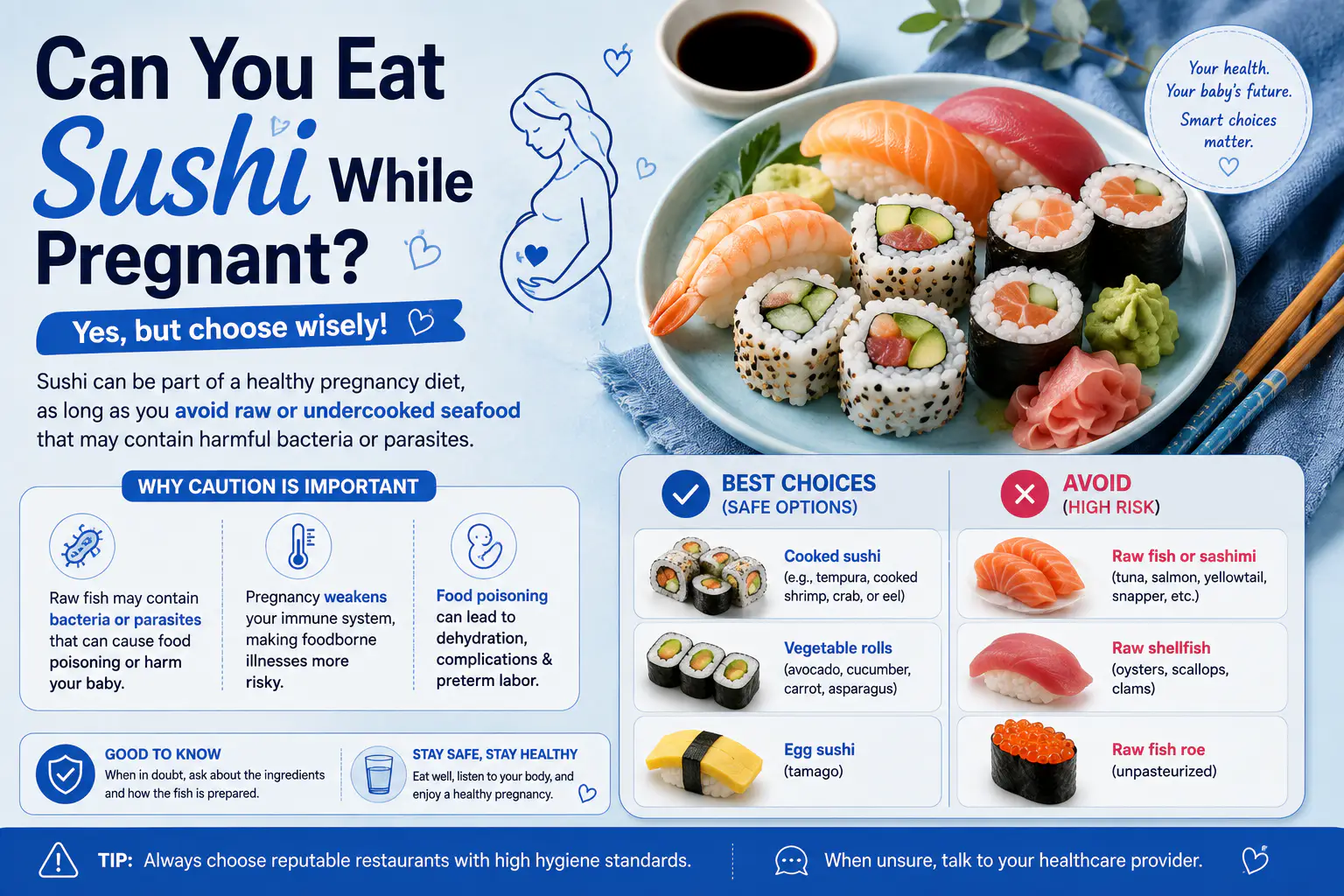
According to the American College of Obstetricians and Gynecologists (ACOG), raw fish — including sushi and sashimi — carries a higher risk of parasites and bacteria than fully cooked fish, so it’s recommended to avoid it during pregnancy. That doesn’t mean sushi is off the table entirely. Cooked sushi rolls, made with low-mercury seafood, are considered safe and can absolutely stay in your rotation.
Why Raw Fish Is a Concern During Pregnancy
There are two separate risks that get lumped together when people ask “can pregnant women eat sushi,” and it helps to understand them individually.
Bacteria and parasites. Raw or undercooked fish can carry parasites (like Anisakis) and bacteria such as salmonella and listeria. Most of these cause food poisoning symptoms — nausea, vomiting, diarrhea — that are unpleasant but not typically dangerous to a fetus. Listeria is the exception: it can cross the placenta and, in rare cases, lead to miscarriage, stillbirth, or serious newborn infection, which is why pregnancy guidelines are more cautious than general food safety advice.
Mercury. This is arguably the bigger long-term concern. High mercury exposure during pregnancy has been linked to developmental issues, including effects on a baby’s brain, hearing, and vision. Certain fish — particularly larger, longer-living species — accumulate more mercury than others, which is why the type of fish matters just as much as whether it’s raw or cooked.
What Sushi Is Safe to Eat While Pregnant
The good news is that plenty of sushi menu items are perfectly fine:
Cooked, low-mercury seafood rolls — think California rolls (imitation crab), shrimp tempura rolls, eel (unagi), and cooked octopus
Vegetable rolls — cucumber, avocado, sweet potato, and carrot rolls are all safe bets
Vegetarian options — tofu and tempeh-based rolls
Cooked roe in small amounts, such as cooked salmon or flying fish roe
As a general guideline, aim for 8–12 ounces of low-mercury seafood per week, split across meals, to get the nutritional benefits of fish (like omega-3s) without overdoing mercury exposure.
What to Avoid
Raw or undercooked fish rolls — sashimi, nigiri with raw fish, spicy tuna rolls, and any roll listing raw salmon or tuna
Raw shellfish — including raw oysters or clams used in some sushi preparations
Smoked seafood that’s refrigerated (not shelf-stable), like cold-smoked salmon, unless it’s been cooked into a dish
High-mercury fish, whether raw or cooked — this includes bigeye tuna, king mackerel, swordfish, shark, and tilefish
Ceviche, which uses citrus juice rather than heat to “cook” the fish and doesn’t eliminate the same risks
A Note on Nuance
You may come across sources — including some doctors and popular pregnancy books — that take a more relaxed stance, pointing out that reputable sushi restaurants use flash-frozen fish, which kills parasites, and that the bacterial risks (aside from listeria) aren’t meaningfully higher for a fetus than for the mother herself. That’s a legitimate conversation happening in some medical circles, and it’s part of why sushi practices vary so much by country. But the official guidance from ACOG and the CDC in the U.S. remains to avoid raw fish during pregnancy, and that’s the safest, most conservative approach if you’re unsure. If you do want to make an individual choice that departs from that guidance, it’s worth talking it through with your OB first.
Tips for Ordering Sushi Safely While Pregnant
Ask before you order. Restaurant staff can confirm which rolls are fully cooked and which contain raw fish or shellfish.
Choose a reputable, high-turnover restaurant. Fresh ingredients and proper food handling reduce contamination risk regardless of whether something is cooked.
Watch for cross-contamination. Rolls prepared on the same surface as raw fish can pick up trace bacteria, so ask if cooked and raw items are prepared separately.
Stick to your low-mercury seafood limit. Even cooked fish should stay within the recommended weekly amount.
When in doubt, order vegetarian. Cucumber, avocado, and sweet potato rolls are always a safe, satisfying option.
The Bottom Line
You don’t have to give up sushi for nine months — you just have to be selective about what’s on your plate. Cooked, low-mercury rolls and vegetarian options let you keep enjoying sushi night throughout pregnancy, while raw fish, raw shellfish, and high-mercury varieties are best saved for after your baby arrives.
FAQ
Can you eat California rolls while pregnant?
Yes. California rolls are made with cooked imitation crab, avocado, and cucumber, making them one of the safest and most common sushi choices during pregnancy.
Is cooked shrimp sushi safe during pregnancy?
Yes, as long as the shrimp is fully cooked, it’s a safe, low-mercury option and a good source of protein.
What happens if I accidentally ate raw sushi while pregnant?
A single serving of raw sushi is unlikely to cause harm, but it’s worth monitoring for symptoms like fever, nausea, vomiting, or diarrhea in the days after, and calling your doctor if any appear. Try not to panic — the actual risk from one meal is low.
Can you eat smoked salmon while pregnant?
Refrigerated, cold-smoked salmon (like the kind used on bagels or in some sushi) should be avoided, since it isn’t fully cooked and carries a listeria risk. Canned or shelf-stable smoked salmon and fully cooked salmon dishes are safe.
Is sushi safe in the third trimester?
The same guidelines apply throughout all three trimesters — cooked, low-mercury sushi is fine at any stage of pregnancy, while raw fish and shellfish should still be avoided until after delivery.