
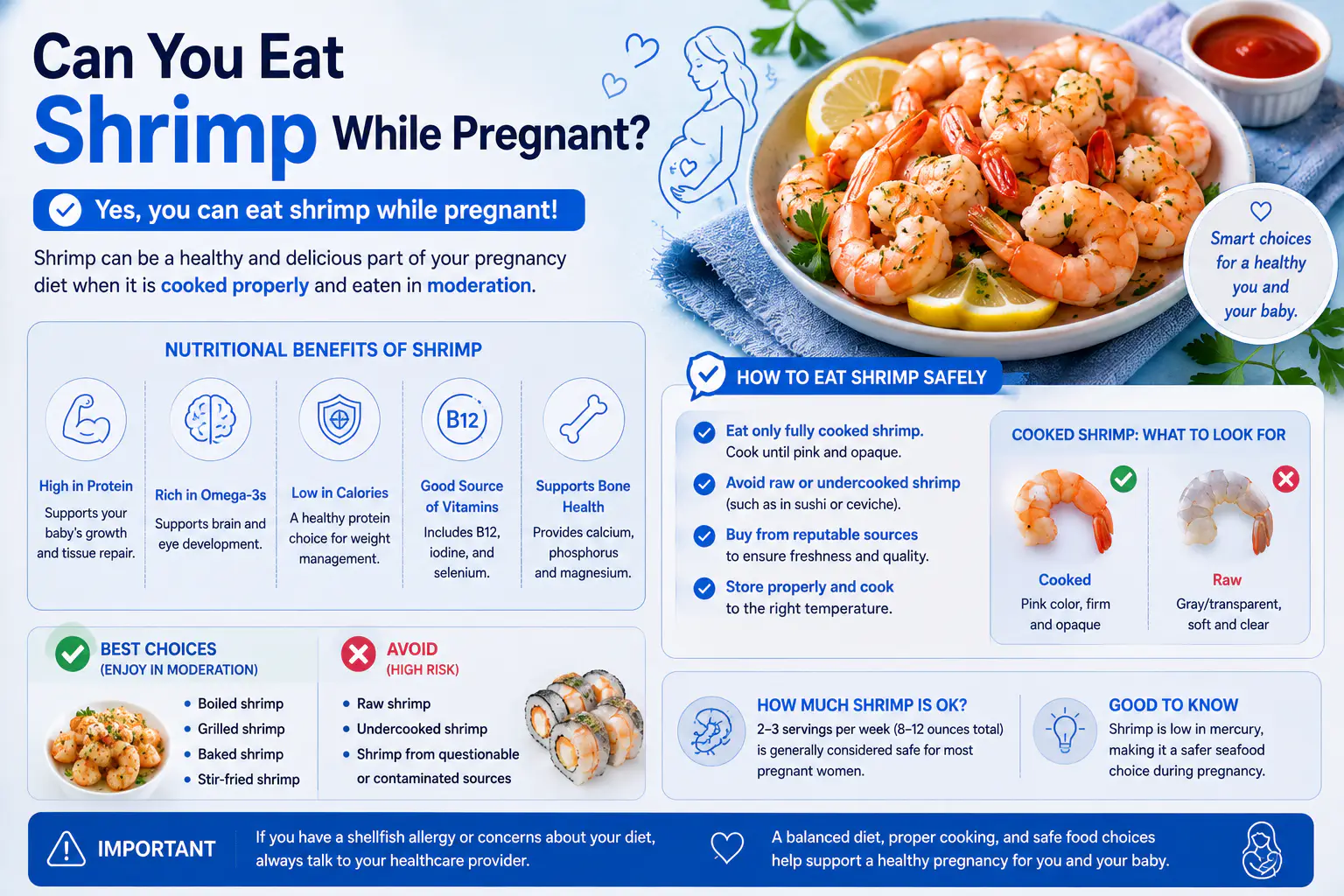

If shrimp cocktail, shrimp tacos, or a good garlic shrimp stir-fry are your go-to order, you don’t have to give them up just because you’re expecting. Yes, pregnant women can eat shrimp — it’s actually one of the better seafood choices you can make right now. Here’s what the research and OB-GYNs say about eating shrimp safely during pregnancy, plus a few precautions worth knowing.
The Quick Answer
Shrimp is safe to eat during pregnancy as long as it’s fully cooked. It’s naturally low in mercury, high in protein, and a source of several nutrients your body needs more of right now, including iodine, choline, and omega-3 fatty acids. The main things to watch are making sure it’s cooked thoroughly and keeping your overall seafood intake within recommended weekly limits.
Why Shrimp Is Considered a Safe, Healthy Choice
Unlike larger, longer-living fish, shrimp doesn’t accumulate much mercury over its lifespan, which is why it lands in the FDA’s “Best Choices” category for seafood during pregnancy — alongside salmon, cod, sardines, and canned light tuna. Mercury is the main reason doctors are cautious about fish in pregnancy, since high exposure has been linked to developmental issues affecting a baby’s brain and nervous system. Shrimp simply doesn’t carry that same risk in normal amounts.
Beyond being low-mercury, shrimp brings real nutritional value to a pregnancy diet:
Protein to support your baby’s growth and your own increased needs
Iodine, important for your baby’s developing thyroid and brain
Choline, which works alongside folate to support early brain development
Omega-3 fatty acids, linked to healthy fetal brain and eye development
Selenium and vitamin D, both of which support immune function
Some research has even suggested that eating shrimp and other low-mercury shellfish during pregnancy may be associated with a lower risk of preterm birth and low birth weight, likely thanks to this nutrient profile.
How Much Shrimp Can You Eat While Pregnant?
The FDA and EPA recommend that pregnant women eat 8 to 12 ounces (about 2–3 servings) of low-mercury seafood per week, and shrimp counts toward that total. A serving is roughly the size of your palm. You can eat shrimp exclusively within that range, or mix it with other low-mercury options like salmon, cod, or tilapia for variety.
The Non-Negotiable Rule: Cook It Thoroughly
The real safety concern with shrimp isn’t mercury — it’s undercooking. Raw or undercooked shrimp can carry bacteria and parasites, including listeria and salmonella, which pose a higher risk during pregnancy and can, in rare cases, lead to complications like miscarriage or preterm labor.
To eat shrimp safely while pregnant:
Cook it to an internal temperature of 145°F (about 63°C). Properly cooked shrimp turns pink and opaque with a firm texture — if it still looks translucent or grayish, it needs more time.
Skip raw shrimp entirely. This means avoiding shrimp sushi, sashimi, and raw shrimp ceviche.
Be cautious with shrimp cocktail. It’s fine as long as the shrimp was fully cooked before chilling — which is standard practice, but it’s worth confirming when eating out.
Ask when dining out. If you’re ordering a dish with shrimp, don’t hesitate to ask your server whether it’s fully cooked.
Handle and store it properly. Refrigerate cooked shrimp within two hours, use it within 1–2 days, and buy from a reputable source to reduce contamination risk.
What About Shrimp Tempura Sushi?
This one comes up a lot: shrimp tempura rolls are cooked, breaded, and fried, which makes them a safe sushi option during pregnancy — unlike rolls made with raw fish. Many OB-GYNs specifically point to shrimp tempura as a pregnancy-friendly way to still enjoy sushi night.
Other Low-Mercury Seafood to Rotate In
If you want variety alongside shrimp, other good low-mercury choices include salmon, cod, tilapia, pollock, catfish, sardines, and canned light tuna. Fish to avoid entirely during pregnancy due to high mercury content include shark, swordfish, king mackerel, tilefish, and marlin. Albacore tuna falls in between — it’s fine, but should be limited to about one serving (roughly 4 ounces) per week.
The Bottom Line
Shrimp is one of the easier seafood questions in pregnancy: it’s low in mercury, nutrient-dense, and safe to enjoy a few times a week as long as it’s fully cooked. The rule to remember isn’t about avoiding shrimp — it’s about avoiding it raw. Cook it properly, stick to the recommended weekly seafood range, and shrimp can stay right where it belongs on your plate.
FAQ
Is shrimp high in mercury?
No. Shrimp is one of the lowest-mercury seafood options and falls into the FDA’s “Best Choices” category, making it safe to eat multiple times a week during pregnancy.
Can I eat shrimp cocktail while pregnant?
Yes, as long as the shrimp was fully cooked before being chilled, which is standard for shrimp cocktail. If you’re unsure how it was prepared, it’s fine to ask.
Can I eat shrimp tempura sushi while pregnant?
Yes. Shrimp tempura is cooked and breaded, making it a pregnancy-safe sushi option, unlike rolls containing raw fish.
How much shrimp can I eat per week while pregnant?
Shrimp counts toward the FDA’s recommended 8–12 ounces (2–3 servings) of low-mercury seafood per week. You can eat shrimp exclusively within that range or combine it with other low-mercury fish.
What happens if I accidentally ate undercooked shrimp while pregnant?
A single instance is unlikely to cause harm, but watch for symptoms like fever, nausea, vomiting, or diarrhea over the following days, and contact your doctor if any appear or if you’re concerned.